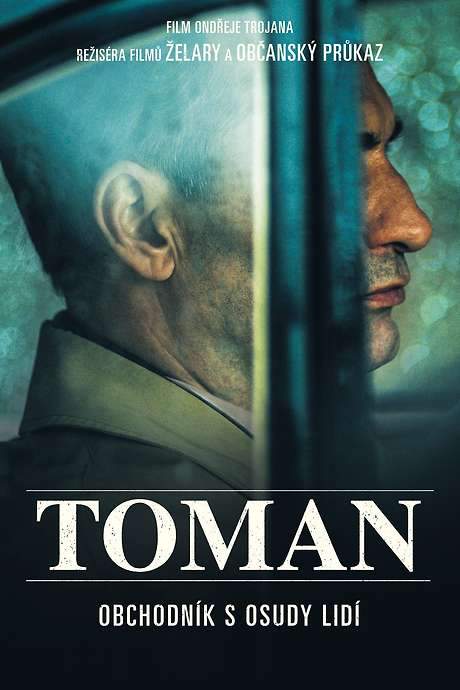
Toman 2018

Directed by

Ondřej Trojan
Made by

Total HelpArt T.H.A.
Where to Watch Toman
See current US streaming, rental, and purchase options for Toman (2018) via JustWatch.




Streaming availability powered by 
Toman Plot Summary
Read the complete plot summary and ending explained for Toman (2018). From turning points to emotional moments, uncover what really happened and why it matters.
The film traces the rise and fall of Zdeněk Toman Jiří Macháček, the head of Czechoslovak Intelligence from 1945 to 1948, a figure whose career twists through political intrigue, war-time decisions, and a dramatic coup d’état. It opens in April 1948 with an interrogation by Inspector Putna, a tense moment that signals the fragility of Toman’s grip on power, before shifting back to March 1945 when he served as a repatriation officer in Carpathian Ruthenia. In this frontier region, he finds himself at odds with NKVD officers who insist that no one should be repatriated as the area edges toward becoming part of the Soviet Union. To survive the clash, Toman begins to use bribes and leverage to navigate the competing pressures around him, testing the boundaries between loyalty, money, and influence.
Toman’s path crosses with Imrich Rosenberg, a moment that marks a turning point in his ambitions. When Rosenberg asks him to facilitate the repatriation of Jews from Carpathian Ruthenia, Toman agrees, motivated by the promise of money and a chance to expand his own power. This decision foreshadows his later willingness to use his position for personal advancement, even as he also shows a capacity to assist vulnerable groups. The plot thickens as he organizes a meeting of the exiled Czechoslovak government in Košice, a move that expands his network and visibility. At this juncture, Toman encounters Václav Nosek [Jaromír Dulava], who agrees to help him climb the ranks of the intelligence service. Nosek’s backing becomes a crucial aid, and with it Toman moves from peripheral influence to a central role within the intelligence circle that is then led by a non-communist General Josef Bartík [Jiří Dvořák].
As Toman’s star rises, he forges a close connection with Rudolf Slánský [Stanislav Majer], a prominent Communist who tasks him with securing finances for the Communist Party of Czechoslovakia. To fulfill this mandate, Toman taps into contacts in Great Britain, gathering resources that fuel his ascent and, more broadly, the party’s ambitions. When the opportunity arises, he replaces Bartík as the Head of Intelligence, consolidating power and shaping policy behind the scenes. His influence extends beyond statecraft: he leverages his position to aid Jewish refugees and to contribute to the early momentum behind Israel’s establishment, a move that earns both praise and suspicion from various political quarters.
Toman’s growing influence helps the Communist side win the 1946 elections, but it also pits him against the Soviet clique embodied by Bedřich Reicin [Marek Taclík], whose ties to Moscow threaten Toman’s autonomy. The tension escalates as Toman’s support for Israel collides with Soviet interests, placing him in open conflict with his former allies. This clash culminates in his removal from office during the 1948 coup d’état, a turning point that leads to his arrest and the sensational suicide of his wife, Pesla Tomanová [Kateřina Winterová]. The narrative follows Toman’s desperate flight to Bavaria, where he ultimately surrenders to American soldiers with the help of Jewish representatives he had previously assisted, completing a arc defined by ambition, loyalty, and a dramatic pursuit of power that altered Czechoslovakia’s postwar landscape.
Throughout the story, the film balances personal calculation with political consequence, painting a portrait of a man who navigates bribery, diplomacy, and ideological shifts in a time of upheaval. The cast’s carefully drawn performances anchor a history that reads like a cautionary chronicle of how power can bend under pressure, yet how the past continues to echo in the decisions of those who hold influence.
Toman Timeline
Follow the complete movie timeline of Toman (2018) with every major event in chronological order. Great for understanding complex plots and story progression.
March 1945: Repatriation officer in Carpathian Ruthenia
Toman begins his ascent in Carpathian Ruthenia as a repatriation officer. He clashes with NKVD officers who insist that nobody will be repatriated to the Soviet Union, and he resorts to bribery to push through his orders. The confrontation establishes a pattern of pragmatic, sometimes transactional decisions that will define his career.
Rosenberg asks Toman to help repatriate Jews
Imrich Rosenberg approaches Toman with a request to help repatriate Jews from Carpathian Ruthenia. Toman agrees to assist in exchange for money, signaling his readiness to leverage government power for personal gain. The arrangement foreshadows his later use of foreign contacts to bolster his own position.
Organizes meeting of exiled government in Košice
Toman organises a meeting of the exiled Czechoslovak government in Košice, aiming to consolidate influence and create opportunities for advancement. The event demonstrates his ability to orchestrate high-level gatherings and negotiate with key political players. It marks a significant step in his public-facing ascent.
Meets Václav Nosek who backs his career
Toman befriends Václav Nosek, who agrees to back his career and open doors within party circles. Nosek's support helps him gain credibility and access to influential networks. Their alliance becomes a turning point that accelerates his entry into the intelligence service.
Joins Czechoslovak Intelligence led by Bartík
Nosek helps Toman join Czechoslovak Intelligence, which is led by non-Communist General Josef Bartík. This entry places Toman inside the state's security apparatus and lets him begin building a power base. He starts coordinating intelligence work with political objectives in mind.
Befriends Slánský; tasked with financing the CPC
Toman forms a close relationship with Rudolf Slánský, who assigns him the task of securing finances for the Communist Party. He taps his international connections to raise funds, mixing covert operations with political strategy. These financial dealings strengthen the CPC's ability to operate and grow in influence.
Gains British funds and becomes Head of Intelligence
Using his links to Great Britain, Toman secures substantial funding that helps the Communists consolidate power. He eventually replaces Bartík as Head of Czechoslovak Intelligence, signaling his rise to the top of the security structure. The shift expands his autonomy and deepens his political leverage.
Helps Jewish refugees and supports Israel
Toman uses his influence to help Jewish refugees and to support the establishment of Israel. His actions earn him friends among Jewish communities abroad and raise the stakes in the geopolitical struggles. This humanitarian angle creates tension with Soviet-aligned factions back home.
Finances aid the 1946 Communist victory
The funds channeled by Toman contribute to the Communist Party's victory in the 1946 elections, solidifying Communist control over the country. The win elevates his standing with Gottwald and cements his role as an indispensable power broker. His success also sharpens the rivalry with Soviet-aligned elements in the regime.
Meets Gottwald and clashes with Reicin
Toman meets Klement Gottwald and becomes entangled with the Communist leadership, drawing the ire of Bedřich Reicin, who embodies the Soviet-aligned clique. The factional rivalries threaten his position and foreshadow the purge of non-Soviet influences. The tension intensifies as he pursues Israel-friendly policies.
Soviet tensions mount over his independent financing
His pro-Israel stance and independent financing bring him into conflict with the Soviet circle and its Czech allies. He navigates increasing pressure as Moscow tightens its grip on politics and security services. The clash foreshadows the ultimate realignment and his downward trajectory.
Removed from power during the 1948 coup
During the 1948 coup d'état, Toman is removed from his position and loses control of the intelligence apparatus. The power shift marks a decisive turning point, ending his rapid ascent. The coup reshapes the political landscape and isolates him from the centers of power.
Arrest and wife’s suicide
Following the coup, Toman is arrested as the authorities consolidate power. His wife commits suicide under the strain of the regime change and personal turmoil. The tragedy underscores the human cost of political machinations and marks his fall from influence.
Escape to Bavaria and surrender to Americans
Facing imprisonment, Toman escapes to Bavaria with the help of Jewish representatives he had aided. He surrenders to American soldiers, seeking asylum away from the Soviet-dominated regime. The escape ends his direct influence in Central Europe and moves his story into exile.
Opening scene: Interrogation by Inspector Putna
In the film's opening flash, Toman is interrogated by Inspector Putna in April 1948. The scene frames the narrative, presenting the dramatic rise and fall and the moral ambiguities of his actions. It sets a retrospective lens on the events that follow.
Toman Characters
Explore all characters from Toman (2018). Get detailed profiles with their roles, arcs, and key relationships explained.
Zdeněk Toman (Jiří Macháček)
An ambitious head of Czechoslovak Intelligence who maneuvers between NKVD pressure, political factions, and financial deals. He leverages repatriation, refugee favors, and international contacts to climb the power ladder. His charisma hides a willingness to bend rules to secure his position and influence. He embodies the moral ambiguities of postwar espionage.
Rudolf Slánský (Stanislav Majer)
A prominent Communist ally who helps steer Toman's career and secures influence for the party. He trusts in political deals and his ideological outlook to expand the Communist footprint. His relationship with Toman shows how loyalty and ambition intertwine in the power structure.
Klement Gottwald (Aleš Procházka)
Prime Minister and leading Communist figure who seeks to consolidate power with Toman's help. He uses financial and diplomatic networks to push through party goals and solidify control after the wartime coalition. His presence anchors the hardline shift that culminates in the 1948 coup.
Bedřich Reicin (Marek Taclk)
A key member of the Soviet-aligned clique within the party who opposes Toman's independent power moves. He wields influence through the security apparatus and represents the Soviet-backed hard line. His actions heighten the tension that leads to Toman's removal in 1948.
Josef Bartík (Jiří Dvořák)
Former head of non-Communist Czechoslovak Intelligence who is outmaneuvered by Toman. His leadership marks the older generation's resistance to the totalitarian shift, eventually giving way to Toman's ascent. He embodies institutional inertia in the early Cold War period.
Lída Clementisová (Kateřina Winterová)
A close associate connected to Clement Gottwald's inner circle, her role reflects the intertwining of personal relationships and political life. She embodies the cost borne by families within the power machine. Her presence signals how private lives are pulled into state strategy.
Toman Settings
Learn where and when Toman (2018) takes place. Explore the film’s settings, era, and how they shape the narrative.
Time period
1945-1948
The film tracks the immediate post–World War II era through the late 1940s. It opens in March 1945 with repatriation in Carpathian Ruthenia, moves through the 1946 election, and culminates in the April 1948 coup and its aftermath, including Toman's escape to Bavaria.
Location
Carpathian Ruthenia, Košice, Prague, Bavaria, Great Britain, Israel
The story unfolds in the borderlands of Carpathian Ruthenia, where postwar repatriation politics drive tension between local authorities and NKVD cadres. Košice serves as a political hub where the exiled Czechoslovak government meets, signaling the fraught transition from war to state-building. Prague becomes the center of the 1948 coup and the tightening grip of the Communist Party, while Bavaria hosts the fugitives and the legal limbo of surrender. Britain and Israel appear as distant theaters of influence through financial and diplomatic maneuvering.
Toman Themes
Discover the main themes in Toman (2018). Analyze the deeper meanings, emotional layers, and social commentary behind the film.
⚖️
Power
Toman navigates a maze of political factions, using bribery, influence, and international contacts to climb the intelligence hierarchy. The story portrays how control over information and finances can tilt national events, from refugee operations to electoral outcomes. It questions where loyalty ends and self-preservation begins in a shifting postwar landscape.
🧳
Refugees
Repatriation and the fate of Jewish refugees from Carpathian Ruthenia are central to Toman's deals and moral calculus. The film shows the humanitarian pressures that collide with political agendas, revealing the human cost behind bureaucratic decisions. It also presents how refugee networks become capital and leverage in power struggles.
🕵️
Betrayal
Betrayal threads through personal and political relationships, from NKVD pressure to close allyships with Slánský and Gottwald. Toman's calculations require sacrificing trust for advancement, highlighting the precarious balance between loyalty to friends and obedience to the state. The narrative underscores how deception can shield or propel someone in a totalitarian system.

Coming soon on iOS and Android
The Plot Explained Mobile App
From blockbusters to hidden gems — dive into movie stories anytime, anywhere. Save your favorites, discover plots faster, and never miss a twist again.
Sign up to be the first to know when we launch. Your email stays private — always.
Explore the mobile appToman Spoiler-Free Summary
Discover the spoiler-free summary of Toman (2018). Get a concise overview without any spoilers.
In the turbulent aftermath of the Second World War, a fledgling Czechoslovakia teeters between reconstruction and ideological struggle. The streets of Prague and the remote valleys of Carpathian Ruthenia pulse with the clatter of displaced peoples, secret dossiers, and whispered negotiations. Against this backdrop, the film paints a world where politics and survival intertwine, and where the line between savior and opportunist is perpetually blurred.
At its core is Zdeněk Toman, a charismatic yet enigmatic figure whose reputation oscillates between celebrated rescuer and controversial power broker. As the head of a nascent intelligence service, he navigates a labyrinth of foreign agents, revolutionary leaders, and desperate refugees. His alliances stretch from seasoned officials like Inspector Putna to shadowy financiers such as Rudolf Slánský, while his personal motivations remain a delicate balance of ambition, pragmatism, and a lingering sense of responsibility toward those he helps.
The tone is a measured historical drama, rich with the austere palette of post‑war Europe and underscored by an undercurrent of moral tension. Cinematically, the narrative weaves between dimly lit office corridors, bustling border crossings, and intimate conversations that reveal the protagonist’s inner contradictions. The mood is simultaneously urgent and reflective, inviting the audience to ponder how a single individual can embody both the pragmatic machinations of politics and the quiet heroism of rescuing lives.
Through a structure that shifts between present interrogations and flashbacks to earlier missions, the story probes the paradoxes of a man labeled the “Czech Schindler.” It asks whether deeds of compassion can outweigh the shadows cast by personal ambition, leaving viewers to contemplate the fragile line between notoriety and nobility without ever revealing the final tally of his choices.
Featured on this page

What's After the Movie?
Not sure whether to stay after the credits? Find out!
Check out our other apps:

SAT Sphere
Build confidence for the Digital SAT.

Mori Atlas
Discover wild places worth protecting.

Luntero
Search smarter for a home in Amsterdam.

Plot Explained
Unravel movie endings and hidden clues.

Pokechamp
Dive into Pokémon data and battle logic.

Driving Theory
Get ready for your European theory test.

Movie Dust
Plan your next cinema trip with ease.

Musemap
Find art and culture as you travel.

Selkobase
Compare credentials before committing.

Local Manual
Turn an unfamiliar country into practical next steps.

Lernavi
Compare school systems before your next move.

GymRoam
Find a workout stop wherever your plans take you.
Explore Our Movie Platform
New Movie Releases (2026)
Famous Movie Actors
Top Film Production Studios
Movie Plot Summaries & Endings
Major Movie Awards & Winners
Best Concert Films & Music Documentaries
Movie Collections and Curated Lists
© 2026 What's After the Movie. All rights reserved.
Privacy Policy