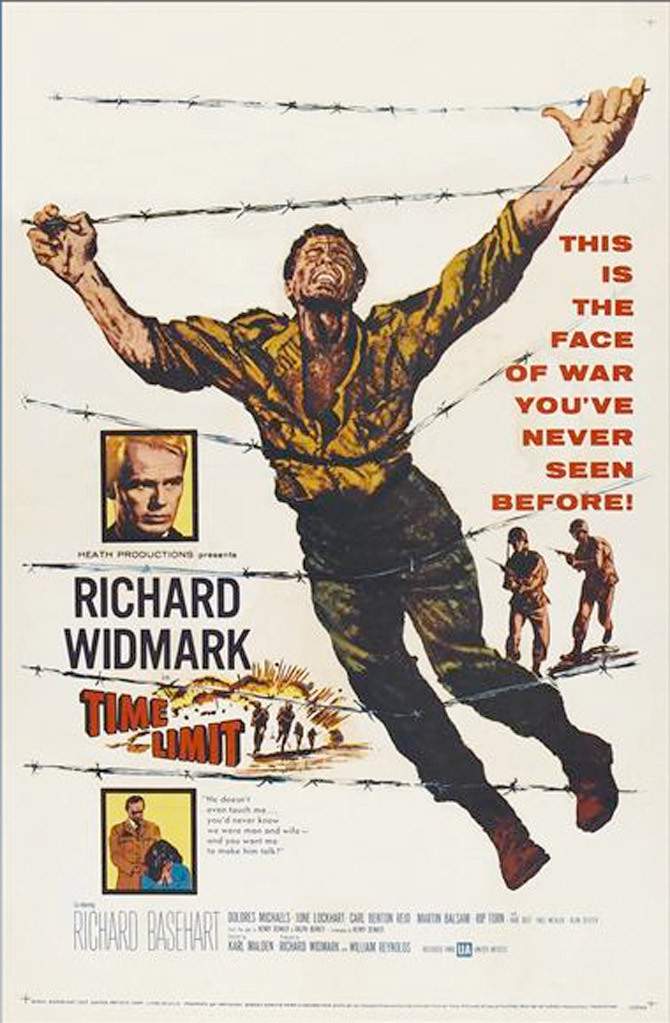
What Is Time Limit About?
The premise of Time Limit in 295 words, with nothing given away. The full story follows below.
In the austere world of a post‑war military courtroom, the rhythm is dictated by hierarchy, honor, and the unrelenting pressure of command decisions made under fire. The film opens with a charged atmosphere where every testimony feels like a ticking clock, and the line between duty and conscience blurs with each passing question. The tone is tight‑knit and suspenseful, a blend of procedural rigor and moral drama that keeps the stakes palpable without resorting to overt spectacle.
At the center of this crucible stands William Edwards, a seasoned army colonel whose reputation for exacting competence masks a deeper, more measured curiosity. Drawn into a contentious case, he must navigate a maze of evidence, testimony, and institutional expectations, all while wrestling with his own instincts about right and wrong. Across the table, Harry Cargill, a decorated major whose calm exterior hints at hidden complexities, becomes the focal point of a probing investigation that threatens to unravel lives and careers alike.
The film also introduces General Connors, a senior officer carrying the weight of personal loss and professional responsibility. His presence adds a generational perspective, emphasizing how the echoes of past battles reverberate through present judgments. The interplay among these three figures—colonel, major, and general—creates a dynamic tension that fuels the narrative, each maneuvering within a rigid system while searching for an ethical foothold.
Against this backdrop, the story unfolds with a measured, almost forensic pace, allowing the audience to feel the pressure of impending decisions. The environment is stark, the dialogue sharp, and the moral questions presented are as layered as the characters themselves. As the case progresses, viewers are invited to contemplate the fragile balance between obedience and humanity, and to wonder whether the truth can ever be fully disentangled from the fog of war.
What Happens in Time Limit?
The complete story of Time Limit, from the first scene to the last, in 378 words (about 2 minutes). Spoilers throughout. Names in the text link to 6 cast member pages.
Spoilers ahead
Army Colonel William Edwards Richard Widmark is drawn into a tense, morally charged case when Major Harry Cargill Richard Basehart is accused of collaborating with the enemy after their North Korean prisoner-of-war ordeal. Cargill openly admits guilt and presents what appears to be damning evidence: a signed germ-warfare confession and radio broadcasts that attack American efforts, seemingly proving treason.
Yet the case refuses to stay one-sided. Cargill refuses to defend himself, a quiet move that clouds the obvious conclusions. The tension thickens as two soldiers die and the unit’s survivors recite a nearly identical, rehearsed account of those deaths, sowing doubt about the truth behind the accusations. Edwards’s commander, General Connors Carl Benton Reid, has a deeply personal stake in the outcome—his own son, Captain Joe Connors Yale Wexler, was among the fallen—pushing him to demand a court-martial. But Edwards chooses to look beyond surface appearances and asks tougher questions, resisting the ready-made explanations.
As the investigation deepens, a disturbing revelation shifts the entire case. Lieutenant George Miller Rip Torn discloses that after Lieutenant Harvey’s death during an escape attempt, Captain Connors betrayed the group under torture. To save the dwindling number of his men, they decided to execute Connors, with Miller drawing the short straw. Their captor, Colonel Kim Khigh Dhiegh, had warned Cargill that obedience would come at the cost of his men’s lives if he refused.
The drama intensifies as General Connors condemns his son as a traitor, while Cargill argues that heroism cannot be measured by endless sacrifice and that the Uniform Code of Military Justice asks too much of soldiers in the heat of fear and desperation. Yet the elder Connors reminds him of the grim calculus faced by leaders whose orders affect the lives and families of many, not just a single man.
In the end, Edwards aligns with Connors on a nuanced reading of Cargill’s actions: they were born of humane motives but carried a flawed judgment. He recommends that all charges be dropped, even as he warns that a court-martial may still be on the horizon. And so Edwards announces that he will step forward to defend Cargill, acknowledging that there may not be perfect answers, but that “they’ll know we asked the questions.”
they’ll know we asked the questions
Time Limit Timeline: Every Key Event in Order
12 key events in the order they happen, from “Accusation and damning evidence presented” to “Resolution: asking the hard questions”. 12 events name a place, across 12 locations.
- 1
Accusation and damning evidence presented
In a tense POW aftermath in North Korea, Major Harry Cargill openly admits guilt and presents what appears to be damning evidence: a signed germ-warfare confession and radio broadcasts that attack American efforts. The revelation seems to seal his treason in the eyes of the investigating unit. His admission, however, raises questions about its authenticity and the motive behind airing such claims.
When:After the POW ordeal Where:North Korea (POW camp)
- 2
The defense remains quiet
Cargill refuses to defend himself, a quiet move that complicates the case and sows doubt among observers. The contrast between a damning confession and a silent defendant invites scrutiny of what really happened. The investigation then faces a crisis when two soldiers die and their testimonies echo a rehearsed account.
When:Early phase of inquiry Where:Military inquiry room
- 3
Questioning surface conclusions
Colonel William Edwards questions the obvious conclusions and resists the ready-made explanations. He tries to look beyond guilt by association to uncover the deeper truth. General Connors pressures for a court-martial, driven by personal stakes in the death of his son.
When:Early investigation Where:Army base investigation room
- 4
Revelation under torture surfaces
Lieutenant George Miller reveals that Captain Connors betrayed the group after Lieutenant Harvey's death during an escape attempt. To save the remaining men, they decide to execute Connors, with Miller drawing the short straw. The confession upends the simple traitor narrative and exposes a grim calculus under duress.
When:During investigation Where:Korean POW camp / interrogation area
- 5
Captors' threat and the cost of obedience
Their captor Colonel Kim warned that obedience would cost the lives of the remaining prisoners if Cargill refused to cooperate. The leverage of torture and fear complicates any straightforward judgment of loyalty or betrayal. This warning casts doubt on the integrity of the testimonies collected under pressure.
When:Under interrogation Where:Captivity camp in Korea
- 6
Family and war: the moral calculus
General Connors condemns his son as a traitor, while Cargill argues that heroism cannot be measured by endless sacrifice. He contends that the Uniform Code of Military Justice demands too much of soldiers in fear and desperation. The exchanged positions reveal the moral ambiguity at the heart of war.
When:Height of the investigation Where:Base / courtroom
- 7
A nuanced reading of Cargill's actions
Edwards privately aligns with a more nuanced reading of Cargill's conduct, recognizing humane motives but flawed judgment. He concludes that the charges should be dropped, even as he acknowledges that a court-martial might still be on the horizon. The decision reframes Cargill's actions as morally complex rather than wholly treasonous.
When:As evidence unfolds Where:Base office
- 8
Edwards takes the stand
Edwards announces his intent to defend Cargill, signaling a pivot from prosecutorial certainty to a defense that seeks to understand the questions behind the actions. He acknowledges there may be no perfect answers, but emphasizes the value of rigorous inquiry. The move signals a commitment to due process even amid fear and suspicion.
When:Late investigation Where:Military courthouse or defense planning room
- 9
From guilt to complexity
The revelation shifts the entire case from a binary treason tale to a study in human motive under pressure. Edwards and Connors begin to see that duty and humanity can pull in opposite directions. The inquiry makes it clear that surface appearances do not tell the whole story.
When:Mid to late investigation Where:Investigation room / command center
- 10
Survivors' rehearsed testimonies
The surviving soldiers recite a nearly identical, rehearsed account of the deaths, suggesting coercion or a shared narrative born of fear. The uniformity of their statements raises questions about how much truth emerges when fear governs memory. This doubt anchors the central tension of Edwards's inquiry.
When:During investigations Where:Frontline or interrogation area
- 11
Leaders' heavy burden
The elder Connors underscores the grim calculus faced by leaders whose orders affect many lives, not just one. He reminds Edwards that the consequences of decisions ripple through families and futures. The debate sharpens into a meditation on responsibility in war.
When:During moral debate Where:Base/office
- 12
Resolution: asking the hard questions
Edwards reaches a resolution that Cargill's actions, though flawed, were born of humane motives. He recommends dropping charges and preparing for a potential court-martial, acknowledging uncertainty. The final stance emphasizes that best defense is the willingness to ask hard questions rather than pretend easy answers.
When:End of investigation Where:Base command center
Who Are the Main Characters in Time Limit?
7 characters, among them Colonel William Edwards (Richard Widmark), Major Harry Cargill (Richard Basehart) and Captain Joe Connors (Yale Wexler): who each one is and the part they play in the story. 6 of them link to the actor’s page.
- CW
Colonel William Edwards (Richard Widmark)
Played by Richard Widmark
A determined Army colonel who challenges easy explanations and pursues a thorough inquiry. He weighs duty and humanity, pushing for questions that expose uncomfortable truths rather than accepting convenient answers.
- 🕵️ Investigator
- 🧭 Duty vs. justice
- 💡 Moral clarity
-
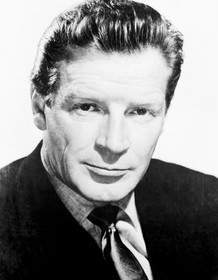
Major Harry Cargill (Richard Basehart)
Played by Richard Basehart
A decorated officer who admits guilt in the germ-warfare case, yet his confession is tied to coercive pressure and a desperate bid to save his men. He embodies the complexity of personal sacrifice under threat.
- 🧪 Germ warfare
- 🗣️ Coercion
- 🧭 Moral ambiguity
- CJ
Captain Joe Connors (Yale Wexler)
Played by Yale Wexler
General Connors's son, who betrays a comrade under torture and pays a heavy personal price for his actions. He represents how fear can override loyalty and honor in the crucible of war.
- 💥 Betrayal
- ⚖️ Traumatic legacy
- 🧭 War ethics
-
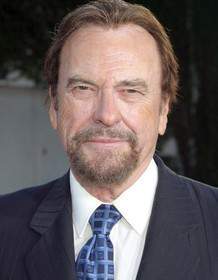
Lieutenant George Miller (Rip Torn)
Played by Rip Torn
A survivor who reveals the truth behind the deaths and the coercive confession, bearing the burden of truth in a morally tangled situation.
- 🗣️ Witness
- 🧠 Moral responsibility
- 🩸 Crucial reveal
- CK
Colonel Kim (Khigh Dhiegh)
Played by Khigh Dhiegh
The interrogator who delivers ultimatums, embodying the ruthless pressure tactics used to force cooperation.
- 🧨 Torture
- 🪪 Coercion
- 🗡️ Interrogation
- GC
General Connors (Carl Benton Reid)
Played by Carl Benton Reid
A senior commander who defends the strict Uniform Code of Military Justice and pushes for a court-martial while wrestling with the human cost of his orders.
- 🎖️ Military hierarchy
- 🧭 Accountability
- 🗝️ Duty vs mercy
- LH
Lieutenant Harvey (Manning Ross)
A junior officer killed while trying to escape; his death catalyzes the revelation of Connors's betrayal and intensifies the moral stakes.
- 💀 Sacrifice
- 🕊️ Innocence lost
- 🧭 Consequences
Where and When Is Time Limit Set?
Time Limit is set in North Korea POW camp and United States military base (Korean War era). Here is why the time and place matter to the story.
When
Korean War era
Set during the Korean War era, the story unfolds amid prisoner interrogations and the tense atmosphere of military discipline. It reflects the early Cold War concern with loyalty, treachery, and the ethics of wartime decisions. The period foregrounds a system where life and duty collide under extreme stress.
Where
North Korea POW camp, United States military base
The action centers on a North Korean prisoner-of-war camp where the accused Cargill is held under harsh conditions. The investigation and potential court-martial unfold at a U.S. military base, exposing the pressure to deliver quick verdicts. The setting contrasts captivity and command structure, highlighting how war tests the limits of justice and loyalty.
- ⚔️ War zone
- 🏛️ Military justice
What Are the Themes of Time Limit?
3 ideas the story keeps returning to, among them Moral Dilemma, Truth vs Loyalty and War Ethics.
-
01
Moral Dilemma
Edwards must balance loyalty to his fellow soldiers with the duty to pursue justice, even when the line between right and wrong becomes murky. The case shows how coercion, fear, and compassion interfere with clear decisions. The film asks whether there is a time limit on heroism and where accountability begins.
-
02
Truth vs Loyalty
Survivors recount a rehearsed version of events, while the truth hides in the details uncovered by a determined investigator. The tension between protecting comrades and exposing the truth drives the narrative. Sacrifice and honesty emerge only after difficult revelations.
-
03
War Ethics
Germ warfare allegations, torture, and fear-mongering illuminate the cruel calculus of wartime decisions. The investigation questions whether saving lives justifies coercive means. The movie uses the pressure of battle to probe the morality of orders and obedience.
What Kind of Film Is Time Limit?
Tense in tone, with steady pacing and a complex story, going by the plot summary.
- Tone
- Tense
- Pacing
- Steady
- Story
- Complex
- Intensity
- High
- Ending
- Bittersweet
A tense and morally fraught military courtroom drama that builds claustrophobic pressure as it investigates the ambiguous truth behind a treason accusation in the shadow of war trauma.
- tense
- somber
- morally complex
- anxious
- claustrophobic
- investigative
- military justice
- prisoner of war
- treason accusation
- moral dilemma
Content notes: torture, war violence, death of soldiers, execution.
Quiz
How well do you remember Time Limit? Test yourself on the story.