What Is The Power About?
The premise of The Power in 270 words, with nothing given away. The full story follows below.
In a hidden research complex dedicated to the space program, a covert initiative called the Committee on Human Endurance pushes the limits of what the human body—and mind—can endure. Led by the enigmatic anthropologist Prof. Henry Hallson, the team designs secretive questionnaires to identify individuals with extraordinary resilience, turning a sterile laboratory into a crucible of whispered ambition. The setting feels both clinical and claustrophobic, a place where scientific rigor collides with the uncharted possibilities of the human psyche, setting a tone that is equal parts methodical and unsettling.
The committee gathers a tight‑knit group of specialists: biologist Prof. Jim Tanner, geneticist Prof. Margery Lansing, physicist Prof. Talbot Scott, and several other brilliant but guarded colleagues. Their interactions are marked by professional respect tinged with underlying rivalry, each member aware that the project’s stakes reach far beyond ordinary research. As they conduct a seemingly innocuous telekinesis experiment, a palpable tension surfaces—an invisible force begins to manifest, suggesting that some hidden capacity among them may be far more potent—and far more dangerous—than they ever imagined.
When members start to fall victim to an unseen, telekinetic power, fear ripples through the laboratory’s corridors, turning curiosity into dread. The survivors must grapple with the paradox of their own expertise: they are the ones trained to test human limits, yet now they are powerless against a threat that may arise from within. The film unfolds as a psychological thriller, blending cold scientific inquiry with an eerie, almost supernatural menace, leaving the audience to wonder which mind among the group holds the lethal ability and whether they can outwit a power that bends reality itself.
What Happens in The Power?
The complete story of The Power, from the first scene to the last, in 619 words (about 3 minutes). Spoilers throughout. Names in the text link to 7 cast member pages.
Spoilers ahead
In the world of space study, a project called The Committee on Human Endurance probes how the human body withstands pain and extreme physical stress, all in service of the space program. At the heart of this effort is Prof. Henry Hallson, an anthropologist who has designed a series of anonymous questionnaires to identify people with extraordinary survival capacity and uses fellow committee members as initial subjects in a quiet, unsettling screening process.
During a formal meeting, Hallson lays out a startling claim before the panel—chairman and biologist Prof. Jim Tanner, geneticist Prof. Margery Lansing, geneticist Prof. Carl Melnicker, physicist Prof. Talbot Scott (also known as Scotty), biologist Prof. Norman E. Van Zandt, and government liaison Arthur Nordlund. He asserts that someone among them possesses a superhuman intellect capable of influencing other minds, even within their intimate circle. When no one volunteers the truth, the idea is tested in a staged telekinesis experiment: a simple psi wheel is set in motion not by a single participant, but by the collective focus of the group, and the wheel answers with a spinning, almost reluctant motion.
That night, Hallson is found dead in the laboratory’s centrifuge room, a cryptic note bearing the name “Adam Hart” left nearby. Hallson’s widow, Sally Hallson, explains that “Adam Hart” was the name of her husband’s childhood friend, casting a shadow of personal history over the impersonal investigation. The authorities and Tanner begin to wrestle with a troubling possibility: if a superhuman power exists, it could be used to hide or manipulate truth, even within a tight-knit scientific team. Talbot Scott is quick to deny the very premise, while the police start to connect the dots to the strange gaps in Tanner’s past.
As the case unfolds, Tanner becomes the prime suspect when it emerges that all records detailing his early life have vanished without explanation. He experiences vivid, disorienting hallucinations and survives a psychic assault that seems aimed at driving him off the case. With the help of [Prof. Margery Lansing], he undertakes a journey to Hallson’s hometown to pursue the truth and discovers that Adam Hart is a real figure—a superhuman whose appearance elicits contradictory descriptions from those who glimpsed him, and whose commands were once obeyed by people years earlier.
The hunt for the remaining committee members intensifies. [Prof. Carl Melnicker] is murdered in cold blood, while [Arthur Nordlund] appears to survive another psychic attack. The investigation tightens its grip when [Prof. Norman E. Van Zandt] is revealed to have been an ally of Hart, only to be murdered himself. Tanner endures continued danger and, after a nerve-wracking pursuit, returns to the research center to confront [Prof. Talbot Scott], with the police closing in. Scott, overwhelmed by the idea that Tanner himself could be the superhuman, panics and is fatally shot by the authorities.
In the dramatic final confrontation, Tanner tracks down Nordlund, who has been playing a double game and is revealed to be Adam Hart in disguise. Hart presses his psychic power against Tanner, but Tanner taps into a stronger, awakened psychic ability of his own and kills Hart with a decisive, otherworldly force. The revelation lands with a heavy truth: Tanner is the superhuman uncovered by Hallson’s tests, and Hart’s fatal motive was to eliminate any rivals who might share the same extraordinary gifts.
In the end, the investigation leaves the door open to a troubling conclusion about the limits of human endurance and the dangers of testing it too far. The lines between science, power, and control blur as the participants confront the unsettling possibility that the human mind can be bent, and perhaps bent too far, by those who seek to push the boundaries of what is possible.
The Power Timeline: Every Key Event in Order
13 key events in the order they happen, from “Hallson's reveal of a hidden super-intellect” to “Tanner learns he is the superhuman”. 13 events name a place, across 8 locations.
- 1
Hallson's reveal of a hidden super-intellect
During a high-level committee meeting, Hallson declares that one member may possess a mind far beyond normal human limits. He explains that the tests are designed to identify survivability under extreme conditions and to uncover latent powers. The room reacts with skepticism as he hints at abilities that could bend others to will.
Where:Committee on Human Endurance meeting room
- 2
Psi wheel test demonstrates telekinetic potential
Hallson orders all members to focus simultaneously on a simple psi wheel, insisting the true subject will not reveal himself alone. As the minds concentrate, the wheel suddenly starts to spin on its own. The demonstration confirms that hidden psychic capabilities may exist among them.
Where:Committee on Human Endurance meeting room
- 3
Hallson is found murdered in the lab
That same night, Hallson is found murdered in the laboratory's centrifuge room, with a note reading 'Adam Hart' nearby. Sally Hallson explains that Adam Hart was the name of her husband's childhood friend, intensifying the suspicions. The investigators begin to sense a connection between Hallson's theories and the killer on the loose.
Where:Laboratory's centrifuge room
- 4
Tanner becomes prime suspect due to erased credentials
As investigators press the case, Jim Tanner becomes the prime suspect when it is revealed his past credentials have been erased and his records show tampering. The mystery deepens as his background is called into question and he is drawn into the investigation. He begins to suspect a hidden element within the committee.
Where:Police investigation
- 5
Tanner suffers hallucinations and psychic assault
Tanner endures disturbing hallucinations that seem to be induced by the unseen force connected to Hallson's theory. He barely survives a psychic attack that targets his mind, leaving him shaken and more determined to uncover the truth. The experience convinces him there is real danger among the committee.
Where:Tanner's residence
- 6
Tanner travels to Hallson's hometown and learns the truth
Driven by urgent questions, Tanner travels to Hallson's hometown to uncover the man behind the name 'Adam Hart.' There he discovers that Hart is a superhuman figure, described variably by witnesses and capable of issuing commands that others still remember. The realization ties the murder to a larger struggle for power among extraordinary individuals.
Where:Hallson's hometown
- 7
Search for other committee members
Tanner and Margery Lansing broaden their investigation to track down the other committee members. They uncover fragmented testimonies and conflicting accounts that hint at how a hidden power broker moved behind the scenes. The search heightens the sense of paranoia surrounding the project.
Where:Various locations around the country
- 8
Melnicker is murdered
The pressure escalates as Dr. Carl Melnicker becomes the next victim, killed by unknown means before investigators can intervene. The murder confirms that the conspiracy extends to the heart of Hallson's panel. The team loses another ally just as they close in on the truth.
Where:Research center / laboratory
- 9
Nordlund survives another psychic assault
Arthur Nordlund endures a second psychic attack from Hart, seemingly surviving to fight another day. The attack confirms Hart's ability to control minds and to strike at will from within the organization. The police grow more determined to stop Hart and his influence.
Where:Research center
- 10
Van Zandt's alliance with Hart revealed and murder
Dr. Norman Van Zandt is exposed as an ally of Hart, yet he is murdered in the wake of his betrayal. The revelation shakes the committee and demonstrates the reach of Hart's influence. Tanner realizes the danger is broader than any one person’s ambitions.
Where:Research center
Show the other 3 events of The Power Hide the last 3 events
- 11
Tanner confronts Talbot Scott; police intervene
Tanner returns to the research center to confront Talbot Scott, who suspects he is the superhuman and pleads for his life. Panic seizes Scott, and law enforcement intervenes, shooting him before he can act. The confrontation intensifies the sense that the threat is close to home.
Where:Research center
- 12
Final showdown: Nordlund is Adam Hart
In a dramatic twist, Nordlund is revealed to be Adam Hart, having faked his own attack. Hart unleashes one last psychic assault on Tanner, who unexpectedly counters with awakened psychic power and defeats him. The battle confirms Hart's identity as the real threat and the police close in.
Where:Research center
- 13
Tanner learns he is the superhuman
With Hart dead, Tanner realizes he himself is the superhuman uncovered by Hallson's tests. He understands that Hart's aim was to eliminate any competition, and that the true danger lay within their own ranks. The revelation reframes the entire investigation and Tanner's purpose within it.
Where:Research center
Who Are the Main Characters in The Power?
8 characters, among them Prof. Jim Tanner (George Hamilton), Prof. Margery Lansing (Suzanne Pleshette) and Prof. Henry Hallson (Arthur O'Connell): who each one is and the part they play in the story. Every profile links to the actor’s page.
-
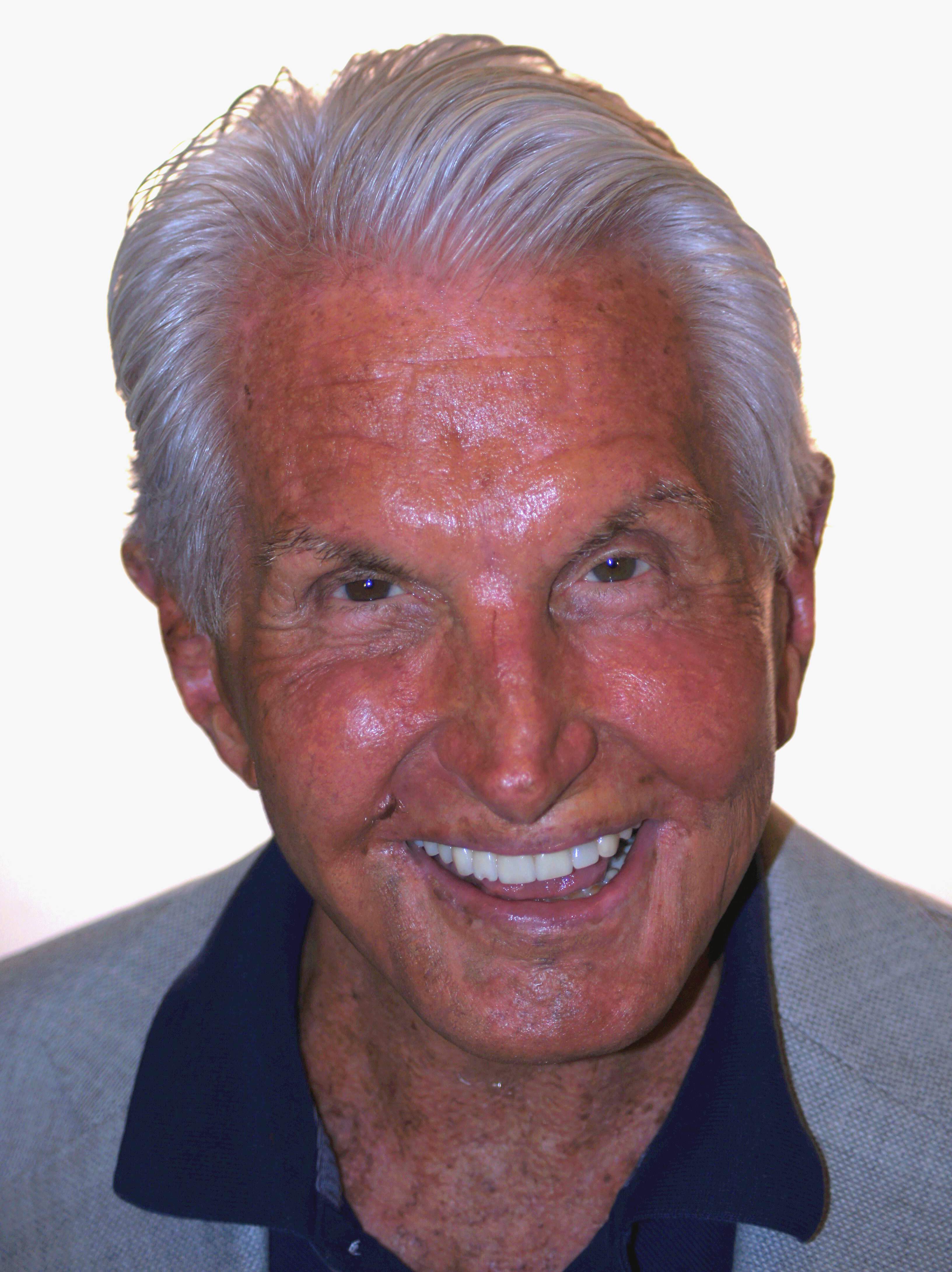
Prof. Jim Tanner (George Hamilton)
Played by George Hamilton
A respected investigator who becomes the prime suspect after Hallson's murder. He endures disturbing visions and psychic attacks, and gradually uncovers that he himself may be the superhuman the tests were designed to reveal. His combination of intellect and skepticism drives the pursuit of truth amid a web of deception.
- 🕵️ Investigator
- 🧠 Skeptic
- 🧬 Leader
-

Prof. Margery Lansing (Suzanne Pleshette)
Played by Suzanne Pleshette
A geneticist on the Committee on Human Endurance who advocates the testing and becomes a crucial ally in unraveling the Adam Hart mystery. She remains rational and scientifically grounded as fear and intrigue mount. Her methodical approach contrasts with the growing paranoia around the experiments.
- 🧬 Geneticist
- 🧠 Scientist
- 🕵️ Investigator
-
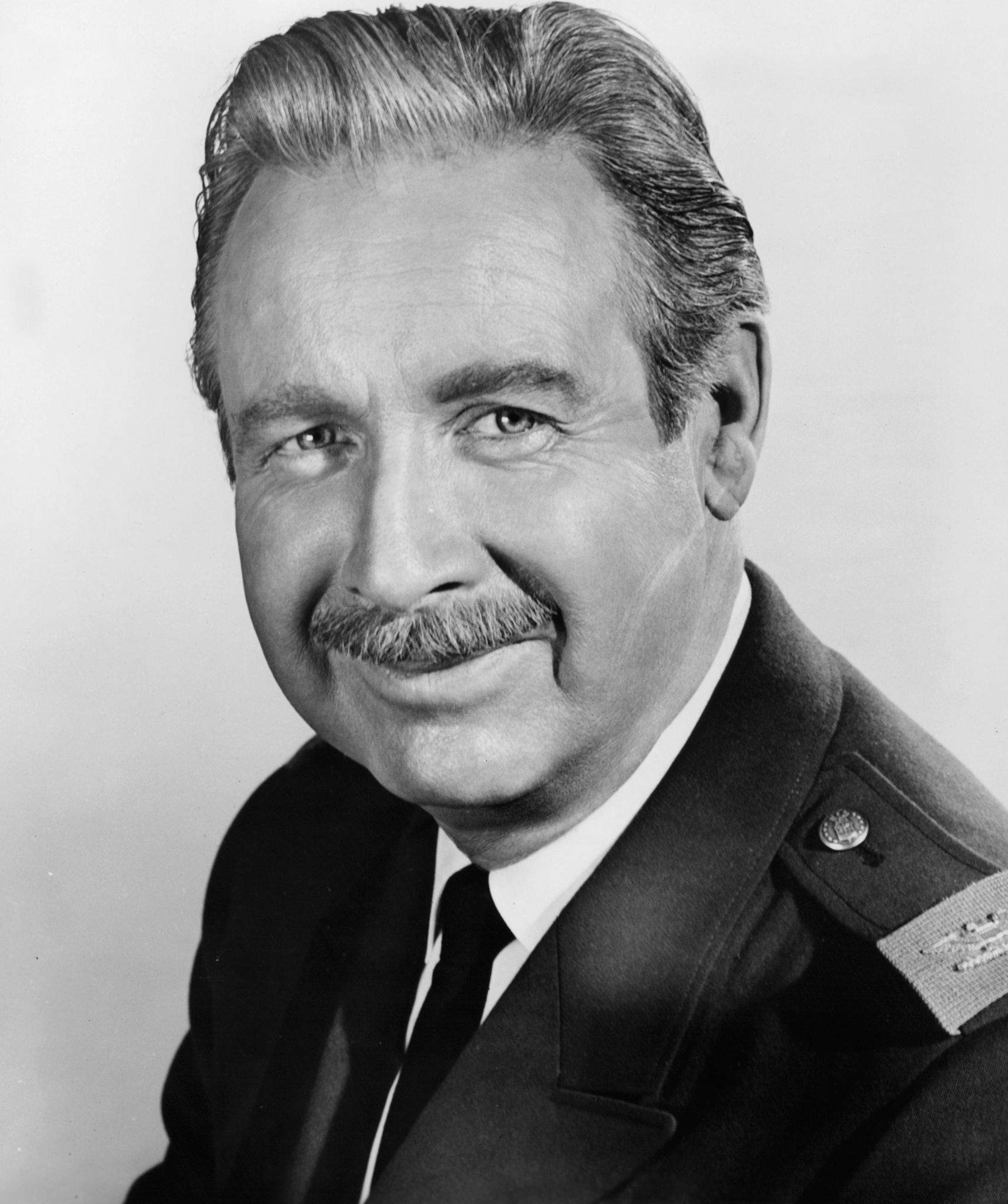
Prof. Henry Hallson (Arthur O'Connell)
Played by Arthur O'Connell
An anthropologist who designed the anonymous questionnaires and becomes one of the victims of the psychical attacks. His work anchors the idea that the human mind can be measured and manipulated. His death escalates the investigation and the stakes of the study.
- 🧠 Anthropologist
- 🧪 Scientist
- 🕵️ Investigator
- PC
Prof. Carl Melnicker (Nehemiah Persoff)
Played by Nehemiah Persoff
A physicist on the committee who argues for the testing program. He is murdered as the investigation uncovers the danger of powers beyond normal humans. His presence represents the scientific pressure that fuels the plot's conspiracy.
- 🧪 Physicist
- 🧠 Skeptic
- 🧬 Scientist
- PT
Prof. Talbot Scott aka Scotty (Earl Holliman)
Played by Earl Holliman
A biologist on the committee who becomes entangled with Hart's plans and is murdered amid fears about hidden powers. His involvement highlights the ethical risk of pursuing knowledge without restraint. His fate underscores the deadly seriousness of the research.
- 🧬 Biologist
- 🕵️ Investigator
- 🧪 Scientist
- PN
Prof. Norman E. Van Zandt (Richard Carlson)
Played by Richard Carlson
A biologist who is revealed to be an ally of Hart and is murdered, adding a layer of betrayal to the conspiracy. His dual role increases the distrust within the committee. He embodies the danger of hidden loyalties in high-stakes research.
- 🧬 Biologist
- 🕵️ Conspirator
- 🧠 Intellectual
- AN
Arthur Nordlund (Michael Rennie)
Played by Michael Rennie
Government liaison on the committee who survives the first psychic assault but is later revealed to be Adam Hart, the mastermind behind the attacks. His dual identity exposes the extent of deception powering the plot. He serves as the pivotal antagonist until the final confrontation.
- 🧭 Government
- 🧠 Mastermind
- 🧩 Deceiver
-
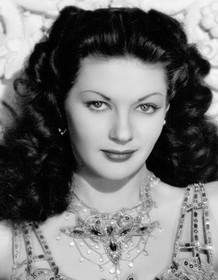
Mrs. Sally Hallson (Yvonne De Carlo)
Played by Yvonne De Carlo
Widow of Hallson who helps connect the dots between the murder and her late husband's childhood friend, prompting the investigation. Her perspective anchors the human cost behind the scientific pursuit. She becomes an unlikely source of crucial insight.
- 👩🏫 Matriarch
- 🧠 Investigator
- 🕵️ Mystery
Where and When Is The Power Set?
The Power is set in Research center (Committee on Human Endurance) and Hallson's hometown laboratory (Near future). Here is why the time and place matter to the story.
When
Near future
The events unfold in a near-future context tied to ambitious space program goals and advanced experimentation. The era features government-backed scientific research and secret psychic testing. The mood reflects contemporary fears about power, control, and the consequences of pushing human limits.
Where
Research center (Committee on Human Endurance), Hallson's hometown laboratory
The story centers on a high-security research center where the Committee on Human Endurance conducts psi tests and uses a centrifuge to study extreme pain tolerance. Investigations expand from the laboratory to Hallson's hometown, as clues point to a mysterious figure named Adam Hart. The setting is sterile and bureaucratic, underscoring Cold War era anxieties about hidden powers and scientific experimentation.
- 🧠 Mind
- 🧪 Science
- 🕵️ Mystery
What Are the Themes of The Power?
3 ideas the story keeps returning to, among them Mind Control, Power & Responsibility and Science & Ethics.
-
01
Mind Control
A superhuman ability to influence others' thoughts raises questions about free will and ethical boundaries. The plot centers on discovering who among the committee may wield such power and to what end. The tension stems from the fragility of autonomy when minds can be commanded.
-
02
Power & Responsibility
The drive to enhance endurance for the space program clashes with moral costs, including murders and deception. Characters wrestle with whether possessing extraordinary abilities justifies risking others. The story interrogates who should govern power and under what safeguards.
-
03
Science & Ethics
Psi tests and anonymous questionnaires illustrate the clash between scientific progress and ethical limits. The narrative shows how data can be misused when paranoia takes hold. The climax reveals the consequences of unchecked experimentation and oversight.
What Kind of Film Is The Power?
Dark in tone, with steady pacing and a moderate story, going by the plot summary.
- Tone
- Dark
- Pacing
- Steady
- Story
- Moderate
- Intensity
- High
- Ending
- Bittersweet
A tense and paranoid thriller where scientists are hunted by an unseen psychic force, creating a claustrophobic atmosphere of suspicion and escalating fear as reality becomes unreliable.
- paranoid
- suspenseful
- claustrophobic
- anxious
- cerebral
- unsettling
- psychic powers
- scientific hubris
- murder mystery
- psychological manipulation
Content notes: murder, psychological manipulation, mind control, hallucinations.
Quiz
How well do you remember The Power? Test yourself on the story.
Where to Watch The Power
Stream it on FlixFling and Night Flight Plus, or rent or buy it from Amazon Video and FlixFling. US availability and prices from JustWatch.
 FlixFling
  Night Flight Plus
  Tubi TV
  YouTube TV
Streaming availability in the US, powered by