
The Hindenburg 1975

Directed by
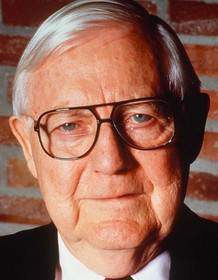
Robert Wise
Made by

The Filmakers Group
Where to Watch The Hindenburg
See current US streaming, rental, and purchase options for The Hindenburg (1975) via JustWatch.






The Hindenburg Plot Summary
Read the complete plot summary and ending explained for The Hindenburg (1975). From turning points to emotional moments, uncover what really happened and why it matters.
Kathie Rauch from Milwaukee, Wisconsin sends a letter to the German Embassy in Washington, D.C., claiming the German zeppelin Hindenburg will explode while flying over New York City during its first flight of the season. To guard against this threat, Luftwaffe Colonel Franz Ritter, George C. Scott, is named security officer to protect the airship as it prepares for its voyage. He is aided by a Nazi government official, SS/Gestapo Hauptsturmführer Martin Vogel, Roy Thinnes, who poses as the ship’s official photographer. Together, they quietly probe the backgrounds of passengers and crew, each keeping their own counsel even as they pretend to work in tandem.
Ritter has reason to be wary of almost everyone aboard, and among the most intriguing figures is Countess Ursula von Reugen, Anne Bancroft, whose Baltic estate at Peenemünde had been seized by the Nazis for weapons testing. She appears to be fleeing Germany while visiting her young hearing-impaired daughter in Boston, a detail that makes her a focal point for Ritter’s suspicions. The list of potential suspects widens to include Edward Douglas, Gig Young, a shrewd German-American advertising executive; Emilio Pajetta, Burgess Meredith, a card sharp with a knack for reading people; and Major Napier, René Auberjonois, along with several crew members and even the Hindenburg’s own captains, such as Captain Pruss, Charles Durning. As the tension builds, the ship’s atmosphere thickens with mystery and misdirection.
Hints and half-truths pile up as the investigators chase clues that ultimately prove to be red herrings. Joe Spah, Robert Clary, sketches the ship’s interior in a way that could inspire a vaudeville routine, and passenger bets on horse names surface as if they conceal something more meaningful. A pair of coded phrases—“carnivorous air” and “sea animals”—turn out to point not to people but to the ship itself and the Queen Mary, where a rival businessman races to outpace Edward Douglas in a high-stakes deal in New York. The pressure intensifies as the airship nears Lakehurst, and Vogel begins to act behind Ritter’s back, arresting Boerth and confiscating the Countess’s passport.
As Lakehurst looms, Ritter and Vogel’s uneasy partnership strains under the weight of a dangerous game. Boerth, a former Hitler Youth leader who has grown disillusioned with the Nazi regime, becomes the prime suspect in the growing crisis. Boerth is brought into the orbit of the investigation; his fate becomes intertwined with the Countess’s safety, and the tension between loyalty and conscience comes to a head. The revelation of a personal tragedy—Vogel torturing Boerth in the cargo hold, followed by Ritter’s intervention—pushes the saga toward a drastic climax. Boerth, badly burned and injured, dies of his injuries after freeing the Dalmatian dog that had been kept with the Channing family, while the Countess survives and is reunited with her daughter.
In the final act, the bomb that could devastate the airship becomes the pivotal obstacle. Ritter discovers that the device is hidden in the repair patch of gas cell 4, and a frantic struggle ensues as Vogel fights to stop him. With the clock ticking, Ritter detonates the device to prevent a catastrophe, sacrificing himself in the blast. Vogel is hurled down the catwalk but survives, badly burned, to be carried away by ground crews once the airship crashes to the ground. Boerth’s burns claim him as well, yet he has managed to free the Dalmatian and, in his last moments, to assert a quiet resistance against the regime. The Countess survives and is spared the worst of the disaster, reuniting with her daughter.
The aftermath is framed by newsreel footage and a steady narration that lists survivors and casualties, while offering various theories about what happened. As Herbert Morrison’s famous radio commentary plays, the wreckage is scrutinized for the inquiry, and the Hindenburg appears once again in the skies—only to fade back into the clouds as the credits roll.
The Hindenburg Timeline
Follow the complete movie timeline of The Hindenburg (1975) with every major event in chronological order. Great for understanding complex plots and story progression.
Kathie Rauch's warning letter
Kathie Rauch, from Milwaukee, Wisconsin, sends a letter to the German Embassy in Washington, D.C., claiming the Hindenburg will explode while flying over New York City on its first flight of the season. The warning sets up a tense atmosphere of sabotage rumors and heightened security concerns aboard the airship. This initial omen anchors the story’s sense of looming danger.
Ritter is appointed security chief
Luftwaffe Colonel Franz Ritter is named the security officer to protect the Hindenburg amid threats of sabotage. He begins his vigilance aboard the airship, wary of every passenger and crew member. The assignment creates a wary, investigative dynamic as threats surface from multiple directions.
Vogel begins undercover investigation
SS/Gestapo Hauptsturmführer Martin Vogel poses as the official photographer but secretly investigates passenger and crew backgrounds. He works independently of Ritter, fueling a tense undercurrent of competing inquiries. The dual scrutiny heightens the mystery surrounding the voyage.
Countess Ursula von Reugen under suspicion
Countess Ursula von Reugen, tied to a Baltic estate seized for weapons testing, appears to be escaping Germany while visiting her daughter in Boston. She becomes a prime suspect during the security sweep. Her presence underscores the Nazi paranoia aboard the airship.
A web of suspects and red herrings
Suspects include Edward Douglas, Emilio Pajetta, Major Napier, and various crew members, with many clues turning out to be red herrings. Casual details like Joe Spah's interior sketch and bets on race-horse names distract from the real danger. The maze of possibilities deepens the intrigue aboard.
Rauch’s clairvoyance under FBI scrutiny
Rauch’s self-proclaimed clairvoyance comes under FBI investigation, shifting attention toward Karl Boerth, a former Hitler Youth member gone disillusioned with the regime. Official scrutiny adds pressure to the ongoing investigations. The tension between belief and evidence sharpens the plot.
Freda Halle’s death fuels Boerth’s resolve
Boerth’s girlfriend Freda Halle is killed while attempting to escape the Gestapo after questioning the ship’s exact position. Boerth, grief-stricken, resolves to resist the Nazis and stay aboard as the plot to destroy the airship forms. Ritter’s sympathy for Boerth grows as he faces a personal loss tied to the regime.
Plan to set the bomb at 7:30
Boerth agrees with a plan to trigger the bomb at 7:30, the moment passengers would disembark in New York. He insists that the explosion would be a form of resistance rather than mere destruction. Ritter reluctantly consents to the dangerous course of action.
The knife incident and cover-up
Boerth drops a knife, recovered by a crew member, prompting him to steal another knife from rigger Ludwig Knorr to cover the loss. The weapon’s disappearance becomes a symbol of the impending unraveling of the plan. The cover-up accelerates the ship’s perilous trajectory toward Lakehurst.
Vogel arrests Boerth and seizes the Countess’s passport
Vogel arrests Boerth and confiscates the Countess’s passport, acting behind Ritter’s back. The security forces fracture the alliance and escalate the stakes. Ritter remains unaware of Vogel’s double-dealing until the crisis reaches its peak.
Approach to Lakehurst reveals the bomb
As the airship nears Lakehurst Naval Air Station, Ritter learns that Boerth’s bomb is hidden in the repair patch of gas cell 4 while Vogel tortures Boerth in the cargo hold. The imminent landing concentrates the danger into a single, lethal moment. A final confrontation is now unavoidable.
Confrontation and the fatal detonation
Ritter fights Vogel and knocks him unconscious as Boerth reveals the bomb’s location. Ritter detonates the device, killing himself instantly and sending Vogel severely burned into the airship’s path. Boerth dies from burns, but his actions free the Dalmatian before the inferno closes in.
The crash and its immediate aftermath
The Hindenburg crashes at Lakehurst, claiming Boerth’s life and many others while Countess Ursula survives and is reunited with her daughter. The Dalmatian dog is freed in the chaos as the fire rages around the wreckage. The tragedy marks the culmination of the voyage’s perils and political tensions.
Inquiries begin and memories circulate
The next day, newsreel footage lists survivors and casualties as an official inquiry begins to examine the wreckage. A narrator recounts the disaster while the Hindenburg’s silhouette fades into the clouds, closing the film with a ghostly coda to the catastrophe.
The Hindenburg Characters
Explore all characters from The Hindenburg (1975). Get detailed profiles with their roles, arcs, and key relationships explained.
Franz Ritter (George C. Scott)
Luftwaffe colonel assigned as the Hindenburg's security officer. He is suspicious by nature, highly capable, and burdened by a personal loss in the Hitler Youth. He races to uncover threats while trying to protect innocents, and he ultimately sacrifices himself to stop the catastrophe.
Martin Vogel (Roy Thinnes)
A Nazi official posing as the ship's official photographer who independently investigates passengers and crew. He is willing to bend the law to control information and to eliminate threats, leading to tense confrontations with Ritter. He embodies the regime's reach and the moral ambiguity aboard the airship.
Countess Ursula von Reugen (Anne Bancroft)
A Baltic estate owner escaping Nazi control who travels with her daughter to Boston. She navigates political danger while seeking safety, symbolizing the personal cost of the regime's expansion. Her presence highlights the human impact of the geopolitical conflict.
Karl Boerth (William Atherton)
A disillusioned former Hitler Youth member who becomes entangled with the airship's fate. He is driven by fear and a fragile loyalty to his lover, culminating in his self-determined act tied to the planned explosion. His arc exposes the inner conflict within the Nazi ranks.
Reed Channing (Peter Donat)
A German-American advertiser whose motives and alliances raise suspicion among crew and security. He represents the commercial pressures and personal ambitions that blur moral lines aboard the ship. His actions contribute to the web of clues surrounding the sabotage.
Captain Pruss (Charles Durning)
One of the Hindenburg's captains who faces the crisis onboard. He embodies the leadership present amid escalating stakes and the challenge of maintaining order as danger grows. He remains a key figure in the ship's navigation and safety decisions.
Ernst Lehmann (Richard Dysart)
The Hindenburg's other captain, managing flight operations and contributing to the tense atmosphere as the disaster looms. His presence underscores the command structure and the tension between duty and survival.
Major Napier (René Auberjonois)
A Nazi official who investigates aboard the ship, adding to the atmosphere of surveillance and suspicion. His involvement reflects the broader Gestapo presence and the reach of Nazi machinery.
The Hindenburg Settings
Learn where and when The Hindenburg (1975) takes place. Explore the film’s settings, era, and how they shape the narrative.
Time period
1937
Set in 1937, the late-1930s atmosphere frames a world on the brink of war. The airship era highlights technological wonder alongside political menace from the Nazi regime. The disaster at Lakehurst becomes a turning point that blends history with suspense.
Location
New York City, Lakehurst Naval Air Station, Peenemünde, Boston, Washington, D.C.
The action moves between New York City during the Hindenburg's first flight and the ship's arrival at Lakehurst Naval Air Station in New Jersey. The Baltic estate at Peenemünde is depicted as a Nazi testing site, reflecting the regime's reach. Boston is shown as a destination for the Countess and her daughter, while Washington, D.C. frames the German embassy's mood and politics. The locations create a claustrophobic, high-stakes backdrop for the looming catastrophe.
The Hindenburg Themes
Discover the main themes in The Hindenburg (1975). Analyze the deeper meanings, emotional layers, and social commentary behind the film.
🔎
Mystery
A central puzzle drives the narrative: who sabotages the Hindenburg and why? Clues emerge and mislead, pushing Ritter and Vogel to interrogate passengers and crew. The investigation weaves personal motives, political pressure, and the fog of fear into a suspenseful maze. The film uses red herrings to keep the danger of a catastrophe in constant focus.
⚖️
Loyalty
Loyalty strains under political pressure and personal history. Ritter must balance duty to protect the ship with his sympathy for a disillusioned suspect. Boerth faces a crisis of allegiance as his ties to the Nazi regime conflict with a possible resistance. The tension between personal loyalties and public duty underpins the drama.
🔥
Disaster
The looming explosion and the crash constitute the film's grim centerpiece. Technical stakes—bombs, detectors, and gas cells—collide with human frailty as the crew fights to save lives. The disaster is portrayed not only as a physical catastrophe but as a moment that reveals character under pressure. In the end, the explosion changes everything, underscoring the fragility of human plans.

Coming soon on iOS and Android
The Plot Explained Mobile App
From blockbusters to hidden gems — dive into movie stories anytime, anywhere. Save your favorites, discover plots faster, and never miss a twist again.
Sign up to be the first to know when we launch. Your email stays private — always.
Explore the mobile appThe Hindenburg Spoiler-Free Summary
Discover the spoiler-free summary of The Hindenburg (1975). Get a concise overview without any spoilers.
The story opens against the sleek, metallic hull of the Hindenburg, the pride of a nation poised on the brink of a new era of air travel. 1930s Europe hums with political undercurrents, and the massive German zeppelin—glimmering against the sky—becomes a floating stage where curiosity, ambition, and unease intersect. The film’s tone is a blend of period‑driven grandeur and claustrophobic intrigue, letting the luxurious interiors and the endless clouds create a backdrop that feels both awe‑inspiring and ominously contained.
At the heart of the narrative is Colonel Franz Ritter, a once‑celebrated pilot now serving in military intelligence. Appointed chief of security for the Hindenburg, he carries the weight of a distinguished past while navigating a present fraught with suspicion. He is paired with Martin Vogel, a Gestapo official masquerading as the ship’s photographer, whose official poise hides a keen, watchful mind. Their uneasy partnership drives the film’s central tension, as each seeks to protect the monumental airship while probing for hidden threats that could turn triumph into tragedy.
Around them drift a cast of passengers and crew whose lives intersect in the cramped corridors of the zeppelin. Among them is Countess Ursula von Reugen, a noblewoman fleeing a turbulent homeland, whose quiet demeanor belies a complex personal history. Businessmen, entertainers, and former soldiers mingle, each carrying secrets that could tip the balance between safety and catastrophe. The atmosphere is thick with half‑spoken warnings, coded conversations, and the ever‑present sense that any one of them might be the key to an unseen danger.
The film moves like the Hindenburg itself—gliding smoothly over a world of polished elegance while a subtle, invisible strain builds beneath the surface. Its storytelling leans on mood, carefully crafted period details, and the interplay of distrust and duty, inviting the audience to wonder whether the greatest peril lies in the skies above or within the hearts of those aboard.
Movies with Similar Twists and Themes
Uncover films that echo the narrative beats, emotional arcs, or dramatic twists of the one you're exploring. These recommendations are handpicked based on story depth, thematic resonance, and spoiler-worthy moments — perfect for fans who crave more of the same intrigue.



Featured on this page

What's After the Movie?
Not sure whether to stay after the credits? Find out!
Check out our other apps:

SAT Sphere
Build confidence for the Digital SAT.

Mori Atlas
Discover wild places worth protecting.

Luntero
Search smarter for a home in Amsterdam.

Plot Explained
Unravel movie endings and hidden clues.

Pokechamp
Dive into Pokémon data and battle logic.

Driving Theory
Get ready for your European theory test.

Movie Dust
Plan your next cinema trip with ease.

Musemap
Find art and culture as you travel.

Selkobase
Compare credentials before committing.

Local Manual
Turn an unfamiliar country into practical next steps.

Lernavi
Compare school systems before your next move.

GymRoam
Find a workout stop wherever your plans take you.
Explore Our Movie Platform
New Movie Releases (2026)
Famous Movie Actors
Top Film Production Studios
Movie Plot Summaries & Endings
Major Movie Awards & Winners
Best Concert Films & Music Documentaries
Movie Collections and Curated Lists
© 2026 What's After the Movie. All rights reserved.
Privacy Policy