
The Young Savages 1961


Directed by
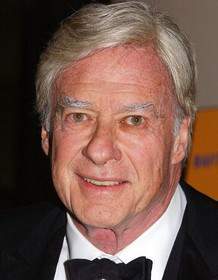
John Frankenheimer
Made by

Contemporary Productions
Where to Watch The Young Savages
See current US streaming, rental, and purchase options for The Young Savages (1961) via JustWatch.








The Young Savages Plot Summary
Read the complete plot summary and ending explained for The Young Savages (1961). From turning points to emotional moments, uncover what really happened and why it matters.
Set in East Harlem, amid a tight-knit Italian-American community and the rough edges of urban life, the story follows three teenage gang members who lead the Thunderbirds: Danny diPace, Stanley Kristien, Anthony Aposto, Neil Burstyn, and Arthur Reardon, John Davis Chandler. The trio’s days are spent navigating a perilous turf war with the Horsemen, a Puerto Rican gang rooted in a different stretch of the same neighborhood. The opening burst of violence comes when the Thunderbirds fatally knife a member of the Horsemen, Roberto Escalante, José Pérez, who is blind, turning a quiet afternoon into a brutal claim of self-defense that will echo through the rest of the film.
As the investigation unfolds, the three boys are arrested and interrogated. They insist they acted in self-defense after Escalante allegedly attacked them with a knife, but the case quickly becomes more than a simple crime scene. Hank Bell, [Burt Lancaster], the assistant district attorney, begins to sense there is more beneath the surface when he learns that one of the youths is the son of Mary diPace, Shelley Winters, a former girlfriend of Bell’s. This revelation stirs up old neighborhood memories and raises questions about loyalties, history, and whether personal ties should influence the pursuit of justice. Bell shares his background with District Attorney Dan Cole, Edward Andrews, explaining how he changed his name from Bellini to protect his past and advance his career. He hopes to keep his personal history from clouding the case, while Cole, intent on a political win as he seeks higher office, pushes hard for a heavy-handed prosecution.
The funeral for Escalante becomes a turning point, a public stage where grief, anger, and political pressure collide. Escalante’s mother demands punishment for the boys, while Mary argues for their innocence and recalls her son’s promise not to join a gang. Bell resolves to uncover the truth, visiting the families and gang members involved one by one to understand the web of relationships, grievances, and loyalties that shape the events. This investigative journey reveals that the case is far more nuanced than a straightforward killing, challenging Bell’s initial assumptions and forcing him to weigh justice against vengeance.
Karin Bell, Dina Merrill, Bell’s wife, opposes the death penalty, offering a counterpoint to the political calculus driving the prosecution. Her stance highlights the moral complexity at the heart of the case: punishment might satisfy political aims, but it would not necessarily bring true closure to the families involved. Throughout the process, Bell’s inquiries expose facets of each boy’s life that add to the ambiguity surrounding the incident. He learns that Aposto, one of the Thunderbird trio, is mentally disadvantaged, and that Danny diPace had once intervened to save a Puerto Rican child from drowning during a gang confrontation. These revelations complicate the picture: the boys are not merely one-dimensional aggressors, but youths shaped by a rough environment and personal histories that could justify a more measured response than execution.
As Bell pieces together the truth, he moves through tense encounters—an elevator incident where the Thunderbirds threaten Karin with switchblade knives and a subway attack on Bell himself—carefully distinguishing fear from malice and noting how easily perceptions can be swayed in the heat of urban fear. Bell meets with Pretty Boy Savarese, the Thunderbirds’ warlord, who insists on the innocence of the boys and argues that Escalante was a Horsemen ally who helped conceal weapons used in gang assaults. Savarese’s defense reframes the murder as a chain of violence and misperception, challenging Bell to reconcile the facts with the community’s demand for accountability.
The investigation deepens as Bell discovers that Aposto’s mental handicap and diPace’s earlier act of bravery for a drowning Puerto Rican child reveal a pattern of behavior that complicates a clean, vindictive outcome. These discoveries do not automatically exonerate anyone, but they do illuminate the human cost behind every decision made in the heat of a crisis. The tension between justice and political expediency intensifies as Cole presses for maximum penalties, hoping to gain public approval and secure votes, while Bell seeks a more nuanced understanding of each boy’s background and the broader implications for youth in distress.
In the courtroom, the trial culminates in individualized sentences tailored to each boy’s nature and history, a resolution that underscores the film’s insistence on complexity over simple verdicts. Escalante’s mother asks whether justice has truly been served, and Bell’s response—tinged with regret—suggests that responsibility for the boy’s death lies with many hands: the immediate actors, the families, the peers, and a system that sometimes blurs the line between protection and punishment. The conclusion leaves the viewer with a somber meditation on how communities, politics, and personal histories intersect to shape outcomes in the wake of tragedy.
The film’s careful balance of empathy and realism invites the audience to consider the gray areas of violence, punishment, and moral responsibility. It paints a portrait of a neighborhood under pressure, where youths navigate loyalty and survival while adults wrestle with the consequences of political ambition and the pursuit of justice. In the end, the story resists easy answers, choosing instead to reflect on the heavy price of violence and the enduring question of who bears responsibility when a life is lost and a community is left to reckon with the aftermath.
The Young Savages Timeline
Follow the complete movie timeline of The Young Savages (1961) with every major event in chronological order. Great for understanding complex plots and story progression.
The deadly knife attack and Escalante's death
Three Thunderbirds ambush and stab Roberto Escalante, a blind member of the Horsemen, in a brutal street confrontation. The attack triggers a violent turf war between the rival gangs in East Harlem. The victim dies, setting the investigation in motion.
Arrest and the self-defense claim
Danny, Anthony, and Arthur are arrested and interrogated by police. They insist they acted in self-defense against Escalante's knife attack, trying to justify their actions. The interrogation exposes tensions between the gangs and the legal system.
Bell learns a personal link to the case
Assistant District Attorney Hank Bell discovers that one of the Thunderbirds is Mary diPace's son, his ex-girlfriend's child. The revelation complicates the case, as his personal history in the same neighborhood is exposed. He contemplates how this will affect his prosecution.
Bell's past and ambition
Bell reveals that he changed his name from Bellini to distance himself from his upbringing. This backstory explains his drive to advance politically and professionally. He sees the case as a potential stepping stone toward higher office.
Funeral confrontation
At Escalante's funeral, his mother challenges Bell to deliver justice by executing the youths. Mary also pleads for her son's innocence and explains that he had promised not to join a gang. Bell vows to uncover the truth despite the heat of the moment.
Bell begins field investigations
Bell starts to search for facts, meeting with families and gang members involved in the case. He navigates a web of loyalties and alibis as he tries to separate truth from rumor. The process reveals the complexity of gang life.
Karin's stance on capital punishment
Karin opposes the death penalty, challenging Bell and the political pressures surrounding the case. Her position adds a moral counterpoint to the district attorney's appetite for punishment. The political stakes begin to flavor the legal strategy.
Karin threatened in the elevator
Thunderbirds intimidate Karin in the elevator of their home with switchblades. The incident shows how the case affects families and tests Bell's resolve. It also heightens the sense of danger surrounding the defendants.
Bell attacked on the subway
Bell is assaulted on a subway train by a gang that could be either Thunderbirds or Horsemen. The attack underscores the volatility of the community and the risks faced by investigators. He presses on, seeking to determine the truth.
Savarese's defense and the self-defense claim
Bell visits Pretty Boy Savarese, the Thunderbirds' warlord, who defends the youths' innocence and claims Escalante was aiding the Horsemen and harboring weapons. This complicates the prosecution with an alternative version of events. Bell weighs Savarese's testimony against the evidence.
Newly revealed facts complicate the case
Bell learns that Aposto is mentally handicapped and that diPace once saved a Puerto Rican child from drowning during a gang incident. These revelations add ambiguity, challenging the narrative of deliberate murder. The investigation considers how these factors might influence culpability.
Trial concludes with tailored sentences
The trial ends with sentences for each boy that appear tailored to their individual natures rather than a uniform punishment. The verdicts reflect the subjective judgments of the courtroom and the political pressures surrounding the case. Escalante's family confronts the outcomes with mixed emotions.
Escalante's mother questions justice
Escalante's mother asks Bell whether justice has truly been served, highlighting the emotional cost of the verdicts. Bell's answer is haunted and unsatisfying, recognizing shared responsibility beyond the courtroom. The scene emphasizes the moral complexity of gang violence and law.
Ambiguity persists after the verdict
Even as the legal cases resolve, the film leaves questions about guilt, rehabilitation, and the cycles of violence. Bell contemplates how the community will move forward and who truly bears responsibility for Escalante's death. The ending underscores the ongoing tension between justice and consequence.
The Young Savages Characters
Explore all characters from The Young Savages (1961). Get detailed profiles with their roles, arcs, and key relationships explained.
Hank Bell (Burt Lancaster)
An assistant district attorney who grew up in the same East Harlem neighborhood as the Thunderbirds. He pursues the truth and justice in the Escalante murder, even as his past and ambitions complicate his objectivity. He learns that the case involves family ties and social pressures, shaping his approach to prosecution.
Danny diPace (Stanley Kristien)
One of the Thunderbirds, Danny is a teenage gang member whose actions spark the central murder. The film portrays him as part of a loyalty-driven world, where the thrill of belonging clashes with consequences for himself and his family.
Anthony Aposto (Neil Burstyn)
A member of the Thunderbirds who is mentally handicapped, adding a layer of vulnerability and complexity to the case. His presence highlights how differences and pressures within the gang influence perceptions of guilt and responsibility.
Arthur Reardon (John Davis Chandler)
Another teenager in the Thunderbirds trio; part of the violence at the heart of the case. The film shows him as a product of his environment, entangled in street loyalties and the gang’s code.
Karin Bell (Dina Merrill)
Bell’s partner from a higher social class who opposes the death penalty. Her perspective introduces a moral counterpoint to the prosecution and reveals the tensions between social class and justice.
Mary diPace (Shelley Winters)
The mother of Danny and ex-girlfriend of Hank Bell, whose plea for innocence and sorrow shapes the emotional stakes of the investigation and trial.
Pretty Boy Savarese (Chris Robinson)
The warlord of the Thunderbirds who defends the boys' innocence and exerts influence over gang dynamics. He represents the leadership that navigates between loyalty and strategic manipulation.
Louisa Escalante (Pilar Seurat)
The mother of Roberto Escalante, demanding harsh punishment for the killers. Her grief and anger underscore the personal cost of gang violence.
Roberto Escalante (José Pérez)
The blind victim from the Horsemen who is killed in the knife attack, his death catalyzing the investigation and escalating tensions between the two gangs.
R. Daniel Cole (Edward Andrews)
The district attorney who plans to run for governor and press for the maximum penalty to gain political advantage, shaping the legal outcome of the case.
Detective Lt. Gunderson (Telly Savalas)
A lawman involved in questioning and investigating the case, navigating the shifting loyalties and clues as the truth unfolds.
The Young Savages Settings
Learn where and when The Young Savages (1961) takes place. Explore the film’s settings, era, and how they shape the narrative.
Time period
Early 1960s
The story unfolds in a New York City neighborhood of the early 1960s, a period of urban change, ethnic neighborhood boundaries, and rising concerns about juvenile crime. The era's politics intersect with the pursuit of justice, as prosecutors weigh punishment against public perception. The setting underscores the fragility of communities under pressure from gang violence.
Location
East Harlem, New York City
Set in East Harlem, the film portrays a dense urban neighborhood where Italian and Puerto Rican communities vie for space and control. The streets, subways, and tenement blocks form a backdrop of street-level tension and social grinding. The location emphasizes the close-knit yet divided nature of the community that frames the crime and investigation.
The Young Savages Themes
Discover the main themes in The Young Savages (1961). Analyze the deeper meanings, emotional layers, and social commentary behind the film.
⚖️
Justice vs Vengeance
The case tests whether justice is served by the evidence or by political desire for punishment. Protagonists wrestle with the morality of prosecuting juveniles to the maximum penalty, while families plead for truth and mercy. The story suggests responsibility spreads beyond the courtroom into the community.
👪
Family & Identity
Bell’s personal history and his relationship with Mary diPace show how family ties and neighborhood roots influence judgments and choices. The film explores how upbringings, loyalties, and social class shape both the investigators and the accused. Names and histories blur the lines between offender and victim.
🤔
Moral Ambiguity
The murder accusation is complicated by self-defense claims and the unknowns about who truly started the violence. The mental handicap of one suspect and acts of compassion by another complicate the notion of guilt. The film invites viewers to question certainty in crime and punishment.
🏛️
Politics & Power
The pursuit of the maximum penalty is tied to political advantage, including a DA’s governor-hopeful campaign. The film shows how public opinion and leadership can shape legal outcomes. It presents crime as a social and political problem, not just a private tragedy.

Coming soon on iOS and Android
The Plot Explained Mobile App
From blockbusters to hidden gems — dive into movie stories anytime, anywhere. Save your favorites, discover plots faster, and never miss a twist again.
Sign up to be the first to know when we launch. Your email stays private — always.
Explore the mobile appThe Young Savages Spoiler-Free Summary
Discover the spoiler-free summary of The Young Savages (1961). Get a concise overview without any spoilers.
In the cramped streets of East Harlem, an Italian‑American enclave meets the restless pulse of a mixed‑ethnicity neighborhood, creating a backdrop where loyalty, fear and old grudges blend into a dense urban tapestry. The community’s close‑knit vibe masks simmering tensions that surface whenever a tragedy threatens to tip the delicate balance, setting the stage for a case that will force the city’s institutions to confront their own biases.
Hank Bell arrives as the assistant district attorney tasked with untangling the controversy surrounding three teenage boys accused of a violent crime. A former immigrant who changed his name to shield himself from a precarious past, he carries the weight of personal history while striving to keep his investigation impartial. His methodical approach is tempered by an instinctive empathy that makes him question whether the law can ever truly capture the messy reality of the neighborhood’s youth.
Across the courtroom aisle, Dan Cole looms as the district attorney whose ambitions reach far beyond the precinct, viewing the case as a stepping stone toward higher office. His drive for a decisive, high‑profile prosecution clashes with Karin Bell, Hank’s wife, whose quiet opposition to the death penalty underscores a moral counterpoint that reverberates through their marriage. Adding another layer of complexity, Mary diPace—the mother of one of the accused and the former lover of Hank—re‑enters his world, forcing him to navigate old loyalties and the expectations of a community that knows his name.
The atmosphere of the film is gritty and unflinching, colored by the day‑to‑day rhythms of street life and the echo of political maneuvering. As the investigation unfolds, the story hovers between the raw immediacy of neighborhood dynamics and the cold calculus of the justice system, inviting the audience to contemplate how personal histories, cultural fissures and the desire for accountability intersect when a young life is lost.
Featured on this page

What's After the Movie?
Not sure whether to stay after the credits? Find out!
Check out our other apps:

SAT Sphere
Build confidence for the Digital SAT.

Mori Atlas
Discover wild places worth protecting.

Luntero
Search smarter for a home in Amsterdam.

Plot Explained
Unravel movie endings and hidden clues.

Pokechamp
Dive into Pokémon data and battle logic.

Driving Theory
Get ready for your European theory test.

Movie Dust
Plan your next cinema trip with ease.

Musemap
Find art and culture as you travel.

Selkobase
Compare credentials before committing.

Local Manual
Turn an unfamiliar country into practical next steps.

Lernavi
Compare school systems before your next move.

GymRoam
Find a workout stop wherever your plans take you.
Explore Our Movie Platform
New Movie Releases (2026)
Famous Movie Actors
Top Film Production Studios
Movie Plot Summaries & Endings
Major Movie Awards & Winners
Best Concert Films & Music Documentaries
Movie Collections and Curated Lists
© 2026 What's After the Movie. All rights reserved.
Privacy Policy