What Is The President’s Analyst About?
The premise of The President’s Analyst in 292 words, with nothing given away. The full story follows below.
In a nation where power is cloaked in secrecy and the line between mind and policy blurs, Dr. Sidney Schaefer is thrust from the lecture hall into the most intimate chamber of the White House. Chosen by the President himself to serve as the country’s highest‑level psychoanalyst, he moves into a discreet Georgetown townhouse that whispers of hidden tunnels and constant accessibility. The appointment carries both prestige and an unsettling weight: the president’s thoughts are now his charge, and the nation’s fate may hinge on the private counsel he can provide.
The role isolates Schaefer in a world of guarded corridors and whispered surveillance. Surrounded by endless briefings and an ever‑present sense that every wall might be listening, he wrestles with growing anxiety that borders on paranoia. Even his own relationships, including the affection of his girlfriend Nan Butler, feel tinged with suspicion, as he wonders whether the very people who vetted him might also be watching his every move. The pressure builds like a slow‑burning fuse, hinting at a larger, unseen game of geopolitical chess in which the analyst’s own sanity becomes a contested prize.
Against this backdrop of clandestine ambition, the promise of safety evaporates. Agents from several foreign powers—each eager to secure the president’s innermost insights—begin to circle, drawn by the unique knowledge Schaefer now possesses. With only the president and himself truly wanting him to stay alive, the psychiatrist faces a stark choice: remain a hidden confidant under constant watch, or flee into a world of shadowy pursuits where every ally might also be a spy. The film settles into a tense, satirical tone that mixes Cold‑War intrigue with a distinct 1970s countercultural flavor, inviting the audience to question how much of our own thoughts are truly private.
What Happens in The President’s Analyst?
The complete story of The President’s Analyst, from the first scene to the last, in 637 words (about 3 minutes). Spoilers throughout. Names in the text link to 5 cast member pages.
Spoilers ahead
Dr. Sidney Schaefer is chosen by the U.S. government to serve as the president’s top-secret personal psychoanalyst, a decision that comes through a referral from Don Masters, a CIA-like operative who vetted him while undergoing his own introspective work. The assignment is approved over the objections of Henry Lux, the small, sharp-tongued head of the all-male Federal Bureau of Regulation (FBR). Lux’s quip-filled, vacuum-cleaner-inspired nickname echoes through the tale as a sly reminder of the era’s satire. Schaefer is installed in a comfortable home in Georgetown and given an office that connects to the White House by a hidden tunnel, ensuring he can be reached at any hour to fit the president’s relentless schedule.
Yet the job comes with a strange, almost existential isolation: there is no one he can truly speak to about the president’s private problems. As stress compounds, Schaefer begins to feel watched at every turn, until paranoia takes hold. He even doubts the affections of his girlfriend, Nan Butler, suspecting she might be an agent of the very agency that vetted him. All of his fears, the movie suggests, have a grain of truth. To complicate matters, he has a habit of talking in his sleep, a detail that only deepens the sense that he is constantly under scrutiny.
Soon Schaefer finds himself in a dangerous game, fleeing with the help of a seemingly ordinary New Jersey family who shield him from foreign agents intent on kidnapping the president’s confidential briefing. His escape is aided by a colorful, rebellious current of counterculture—a hippie tribe led by the emblematic Old Wrangler. Together they dodge pursuers from multiple nations who want the insider information he possesses.
The chase broadens as the U.S. intelligence apparatus, led by the FBR, presses hard to neutralize him. He is captured and briefly taken by Canadian Secret Service operatives posing as a British pop group, only to be rescued by Kropotkin, a Russian agent whose loyalties become murky as he contemplates defecting from the KGB. Kropotkin aims to spirit Schaefer away to the Soviet Union, but a revelation during a psychoanalytic session with the doctor causes him to rethink his plan and return the psychiatrist to U.S. soil.
The twists don’t stop there. A new kidnap attempt comes from The Phone Company (TPC), a shadowy Organization that dwarfs the CSS and the FBR in its menace. Schaefer is hauled to TPC headquarters in New Jersey, where he confronts a leader who reveals himself to be an animatronic robot—invented for the company’s audacious, dystopian scheme. The plan hinges on the Cerebrum Communicator (CC), a futuristic device that can link every mind to a single digital network. With CC implants, everyone would be numbered, not named, and the world would be wired in an invisible, global phone system.
The TPC pitch unfolds with a close-up on the roboth leader, signaling the cold ambition behind the scheme: to control humanity by eliminating personal identity in favor of instant, brain-initiated communication. Schaefer is pressed to aid in steering the president toward legislative support for this radical overhaul. The company even illustrates its grand design with a brief animation—a spoof of the era’s animation style—explaining how the CC would function across the globe.
In a dramatic reversal, Masters and Kropotkin spring into action, using their espionage skills to rescue Schaefer. They place him back in action and, armed with an M16 rifle, he makes a striking, almost gleeful stand against the Phone Company’s security forces. The trio triumphs over their adversaries, and though the immediate danger ends, the story lingers on a holiday-season echo. Months later, Schaefer and his allies gather for a Christmas reunion, while animatronic executives from the Phone Company watch a secret monitor—and the final image is set to a festive, bittersweet note, as “Joy to the World” swells in the background.
The President’s Analyst Timeline: Every Key Event in Order
12 key events in the order they happen, from “Chosen as the president's top-secret psychoanalyst” to “Aftermath and a chilling finale”. 10 events name a place, across 7 locations.
- 1
Chosen as the president's top-secret psychoanalyst
Dr. Sidney Schaefer is selected by the U.S. government to serve as the president's top-secret personal psychoanalyst. He moves into a home in Georgetown and maintains an office connected to the White House by a hidden tunnel. He is kept on call around the clock to fit the president's demanding schedule.
Where:Georgetown, Washington D.C.
- 2
Schaefer's creeping paranoia
As the strain of the assignment grows, Schaefer begins to feel watched everywhere and spirals into paranoia. He struggles to talk about the president's private problems and starts to suspect his girlfriend Nan is spying on him for the CIA.
- 3
Paranoia verified
Schaefer's worst fears are realized when his suspicions prove true and the various agencies seem to close in on him. The sense of being trapped intensifies as his sleep-talking habit betrays his vulnerability.
- 4
On the run with a New Jersey family
Fleeing from agents, Schaefer is aided by a typical American family in New Jersey who shield him from capture. They help him evade foreign operatives while he clings to his secrets and tries to stay one step ahead.
Where:New Jersey
- 5
Shelter with the hippie tribe
Schaefer seeks refuge with a hippie tribe led by the Old Wrangler, who offer him shelter as the chase continues. Spies from multiple nations intensify the pursuit, underscoring the global stakes of his knowledge.
Where:New Jersey (hippie community)
- 6
Kidnapped by Canadian Secret Service
Canadian Secret Service agents masquerading as a British pop group kidnap Schaefer, pulling him into an international web of intrigue. The caper marks another turning point as he is moved through different hands and locales.
Where:Canada
- 7
Kropotkin saves him
Kropotkin, a Russian KGB agent, rescues Schaefer from the Canadians and an FBR assassin. During a psychoanalysis session, Kropotkin begins to confront his own father-related trauma, which tempers his plans to exile the doctor.
Where:Canada
- 8
Return to U.S. through Kropotkin
Kropotkin decides to return Schaefer to U.S. soil rather than extradite him, continuing his own self-analysis in the process. He helps coordinate the next escape attempt, forming an uneasy alliance.
Where:United States
- 9
Another kidnapping by The Phone Company
Kropotkin arranges a pickup with Don Masters, but Schaefer is abducted again by The Phone Company (TPC) and taken to their New Jersey headquarters. The plan is to coerce him into helping TPC's world-domination scheme.
Where:New Jersey
- 10
The Cerebrum Communicator revealed
At TPC headquarters, the leader unveils the Cerebrum Communicator, a device that would wirelessly connect brains to a universal phone network and erase names in favor of numbers. An animated explanation dramatizes the scheme, showing how convenient control could become with everyone implanted.
Where:TPC Headquarters, New Jersey
- 11
Masters and Kropotkin strike back
Masters and Kropotkin use their spy skills to rescue Schaefer, delivering him an M16 and triggering a violent clash with TPC's security. They escape the bloodbath, freeing Schaefer and thwarting the immediate threat.
Where:TPC Headquarters, New Jersey
- 12
Aftermath and a chilling finale
Months later, Schaefer and his allies reunite for a Christmas gathering, hinting that the crisis has not fully ended. Animatronic executives from TPC watch approvingly from a secret monitor as Joy to the World plays, signaling a persistent corporate menace.
When:months later Where:Unspecified location
Who Are the Main Characters in The President’s Analyst?
6 characters, among them Dr. Sidney Schaefer (James Coburn), Henry Lux (Walter Burke) and Don Masters (Godfrey Cambridge): who each one is and the part they play in the story. Every profile links to the actor’s page.
-
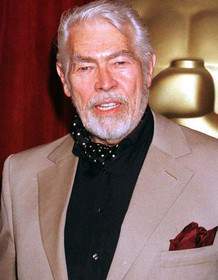
Dr. Sidney Schaefer (James Coburn)
Played by James Coburn
The president's top-secret personal psychoanalyst who is overwhelmed by the burdens of his assignment. His stress amplifies into clinical paranoia, leading him to fear surveillance at every turn and to mistrust even his closest partner. His arc follows a wild cat-and-mouse chase across domestic and international settings, driven by a sleep-talking slip that reveals uncomfortable truths.
- 🧠 Paranoid
- 🕵️♂️ Targeted
- 🎯 Analyst
-

Henry Lux (Walter Burke)
Played by Walter Burke
The diminutive yet formidable director of the all-male Federal Bureau of Regulation (FBR). He resents Schaefer’s proximity to the president and embodies the bureaucratic turn against individual autonomy. Lux’s skepticism and authority push the narrative toward conflict, highlighting institutional power as a force that can endanger personal freedom.
- 🏛️ Bureaucrat
- 🗡️ Authority
- 🎭 Skeptic
- DM
Don Masters (Godfrey Cambridge)
Played by Godfrey Cambridge
A Central Enquiries Agency (CEA) operative who vets Schaefer and helps navigate the shifting alliances around the president’s secrets. Masters embodies a pragmatic, morally gray spy who maneuvers through a web of agencies to protect or exploit the information at stake. His actions illustrate the blurred lines between loyalty and self-preservation in the spy world.
- 🕵️ Spy
- 🧭 Ally
- 🗡️ Operative
- K(
Kropotkin (Severn Darden)
Played by Severn Darden
A Russian KGB agent who intends to spirit Schaefer away to the Soviet Union but undergoes an internal shift after a psychoanalysis session. His arc explores ideological conflict, personal history, and a reconsideration of paternity fault lines from the past. Ultimately he returns Schaefer to U.S. soil, torn between duty and self-discovery.
- 🌐 Spy
- 🧠 Internal conflict
- 🗺️ Cold War
- OW
Old Wrangler (Barry McGuire)
Played by Barry McGuire
Leader of a countercultural hippie tribe that aids Schaefer during his escape. He represents a countercurrent to the official power structure, offering a pragmatic, if nonconformist, form of assistance. His presence showcases the era’s societal fragmentation and alternative communities.
- 🎸 Counterculture
- 🧭 Mentor
- 🌀 Free spirit
- NB
Nan Butler (Joan Delaney)
Played by Joan Delaney
Schaefer's girlfriend who becomes a potential focal point of manipulation and suspicion. She experiences strain as Schaefer misreads loyalties, reflecting how trust frays under the weight of conspiracy and espionage. Her role underscores personal relationships under political pressure.
- 💞 Relationship
- 🕵️♀️ Suspicion
- 🔎 Trust
Where and When Is The President’s Analyst Set?
The President’s Analyst is set in Georgetown, Washington, D.C., White House vicinity, New Jersey, Canada, Soviet… (1960s). Here is why the time and place matter to the story.
When
1960s
The events occur in the Cold War era, a time of intense government scrutiny, espionage, and rapid technological speculation. Satire of political paranoia and the rise of modern communications reflects the decade’s anxieties. The plot’s gadgets and surveillance culture align with late-1960s techno-thriller sensibilities.
Where
Georgetown, Washington, D.C., White House vicinity, New Jersey, Canada, Soviet Union
The story largely unfolds in upscale Georgetown and connected White House settings in Washington, D.C., with a secret tunnel linking the president's analyst to the executive residence. The action also pivots through New Jersey locations during chases and abductions. International detours bring in Canada and the Soviet Union as backdrops for the global conspiracy.
- 🗺️ Washington
- D.C.
- 🕵️ Espionage
- 🏛️ White House area
What Are the Themes of The President’s Analyst?
4 ideas the story keeps returning to, among them Paranoia, Technology and Identity.
-
01
Paranoia
Dr. Schaefer becomes increasingly convinced that everyone around him is an agent or informer. The film probes how constant surveillance and secrecy corrode trust, pushing the protagonist toward isolation. Paranoia drives both the plot and the character’s emotional arc, culminating in a frenetic pursuit across multiple jurisdictions.
-
02
Technology
A central plot device is the Cerebrum Communicator, a brain-implanted system that could instantly dial any number by thought. The film invites skepticism about the unchecked power of technology and corporate control over everyday life. It satirizes a future where human identity is supplanted by numbers and machines.
-
03
Identity
The narrative plays with names, roles, and public personas in a world of espionage where truth is mutable. Characters hide true intentions behind various guises, reflecting the tension between private life and public duty. The idea of being continually watched blurs boundaries between self and performance.
-
04
Conspiracy
Multiple agencies and states—FBR, CSS, KGB, and TPC—interweave in a sprawling plot to capture or co-opt Schaefer. The film satirizes how power consolidates through clandestine plots and corporate schemes. The climactic sequence reveals a twist on manipulation of global systems for domination.
What Kind of Film Is The President’s Analyst?
Whimsical in tone, with fast pacing and a moderate story, going by the plot summary.
- Tone
- Whimsical
- Pacing
- Fast
- Story
- Moderate
- Intensity
- Medium
- Ending
- Bittersweet
A fast-paced, whimsical spy satire that blends Cold War paranoia with countercultural humor, creating an anxious yet playful chase through a landscape of secret agents and dystopian corporations.
- paranoid
- satirical
- anxious
- quirky
- countercultural
- playful
- political satire
- espionage
- government conspiracy
- paranoia
Content notes: kidnapping, psychological manipulation.
Quiz
How well do you remember The President’s Analyst? Test yourself on the story.