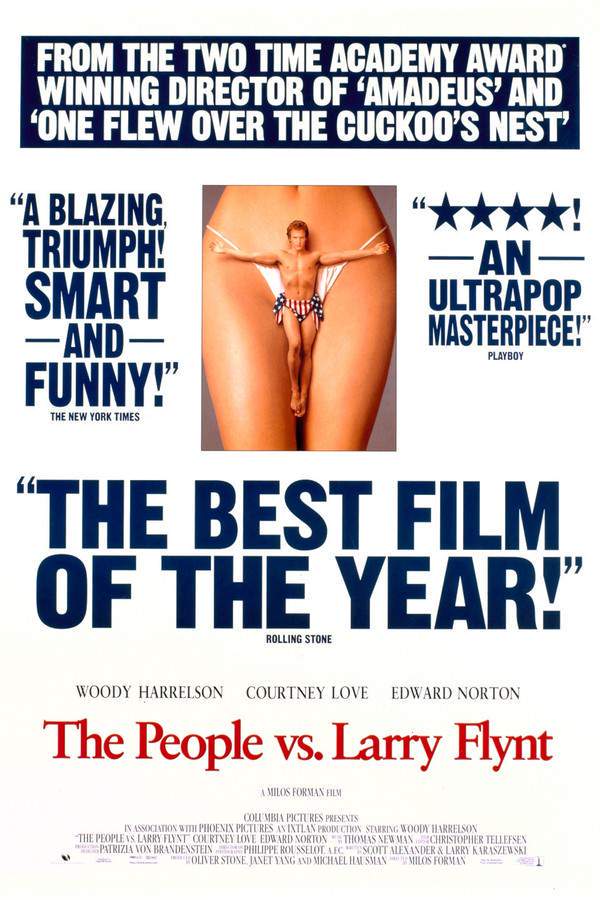
The People vs. Larry Flynt 1996

Directed by
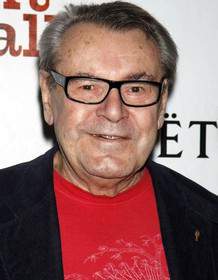
Milos Forman
Made by

Columbia Pictures
Where to Watch The People vs. Larry Flynt
See current US streaming, rental, and purchase options for The People vs. Larry Flynt (1996) via JustWatch.






The People vs. Larry Flynt Plot Summary
Read the complete plot summary and ending explained for The People vs. Larry Flynt (1996). From turning points to emotional moments, uncover what really happened and why it matters.
In 1953, a young Larry Flynt is found peddling moonshine in Kentucky. Fast forward twenty years, and he, portrayed by Woody Harrelson, along with his younger brother Jimmy (played by Brett Harrelson), operates the Hustler Go-Go club in Cincinnati. As profits dwindle, Flynt makes the bold decision to launch a newsletter featuring nude images of the club’s entertainers, marking the inception of Hustler magazine. Initially, the magazine struggles for traction, but everything changes in 1975 when it publishes scandalous photos of former First Lady Jackie Kennedy Onassis, leading to skyrocketing sales.
Amid this whirlwind of success, Flynt becomes enamored with Althea Leasure, a stripper played by Courtney Love, who works at one of his establishments. With the support of Althea and Jimmy, Flynt’s financial gains soar, yet his notoriety grows as he becomes a target for anti-pornography activists. In fiery debates, he provocatively remarks: > “Murder is illegal, but if you take a picture of it you may get your name in a magazine or maybe win a Pulitzer Prize… However, sex is legal, but if you take a picture of that act, you can go to jail.”
As Flynt gets embroiled in significant legal battles, he finds an unlikely ally in young attorney Alan Isaacman (played by Edward Norton). The tumultuous year 1975 brings a severe setback for Flynt when he faces a court ruling against him in Cincinnati for smut-peddling but is released shortly after due to a technicality. Around this time, Ruth Carter Stapleton, a devout Christian and sister of President Jimmy Carter, approaches Flynt, encouraging him to turn toward faith. Struck by her words, Flynt begins to let religion seep into his life and his magazine’s content.
By 1978, a tragic shooting incident occurs during a court session in Georgia, leaving Flynt paralyzed from the waist down, while Isaacman survives. Crippled by despair and longing for death, Flynt shifts to Beverly Hills, where he spirals into a dark abyss of depression and substance abuse. Althea, too, becomes entrapped in addiction to pain medications.
In 1983, a turning point emerges as Flynt undergoes back surgery, leading to a new sense of vitality. He reestablishes control over Hustler, which had been managed by Althea and Jimmy in his absence. However, the courtroom drama doesn’t end there; Flynt finds himself in legal hot water again after leaking videos related to the John DeLorean case. His outrageous behavior, such as hurling an orange at a judge and wearing a flag as a diaper, earns him a stint in a psychiatric ward, where he faces the realities of his bipolar disorder diagnosis.
During these turbulent times, Flynt publishes an audacious parody featuring Jerry Falwell, a fundamentalist preacher, which triggers a lawsuit for libel. In a surprising turn, Flynt countersues for copyright infringement. As the trial unfolds in December 1984, the resulting verdict finds Flynt guilty of emotional distress, though initially, it seems bleak.
Tragedy strikes again when Althea tragically succumbs to AIDS. After discovering her lifeless body in the bathtub in 1987, Flynt turns his focus back to the legal battle with Falwell, pressing Isaacman to appeal the decision to the Supreme Court. After much persistence, Isaacman agrees, and they take the case, Hustler Magazine v. Falwell, to the highest court. In 1988, Flynt witnesses a monumental moment as the court unanimously overturns the previous verdict.
In the aftermath of this victory, however, Flynt is left alone with his memories, watching old tapes of a vibrant Althea, both haunted by the past and unsettled by the price of his battles.
The People vs. Larry Flynt Timeline
Follow the complete movie timeline of The People vs. Larry Flynt (1996) with every major event in chronological order. Great for understanding complex plots and story progression.
Larry Flynt's Early Days
In 1953, a young Larry Flynt is discovered peddling moonshine in Kentucky. This marks the beginning of his tumultuous journey in search of success and notoriety.
Establishment of the Hustler Go-Go Club
Fast forward to the early 1970s, Flynt, alongside his brother Jimmy, runs the Hustler Go-Go club in Cincinnati. Despite initial financial struggles, they look for innovative ways to turn around their fortune.
Launch of Hustler Magazine
In a bold move, Larry Flynt decides to launch a newsletter featuring nude images of the club's entertainers. This marks the inception of Hustler magazine, which paves the way for his future endeavors.
Controversial Publication
In 1975, Hustler magazine publishes scandalous photos of former First Lady Jackie Kennedy Onassis. This risky decision attracts significant attention and boosts the magazine's sales drastically.
Love Story with Althea
While experiencing newfound success, Flynt encounters Althea Leasure, a stripper in one of his clubs. Their romantic relationship blossoms, and Althea becomes a pivotal figure in Flynt's life.
Activism and Notoriety
As Flynt's fame climbs, he becomes a target for anti-pornography activists. His provocative statements during public debates challenge societal norms and spur controversy.
Legal Battles Begin
In 1975, Flynt faces a court ruling against him in Cincinnati for smut-peddling. Although this setback is disheartening, he is released shortly after due to a legal technicality.
Turning Toward Faith
Ruth Carter Stapleton, a devout Christian, reaches out to Flynt, urging him to embrace faith. Her message resonates, prompting Flynt to contemplate the role of religion in his life and work.
Tragic Shooting Incident
By 1978, a tragic shooting during a court session in Georgia leaves Flynt paralyzed from the waist down. This moment marks a significant turning point in his life, leading to despair and addiction.
Struggles with Addiction
Following the shooting, Flynt relocates to Beverly Hills, where he grapples with severe depression and substance abuse. Meanwhile, Althea also succumbs to addiction to pain medications.
Back Surgery and Recovery
In 1983, after undergoing back surgery, Flynt experiences a revival of spirit. He returns to reclaim control of Hustler magazine, which had been under the management of Althea and Jimmy.
Courtroom Antics
Flynt finds himself entangled in another legal scandal involving leaked videos tied to the John DeLorean case. His outrageous courtroom antics, including wearing a flag as a diaper, further tarnish his reputation.
Libel Case Against Jerry Falwell
During this tumultuous time, Flynt publishes a parody featuring preacher Jerry Falwell, igniting a libel lawsuit. In a surprising twist, he countersues for copyright infringement, setting the stage for a trial.
Supreme Court Appeal
After the tragic death of Althea in 1987, Flynt turns his energy to appealing the libel case to the Supreme Court. He pushes his attorney Isaacman to fight for justice, despite the overwhelming odds.
A Landmark Victory
In 1988, Flynt achieves a monumental victory as the Supreme Court unanimously overturns the previous verdict against him. However, this success also leaves him grappling with the haunting memories of Althea.
The People vs. Larry Flynt Characters
Explore all characters from The People vs. Larry Flynt (1996). Get detailed profiles with their roles, arcs, and key relationships explained.
Larry Flynt (Woody Harrelson)
Larry Flynt is a complex figure, a controversial entrepreneur who revolutionizes adult entertainment through Hustler magazine. His fierce independence is juxtaposed with his chaotic life, marked by legal battles, personal loss, and struggles with addiction. Despite his flaws, Flynt's resilience and provocative nature embody the fight for freedom of expression.
Althea Leasure (Courtney Love)
Althea Leasure is an empowering yet tragic figure, characterized by her beauty and vibrant spirit as a stripper at Flynt's club. Her relationship with Larry reveals her strength and vulnerability, ultimately succumbing to addiction. Althea's journey reflects the impacts of fame and personal demons, making her a poignant part of Flynt's story.
Alan Isaacman (Edward Norton)
Alan Isaacman is the young attorney who becomes Flynt's pivotal ally in legal battles. His intelligence and dedication reflect a moral commitment to defending free speech, serving as a supportive figure amid Flynt's challenges. Isaacman's role emphasizes the importance of advocacy in the fight for justice.
The People vs. Larry Flynt Settings
Learn where and when The People vs. Larry Flynt (1996) takes place. Explore the film’s settings, era, and how they shape the narrative.
Time period
1953, 1975, 1978, 1983, 1987, 1988
The narrative spans several decades, beginning in 1953, a post-war America still struggling with morality and censorship. The 1970s showcase a cultural revolution with changing attitudes toward sexuality, highlighted by the explosive rise of Hustler magazine. The late 1970s and 1980s further illustrate a tumultuous period of personal tragedy for Flynt, marked by deep legal battles and societal debates on freedom of speech.
Location
Kentucky, Cincinnati, Georgia, Beverly Hills
The film traverses several key locations, starting in Kentucky, known for its bluegrass music and bourbon production. Cincinnati serves as a significant backdrop where Larry Flynt establishes the Hustler Go-Go club and finds legal troubles. Georgia is pivotal in the storyline as the site of a tragic shooting incident that alters Flynt's life. Finally, Beverly Hills represents both a physical and metaphorical descent into despair and later recovery.
The People vs. Larry Flynt Themes
Discover the main themes in The People vs. Larry Flynt (1996). Analyze the deeper meanings, emotional layers, and social commentary behind the film.
⚖️
Justice
Justice is a central theme as Larry Flynt battles against legal challenges and societal norms surrounding freedom of expression. His provocative statements contrast legality versus morality, leading to significant court cases that highlight the ongoing struggles for individual rights. Ultimately, Flynt’s journey through justice reflects broader societal tensions around free speech and censorship.
❤️🩹
Love & Loss
The film intricately weaves themes of love and profound loss, particularly through Flynt’s relationship with Althea Leasure. Her tragic struggle with addiction and eventual death affect him deeply, showcasing the human cost of his tumultuous life. Their bond, filled with passion and pain, serves as both a source of strength and heartache for Flynt amid his battles.
🌀
Mental Health
Mental health emerges as a crucial theme, particularly through Flynt’s experiences with bipolar disorder and addiction issues. His tumultuous emotional landscape is portrayed vividly, revealing the challenges he faces amidst his public trials. The film conveys a poignant message about the importance of mental health awareness, especially following trauma and loss.

Coming soon on iOS and Android
The Plot Explained Mobile App
From blockbusters to hidden gems — dive into movie stories anytime, anywhere. Save your favorites, discover plots faster, and never miss a twist again.
Sign up to be the first to know when we launch. Your email stays private — always.
Explore the mobile appThe People vs. Larry Flynt Spoiler-Free Summary
Discover the spoiler-free summary of The People vs. Larry Flynt (1996). Get a concise overview without any spoilers.
In the gritty yet flamboyant landscape of 1970s America, a world of smoky nightclubs and ink‑stained desks pulses with the restless energy of cultural rebellion. The era’s clash between conventional morality and burgeoning libertarian impulses creates a backdrop where every headline feels like a battlefield, and the very act of publishing becomes an act of provocation. The film captures that charged atmosphere with a blend of dark humor and sharp satire, inviting the audience to sense both the thrill of defiance and the weight of the controversy that follows.
At the center of this storm is Larry Flynt, a charismatic yet unapologetically blunt entrepreneur whose ambition drives him to transform a modest go‑go club into a nationally recognized magazine that challenges the limits of free expression. His rise is buoyed by a fierce partnership with his younger brother, Jimmy, whose loyalty and practicality balance Larry’s flamboyant vision. Alongside them, the magnetic Althea Leasure enters the picture, a vivacious performer whose presence brings both personal warmth and a deeper emotional stake to Larry’s crusade, hinting at the complex intertwining of love, ambition, and vulnerability.
When the cultural heat intensifies, Larry finds an unexpected ally in Alan Isaacman, a sharp‑witted attorney whose idealism is matched only by his willingness to take on fights that most would shy away from. Their collaboration transforms legal skirmishes into high‑stakes contests of principle, with courtroom scenes echoing the same raw energy found in the magazine’s pages. The duo’s dynamic underscores a larger question that the film teases: how far will one go to protect a belief in unfettered speech, and what personal costs are entailed when the law itself becomes the arena for ideological war?
Through its vivid tone and richly textured characters, the story invites viewers into a vivid portrait of a man refusing to be silenced, surrounded by allies and adversaries alike. The mood oscillates between brash bravado and contemplative introspection, leaving a lingering curiosity about how far the battle for expression will push the limits of both society and the individual at its heart.
Movies with Similar Twists and Themes
Uncover films that echo the narrative beats, emotional arcs, or dramatic twists of the one you're exploring. These recommendations are handpicked based on story depth, thematic resonance, and spoiler-worthy moments — perfect for fans who crave more of the same intrigue.

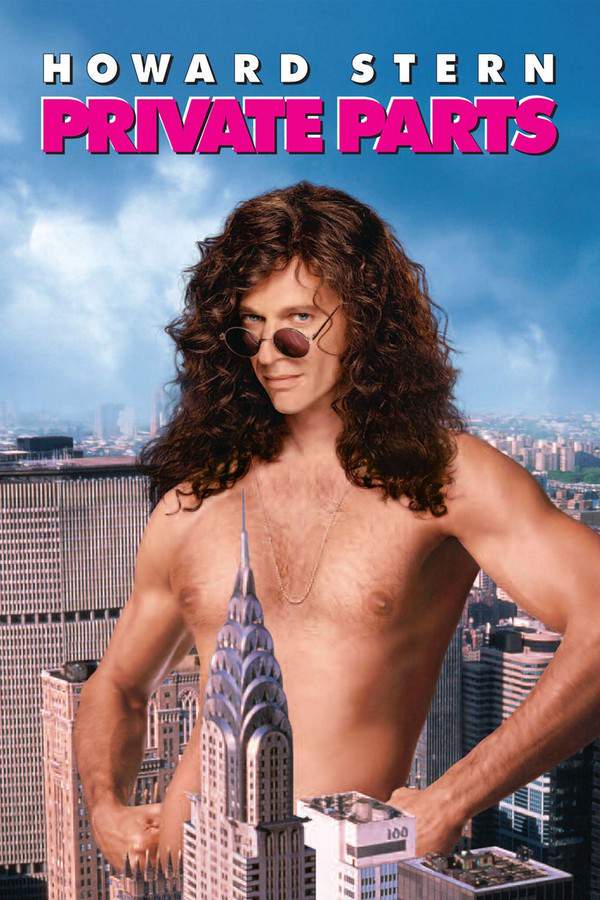

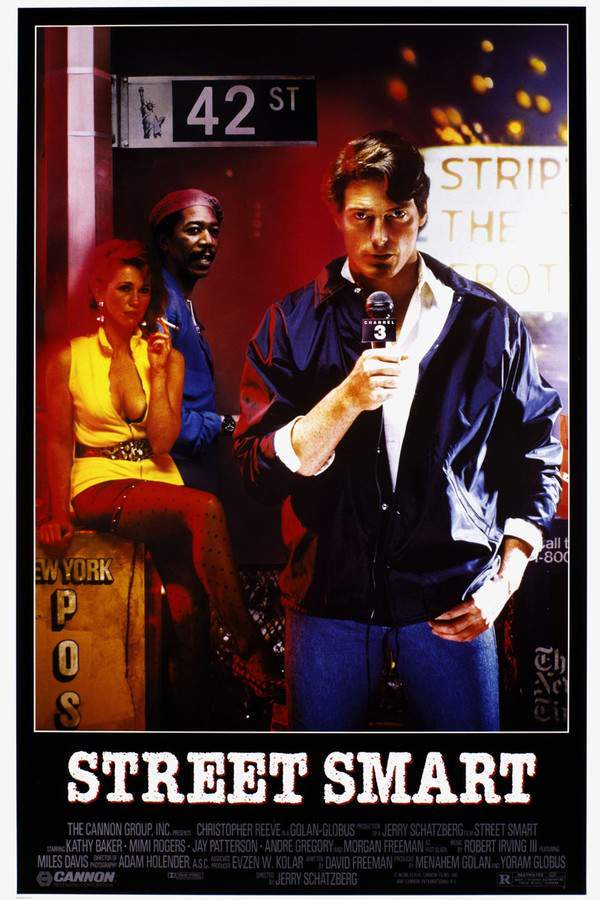
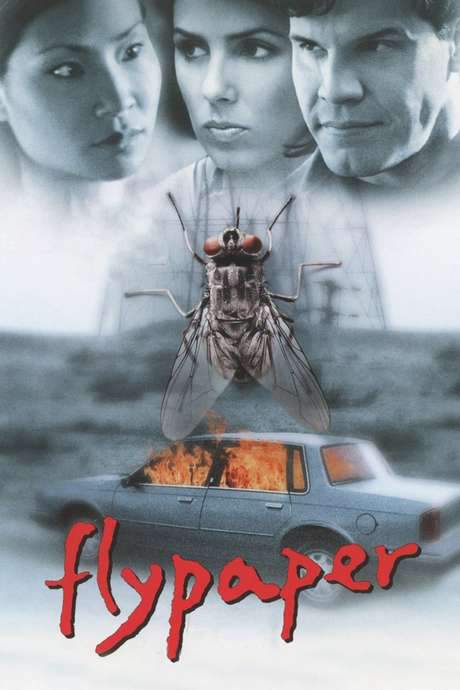
Featured on this page

What's After the Movie?
Not sure whether to stay after the credits? Find out!
Check out our other apps:

SAT Sphere
Build confidence for the Digital SAT.

Mori Atlas
Discover wild places worth protecting.

Luntero
Search smarter for a home in Amsterdam.

Plot Explained
Unravel movie endings and hidden clues.

Pokechamp
Dive into Pokémon data and battle logic.

Driving Theory
Get ready for your European theory test.

Movie Dust
Plan your next cinema trip with ease.

Musemap
Find art and culture as you travel.

Selkobase
Compare credentials before committing.

Local Manual
Turn an unfamiliar country into practical next steps.

Lernavi
Compare school systems before your next move.

GymRoam
Find a workout stop wherever your plans take you.
Explore Our Movie Platform
New Movie Releases (2026)
Famous Movie Actors
Top Film Production Studios
Movie Plot Summaries & Endings
Major Movie Awards & Winners
Best Concert Films & Music Documentaries
Movie Collections and Curated Lists
© 2026 What's After the Movie. All rights reserved.
Privacy Policy