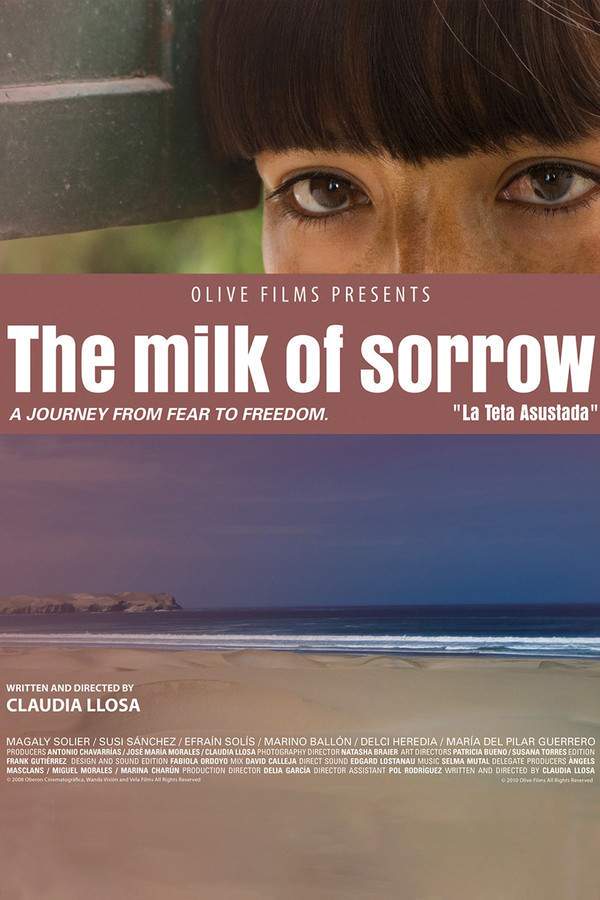
The Milk of Sorrow 2010

Directed by

Claudia Llosa
Made by

Olive Films
The Milk of Sorrow Plot Summary
Read the complete plot summary and ending explained for The Milk of Sorrow (2010). From turning points to emotional moments, uncover what really happened and why it matters.
An elderly woman serenades the world with a poignant song as she lies on her deathbed, recounting a harrowing tale of her own assault and the tragic loss of her husband. As she finishes her last note, she drifts away peacefully beside her daughter, Fausta (Magaly Solier).
Growing up ensconced in the haunting stories of Peru’s internal conflict, which pitted the guerrilla group Sendero Luminoso against the government, Fausta has developed an overwhelming fear of men and the threat of rape. In a desperate attempt to shield herself, she has resorted to placing a potato inside her vagina, which, despite affecting her health, she adamantly refuses to have removed by medical professionals.
After the passing of her mother, Fausta finds herself in a dire financial situation, unable to afford the costs associated with transporting her mother’s body back to their village for a proper burial. To alleviate this burden, she secures a job in the home of a talented pianist, Aída (Susi Sánchez), who is struggling to finish a composition for an upcoming recital.
Upon discovering Fausta’s innate talent for songwriting, Aída seizes the opportunity to motivate her by offering a valuable string of pearls in exchange for a completed song. Fausta, desperate for the money needed for her mother’s funeral, willingly accepts the challenge.
On the night of the performance, Aída delights the audience with Fausta’s song, garnering thunderous applause. However, as they leave the venue, Fausta inadvertently mentions the song’s success. Fearing that her secret of not being the true composer will be exposed, Aída cruelly ejects Fausta into the dark streets of Lima, leaving her alone.
Following her cousin’s wedding, Fausta experiences another traumatic encounter when her uncle intrudes upon her slumber, pressing her to break free from the shackles of fear that have imprisoned her life, much like her late mother.
In a powerful conclusion to her journey, Fausta resolves to undergo the operation to have the potato safely removed and chooses to bury her mother near the ocean—a significant step towards embracing her life without the shadow of her past fears looming over her. It is through this act that Fausta signals her intention to finally move forward, leaving behind the weight of her anguish.
The Milk of Sorrow Timeline
Follow the complete movie timeline of The Milk of Sorrow (2010) with every major event in chronological order. Great for understanding complex plots and story progression.
The Elderly Woman’s Final Serenade
An elderly woman lies on her deathbed, serenading the world with a poignant song. As she sings, she reflects on her past, recounting the harrowing tale of her assault and the tragic loss of her beloved husband.
Fausta's Overwhelming Fear
Growing up in the shadows of Peru's internal conflict, Fausta is deeply affected by the violence perpetrated by the Sendero Luminoso. This trauma manifests as an overwhelming fear of men and a desperate attempt to protect herself from sexual assault.
Fausta's Disturbing Defense
In a misguided attempt to shield herself from her fears, Fausta resorts to placing a potato inside her vagina. Despite the health risks associated with this act, she stubbornly refuses medical intervention, showcasing her deep-seated trauma.
Financial Hardship After Death
After her mother's passing, Fausta finds herself in a dire financial situation. Unable to afford the costs to transport her mother’s body for burial, she grapples with the burdens of grief and financial strain.
A New Job Opportunity
To help manage her financial burdens, Fausta secures a job working for Aída, a talented pianist struggling with her upcoming recital. This position represents a glimmer of hope for Fausta as she seeks to honor her mother's memory.
Discovering Talent
Aída discovers Fausta's innate talent for songwriting and sees this as an opportunity. She offers Fausta a valuable string of pearls in exchange for a completed song, which Fausta desperately needs for her mother's funeral costs.
The Night of Performance
During the recital, Aída performs Fausta's song, earning rapturous applause from the audience. This moment becomes a bittersweet victory for Fausta, who is still grappling with her hidden identity as the true composer.
Aída's Betrayal
After the concert, Fausta inadvertently reveals her role in the song's success. Fearing exposure for not being the actual composer, Aída cruelly discards Fausta into the dark streets of Lima, leaving her feeling abandoned and alone.
Trauma at the Wedding
Following her cousin's wedding, Fausta faces another traumatic experience when her uncle intrudes upon her slumber. He urges her to confront her fears, echoing the struggles she faced with her late mother.
Decision to Change
In a pivotal moment, Fausta resolves to have the potato removed from her body, marking a significant step in her journey toward healing. This decision symbolizes her desire to reclaim her life and break free from the traumas that have defined her existence.
Choosing a Burial Site
Fausta chooses to bury her mother near the ocean, signifying a release from her past burdens. This decision represents her intention to honor her mother's memory while moving forward in her own life.
Embracing the Future
With the removal of the potato and her mother's burial complete, Fausta begins to embrace her life anew. She leaves behind the weight of her past fears and traumas, ready to step into a brighter future.
The Milk of Sorrow Characters
Explore all characters from The Milk of Sorrow (2010). Get detailed profiles with their roles, arcs, and key relationships explained.
Fausta
Fausta is a deeply traumatized woman haunted by the stories of violence and loss that marked her upbringing. Despite her overwhelming fear of men, she is driven by a fierce determination to honor her mother's memory and seek a better life. Her journey is one of resilience and empowerment as she learns to confront her fears and embrace her identity.
Aída
Aída is a talented yet flawed pianist who becomes Fausta's mentor. Initially, she recognizes Fausta's potential and exploits it for her own benefit. However, her cruel treatment ultimately raises questions about authenticity and artistic integrity, as her actions force Fausta to confront her fears head-on.
The Milk of Sorrow Settings
Learn where and when The Milk of Sorrow (2010) takes place. Explore the film’s settings, era, and how they shape the narrative.
Time period
The movie is set against the backdrop of Peru's internal conflict, which leads to a climate of fear and trauma. Though the specific time period is not explicitly mentioned, the characters experience the lingering effects of war and personal loss.
Location
Lima, Peru
Lima, the capital of Peru, is a bustling city known for its rich history and cultural heritage. The ocean nearby signifies both beauty and the possibility of renewal, reflecting Fausta's journey of letting go and moving forward.
The Milk of Sorrow Themes
Discover the main themes in The Milk of Sorrow (2010). Analyze the deeper meanings, emotional layers, and social commentary behind the film.
💔
Loss and Grief
The film explores profound themes of loss, as Fausta navigates the aftermath of her mother's death and the emotional weight of her tragic upbringing. The journey of grieving highlights the struggle to honor the past while seeking healing and closure.
🎶
Creativity and Expression
Fausta’s innate talent for songwriting symbolizes the power of creativity as a form of self-expression. The act of writing and sharing her song becomes instrumental in her journey to reclaim her identity and overcome her fears.
🛤️
Overcoming Fear
Fausta's journey is deeply rooted in overcoming the fears instilled by her past traumas. The narrative portrays her gradual steps towards recovery, highlighting the importance of confronting fears to embrace a brighter future.

Coming soon on iOS and Android
The Plot Explained Mobile App
From blockbusters to hidden gems — dive into movie stories anytime, anywhere. Save your favorites, discover plots faster, and never miss a twist again.
Sign up to be the first to know when we launch. Your email stays private — always.
Explore the mobile appThe Milk of Sorrow Spoiler-Free Summary
Discover the spoiler-free summary of The Milk of Sorrow (2010). Get a concise overview without any spoilers.
In a Peru still echoing with the aftershocks of its recent turmoil, the landscape feels both tender and bruised, a place where whispered histories linger in the streets of Lima and in the quiet of remote village houses. The film settles into a lyrical, almost dream‑like tone, letting the country’s rich textures—its music, its sky‑colored markets, its lingering fear—inform every breath of the story. It is a world where personal memory intertwines with collective wound, and where the quiet moments carry as much weight as the louder, more chaotic ones.
Enter Fausta, a young woman whose life has been shaped by the specter of violence and the loss of the mother who sang her final song. Haunted by an intense dread of men and the shadows of the past, she has adopted an unconventional way of protecting herself, a secret that both isolates her and defines her daily existence. When her mother passes, the practicalities of mourning collide with her fragile finances, pushing Fausta to confront the limits of her survival strategies and the lingering anxiety that has governed her choices.
A chance encounter brings her into the home of Aída, a talented pianist wrestling with her own creative block. The two women form an unlikely partnership, bound by art and desperation. Aída recognizes a raw musical talent in Fausta, offering a promise of financial relief that could finally allow her to honor her mother properly. Their interactions are charged with both tenderness and tension, reflecting the broader theme of women navigating a world that often silences them.
As the story unfolds, the audience is invited to watch Fausta stand at the crossroads of fear and freedom, with the promise of healing humming just beyond the horizon. The film’s mood remains intimate, its style poetic, and its focus on inner transformation keeps the narrative’s heart beating steady, urging viewers to wonder how far a woman can go when she finally decides to listen to herself.
Featured on this page

What's After the Movie?
Not sure whether to stay after the credits? Find out!
Check out our other apps:

SAT Sphere
Build confidence for the Digital SAT.

Mori Atlas
Discover wild places worth protecting.

Luntero
Search smarter for a home in Amsterdam.

Plot Explained
Unravel movie endings and hidden clues.

Pokechamp
Dive into Pokémon data and battle logic.

Driving Theory
Get ready for your European theory test.

Movie Dust
Plan your next cinema trip with ease.

Musemap
Find art and culture as you travel.

Selkobase
Compare credentials before committing.

Local Manual
Turn an unfamiliar country into practical next steps.

Lernavi
Compare school systems before your next move.

GymRoam
Find a workout stop wherever your plans take you.
Explore Our Movie Platform
New Movie Releases (2026)
Famous Movie Actors
Top Film Production Studios
Movie Plot Summaries & Endings
Major Movie Awards & Winners
Best Concert Films & Music Documentaries
Movie Collections and Curated Lists
© 2026 What's After the Movie. All rights reserved.
Privacy Policy