
The Match King 1932

Directed by
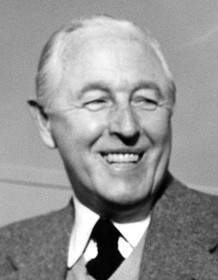
William Keighley
Made by

First National Pictures
The Match King Plot Summary
Read the complete plot summary and ending explained for The Match King (1932). From turning points to emotional moments, uncover what really happened and why it matters.
Paul Kroll, a Chicago street cleaner and Swedish immigrant, is driven by ruthless ambition and a willingness to bend every rule. He engineers the firing of a fellow worker as part of a larger scheme and convinces his foreman to let him stay on the payroll so they can split the salary. Soon there are eight phantom workers, and Kroll and his partner have enough cash to plan a return trip to Sweden. At the same time, Kroll secretly romances his partner’s wife, Babe, and he misleads the people back home about his supposed success. When the local match factory falters, his uncle pleads for him to come back and save it. He persuades Babe to withdraw the money he has stolen by fooling her into thinking they are fleeing together, but he abandons her when he sails to Sweden.
Back in Europe, the con man continues to expand his operation. Erik Borg is the only friend who knows the truth about Kroll’s real achievements, so he is brought on as his assistant. Kroll’s reach grows as he eventually owns all the match factories in Sweden, and his ambitions do not stop there. With information gathered from influential women he has charmed, he pushes into monopolies across Poland, Germany, and beyond, offering loans to cash-strapped governments and bribing officials to cement his control.
The lure of power intensifies when Kroll meets Ilse Wagner and, more strikingly, Marta Molnar, a rising star he aims to win over. To impress her, he even hires a famed gypsy violinist to serenade her, yet his business begins to suffer as he borrows more money to sustain his social conquests. Marta’s departure for Hollywood pulls him back to the company, but trouble accelerates when he learns that the recluse Christian Hobe has invented an everlasting match and Kroll orchestrates Hobe’s institutionalization as a madman. The stock market crash tightens the squeeze, making new loans impossible. To cover his tracks, he buys $50 million in fake Italian bonds from forger Scarlatti and arranges for Scarlatti to drown in a lake, using the bonds as collateral to secure a $40 million loan from an American bank.
As life spirals, Marta returns to Sweden and Kroll contemplates retirement, but she reveals she loves Trino, the gypsy violinist. With his forgeries exposed and the American loan canceled, Kroll’s carefully built empire collapses. He cannot salvage it and ends the story by shooting himself on the balcony, his body tumbling into the gutter where his quest for endless power began.
The Match King Timeline
Follow the complete movie timeline of The Match King (1932) with every major event in chronological order. Great for understanding complex plots and story progression.
Kroll starts phantom worker scheme
Paul Kroll, a Chicago street cleaner and Swedish immigrant, secretly creates a payroll of workers who do not exist. He and his partner siphon their salaries, building a growing stash of cash. The scheme seeds his early ambition of wealth and escape.
Payroll grows to eight phantoms
As the scheme expands, eight phantom workers are kept on the payroll. Their salaries are skimmed, fueling more money for Kroll and his partner. The illicit funds bolster their dream of returning to Sweden.
Romance with Babe and deception about success
Kroll romances Babe behind his partner's back and boasts of a success he doesn't deserve. He tells people in Sweden that he has become a prosperous businessman, hiding the truth at home. The duplicity strains every relationship and fuels his arrogance.
Uncle begs return to save the match factory
When the local match factory faces trouble, Kroll's uncle begs him to return and save it. The appeal pulls him toward Sweden while his Chicago fraud continues to simmer. He weighs family duty against the fortune he's built on lies.
Babe withdraws stolen money; Kroll sails to Sweden
Kroll persuades Babe to withdraw the money he has stolen by convincing her that they will escape together. She is driven to take the money, believing in their joint future. He then sails for Sweden, leaving Babe behind.
Secures loan for a second factory
In Sweden, Kroll cons a local bank into extending a loan to buy a second match factory so he can merge them. The move seems to legitimize his empire, though it rests on increasingly fragile fraud. His financial gambits grow bolder as the mark of success widens.
Erik Borg joins as his assistant
Kroll hires Erik Borg, his old friend who knows the truth of his success, as his assistant. Borg's loyalty helps keep the scheme running without immediate exposure. Together they consolidate power over the match industry.
Monopolies form across Europe
Using information obtained from wealthy women he has charmed, Kroll secures monopolies first in Sweden, then expands to Poland, Germany and other countries. He offers loans to cash-strapped governments and bribes corrupt officials to cement his control. The empire grows, but the rot underneath deepens.
Marta Molnar enters the scene
During dinner with Ilse Wagner, Kroll is dazzled by rising actress Marta Molnar. He goes to extravagant lengths to win her affection, including hiring a gypsy violinist to serenade her. His personal fixation begins to threaten his business focus.
Marta leaves for Hollywood
Marta departs for Hollywood, and Kroll reluctantly shifts his attention back to his company. The romance cools as he doubles down on financing his expanding operations. The absence of Marta marks a renewed emphasis on wealth over relationships.
Hobe's invention and institutionalization
When eccentric inventor Christian Hobe creates an everlasting match, Kroll has him institutionalized as a madman to eliminate competition. The move strengthens Kroll's monopoly by removing a potential rival. His control over information and power grows.
Stock market crash and credit freeze
The stock market crashes and Kroll finds himself unable to obtain a bank loan. His plans begin to crumble as liquidity dries up. He realizes the system that sustained his fraud is failing.
Bond scam: fake Italian bonds and Scarlatti
Desperate, Kroll buys $50 million in fake Italian bonds from forger Scarlatti and arranges for Scarlatti to drown in a lake. He uses the bonds as collateral to secure a $40 million loan from an American bank. The plan is bold, illegal, and increasingly reckless.
Marta returns to Sweden; retirement plan begins
Marta returns to Sweden and Kroll contemplates retirement, asking her to marry him. She reveals that she has fallen in love with Trino, the gypsy violinist. Personal and financial ambitions collide as the path to retirement stalls.
Forgeries detected and suicide
Kroll's forgery is detected and the American loan is canceled. In a final act of despair, he shoots himself on a balcony as his body tumbles into the gutter where his story began. The rise-and-fall arc closes with a tragic, inevitable end.
The Match King Characters
Explore all characters from The Match King (1932). Get detailed profiles with their roles, arcs, and key relationships explained.
Paul Kroll (Warren William)
A Chicago street cleaner who becomes an unscrupulous magnate, masterminding phantom workers to siphon salaries and then expanding across borders to dominate the match industry. He romances Babe behind his partner's back and brazenly deceives his hometown to appear successful. His empire grows through loans, forged bonds, and political influence, only to unravel when the market crashes.
Babe (Glenda Farrell)
The partner's wife whom Kroll seduces, pulling her into his deceit and convincing her to withdraw stolen money as they pretend to flee together. She is left behind when Kroll sails to Sweden, becoming a casualty of his expanding con. Her trust in him underscores the personal cost of Kroll's manipulations.
Erik Borg (Hardie Albright)
Kroll's old friend and the only one who knows the truth about his schemes. Hired as Kroll's assistant, he embodies loyalty tested by ambition and the risk of being drawn into Kroll's dangerous world. His presence hints at the moral ambiguity at the heart of Kroll's operation.
Marta Molnar (Lili Damita)
A rising actress who captivates Kroll, fueling his obsession with glamour and social influence. Her charm prompts elaborate gestures, including hiring a gypsy violinist to serenade her. Her departure for Hollywood becomes a milestone in Kroll's life as he pursues power over celebrity and fortune.
Ilse Wagner (Claire Dodd)
One of Kroll's romantic conquests, used to entice and manipulate powerful circles. She embodies the allure and danger of Kroll's world, where personal relationships are leveraged for business advantage. Her presence exposes the intimate costs of his strategic pursuits.
Scarlatti (Harold Huber)
The master forger who supplies fake Italian bonds, enabling Kroll to secure vast loans and finance expansion. His dealings with Kroll illustrate the concrete mechanics of international fraud that underpin Kroll's empire. Scarlatti's actions precipitate the moment when Kroll's luck begins to unravel.
Christian Hobe (Harry Beresford)
An eccentric recluse inventor of an everlasting match whom Kroll manipulates for his own ends, ultimately institutionalizing him. This subplot highlights the destructive reach of Kroll's ambitions and his willingness to exploit odd genius for profit. Hobe's fate underscores the moral costs of unchecked power.
The Match King Settings
Learn where and when The Match King (1932) takes place. Explore the film’s settings, era, and how they shape the narrative.
Time period
1920s–1930s
Set in the late 1920s and early 1930s, the film captures the optimism of a roaring economy followed by the trauma of the stock market crash. It depicts a finance-driven world where loans, monopolies, and bribery propel empires, then crumble under economic collapse. The era's lax oversight allows Kroll's frauds to flourish until the crisis exposes them.
Location
Chicago, Sweden, Hollywood, Poland, Germany
Set across Chicago's gritty streets and industrial outskirts, the film follows Paul Kroll's rise from a street cleaner to a global match-empire magnate. The action shifts to Sweden, where the local match factories become his playground for expansion, aided by loans and manipulation. The tale then threads through Hollywood and wider Europe (Poland and Germany), illustrating how Kroll spreads his influence through bribery and predatory finance while glamour and romance accompany his ascent.
The Match King Themes
Discover the main themes in The Match King (1932). Analyze the deeper meanings, emotional layers, and social commentary behind the film.
💰
Greed
Kroll's relentless greed drives his ascent from a street cleaner to a multinational monopolist. He expands across borders by exploiting workers, financing loans, and bribing officials, all in the name of profit. The pursuit of wealth blinds him to personal cost and ethical boundaries. The film uses his climb to critique how greed can corrupt both business and relationships.
🎭
Deception
Deception is the engine of Kroll's entire operation. He fabricates workers, misleads his hometown, and uses charm to win influence over women and officials. The forged bonds and fraudulent schemes expose how truth and trust erode in a world driven by money. The emotional costs are paid by those who believe him and by him as he loses control.
📉
Downfall
The pursuit of power ends in a spectacular fall when the stock market crashes and loans collapse. As Kroll's forgeries are uncovered and his American loan is canceled, his carefully built empire crumbles. He shoots himself on the balcony, and his body tumbles into the gutter where his journey began. The ending serves as a cautionary note about hubris and the fragility of wealth.

Coming soon on iOS and Android
The Plot Explained Mobile App
From blockbusters to hidden gems — dive into movie stories anytime, anywhere. Save your favorites, discover plots faster, and never miss a twist again.
Sign up to be the first to know when we launch. Your email stays private — always.
Explore the mobile appThe Match King Spoiler-Free Summary
Discover the spoiler-free summary of The Match King (1932). Get a concise overview without any spoilers.
In the bustling streets of 1920s Chicago, an immigrant with a razor‑sharp mind watches the world move past him. Paul Kroll, a janitor whose daily routine is a study in quiet observation, dreams far beyond the city’s grime. The film opens on his restless ambition, a blend of charm and calculation that hints at larger horizons even as he toils in the shadows of towering factories and crowded tenements. The tone is gritty yet laced with a restless optimism, setting a stage where personal desire clashes with the mechanical rhythm of an industrial age.
A chance to return to his native Sweden becomes the catalyst for a dramatic shift. Back in the European landscape of post‑war recovery, Kroll encounters a modest match‑stick industry that feels both fragile and ripe for transformation. The world he steps into is one of smoky boardrooms, whispered negotiations, and a continent eager for stability. As he navigates this new terrain, his innate talent for persuasion begins to reshape the modest factories into something far more expansive, hinting at a future where a single entrepreneur could influence markets across borders.
Around him gather a cast of personalities drawn to his magnetic confidence. Erik Borg, a steadfast friend who quietly knows more than he lets on, becomes his reluctant confidant. The enigmatic Babe, whose own ambitions intersect with his, adds a layer of personal intrigue, while the captivating Ilse Wagner and rising star Marta Molnar illustrate how his charisma extends into the social circles of power. Even the reclusive inventor Christian Hobe and the enigmatic forger Scarlatti orbit his orbit, suggesting a network where business and desire are tightly woven together.
The film’s mood balances lavish period detail with a subtle undercurrent of tension, portraying a world where opportunity and risk are inseparable. Its style invites the audience to linger on the polished surfaces of opulent gatherings while feeling the restless pulse of a man whose ascent promises both brilliance and inevitable complexity. The story promises a compelling portrait of ambition, charm, and the fragile line between dream and deception.
Movies with Similar Twists and Themes
Uncover films that echo the narrative beats, emotional arcs, or dramatic twists of the one you're exploring. These recommendations are handpicked based on story depth, thematic resonance, and spoiler-worthy moments — perfect for fans who crave more of the same intrigue.



Featured on this page

What's After the Movie?
Not sure whether to stay after the credits? Find out!
Check out our other apps:

SAT Sphere
Build confidence for the Digital SAT.

Mori Atlas
Discover wild places worth protecting.

Luntero
Search smarter for a home in Amsterdam.

Plot Explained
Unravel movie endings and hidden clues.

Pokechamp
Dive into Pokémon data and battle logic.

Driving Theory
Get ready for your European theory test.

Movie Dust
Plan your next cinema trip with ease.

Musemap
Find art and culture as you travel.

Selkobase
Compare credentials before committing.

Local Manual
Turn an unfamiliar country into practical next steps.

Lernavi
Compare school systems before your next move.

GymRoam
Find a workout stop wherever your plans take you.
Explore Our Movie Platform
New Movie Releases (2026)
Famous Movie Actors
Top Film Production Studios
Movie Plot Summaries & Endings
Major Movie Awards & Winners
Best Concert Films & Music Documentaries
Movie Collections and Curated Lists
© 2026 What's After the Movie. All rights reserved.
Privacy Policy