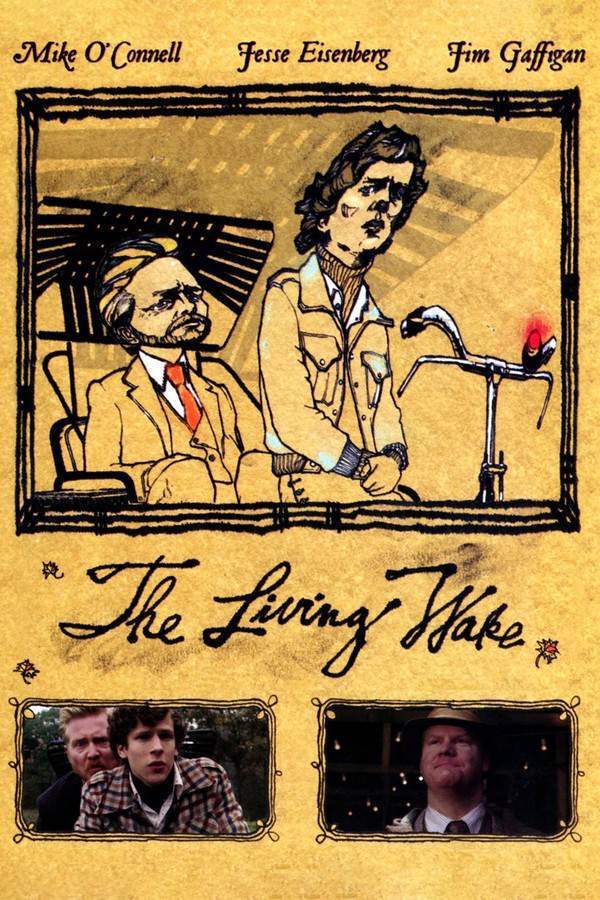
The Living Wake 2010


Directed by

Sol Tryon
Made by

Mangusta Productions
Where to Watch The Living Wake
See current US streaming, rental, and purchase options for The Living Wake (2010) via JustWatch.







The Living Wake Plot Summary
Read the complete plot summary and ending explained for The Living Wake (2010). From turning points to emotional moments, uncover what really happened and why it matters.
As the curtain falls on his fleeting existence, K. Roth Binew (Jesse Eisenberg), a self-styled visionary, embarks on an existential journey to decode the mysteries surrounding mortality. Accompanied by his quirky companion, Mills Joaquin (Jesse Eisenberg), Roth’s odyssey is ignited by the shocking diagnosis of a rare terminal illness, one he has resolved to face with courage.
With time slipping away, K. Roth is driven by a long-held desire to unearth the profound wisdom his father failed to provide—a haunting monologue that has lingered throughout his life. As he traverses the convoluted maze of self-discovery, he invites his adversary and neighbor, Reginald, to partake in the a celebration of life and mortality.
As the hourglass of life empties, K. Roth and Mills scheme to organize a funeral that is both morbid and grandiose. Their escapades lead them to a local liquorsmith, where they seek fleeting joy, and even involve a goat sacrifice as a desperate attempt to curry favor with the unpredictable gods.
In his belief that love holds the key to the universe’s secrets, K. Roth attempts to reignite a romance with Marla, his former nanny, during a heartwarming picnic that ultimately concludes in disappointment. He remains undaunted and continues to venture into a series of misadventures, including a flirtation with a prostitute ([Colombe Jacobsen]) and a visit to a psychic, all in his quest for the enigmatic meaning of life.
As the specter of his wake and inevitable end cast a shadow over him, K. Roth spirals into despair but ultimately finds comfort in an unforeseen reunion with his family at a nearby church. Initially reluctant, his brother Karl and mother ([Jill Larson]) warm to his plea for reconciliation, leading K. Roth on a path towards healing.
As the final moments approach, K. Roth and Mills get ready for their farewell gathering, cherishing every second while reflecting on the life lived and the enigmas that remain. As the mournful atmosphere of the wake sets in, a cast of characters gather, witnessing a touching spectacle. The air vibrates with the tones of K. Roth’s dance, paired with Mills’ haunting melody, “If I Was Real.” A collective grief begins to lift with K. Roth’s striking one-woman play, Remembrance of Dawn, which seems to encapsulate the essence of his being.
However, just as the mood starts to lighten, Karl and Dr. Schoenberg interrupt, insisting K. Roth end the wake, deeming it another instance of his erratic behavior. Unfazed, K. Roth presses on to resolve loose ends, avenging himself against Reginald and relinquishing material possessions. Mills delivers a heartfelt poem that serves as a eulogy for K. Roth’s existence.
As the wake reaches its zenith, the ghostly figure of Lampert Binew ([Jim Gaffigan])—K. Roth’s father—materializes, visible only to K. Roth. In an emotional confrontation, he demands acknowledgment of his father’s abandonment, which leads to a profound revelation: Lampert did not desert K. Roth but died without imparting any guidance. He shares wisdom, suggesting the essence of existence is not encapsulated in elaborate philosophies but in living fully.
Facing the reality of his mortality, K. Roth experiences an awakening, accepting the futility of his plight, even referring to himself as a “stupid, drunk, scared, dying man.” Inspired by his father’s words, he concludes the wake with an exhilarating song and dance. As the final notes resonate, K. Roth’s illness claims him, causing him to collapse into an upright coffin. The mourners honor their last respects as the film reaches its conclusion. In a powerful finale, Mills ignites K. Roth’s lifeless form, consigned to oblivion as the credits begin to roll.
The Living Wake Timeline
Follow the complete movie timeline of The Living Wake (2010) with every major event in chronological order. Great for understanding complex plots and story progression.
Diagnosis of Terminal Illness
K. Roth Binew receives the shocking diagnosis of a rare terminal illness that propels him into an existential journey. Faced with his own mortality, he resolves to confront this challenge head-on, determined to find meaning in the time that remains.
Search for Wisdom
Haunted by a monologue from his father that has lingered throughout his life, K. Roth embarks on a quest to uncover the wisdom he believes his father failed to provide. This search leads him into a maze of self-discovery and revelations about love and existence.
Celebration of Life and Mortality
K. Roth invites his adversary and neighbor, Reginald, to join him in a celebration that contemplates both life and death. This event sets the stage for a series of unpredictable and poignant experiences for the group.
Planning a Grand Funeral
Roth and his companion Mills scheme to organize a funeral that is both morbid and grandiose, highlighting their unconventional approach to facing death. The duo's plans twist into absurdity as they seek fleeting joys and strange rituals, including a goat sacrifice.
Rekindling Past Love
K. Roth attempts to revive a previous romantic relationship with Marla, his former nanny, during a picnic that he hopes will reignite their connection. However, their meeting leads to disappointment, yet K. Roth remains undeterred in his pursuit of understanding love.
Misadventures in Search for Meaning
K. Roth embarks on a series of misadventures that include interactions with a prostitute and a visit to a psychic. These colorful encounters further reflect his quest for the elusive answer to life’s mysteries amid his escalating despair.
Reunion with Family
As the specter of his impending death looms, K. Roth finds solace in a reunion with his family at a nearby church. Initially hesitant, his mother and brother Karl warm to his plea for reconciliation, paving a path for healing amidst heartbreak.
Final Gathering
As K. Roth and Mills prepare for their farewell gathering, they cherish the moments they have left. Surrounded by friends and family, they hold onto the memories while reflecting on the life's enigmas that now linger in the air.
K. Roth's Dance Performance
During the mournful atmosphere of the wake, K. Roth captivates his audience with a dance juxtaposed against Mills' haunting melody. The mourners engage with the poignant performance, momentarily lifting the heavy mood of grief.
Confrontation with Lampert Binew
An emotional confrontation occurs when the ghostly figure of K. Roth's father, Lampert Binew, appears, prompting discussions about abandonment. This revelation leads K. Roth to understand that his father did not desert him but died without imparting vital guidance.
Acceptance of Mortality
Embracing the truth of his mortality, K. Roth experiences an awakening, acknowledging his fears and insecurities. As he deliberates on the essence of existence, he realizes that life is about living fully rather than getting lost in ideologies.
Exhilarating Conclusion
The wake reaches its zenith with K. Roth concluding the gathering with a triumphant song and dance. However, as the performance ends, he collapses into an upright coffin, marking the poignant climax of his bittersweet journey.
Final Farewell
As the credits roll, the mourners give their final respects while witnessing the end of K. Roth’s journey. Mills sets fire to K. Roth's lifeless form, symbolizing his departure and emphasizing the themes of mortality and the enduring spirit.
The Living Wake Characters
Explore all characters from The Living Wake (2010). Get detailed profiles with their roles, arcs, and key relationships explained.
K. Roth Binew
K. Roth Binew is a self-styled visionary faced with the reality of terminal illness. His quirky personality drives him to seek understanding and meaning amidst a backdrop of existential dread, leading to humorous and poignant encounters with those around him.
Mills Joaquin
Mills Joaquin is K. Roth's eclectic companion who shares in the absurd journey of planning the wake. He provides both comic relief and emotional support, embodying a loyal friend who seeks to navigate the chaos of life alongside K. Roth.
Reginald
Reginald serves as both adversary and ally, highlighting the complexities of human relationships. His interactions with K. Roth provide insight into themes of rivalry and the search for meaning in connection.
Karl
Karl, K. Roth's brother, undergoes a transformation from reluctance to reconciliation, showcasing the power of familial bonds. His character arc illustrates healing and the importance of connection amidst grief.
Lampert Binew
Lampert Binew, K. Roth's father, appears as a ghostly figure embodying unresolved issues from the past. His presence facilitates K. Roth's journey toward acceptance, as he imparts the wisdom of living fully despite previous abandonment.
The Living Wake Settings
Learn where and when The Living Wake (2010) takes place. Explore the film’s settings, era, and how they shape the narrative.
Time period
The film is set in a contemporary timeline, addressing themes of mortality and existential reflection that resonate universally. It captures the essence of a life reflecting back on its own impending end, highlighting the quest for meaning in everyday experiences.
Location
Local Church, Liquorsmith
The local church serves as a pivotal location for family reconciliation and emotional healing, where K. Roth reconnects with his family. The liquorsmith is a place of fleeting joy and camaraderie, where K. Roth and Mills seek solace in spirits while navigating the absurdities of life.
The Living Wake Themes
Discover the main themes in The Living Wake (2010). Analyze the deeper meanings, emotional layers, and social commentary behind the film.
💔
Mortality
Mortality is the central theme of the film, as K. Roth grapples with his terminal illness while preparing for his wake. The story invites reflection on the nature of life and death, leading to deeper insights about living fully in the face of inevitable end.
🔍
Self-Discovery
K. Roth's journey is one of profound self-discovery, where he seeks to unravel the mysteries of his existence. Through interactions with family and friends, he confronts his inner fears and desires, ultimately striving for reconciliation and understanding of his father's legacy.
🎭
Reconciliation
The theme of reconciliation weaves throughout the narrative, culminating in K. Roth's emotional reunion with his family. This moment highlights the importance of familial bonds and forgiveness as part of the human experience, even against the backdrop of death.

Coming soon on iOS and Android
The Plot Explained Mobile App
From blockbusters to hidden gems — dive into movie stories anytime, anywhere. Save your favorites, discover plots faster, and never miss a twist again.
Sign up to be the first to know when we launch. Your email stays private — always.
Explore the mobile appThe Living Wake Spoiler-Free Summary
Discover the spoiler-free summary of The Living Wake (2010). Get a concise overview without any spoilers.
In a quietly off‑kilter town where everyday routines hum with an undercurrent of absurdity, an eccentric artist decides to turn the inevitable into a performance. Diagnosed with a terminal illness, K. Roth Binew resolves to stage his own “living wake,” a flamboyant celebration that blurs the line between ceremony and spectacle. The concept—inviting friends, neighbors, and strangers to witness the final act of his life—sets the tone for a film that balances dark humor with tender introspection, inviting viewers to contemplate how we choose to be remembered.
K. Roth Binew is a self‑styled visionary whose restless curiosity and craving for significance drive every decision. He is armed with quick wit, an unsettling confidence, and a deep yearning to uncover the elusive wisdom his absent father never imparted. His approach to mortality is less solemn mourning and more theatrical experiment, turning the prospect of death into a canvas for artistic expression. This blend of bravado and vulnerability makes him both a compelling guide and a mirror for anyone who has ever wondered what will remain after they’re gone.
By his side is Mills Joaquin, a loyal yet equally unconventional companion who provides both grounding humor and an empathetic counterpoint to Roth’s grand designs. Their circle expands to include quirky neighbors, an estranged family member, and a former nanny, each bringing their own offbeat perspective to the impending celebration. The relationships are layered with affectionate teasing, honest confession, and the occasional uncomfortable truth, creating a tapestry of human connection that feels both intimate and oddly theatrical.
The film’s world is bathed in a stylized realism where everyday locations—home, local shops, a modest church—are transformed into stages for existential inquiry. Its tone oscillates between laugh‑out‑loud moments and quietly moving exchanges, leaving the audience to wonder how far one can push the boundaries of life, art, and legacy before the curtain finally falls.
Featured on this page

What's After the Movie?
Not sure whether to stay after the credits? Find out!
Check out our other apps:

SAT Sphere
Build confidence for the Digital SAT.

Mori Atlas
Discover wild places worth protecting.

Luntero
Search smarter for a home in Amsterdam.

Plot Explained
Unravel movie endings and hidden clues.

Pokechamp
Dive into Pokémon data and battle logic.

Driving Theory
Get ready for your European theory test.

Movie Dust
Plan your next cinema trip with ease.

Musemap
Find art and culture as you travel.

Selkobase
Compare credentials before committing.

Local Manual
Turn an unfamiliar country into practical next steps.

Lernavi
Compare school systems before your next move.

GymRoam
Find a workout stop wherever your plans take you.
Explore Our Movie Platform
New Movie Releases (2026)
Famous Movie Actors
Top Film Production Studios
Movie Plot Summaries & Endings
Major Movie Awards & Winners
Best Concert Films & Music Documentaries
Movie Collections and Curated Lists
© 2026 What's After the Movie. All rights reserved.
Privacy Policy