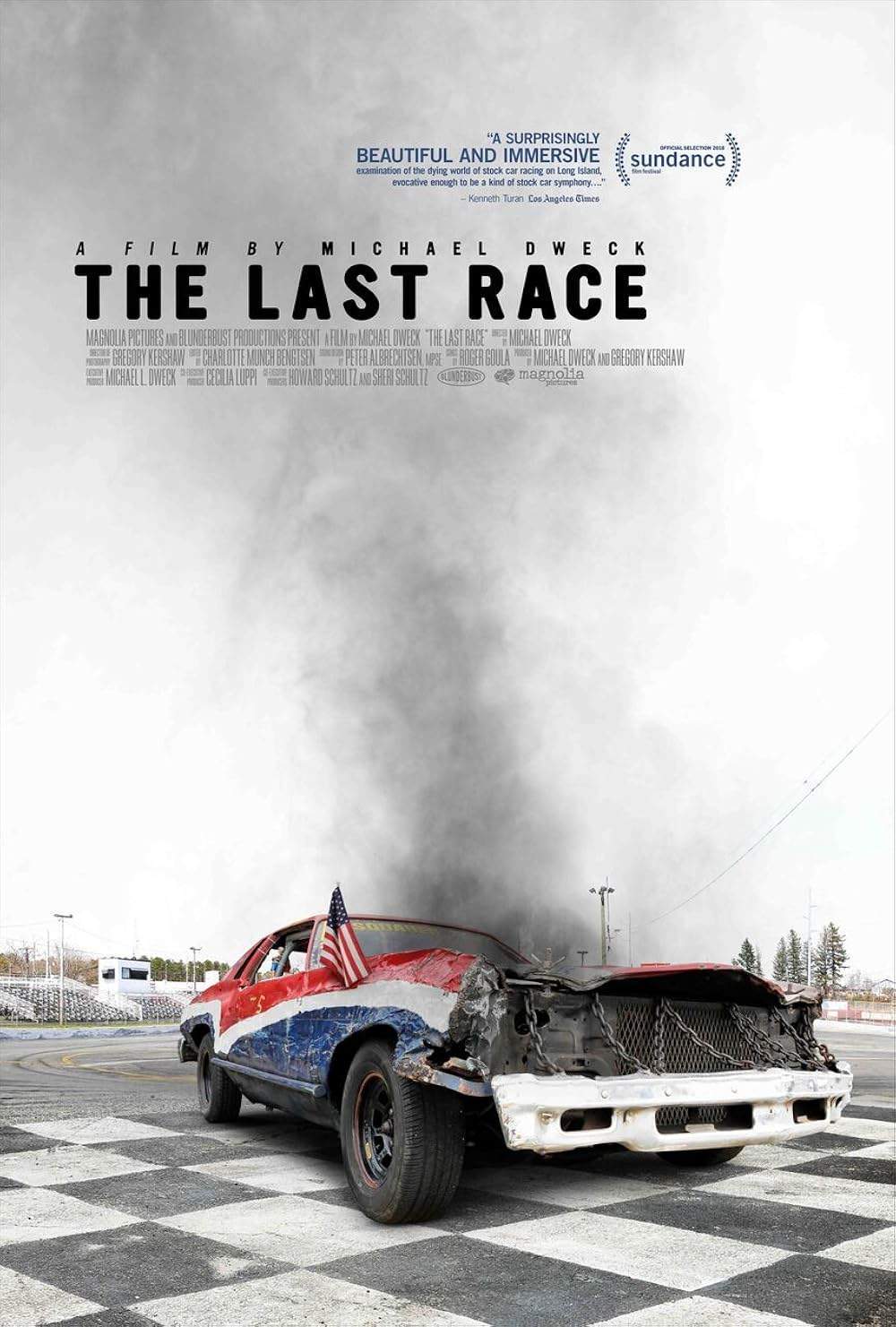
What Is The Last Race About?
The premise of The Last Race in 316 words, with nothing given away. The full story follows below.
The documentary opens on the lone quarter‑mile oval that still roars on Long Island, a relic of a time when the island was the cradle of American stock‑car racing. Surrounded by gleaming malls and sprawling retail parks, the track feels like a pocket of raw, unpolished passion set against a landscape of polished commerce. The film’s visual language leans heavily on the contrast between weather‑worn asphalt and corporate glass, letting the scent of burnt rubber and the echo of engines become a sensory bridge to a bygone era.
At the heart of this fading enclave are its octogenarian stewards, Barbara and Jim Cromarty, who have tended the racetrack since the late 1970s. Their bond to the venue runs deeper than business; it is a lifeline to a community built on grit, camaraderie, and the joy of crafting speed from salvaged parts. Through intimate interviews, the film captures their quiet determination, the pride in every dented chassis, and the subtle wear of time on their faces, all while hinting at the weight of an uncertain future.
The surrounding world is one of relentless development—highways that have grown from country lanes, outlet malls that sprouted where fields once lay, and investors whose interest in the land is measured in millions. Yet the race fans, local mechanics, and weekend spectators arrive like a tribe, drawn together by the thunderous chorus of engines and the shared sense of belonging that the track has fostered for generations. Their stories paint a picture of blue‑collar identity that feels both timeless and fragile.
Tone‑wise, the documentary balances lush, immersive soundscapes with reflective narration, inviting viewers to feel the pulse of the race and the looming silence that could replace it. It poses quiet questions about heritage versus profit, community versus progress, without spelling out any decisive outcomes, leaving the audience to wonder whether the echo of the final lap will ever truly fade.
What Happens in The Last Race?
The complete story of The Last Race, from the first scene to the last, in 659 words (about 3 minutes). Spoilers throughout.
Spoilers ahead
THE LAST RACE presents a vivid portrayal of a Long Island stock car racetrack as its octogenarian owners strive to uphold an American racing legacy amidst a real estate development surge. This film artfully weaves imagery and sound to immerse viewers in the vibrant world of grassroots racing culture, while subtly addressing poignant questions surrounding blue-collar American identity, which resonate deeply in our current political landscape.
Originally, Long Island was the birthplace of American stock car racing, boasting over forty racetracks at its zenith. Today, however, only one remains: Riverhead Raceway. This quarter-mile track has defied the odds, remaining amidst the dramatic transformation of Long Island from tranquil farmland peppered with mom-and-pop farm stands into a labyrinth of shopping malls and corporate retail outlets. Established in 1949, it initially sat at the edge of a little country road, surrounded by vast fields. Yet, as the years passed, the humble road was expanded into a bustling highway, beckoning developers. First came an outlet mall, followed by familiar retail giants, eventually devouring the adjacent farmland. Today, Riverhead Raceway stands as the last piece of untouched land amidst commercial development along Old Country Road.
The land on which the track is situated is valued at over ten million dollars, but the revenue generated from weekend ticket sales barely sustains operations. The survival of Riverhead Raceway seems to flout capitalist principles, with Barbara and Jim Cromarty at the helm. The couple acquired the racetrack in 1977, persisting against multi-million dollar offers that tempt them toward a comfortable retirement. They are deeply aware that Riverhead is not just a racetrack; it represents the final stronghold of stock car racing on Long Island. Its potential closure would symbolize the end of an era.
In stark contrast to the surrounding box stores, Riverhead Raceway was not conceived in a boardroom, but instead emerged from a community passionate about speed. It began with old cars racing on a dirt oval, which eventually led to the addition of asphalt and grandstands. The Cromartys capitalized on this growing popularity by selling tickets, hot dogs, and T-shirts—not just to showcase races but to forge a sense of belonging among a tribe of blue-collar mechanics who revel in crafting racing machines from raw materials. Their lives revolve around the thrill of the race, and their identities are bound to this land where blue-collar triumph can overshadow white-collar profit.
The allure at Riverhead emerges in its most raw and visceral form. A visit feels akin to entering an untouched tribe, revealing the cultural artifacts shaped by generations. The cars—marvels of engineering—are born from parts scavenged like hidden treasures in junkyards, harkening to a time when automobiles were made with grit and craftsmanship, not mere technology. Each dent and scratch tells a story of endurance. The announcer weaves the tales of their fierce competitions, while the roaring engines compose their epic symphony, culminating in a weekly spectacle of color, noise, and raw emotion.
With Barbara and Jim aging and their health declining, the future of the track hangs in uncertainty, compounded by commercial developers circling with lucrative offers. Should the couple capitulate, the landscape would fall victim to unchecked capitalism, replaced by bland structures synonymous with mundane commercialism.
Both racers and fans recognize the ominous changes. Their cherished universe threatens to dissolve, consumed by the same globalized culture replacing sacred heritages worldwide. The eventual demise of the track signals the triumph of retail over heritage, with the Riverhead footprint blended into the countless cookie-cutter commercial strips that dominate the American scenery. Imagine weekends spent in monotonous shopping experiences, devoid of the intoxicating scent of burnt rubber and gasoline. The thrills of speed will yield to a dull hum, erasing the jubilant chaos that once defined it.
Yet, this impending calmness is a deadly trade-off.
THE LAST RACE tells the compelling story of the land and its people who cling fiercely to their passion during their final struggle, as the bulldozers loom ever closer.
The Last Race Timeline: Every Key Event in Order
14 key events in the order they happen, from “Origins of Stock Car Racing” to “The Final Struggle”. 14 events name a place, across 2 locations.
- 1
Origins of Stock Car Racing
Stock car racing finds its roots in Long Island, once home to over forty racetracks at its peak. This vibrant culture of grassroots racing became an integral part of local identity and community spirit.
When:1949 Where:Long Island
- 2
Establishment of Riverhead Raceway
In 1949, Riverhead Raceway opened its doors on the edge of a quiet country road, surrounded by farmlands that depict the simplicity of rural life. It was established as a quarter-mile track, inviting local enthusiasts to embrace the thrill of racing.
When:1949 Where:Riverhead Raceway, Long Island
- 3
Commercial Development Surge
As the years went by, Long Island underwent a dramatic transformation from farmland to a commercial hub. Shopping malls and retail giants began to replace the once tranquil area, impacting the heritage of places like Riverhead Raceway.
When:1980s-1990s Where:Long Island
- 4
The Cromarty Acquisition
In 1977, Barbara and Jim Cromarty took over the management of Riverhead Raceway, determined to preserve the racetrack against the backdrop of lucrative multi-million dollar offers. Their decision marked the beginning of a passionate legacy to keep racing alive.
When:1977 Where:Riverhead Raceway, Long Island
- 5
Value of the Land
The land where Riverhead Raceway is situated is valued at over ten million dollars, a stark contrast to the meager revenue generated from weekend ticket sales. This highlights the struggle between the love for racing and the pressures of commercial development.
When:2020s Where:Riverhead Raceway, Long Island
- 6
Survival Against Odds
Despite the challenges and pressures from developers, the Cromartys continued to operate the racetrack, aware that its closure would mean the end of an era for stock car racing on Long Island. They fought not just for the track, but for the community it represented.
When:2020s Where:Riverhead Raceway, Long Island
- 7
Community Connection
Riverhead Raceway evolved into more than a racing venue; it became a community hub where blue-collar workers found camaraderie. The track thrived on local support, fostering a culture around shared passions and the spirit of racing.
When:2020s Where:Riverhead Raceway, Long Island
- 8
The Race Experience
The atmosphere at Riverhead Raceway is electric, filled with the sounds of roaring engines and the scent of burnt rubber. Spectators experience the thrill of speed firsthand, immersed in an emotionally charged environment that celebrates American racing heritage.
When:2020s Where:Riverhead Raceway, Long Island
- 9
Aging Owners and Uncertain Future
With Barbara and Jim Cromarty now aging and facing health issues, the racetrack's future grew increasingly uncertain. Their potential decision to sell becomes a critical moment that could drastically alter the area’s cultural landscape.
When:2020s Where:Riverhead Raceway, Long Island
- 10
Threat of Commercialization
As developers circle around Riverhead Raceway, community members grow concerned about losing their cherished space to commercial structures. There is a collective recognition that the cultural and historical value of the track is at risk of being obliterated.
When:2020s Where:Riverhead Raceway, Long Island
Show the other 4 events of The Last Race Hide the last 4 events
- 11
Legacy of Blue-Collar Triumph
The legacy of Riverhead Raceway is intertwined with the identity of blue-collar workers who find pride in their craftsmanship. Each race at the venue is a celebration of hard work and community dedication, values that defy the glossy commercialism surrounding them.
When:2020s Where:Riverhead Raceway, Long Island
- 12
Imminent Transformation
The anticipation of bulldozers looms over Riverhead, with whispers of commercial transformation threatening to erase the history of stock car racing. The potential loss of the racetrack represents a larger cultural shift toward homogenization and loss of local heritage.
When:2020s Where:Riverhead Raceway, Long Island
- 13
Clinging to the Past
As the community faces the impending changes, a palpable sense of loss and nostalgia hangs in the air. The struggle to maintain the essence of Riverhead Raceway reflects broader themes of resisting the relentless tide of globalization and commercialization.
When:2020s Where:Riverhead Raceway, Long Island
- 14
The Final Struggle
The ongoing battle to keep Riverhead Raceway open symbolizes a larger fight against cultural erosion. As bulldozers threaten, the owners and local racers cling fiercely to their passion and dreams, embodying the resilience of grassroots American identity.
When:2020s Where:Riverhead Raceway, Long Island
Who Are the Main Characters in The Last Race?
2 characters, among them Barbara Cromarty and Jim Cromarty: who each one is and the part they play in the story. Every profile links to the actor’s page.
- BC
Barbara Cromarty
Played by Barbara Cromarty
Barbara Cromarty is one half of the octogenarian couple who have owned Riverhead Raceway since 1977. Her determined efforts to maintain the racetrack embody the struggle against commercial development, highlighting her commitment to preserving the legacy of racing despite overwhelming odds.
- 👵 Ownership
- 💪 Determination
- JC
Jim Cromarty
Played by Jim Cromarty
Jim Cromarty, alongside his wife Barbara, has fought to keep Riverhead Raceway operational while dealing with their declining health. Their enduring passion for the sport and the local racing culture represents a deep-rooted commitment to keeping history alive against the pressures of modernity.
- 👴 Heritage
- 🚗 Racing
Where and When Is The Last Race Set?
The Last Race is set in Long Island and Riverhead Raceway (1949 - Present). Here is why the time and place matter to the story.
When
1949 - Present
Since its establishment in 1949, Riverhead Raceway has mirrored the transformation of Long Island from rural farmland to bustling urban landscapes. This time period encapsulates the rise of commercial development that threatens the survival of such local traditions and the identity of blue-collar America.
Where
Long Island, Riverhead Raceway
Long Island, once a hub for American stock car racing, is now undergoing rapid urban development. Riverhead Raceway, the last remaining track, stands as a testament to this legacy, surrounded by shopping malls and corporate outlets, it retains the spirit of grassroots racing culture in a changing landscape.
- 🏁 Racing
- 🏙️ Urban Development
What Are the Themes of The Last Race?
3 ideas the story keeps returning to, among them Heritage, Loss and Community.
-
01
Heritage
The film explores the theme of heritage, highlighting the significance of the Riverhead Raceway in preserving the historical culture of stock car racing. It contrasts the passion of the local community with the encroachment of commercialization, symbolizing the struggle between maintaining traditions and adapting to modernity.
-
02
Loss
The narrative underscores the looming threat of loss, as the aging owners face the reality of potentially closing the track. This signifies a broader commentary on the erosion of local identities in the face of relentless capitalist pressures, serving as a poignant reminder of what is at stake.
-
03
Community
A central theme of the movie is community, as the track serves as a gathering place for blue-collar families and racing enthusiasts. It reflects the camaraderie forged through shared experiences at the racetrack, emphasizing the importance of local support and connection in the face of commercial development.
What Kind of Film Is The Last Race?
Melancholic in tone, with slow pacing and a straightforward story, going by the plot summary.
- Tone
- Melancholic
- Pacing
- Slow
- Story
- Straightforward
- Intensity
- Medium
- Ending
- Bittersweet
A melancholic and immersive documentary that captures the raw, visceral energy of a grassroots racetrack while reflecting on the poignant loss of cultural heritage to relentless commercial development.
- nostalgic
- poignant
- visceral
- reflective
- melancholic
- tribal
- end of an era
- cultural preservation
- blue-collar identity
- community vs capitalism
Quiz
How well do you remember The Last Race? Test yourself on the story.
Where to Watch The Last Race
Stream it on Amazon Prime Video and Dox, or rent or buy it from Amazon Video and Apple TV Store. US availability and prices from JustWatch.
Stream 10
 Amazon Prime Video
  Amazon Prime Video with Ads
  Dox Amazon Channel
  Fandango at Home Free
  fuboTV
  Hoopla
  Kanopy
  Magnolia Selects Amazon Channel
  Philo
Philo  YouTube Free




Streaming availability in the US, powered by