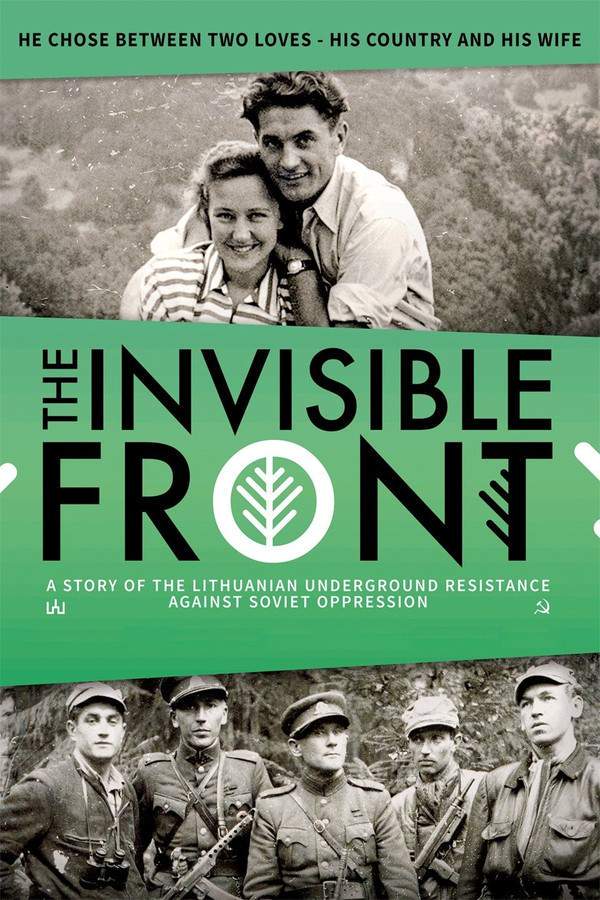
The Invisible Front 2014

Directed by

Jonas Ohman
Made by

Where to Watch The Invisible Front
See current US streaming, rental, and purchase options for The Invisible Front (2014) via JustWatch.

Kanopy
SD
Amazon Video
SD
Apple TV Store
HD
Google Play Movies
SD Streaming availability powered by 
The Invisible Front Plot Summary
Read the complete plot summary and ending explained for The Invisible Front (2014). From turning points to emotional moments, uncover what really happened and why it matters.
The Invisible Front serves as the covert title assigned by the Soviet Interior Forces to the armed resistance that emerged in the occupied territories of the former Soviet Union. This movement began to take shape almost spontaneously in 1940 and reemerged in 1944, persisting in various capacities—both armed and unarmed—until the collapse of the Soviet Union in 1991. At the heart of this compelling narrative is the journey of Juozas Luksa, along with his comrades, the Forest Brothers, as they fought against oppression.
This documentary aims to illuminate the complexities of the underground resistance through powerful interviews and access to never-before-seen archival footage. It stands as a groundbreaking tribute to a fading legacy. Over the course of four years, a dedicated team, including Mark Ryan, Mark Johnston, Jonas Ohman, and Vincas Sruoginis, has captured the essence of this struggle on location in New York, Washington DC, Estonia, Latvia, and Lithuania.
With over 50 interviews under their belt, they have spoken with dignitaries such as President Adamkus of Lithuania and President Zatlers of Latvia, as well as CIA operatives and US government officials, uncovering the stories of those from the Baltic Nations who not only resisted Stalin and his regime but also those who supported Moscow.
Through the lens of these diverse perspectives, the documentary seeks to paint a nuanced picture of a conflict that played a crucial role in the eventual demise of the Soviet Union, which transpired 50 years after its ignition. It provocatively examines the personal choices faced during times of adversity and repression.
Utilizing reenactments, historic footage from LTV and the National Archives in Washington DC, interviews with actual participants, and firsthand access to documents and photographs through the KGB museum, the film presents an authentic portrayal of Lithuanian armed resistance and its tragic consequences. The voice of Juozas Luksa, narrated by Andrius Mamantovas, harmonizes the compelling accounts of individuals who either observed the turmoil or actively participated in the underground movement. Many of these interviewees are among the very few individuals who lived through this era and witnessed the fall of the Soviet Union—their insights contributing to a broader western understanding of this pivotal historical chapter.
The Invisible Front Timeline
Follow the complete movie timeline of The Invisible Front (2014) with every major event in chronological order. Great for understanding complex plots and story progression.
Emergence of Armed Resistance
In 1940, the armed resistance began to take shape in the occupied territories of the former Soviet Union. This movement, which emerged almost spontaneously, marked the beginning of a long struggle against oppression.
Reemergence of the Forest Brothers
By 1944, the armed resistance reemerged under the leadership of Juozas Luksa and his comrades known as the Forest Brothers. This resurgence highlighted the determination of individuals committed to fighting against the Soviet regime.
Rise of the Underground Movement
Throughout the years leading up to the collapse of the Soviet Union in 1991, the underground movement persisted in various capacities, both armed and unarmed. The efforts of resistance fighters showed the resilience of these communities in the face of severe repression.
Creation of the Documentary
Over four years, a dedicated team captured the essence of the resistance movement through powerful interviews and archival footage. This effort aimed to create a groundbreaking tribute to a fading legacy of the armed resistance.
Filming Across Multiple Locations
The documentary team traveled to key locations such as New York, Washington DC, Estonia, Latvia, and Lithuania. These sites were crucial in understanding the historical context of the Baltic resistance against Soviet oppression.
Interviews with Political Leaders
The filmmakers conducted over 50 interviews, including dignitaries like President Adamkus of Lithuania and President Zatlers of Latvia. These conversations revealed insights into the leadership and political dynamics during the resistance.
Insights from CIA and US Officials
Interviews with CIA operatives and US government officials provided a broader context of international support and opposition to the Soviet regime. These perspectives highlighted the interplay between local resistance and global politics.
Diverse Perspectives on Resistance
Through various interviews, the documentary paints a nuanced picture of the conflict. It showcases the complex choices faced by individuals during times of adversity, capturing a myriad of experiences from the Baltic Nations.
Use of Historic Footage
Historic footage from LTV and the National Archives in Washington DC was utilized to enhance the storytelling. This archival material provides authenticity to the narrative of the armed resistance in Lithuania.
KGB Museum Access
The filmmakers gained firsthand access to documents and photographs through the KGB museum. This valuable resource helped to construct a more complete picture of the surveillance and repression faced by resistance fighters.
Narration by Juozas Luksa
The voice of Juozas Luksa was brought to life through the narration of Andrius Mamantovas. His words harmonized the compelling accounts of those who witnessed or participated in the turmoil of the underground movement.
Legacy of the Resistance
As the documentary aims to shine a light on the fading legacy of the resistance, it serves as a reminder of the personal sacrifices and struggles of many. It celebrates the courage of those who fought against oppression over generations.
Impact on the Fall of the Soviet Union
The documentary provocatively examines how the efforts of the resistance contributed to the eventual demise of the Soviet Union. It emphasizes the historical significance of this movement, which began 50 years prior to the USSR's collapse.
Commemoration of the Struggle
Through the innovative blend of personal accounts, historic footage, and scholarly insights, the documentary helps commemorate the struggles faced by the Forest Brothers. It invites viewers to reflect on this critical period of history.
The Invisible Front Characters
Explore all characters from The Invisible Front (2014). Get detailed profiles with their roles, arcs, and key relationships explained.
Juozas Luksa
Juozas Luksa is portrayed as a symbol of resistance against Soviet oppression, leading the charge alongside the Forest Brothers. His journey reflects the sacrifices made by many individuals who risked everything in the fight for freedom, embodying courage and determination in dire circumstances.
Andrius Mamantovas
Andrius Mamantovas lends his voice to narrate the powerful accounts of those who lived through the resistance. His narration serves to connect viewers emotionally to the stories, emphasizing the personal and collective struggles faced throughout this tumultuous period.
The Invisible Front Settings
Learn where and when The Invisible Front (2014) takes place. Explore the film’s settings, era, and how they shape the narrative.
Time period
1940-1991
The film spans over five decades, beginning with the onset of armed resistance in 1940 and extending through the collapse of the Soviet Union in 1991. This era was marked by numerous uprisings and the struggle for national identity in the Baltic states, ultimately leading to significant geopolitical changes in Eastern Europe.
Location
New York, Washington DC, Estonia, Latvia, Lithuania
The movie takes viewers through significant locations including New York and Washington DC, where much of the documentary's interviews were conducted, and the Baltic nations of Estonia, Latvia, and Lithuania, which were at the heart of the armed resistance against Soviet oppression. These places are known for their historical significance during the Cold War and the fight for independence from Soviet influence.
The Invisible Front Themes
Discover the main themes in The Invisible Front (2014). Analyze the deeper meanings, emotional layers, and social commentary behind the film.
🛡️
Resistance
The theme of resistance is central to the documentary, showcasing the struggles of the Forest Brothers as they fought against oppressive regimes. It highlights not only the armed conflict but also the unarmed resistance that emerged over decades, illustrating the complexities of standing up to authority.
📜
Historical Legacy
This theme delves into the fading legacy of the resistance movement in the former Soviet territories. By sharing personal stories and archival footage, the documentary preserves the memories of those who fought and provides a deeper understanding of this critical historical chapter.
🤝
Collaboration
The film examines the relationships between various groups involved in the struggle against the Soviet regime, including those who collaborated with oppressive forces. This dynamic adds a layer of complexity to the narrative, showing that choices were often fraught with moral ambiguity.

Coming soon on iOS and Android
The Plot Explained Mobile App
From blockbusters to hidden gems — dive into movie stories anytime, anywhere. Save your favorites, discover plots faster, and never miss a twist again.
Sign up to be the first to know when we launch. Your email stays private — always.
Explore the mobile appThe Invisible Front Spoiler-Free Summary
Discover the spoiler-free summary of The Invisible Front (2014). Get a concise overview without any spoilers.
In the waning days of World War II, the shadowed pine forests of Lithuania become a silent stage for a people caught between history and survival. The Soviet occupation casts a heavy, oppressive pall over villages and towns, turning everyday life into a careful negotiation of fear and quiet defiance. Within this stark landscape, a generation of young men and women gathers beneath the canopy, forging a covert camaraderie that whispers of freedom even as the world outside seems to forget them. The atmosphere is at once haunting and hopeful, a liminal space where the rustle of leaves carries the weight of unspoken promises.
At the heart of the resistance stands Juozas Luksa, a charismatic leader whose pen is as vital as any weapon. Having tasted love and literary ambition in distant Paris, he returns to his homeland not only to command but to chronicle the pulse of an emerging underground army. His correspondence with Nijole—intimate, lyrical letters that thread personal longing through the broader struggle—offers a delicate counterpoint to the harsh realities of guerrilla life. Through his eyes we glimpse a man torn between the desire for artistic expression and the urgent call to safeguard his nation’s spirit.
The documentary weaves together these personal narratives with a rich tapestry of archival footage, freshly recorded interviews, and carefully staged reenactments. Voices of surviving participants, scholars, and former officials intersect, each adding texture to a story that feels both immediate and timeless. The tone is contemplative yet urgent, inviting viewers to feel the quiet tension of hidden meetings and the fierce resolve that fuels them. The visual palette—muted earth tones punctuated by the stark contrast of wartime film grain—reinforces a sense of authenticity and reverence for a history that is still being uncovered.
Surrounding Juozas are his brothers-in-arms, a ragtag fellowship whose loyalty and shared purpose illuminate the human core of the resistance. Their interactions, marked by a blend of camaraderie, quiet humor, and solemn duty, hint at the profound sacrifices that lie ahead, while never stepping beyond the promise of the present struggle. The film remains an evocative portrait of a nation’s yearning for freedom, rendered through the intimate lens of those who lived it.
Featured on this page

What's After the Movie?
Not sure whether to stay after the credits? Find out!
Check out our other apps:

SAT Sphere
Build confidence for the Digital SAT.

Mori Atlas
Discover wild places worth protecting.

Luntero
Search smarter for a home in Amsterdam.

Plot Explained
Unravel movie endings and hidden clues.

Pokechamp
Dive into Pokémon data and battle logic.

Driving Theory
Get ready for your European theory test.

Movie Dust
Plan your next cinema trip with ease.

Musemap
Find art and culture as you travel.

Selkobase
Compare credentials before committing.

Local Manual
Turn an unfamiliar country into practical next steps.

Lernavi
Compare school systems before your next move.

GymRoam
Find a workout stop wherever your plans take you.
Explore Our Movie Platform
New Movie Releases (2026)
Famous Movie Actors
Top Film Production Studios
Movie Plot Summaries & Endings
Major Movie Awards & Winners
Best Concert Films & Music Documentaries
Movie Collections and Curated Lists
© 2026 What's After the Movie. All rights reserved.
Privacy Policy