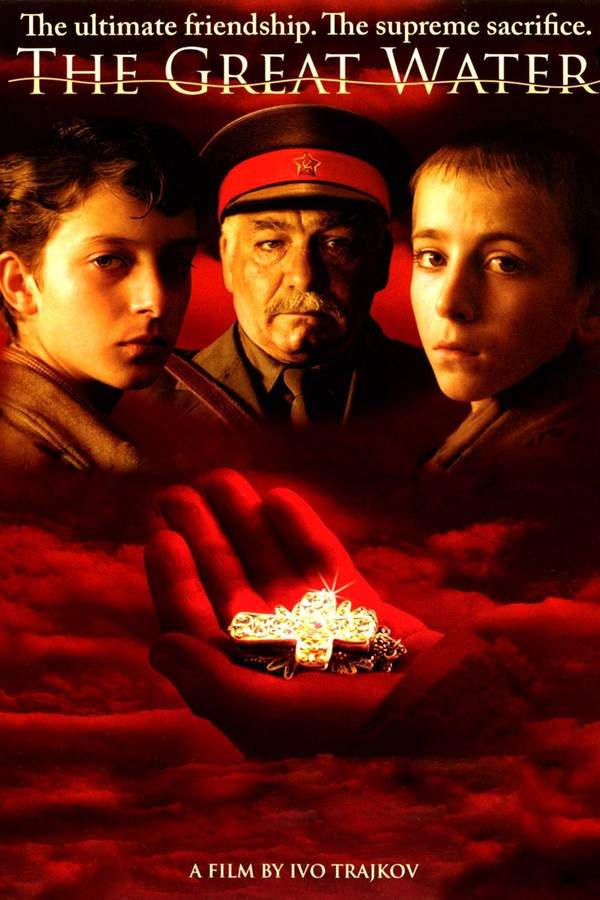
The Great Water 2005

Directed by

Ivo Trajkov
Made by

Picture This! Entertainment
The Great Water Plot Summary
Read the complete plot summary and ending explained for The Great Water (2005). From turning points to emotional moments, uncover what really happened and why it matters.
Inspired by Živko Čingo’s cherished children’s book from the 1970s, this emotional film explores the tumultuous aftermath of the war in Macedonia. The story opens in contemporary times, where Meto Jovanovski (Meto Jovanovski), a seasoned politician grappling with a critical heart condition, is taken to the hospital for urgent medical care. As he begins to recover, Jovanovski’s mind drifts to his childhood during the year 1945, a period rife with uncertainty and change.
As these vivid memories come flooding back, we find ourselves in an orphanage where children are being shaped into loyal supporters of the nascent regime. Jovanovski reflects on the challenges he endured as a boy, forced to conform to a society that prioritized obedience over individuality. In the midst of this stark environment, he forms an unexpected friendship with Isak, a charming and radiant child who ignites a flicker of hope amid the somber backdrop.
As the tale progresses, underlying tensions begin to surface, highlighting the stark contrast between the Communist regime’s harsh dismissal of faith and the profound human need for spiritual connection. The narrative grapples with the complex legacies left by leaders like Stalin and Tito, alongside the difficult adjustment to a new political order intent on erasing national pride. Ultimately, it poignantly depicts the tragic metamorphosis of children into mere instruments of the state, robbed of their unique identities and the innocent pleasures of childhood camaraderie.
The Great Water Timeline
Follow the complete movie timeline of The Great Water (2005) with every major event in chronological order. Great for understanding complex plots and story progression.
Meto's Hospitalization
The film opens with Meto Jovanovski, a seasoned politician, being taken to the hospital for urgent medical care due to his critical heart condition. This moment sets the stage for his reflections on his tumultuous childhood and the effects of war in Macedonia.
Flashback to 1945
As Meto begins to recover, his mind drifts back to the year 1945, a time filled with uncertainty and change due to the aftermath of war. These memories transport the audience to a period that deeply shaped his character and life choices.
Life in the Orphanage
In 1945, the story shifts to an orphanage where children are being molded into loyal supporters of the Communist regime. Here, Meto experiences a structured environment that prioritizes obedience and conformity over individuality.
Meto's Challenges
Meto reflects on the various challenges he faced in the orphanage, including the pressure to conform to the ideologies of the state. This era is marked by a struggle to maintain one's identity amidst oppressive societal expectations.
Friendship with Isak
In the midst of the oppressive atmosphere, Meto forms an unexpected friendship with Isak, a radiant and charming child. This bond sparks a flicker of hope and emotional connection that contrasts sharply with the bleak surroundings.
Spiritual Struggles
The film delves into the underlying tensions between the Communist regime's rejection of faith and the children's inherent need for spiritual connection. It explores how this need is stifled by the regime's agenda.
Legacy of Leaders
As the narrative unfolds, it grapples with the complex legacies left by leaders such as Stalin and Tito. Their effects on political values and societal expectations are keenly felt by the children growing up under their regimes.
Erasure of National Pride
The story highlights the difficult transition to a new political order intent on erasing national pride. This change leaves a lasting impact on the children's identities, robbing them of a sense of belonging and historical context.
Children as Instruments of the State
Ultimately, the film poignantly depicts the tragic transformation of children into mere instruments of the state. Their unique identities are overshadowed by the demands of loyalty to a regime that prioritizes collective ideology over individual spirit.
Loss of Innocence
The narrative culminates in a heart-wrenching portrayal of the loss of innocence among the children. They are forced to navigate a world that denies their individuality and the simple joys of childhood friendship.
The Great Water Characters
Explore all characters from The Great Water (2005). Get detailed profiles with their roles, arcs, and key relationships explained.
Meto Jovanovski
Meto Jovanovski is a seasoned politician whose journey through a heart condition serves as a catalyst for memories of his childhood. He reflects on the harsh realities faced during his upbringing in a repressive regime. Meto embodies resilience, navigating the complexities of personal and collective identity.
Isak
Isak is a charming and radiant child whose friendship with Meto offers a glimmer of hope amid the oppressive environment of the orphanage. His joyful spirit contrasts with the grim realities around him, serving as a beacon of innocence and possibility during tumultuous times.
The Great Water Settings
Learn where and when The Great Water (2005) takes place. Explore the film’s settings, era, and how they shape the narrative.
Time period
1945
The narrative takes place in 1945, a year marked by the aftermath of World War II and the rise of communist regimes across Eastern Europe. This period was characterized by societal upheaval and the struggle between individualism and state loyalty. It was a time when children were often caught in the crossfire of political ideologies, often losing their innocence.
Location
Macedonia, Orphanage
The story unfolds in Macedonia, a region marked by a rich cultural heritage and a tumultuous political history. The orphanage serves as a critical setting, representing the harsh indoctrination of children under the nascent regime. It contrasts sharply with the hospital's atmosphere, where healing serves as a backdrop for reflection and introspection.
The Great Water Themes
Discover the main themes in The Great Water (2005). Analyze the deeper meanings, emotional layers, and social commentary behind the film.
🕊️
Hope
Hope emerges as a powerful theme throughout the film, especially through the relationship between Meto Jovanovski and Isak. Despite the oppressive environment, Isak's charm symbolizes the resilience of the human spirit. The film showcases how small moments of friendship can provide solace and inspiration in dark times.
🔄
Identity
The theme of identity is central to the film, depicting how children are molded into supporters of the state. The story reflects on the struggle of maintaining one’s individuality amidst authoritarian pressure. Jovanovski's journey illustrates the loss of personal identity in the face of political manipulation.
⚔️
Conflict
Conflict is portrayed vividly through the tensions between personal beliefs and imposed ideologies. The film examines the struggles within society and families during a period of political upheaval. It highlights the emotional and ideological battles that arise when faith and loyalty to the state clash.

Coming soon on iOS and Android
The Plot Explained Mobile App
From blockbusters to hidden gems — dive into movie stories anytime, anywhere. Save your favorites, discover plots faster, and never miss a twist again.
Sign up to be the first to know when we launch. Your email stays private — always.
Explore the mobile appThe Great Water Spoiler-Free Summary
Discover the spoiler-free summary of The Great Water (2005). Get a concise overview without any spoilers.
In present‑day Macedonia, a seasoned politician named Meto Jovanovski lies in a hospital bed, his heart bruised by time and war. As doctors tend to his fragile pulse, his mind drifts outward, pulling loose the threads of a childhood he thought long buried. The film opens on this quiet, introspective moment, inviting viewers to feel the steady hum of memory against the stark backdrop of a life that once carried both honor and heaviness. Through a gentle, almost lyrical pacing, the story promises a meditation on how the past can surface when the body weakens.
The recollections settle in a 1945 orphanage where boys are taught to wear the new regime like a uniform. Here, Isak appears—a bright, radiant kid whose presence offers a flicker of warmth amid the austere walls. Their unexpected friendship becomes the emotional core, a tender contrast to an environment that prizes conformity over imagination. The atmosphere is suffused with muted colors and soft light, capturing both the harshness of a state eager to shape futures and the lingering innocence that refuses to be entirely erased. Subtle hints of faith and longing ripple beneath the surface.
Across its two timelines, the film weaves a contemplative tapestry of resilience, identity, and the lingering echo of childhood experiences. Its tone balances melancholy with quiet hope, using restrained cinematography and a measured score to amplify the inner lives of its characters. The audience is drawn into a world where personal history collides with collective ideology, prompting questions about how loyalty is formed and what remains when the structures that once defined us crumble. The story lingers like water—still, reflective, and forever shaping the shape of those who gaze into it.
Featured on this page

What's After the Movie?
Not sure whether to stay after the credits? Find out!
Check out our other apps:

SAT Sphere
Build confidence for the Digital SAT.

Mori Atlas
Discover wild places worth protecting.

Luntero
Search smarter for a home in Amsterdam.

Plot Explained
Unravel movie endings and hidden clues.

Pokechamp
Dive into Pokémon data and battle logic.

Driving Theory
Get ready for your European theory test.

Movie Dust
Plan your next cinema trip with ease.

Musemap
Find art and culture as you travel.

Selkobase
Compare credentials before committing.

Local Manual
Turn an unfamiliar country into practical next steps.

Lernavi
Compare school systems before your next move.

GymRoam
Find a workout stop wherever your plans take you.
Explore Our Movie Platform
New Movie Releases (2026)
Famous Movie Actors
Top Film Production Studios
Movie Plot Summaries & Endings
Major Movie Awards & Winners
Best Concert Films & Music Documentaries
Movie Collections and Curated Lists
© 2026 What's After the Movie. All rights reserved.
Privacy Policy