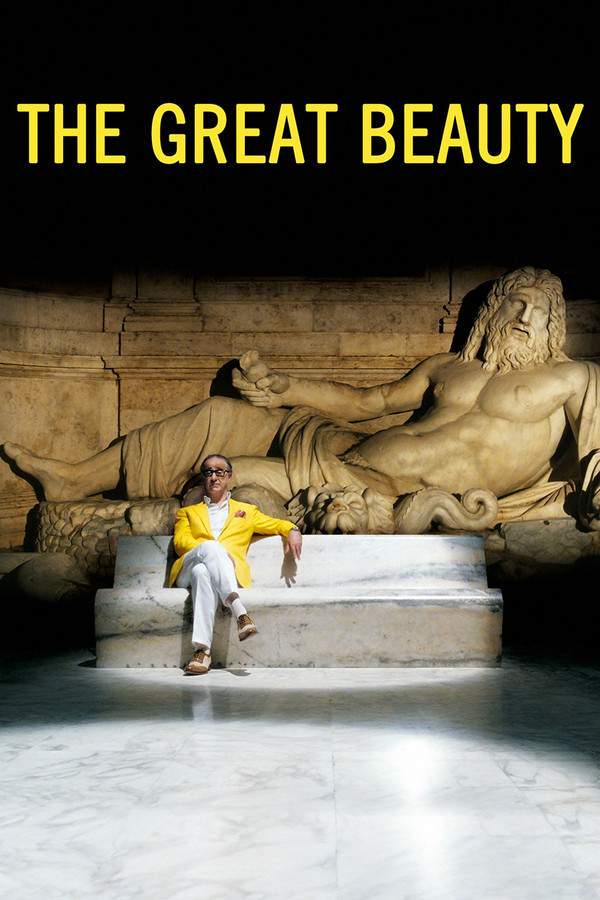
The Great Beauty 2013


Directed by

Paolo Sorrentino
Made by

Janus Films
Where to Watch The Great Beauty
See current US streaming, rental, and purchase options for The Great Beauty (2013) via JustWatch.

Criterion Channel
HD
HBO Max
HD
HBO Max Amazon Channel
HD
Amazon Video
SD
Apple TV Store
HD
Fandango At Home
SD
Google Play Movies
SD
YouTube
SD Streaming availability powered by 
The Great Beauty Plot Summary
Read the complete plot summary and ending explained for The Great Beauty (2013). From turning points to emotional moments, uncover what really happened and why it matters.
The film begins with a profound quote from Louis-Ferdinand Céline’s Journey to the End of the Night:
“Travel is useful; it exercises the imagination. All the rest is disappointment and fatigue. Our journey is entirely imaginary. That is its strength. It goes from life to death. People, animals, cities, things – all are imagined. It’s a novel, just a fictitious narrative. Littré says so, and he’s never wrong. And besides, in the first place, anyone can do as much. You just have to close your eyes. It’s on the other side of life.”
Meet Jep Gambardella, a 65-year-old journalist and theater critic, whose life has been a captivating journey through the opulent yet superficial social scene of Rome. With a rich history steeped in the city’s beauty and flaws, he seeks not only acceptance but aims to reign as the “king of society.” In his younger years, Jep dabbled in creative writing, producing The Human Apparatus, his sole literary work that garnered him acclaim and awards. Unfortunately, a relentless creative block has stifled his ability to write further, leaving him to navigate a world where superficiality reigns.
Surrounded by an eclectic group of friends, Jep finds himself entangled with Romano, a playwright often manipulated by a younger partner; Lello, a boisterous toy salesman; Viola, a wealthy woman coping with the challenges of a mentally ill son named Andrea; and Stefania, a self-absorbed writer engrossed in her own world. Among this ensemble is Dadina, the dwarf editor from Jep’s newspaper, who adds her unique charm to the mix.
A turning point arrives when Jep unexpectedly encounters the husband of Elisa, his first love, who conveys the heartbreaking news of her passing. She leaves behind a diary revealing that Jep was never truly replaced; rather, his presence was merely a lingering memory in Elisa’s life. The bond of her husband, now grieving, crumbles despite his newfound solace offered by a foreign maid. This encounter ignites a profound introspection within Jep, nudging him into a melancholic reevaluation of his own existence and compelling thoughts of returning to writing.
As days pass, Jep’s path crosses with Ramona, a stripper burdened with her own dark secrets, and Cardinal Bellucci, whose fervor for culinary arts starkly contrasts his religious duties. Through these experiences, Jep grapples with the sense of futility that envelops his life. Tragedy soon strikes; Ramona succumbs to illness, and Romano departs Rome seeking something more fulfilling, leaving only Jep behind. In a dramatic turn, Stefania, humiliated by Jep’s revelations about her deceptions, distances herself from his circle, while Viola, devastated by her son’s death, dedicates her life to missionary work in Africa.
Just as despair threatens to engulf Jep, an unexpected opportunity emerges. Urged by Dadina, he embarks on a mission to interview a Catholic missionary nun in the Third World, leading him to Giglio Island amidst the wreckage of the Costa Concordia. It is here, during a poignant flashback to his initial encounter with Elisa, that a flicker of hope rekindles within him, guiding Jep towards the completion of the novel he has long yearned to write.
The Great Beauty Timeline
Follow the complete movie timeline of The Great Beauty (2013) with every major event in chronological order. Great for understanding complex plots and story progression.
Introduction to Jep Gambardella
The film opens with a profound quote from Louis-Ferdinand Céline, establishing a theme of imagination versus reality. It introduces Jep Gambardella, a 65-year-old journalist and theater critic navigating the superficial social scene of Rome.
Jep's Past as a Writer
Jep reflects on his earlier life when he achieved acclaim for his book titled *The Human Apparatus*. However, his journey into creativity is marred by a persistent writer's block, leading him to wander through the elite yet hollow circles of society.
Encounter with Friends
Jep is surrounded by a diverse group of friends including Romano, a playwright, and Lello, a lively toy salesman. Their interactions reveal the complexities of friendship in a world populated by vanity and ambition, showcasing the intertwining lives in Jep's social sphere.
The News of Elisa's Death
A pivotal moment occurs when Jep meets the husband of Elisa, his first love, who sadly informs him of her passing. This encounter forces Jep to confront his past and the unresolved emotions tied to Elisa, reminding him of his fleeting moments with her.
Reflections on Loss
Upon learning about Elisa's death, Jep becomes introspective about his own life and the memories that shape it. He realizes that despite being absent, he remained a significant figure in Elisa's life, prompting him to revisit his own creative aspirations.
Meeting Ramona
Jep's path crosses with Ramona, a stripper with hidden struggles. Their interaction illuminates Jep's growing sense of discontent and empathizes with Ramona's burdens, showcasing the shared sense of longing for meaning in their existences.
A Culinary Cardinal
Jep encounters Cardinal Bellucci, a church leader passionate about gastronomy, which starkly juxtaposes his religious duties. This interaction underscores the absurdity and irony present in Jep's society, leading to further disillusionment.
Tragedy Strikes
The tragedy of Ramona's illness and subsequent death deeply impacts Jep, further solidifying his feelings of futility. This loss shakes the foundations of his relationships and amplifies his isolation amidst the superficiality surrounding him.
Romano's Departure
Romano decides to leave Rome in search of something more fulfilling, marking another loss for Jep. This event symbolizes the transient nature of their friendships and the quest for deeper meaning in life away from their superficial lifestyles.
Viola's Dedication
In a turn of events, Viola dedicates her life to missionary work in Africa after the tragic death of her son, Andrea. This decision highlights the stark realities of loss and the search for purpose, contrasting Jep's drift into despair.
Jep's Moment of Despair
As Jep grapples with the accumulation of loss and despair, he faces a critical point in his life. He contemplates the futility of his existence, unsure of how to reclaim joy or creative inspiration in his life.
A Call for Opportunity
Encouraged by Dadina, Jep seizes an unexpected opportunity to interview a Catholic missionary nun. This moment pushes him towards a journey that may reignite his passions and creative thoughts.
Journey to Giglio Island
Jep travels to Giglio Island, a site still grappling with the wreckage of the *Costa Concordia*. This journey serves as both a literal and metaphorical exploration of his own wrecked aspirations and the process of healing.
Flashback to Elisa
During his time on the island, Jep experiences poignant flashbacks of his first encounter with Elisa, rekindling memories of love and loss. This reflection becomes a catalyst for Jep, inspiring him to pursue his writing once more.
Renewed Inspiration
The contemplative moments on Giglio Island reignite Jep's passion for writing, steering him towards the completion of the novel he has long desired to finish. This signifies a hopeful turn in Jep's life as he embraces the act of creation once again.
The Great Beauty Characters
Explore all characters from The Great Beauty (2013). Get detailed profiles with their roles, arcs, and key relationships explained.
Jep Gambardella
Jep is a 65-year-old journalist known for his insightful critiques of society. He embodies both charm and a profound sense of loss, grappling with the realization that his life has been consumed by superficiality. As he confronts his past and relationships, he seeks to rediscover his passion for writing, making him a deeply reflective character.
Romano
Romano is a playwright often swayed by his younger partner, showcasing the vulnerabilities of artistic souls. His character represents the struggle between ambition and personal fulfillment, as he ultimately seeks meaning beyond the superficial social circle that surrounds him.
Viola
Viola is a wealthy woman who struggles with the turmoil of her mentally ill son. Her character highlights the challenges of motherhood and the weight of societal expectations, ultimately leading her to devote her life to missionary work after suffering significant personal loss.
Ramona
Ramona is a stripper whose dark secrets paint a complex portrait of survival and the hidden depths of her character. Her relationship with Jep reveals the layers of human connection that exist beneath surface interactions, ultimately ending tragically.
Cardinal Bellucci
Cardinal Bellucci is a religious figure whose passion for culinary arts starkly contrasts his clerical duties. He represents the duality of life, depicting how personal passions can coexist with societal roles while navigating morality and desire.
The Great Beauty Settings
Learn where and when The Great Beauty (2013) takes place. Explore the film’s settings, era, and how they shape the narrative.
Time period
The film unfolds in contemporary times, exploring themes of existentialism and social critique, reflecting a modern society grappling with superficiality and the pursuit of meaning in personal relationships. This period is marked by a continual quest for true connection amidst the chaos of opulence and loss.
Location
Rome, Giglio Island, Third World
Rome serves as a vibrant yet superficial backdrop for Jep Gambardella's life, known for its rich history, stunning architecture, and opulent social scene. Giglio Island, a significant location related to Jep's introspection, is infamous for the wreckage of the *Costa Concordia*, symbolizing a mix of beauty and tragedy. The Third World represents the broader, often stark realities of life that contrast sharply with Jep's previous superficial existence.
The Great Beauty Themes
Discover the main themes in The Great Beauty (2013). Analyze the deeper meanings, emotional layers, and social commentary behind the film.
🪞
Self-Reflection
The theme of self-reflection is central to Jep's journey, as he confronts the reality of his life choices and relationships. His introspection, triggered by loss and memories, drives him to reconsider his past and the superficiality that has defined his existence. Ultimately, this quest for meaning leads him to seek a renewed purpose through writing.
💔
Love and Loss
Love and loss play a poignant role in the narrative, as Jep navigates the pain of his past relationships. The news of Elisa’s death forces him to confront the unresolved feelings and memories that linger, leading to moments of melancholy and a desperate search for connection. This theme underscores the fragility of life and the importance of authentic bonds.
🌊
Existential Quest
The existential quest theme is prevalent as Jep grapples with feelings of futility and the search for deeper meaning beyond superficial social interactions. His journey through grief and self-exploration illustrates the human condition's complexities, ultimately culminating in an opportunity that reignites his passion for writing.

Coming soon on iOS and Android
The Plot Explained Mobile App
From blockbusters to hidden gems — dive into movie stories anytime, anywhere. Save your favorites, discover plots faster, and never miss a twist again.
Sign up to be the first to know when we launch. Your email stays private — always.
Explore the mobile appThe Great Beauty Spoiler-Free Summary
Discover the spoiler-free summary of The Great Beauty (2013). Get a concise overview without any spoilers.
In the luminous yet hollow corridors of Rome’s elite, Jep Gambardella drifts through endless soirées, his once‑fiery prose now a quiet echo. A journalist and theater critic in his sixties, he has become both chronicler and captive of a world that dazzles with marble façades while whispering of missed chances. The city itself is a character—a tapestry of ancient splendor and modern frivolity, where every fountain and fresco seems to mock the fleeting nature of fame and beauty.
Surrounded by a vivid entourage, Romano the playwright, Lello the exuberant toy‑seller, Viola the affluent matriarch, Stefania the self‑absorbed writer, and Dadina the quirky editor, Jep’s days are a collage of bright conversations and shallow comforts. Each companion reflects a facet of the society he once adored, yet their interactions also illuminate the cracks beneath the glitter. Through witty banter and lingering glances, the film sketches a portrait of a man whose inner life is as richly layered as the city’s cobblestones.
A lingering memory of his first love, Elisa, hovers like a half‑remembered melody, reminding him of a time when imagination ruled over obligation. Her absence, more felt than spoken, stirs a restless yearning that tugs at the pages of a novel that has waited decades to be born. The presence of Ramona, a striking figure from a different world, and Cardinal Bellucci, whose unexpected passions hint at the paradoxes of faith and desire, further accentuate Jep’s contemplation of what truly matters.
The tone is both sumptuous and melancholic, bathing the viewer in the golden haze of twilight over the Tiber while probing the ache of a soul caught between nostalgia and the present. As the camera lingers on Rome’s opulent balconies and dimly lit cafés, it invites the audience to share Jep’s silent quest: to rediscover the beauty that once inspired his words and to decide whether a life spent observing can ever become a story worth telling.
Featured on this page

What's After the Movie?
Not sure whether to stay after the credits? Find out!
Check out our other apps:

SAT Sphere
Build confidence for the Digital SAT.

Mori Atlas
Discover wild places worth protecting.

Luntero
Search smarter for a home in Amsterdam.

Plot Explained
Unravel movie endings and hidden clues.

Pokechamp
Dive into Pokémon data and battle logic.

Driving Theory
Get ready for your European theory test.

Movie Dust
Plan your next cinema trip with ease.

Musemap
Find art and culture as you travel.

Selkobase
Compare credentials before committing.

Local Manual
Turn an unfamiliar country into practical next steps.

Lernavi
Compare school systems before your next move.

GymRoam
Find a workout stop wherever your plans take you.
Explore Our Movie Platform
New Movie Releases (2026)
Famous Movie Actors
Top Film Production Studios
Movie Plot Summaries & Endings
Major Movie Awards & Winners
Best Concert Films & Music Documentaries
Movie Collections and Curated Lists
© 2026 What's After the Movie. All rights reserved.
Privacy Policy