
The Crossing I 2014

Directed by
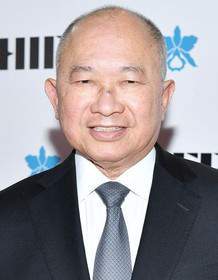
John Woo

The Crossing I Plot Summary
Read the complete plot summary and ending explained for The Crossing I (2014). From turning points to emotional moments, uncover what really happened and why it matters.
Part I
In a sweeping conflict set against World War II on the Manchurian frontier, Lei Yifang, Huang Xiaoming, a high-ranking general, orders a daring assault on entrenched Japanese forces despite pushback from his subordinates. The bold strike breaks through the enemy lines and the momentum shifts, winning a hard-fought victory that changes the careers of those involved. Dr. Yen Zekun, an ethnic Chinese field medic conscripted into the Japanese army from Taiwan, is captured during the chaos and shipped away to a prison camp in Fengtian. Lei’s rise continues as he’s promoted to lieutenant general, while Yen finds himself confined far from home. On the train transporting prisoners, Yen reads a letter from his Japanese lover, Masami Nagasawa, Masako, whose presence threads through the years that follow.
A few years pass, and the Chinese Civil War roars anew. In Shanghai, Yu Zhen, a poor and illiterate young woman who has become an orderly at a Nationalist hospital, clings to the hope of reuniting with her boyfriend Yang Tianhu, who fights on the other side of the conflict. Meanwhile, in a different social orbit, Lei Yifang captives’ world widens when Zhou Yunfen, Song Hye-kyo, a wealthy debutante, captures the general’s attention at a charity event hosted by her family. Their chemistry is undeniable, and their romance soon leads to marriage, set against a backdrop of looming war and social divides.
Months later, Yu Zhen encounters signal sergeant Tong Daqing, Tong Dawei, near the same photography studio used for Zhou and Lei’s wedding photos. Tong hopes to construct a “family portrait”—with a borrowed baby and a staged union—to help his parents secure more food rations. After they take the pictures, a student anti-war protest erupts outside the studio, and the scene spirals into violence as police crack down. In the studio, Yen reemerges, presenting separate photos of himself and Masako and requesting a clever alteration to simulate a life they never shared.
Tong and Yu slip away to a nearby noodle shop, where Tong speaks about why he joined the army, and Yu asks about soldier identification numbers that would let her locate him later, whether alive or dead. Yu’s expression brightens at the thought of her future, but Tong misreads it as a sign of romantic interest. He rushes to depart for duty, urging Yu to memorize his unit number so she can find him in the future. In the end, Yu orders a copy of the wedding portrait that supposedly captures the two of them with their “baby,” a dream that keeps her alive amid hardship.
As Zhou travels to Taiwan with Lei’s world quietly closing around her, she begins to sense the deeper layers of her husband’s life. Her pregnancy grows, and she speaks of not wanting to be sent away to Taiwan as war clouds gather. Her parents see her off, capturing one final image of Lei in the background as he silently watches from a hidden position, preparing for the front.
Back in Shanghai, the atmosphere for workers and dancers grows tense as war demands more sacrifices. Yu, having lost her earlier stability, turns to work as a dancer and, later, into prostitution to secure funds for her journey to Taiwan, hoping to find her missing lover. A new reality emerges: Lei’s 12th Army edges toward encirclement in the Huaihai Campaign, with supply routes cut and morale fraying. An attempt to break out is met with fresh orders that force Lei to confront the scars of battles fought earlier on the same ground, but now against fellow Chinese rather than foreign invaders. He laments the irony of returning to the same battlefronts, only to see comrades fall to their own countrymen.
In Taiwan, Zhou searches for music and memory, replacing a painting with a relic from her wedding. She discovers Masako’s diary tucked behind a painting, along with Masako’s sheet music, and she begins to understand that the house she occupies once belonged to Masako herself. Zhou encounters Yen again, and the two form a fragile, quiet alliance rooted in shared longing for a distant love. Yen explains how his mother sold Masako’s mother the piano that Zhou now treasures, and the two bond over the sound of music and the ache of separation, with quarters of history and family secrets binding them.
Meanwhile, Tong, back with Lei’s radio crew, forges a moment of solidarity with Lei as they share their photos and memories. In the broader war zones, the Communist forces gain momentum, while the Nationalists tighten their grip on dwindling resources. Lei makes a dramatic choice to stand his ground as the enemy advances, and Tong, moved by loyalty, returns to support him even as the end looms. A turning point arrives when Tong’s companion–a defector from the 108th Division–turns hostile, and Tong must navigate a dangerous moral landscape to preserve life. The two men face a final, brutal confrontation as the Chinese civil war consumes them all, with Lei making a last, selfless decision to ensure the survival of his diary and the memory of his family that anchors him to the future. In the end, Lei’s fate is sealed by a tank shell that destroys his command post, and Tong’s steadfast loyalty underlines the human cost of war.
Part II
The story leaps forward to the dawn of 1949 as three couples flee from China to Taiwan amid the Communist Revolution. A drunken ship captain endangers the voyage when his vessel collides with another, and the hull sinks in mere minutes. Surviving a chaotic scramble, Dr. Yen Zekun uses his medical knowledge to tend the injured on makeshift flotation devices as the wreckage drifts. Yu Zhen, recalling her days as a nurse, assists Yen and others while struggling to stay afloat. The desperate scramble for life turns grim when some men target lifebuoys for themselves, and Yen is stabbed in the melee. He drifts away, seeing a vision of Masako—whose own sorrow over her past life threads the memories of those he loves—before slipping away into the sea.
Yu Zhen, resilient and resourceful, is reunited with Tong Daqing, who has also survived, though he loses Lei Yifang’s notebook in the chaos. Yu Zhen clutches the diary’s pages as the survivors cling to debris, and an Australian warship, HMAS, rescues them along with thirty-one other survivors as the sun rises on a fragile new day. Four months pass, and Zhou Yunfen gives birth to Lei Yifang’s son, though she remains unaware of her husband’s fate. Tong Daqing then arrives at Zhou’s home to bring the bad news—and to offer Lei Yifang’s diary, which Yu Zhen had preserved. The two men’s acts of courage—Tong’s loyalty and Yu Zhen’s steadfast hope—allow Zhou to begin to understand the cost of love in war, and to give thanks to the people who helped them endure. In a quiet moment of gratitude, Zhou and Tong both acknowledge the gratitude they owe to Yu Zhen for keeping the memories alive, and for helping to carry the weight of the past into a fragile future.
The Crossing I Timeline
Follow the complete movie timeline of The Crossing I (2014) with every major event in chronological order. Great for understanding complex plots and story progression.
Lei Yifang's breakthrough against Japanese lines
Lei Yifang personally leads an assault against Japanese positions in Manchuria and overruns their lines, turning the tide of the battle. The victory solidifies his standing within the Nationalist army. Dr. Yen Zekun is captured during the clash and sent to a POW camp in Fengtian.
Yen Zekun captured and imprisoned
Yen Zekun is taken prisoner during the battle and shipped to a prison camp in Fengtian. On the POW train, he reads a letter from his Japanese lover Masako, revealing the personal stakes behind the war. His capture marks a turning point in his loyalties and future choices.
Lei promoted to lieutenant general
In the aftermath of the campaign, Lei Yifang receives a promotion to lieutenant general, signaling his rising leadership role. The promotion cements his position within the Nationalist command structure. Yen's imprisonment continues as the conflict broadens into the civil war.
Yu Zhen volunteers at a Shanghai hospital
A few years later, Yu Zhen volunteers as an orderly at a Nationalist hospital in Shanghai, hoping to support herself during wartime. She dreams of reuniting with her boyfriend Yang Tianhu, who fights the Communists. Her quiet resilience sets the stage for future reunions with other characters.
Lei and Zhou Yunfen marry
General Lei Yifang attracts the attention of wealthy Zhou Yunfen at a charity event, and months later they marry. The union bridges two worlds—the military elite and Shanghai's elite society. Zhou's initial reservations about him give way to a committed partnership.
A family portrait as a front-line ruse
Sergeant Tong Daqing arranges a photo session with Yu Zhen and a borrowed baby to create a convincing family portrait. The image is meant to secure food rations and a semblance of stability amid wartime shortages. A nearby anti-war protest adds a tense backdrop to the shoot.
Yen seeks an altered studio photograph
Dr. Yen enters the studio and asks the proprietor to create an altered photo that would make it look like he and Masako are together. The ruse highlights the personal costs of loyalties during the war. The studio becomes a place where private histories collide with public events.
Yu turns to prostitution to survive
With jobs scarce, Yu Zhen moves from a boardinghouse to a wartime dance club, only for the club to be shut down as the city conserves energy for the war. She turns to prostitution to earn money and hopes to travel to Taiwan to find her missing lover. The streets portray the harsh realities of the era.
Huaihai Campaign and the push to breakout
Lei's 12th Army faces encirclement during the Huaihai Campaign, with supply lines severed and breakout plans recalibrated. Anxious about fighting fellow Chinese, Lei laments returning to the same battlegrounds he once faced against invaders. The campaign intensifies the personal and political stakes for all involved.
The 108th Division defects and Tong's peril
Tong discovers that the 108th Division has defected to the Communists while attempting to report the information. His fellow soldier companion holds him at gunpoint, forcing a dangerous standoff. Tong escapes to warn the rest of the 12th Army as front-line loyalties become more fragmented.
The breakout begins and diary exchanges
Lei orders a breakout and the officers resolve to stay with their troops. Tong reports to Lei and asks for court-martial after learning of the 108th's desertion, and Lei entrusts Tong with his diary to ensure Zhou receives it. The exchange cements a bond forged in trust under fire.
Lei Yifang dies protecting his post
As the Communists breach the line, Lei is killed when a tank shell hits his command post. Tong saves him briefly by moving him, but Lei passes away with his memories of wife and children. Before dying, he entrusts Tong with his diary and his mission to deliver it to Zhou Yunfen.
Evacuation ship sinks; Yen dies amid the chaos
In 1949, during a desperate evacuation to Taiwan, a drunken captain's ship collides with another and sinks within minutes. Yen Zekun uses his medical skills to help the injured as survivors cling to wreckage, but he is stabbed and dies, briefly visioning Masako as his last comfort. Yu Zhen fights to survive nearby.
Yu Zhen and Tong Daqing survive and find the diary
Yu Zhen reunites with the injured Tong Daqing aboard the wreckage and helps him recover Lei Yifang's diary after it was lost. The two cling to the wreckage until an Australian HMAS picks up the survivors, including about 31 others. The diary remains a thread linking their fates.
Four months later: Zhou Yunfen gives birth and the diary is delivered
Back in Taiwan, Zhou Yunfen gives birth to Lei Yifang's son, and Tong Daqing arrives to tell her the bad news while delivering Lei's diary thanks to Yu Zhen. Zhou thanks Tong and Yu Zhen for preserving the memory of Lei and their shared history.
The Crossing I Characters
Explore all characters from The Crossing I (2014). Get detailed profiles with their roles, arcs, and key relationships explained.
Lei Yifang (Huang Xiaoming)
Nationalist Major General who personally leads bold assaults and rises to lieutenant general. He drives his troops with decisive, relentless leadership, often overruling subordinates. As the Huaihai Campaign unfolds, the cost of his choices becomes ever clearer, until his post is shattered by a tank shell, leaving his fate ominous.
Masako Shimura (Masami Nagasawa)
A Japanese-identified artist and the object of Yen’s affection, whose letters and diary anchor a cross-cultural thread through the story. Her presence spans generations as a symbol of memory and longing, connecting lives across borders and colonial histories.
Yen Zekun (Takeshi Kaneshiro)
An ethnic Chinese field medic conscripted into the Japanese army, educated and resourceful, navigating divided loyalties. He endures captivity, aids others through medicine, and ultimately dies aboard a sinking ship, his final moment marked by a vision of Masako.
Zhou Yunfen (Song Hye-kyo)
A wealthy Shanghai debutante who becomes Lei’s wife, shaping power dynamics through social status and affection. She discovers Masako’s diary, shaping a bridge between past and present, and seeks inspiration for a song that captures longing across generations.
Tong Daqing (Tong Dawei)
A signal corps sergeant whose practical loyalty binds him to comrades. He fabricates a family portrait to secure rations, then returns to the front to fight alongside Lei, sharing the burden of duty and risking his life for others. He ultimately delivers Lei’s diary to Zhou, preserving a fragment of their story.
Yu Zhen (Zhang Ziyi)
A poor, illiterate young woman who becomes an orderly and then a dancer in Shanghai, turning to prostitution to survive war’s chaos. She pursues reunion with her missing lover, ultimately reuniting with Tong and a child, surviving the shipwreck and finding a new life in the aftermath.
The Crossing I Settings
Learn where and when The Crossing I (2014) takes place. Explore the film’s settings, era, and how they shape the narrative.
Time period
1930s–1949
Spanning the late 1930s through the Chinese Civil War era, the film tracks wars both abroad and at home. It begins with World War II battles in Manchuria, moves through the postwar rearrangement, and ends in 1949 with Taiwan’s uncertain dawn. The timeline emphasizes memory as a thread connecting former lovers across generations.
Location
Manchuria, Shanghai, Taiwan
The story unfolds across Manchuria’s frontlines during World War II, then shifts to the wartime cities of Shanghai and their hospitals. It later moves to Taiwan, with Keelung’s port and island life shaping the characters’ fates. These places serve as backdrops for battles, separations, and the fragile hope of reunion.
The Crossing I Themes
Discover the main themes in The Crossing I (2014). Analyze the deeper meanings, emotional layers, and social commentary behind the film.
❤️
Love and War
War separates lovers and tests loyalties across national boundaries. Photographs, letters, and diaries become lifelines that preserve memory when distance and danger separate people. The narrative uses intimate moments to show how affection endures amid bombing, displacement, and political upheaval.
🧭
Identity & Colonization
Characters navigate complex identities—Chinese, Japanese, Taiwanese—within a landscape of empire and occupation. Masako’s and Yen’s cross-cultural romance highlights colonial histories and the friction between personal desire and larger power structures. The discovery of Masako’s diary and Masako’s piano connects past and present across generations.
🛡️
Duty and Sacrifice
Lei’s leadership forces hard choices under the threat of encirclement and siege. Tong’s steadfast loyalty and the ultimate fate of Lei underscore the cost of war and the meaning of keeping promises. The plot places individual duties against collective survival, showing how survivors carry forward the memory of the fallen.

Coming soon on iOS and Android
The Plot Explained Mobile App
From blockbusters to hidden gems — dive into movie stories anytime, anywhere. Save your favorites, discover plots faster, and never miss a twist again.
Sign up to be the first to know when we launch. Your email stays private — always.
Explore the mobile appThe Crossing I Spoiler-Free Summary
Discover the spoiler-free summary of The Crossing I (2014). Get a concise overview without any spoilers.
In the waning days of World War II and amid the upheaval of the Chinese Revolution, three couples from disparate backgrounds and nationalities find themselves compelled to leave the mainland for the distant island of Taiwan. Their journey is set against a landscape scarred by conflict, where shifting loyalties and uncertain futures shape every decision. The film frames this exodus as both a literal crossing of treacherous seas and a metaphorical passage from a shattered past toward the promise of a fragile new beginning.
At the heart of the story stands Lei Yifang, a seasoned general whose sense of duty is tested by the changing tides of war. Beside him, Dr. Yen Zekun — a field medic with a foot in both the occupying forces and his native land — grapples with the weight of his divided identity. Zhou Yunfen, a poised debutante, brings a perspective of privilege and hidden yearning, while Yu Zhen, a modest hospital orderly, carries a quiet resilience forged in hardship. Completing the ensemble, Tong Daqing serves as a signal sergeant whose loyalty to his comrades fuels his resolve. Together, these characters form a tapestry of hopes, fears, and unspoken ties that drive the narrative forward.
The tone balances sweeping historical scope with intimate, character‑driven moments, using visual motifs such as lingering photographs and lingering notes of music to hint at deeper connections. The atmosphere is thick with anticipation and melancholy, capturing the stark beauty of a nation in transition and the personal cost of survival. Light and shadow play across both battlefield and home, underscoring the fragile balance between duty and desire.
As the couples navigate the uncertain currents of a world reshaped by war, the film invites viewers to contemplate the enduring power of memory, love, and perseverance. With each step toward Taiwan, the characters carry not only their belongings but also the lingering echoes of a past they cannot fully escape, promising an emotionally resonant odyssey that lingers long after the final frame.
Featured on this page

What's After the Movie?
Not sure whether to stay after the credits? Find out!
Check out our other apps:

SAT Sphere
Build confidence for the Digital SAT.

Mori Atlas
Discover wild places worth protecting.

Luntero
Search smarter for a home in Amsterdam.

Plot Explained
Unravel movie endings and hidden clues.

Pokechamp
Dive into Pokémon data and battle logic.

Driving Theory
Get ready for your European theory test.

Movie Dust
Plan your next cinema trip with ease.

Musemap
Find art and culture as you travel.

Selkobase
Compare credentials before committing.

Local Manual
Turn an unfamiliar country into practical next steps.

Lernavi
Compare school systems before your next move.

GymRoam
Find a workout stop wherever your plans take you.
Explore Our Movie Platform
New Movie Releases (2026)
Famous Movie Actors
Top Film Production Studios
Movie Plot Summaries & Endings
Major Movie Awards & Winners
Best Concert Films & Music Documentaries
Movie Collections and Curated Lists
© 2026 What's After the Movie. All rights reserved.
Privacy Policy