
The Chocolate War 1988



Where to Watch The Chocolate War
See current US streaming, rental, and purchase options for The Chocolate War (1988) via JustWatch.









The Chocolate War Plot Summary
Read the complete plot summary and ending explained for The Chocolate War (1988). From turning points to emotional moments, uncover what really happened and why it matters.
At Trinity, a Catholic boys’ boarding school, the film offers a piercing look at the layered hierarchy that governs daily life, from formal authority to the unspoken rules that govern peer culture. The new student Jerry Renault arrives with a quiet sense of defiance, and he is drawn into a chocolate fundraiser expected to showcase school spirit. This fundraiser becomes a battleground not just for economics, but for power, control, and reputation.
A secret society of students, The Vigils, assigns Jerry the notorious task of refusing to sell chocolates for ten days. What begins as a symbolic act quickly grows heavier as the days stretch beyond the deadline, revealing that Jerry is acting on his own, without a clear explanation for his defiance. The tension deepens as the school’s leadership, including the clever yet cruel headmaster, Brother Leon, pressures him to conform. Brother Leon’s insistence that the sale succeed—and the exposure of his own missteps in spending $20,000 of school funds on the chocolates—drives a dangerous stake in the outcome.
Archie Costello, the Assigner of The Vigils and a master of manipulation, moves decisively to secure the sale’s success. He summons Jerry to a direct confrontation with the secret society, urging him to sell the chocolates and warning that the stakes are about more than a fundraiser. When Jerry still resists, Archie orchestrates an escalated hazing campaign and launches a public relations effort at Trinity with a simple, chilling slogan: We’ll make selling chocolates popular. > We’ll make selling chocolates popular.
As public opinion shifts, Trinity’s students begin to view Jerry as the lone holdout against school spirit, while others quietly participate to keep the peace. The Goober, Roland Goubert, quietly stands with Jerry’s stance, though the system’s momentum continues to pull the crowd toward participation. The dynamics of power intensify as Emile Janza, a strong, brutish student drawn into Archie’s plan, taunts Jerry into anger, and a violent ambush follows on the way home from school. Archie later rationalizes the ambush as Emile’s idea, inviting Jerry to seize a revenge that may come at a cost.
That cost comes in the form of a late-night, public boxing match on the school grounds between Emile and Jerry, a match decided not by merit but by the tickets bought by peers who dictate how each punch will be delivered. The match’s sinister ritual is reinforced by an old Vigils tradition: the Assigner orders an Assignment and the participant must draw a marble from a black box. Inside are several white marbles and one black marble. After Archie draws the black marble for the first time in his career, he becomes the one who must step down from his familiar role to take Emile’s place.
Jerry enters the match bound by the formalities of the rules, delivers a few measured blows, and then, in a surge of anger, lands a brutal strike to Archie. Archie is knocked out, and the crowd roars in approval, greeted by approving glances from Carter and Obie Jameson. Yet the scene is emotionally crushing for Jerry, who notices Goober’s disappointed, hurt face and imagines the disapproving gaze of his late mother in the cheering crowd. The moment crystallizes a hard truth: even in the act of rebellion, Jerry has inadvertently fed into the very machinery he sought to resist—the machinations of Brother Leon and The Vigils.
In the end, Obie Jameson—the new Assigner of The Vigils—celebrates a hollow victory as Archie is demoted to Secretary. Obie, lacking Archie’s flair for complexity, crafts crude, blunt assignments that underscore the continuity of control and the fragility of individual defiance within a tightly controlled system. The film closes on a note that is both indicting and quietly revealing: rebellion can be co-opted, and authority can weather even the most audacious acts of resistance.
The Chocolate War Timeline
Follow the complete movie timeline of The Chocolate War (1988) with every major event in chronological order. Great for understanding complex plots and story progression.
Jerry's chocolate sale refusal begins
Jerry Renault is recruited by The Vigils and is made to refuse selling chocolates for ten days as a test of loyalty. The headmaster Brother Leon supports the stunt to test authority and public perception. The ten-day window opens a larger power struggle within Trinity.
Archie orders Jerry to sell the chocolates
Archie Costello, as Assigner, summons Jerry to a direct meeting before The Vigils and orders him to start selling the chocolates. When Jerry refuses again, Archie escalates the pressure by intensifying harassment and public shaming. The confrontation sets the tone for a calculated manipulation of students and authority.
Leon and The Vigils ally with the administration
The Vigils forge an alliance with Brother Leon, who needs the fundraiser to succeed to avoid scrutiny over misusing school funds. The collaboration strengthens both sides' grip on Trinity, turning personal rebellion into a campus-wide spectacle. Public optics become as important as the sale itself.
Goober publicly joins the defiance
Roland Goubert, aka Goober, quietly joins Jerry in refusing to sell, signaling a risk shared by a few. Yet the rest of the student body continues to push the 50-box quota through other boys, maintaining the illusion of broad participation. Goober's stance contrasts with the crowd's complicity.
Publicity campaign proclaims popularity of selling
Archie orchestrates a Trinity-wide publicity campaign with the slogan 'We'll make selling chocolates popular.' The campaign shifts public opinion, reframing Jerry as lacking school spirit rather than as a principled resister. The new narrative helps the sale press forward despite Jerry's defiance.
Harassment escalates after taunts
Emile Janza taunts Jerry and corners him on his way home, triggering a brutal ambush by local kids. Archie then manipulates the situation, claiming Emile acted on his own and offering Jerry a chance at revenge. The bullying intensifies as the line between performance and coercion blurs.
Nocturnal boxing match is organized
That night, The Vigils and Trinity students stage a boxing match between Emile and Jerry on the school grounds. Tickets specify how each punch should be delivered, turning violence into a staged public event. The spectacle consolidates Archie’s control and the crowd’s complicity.
The marble ritual signals a shift in power
Before the match, the traditional marble draw inside the black box determines responsibilities. Archie draws a white marble to stay in his role for Jerry’s place, then draws the black marble for the first time himself, signaling a shift in power. The moment foreshadows a new, stricter leadership within The Vigils.
The fight ends in a surprising knock-out
During the match, Jerry fights within the rules and endures a sequence of prescribed moves. When Archie kicks Jerry in the groin, Jerry breaks from the plan and overwhelms Archie, knocking him unconscious. The cheering crowd feels hollow as Goober looks on with disappointment, highlighting the moral cost of the spectacle.
Jerry realizes his rebellion aided the system
After the fight, Jerry is celebrated briefly by the crowd but realizes his act of rebellion conformed to the system’s goals. He understands that his resistance inadvertently aided Brother Leon and The Vigils in selling the chocolates. The revelation marks a turning point in his moral stance and the film’s meditation on power and complicity.
Obie rises; Archie is demoted
Archie is demoted to Secretary, and Obie Jameson becomes the new Assigner. Obie lacks Archie's flair for manipulation and instead offers crude, simplistic assignments. The leadership shift preserves The Vigils' grip on Trinity, albeit through a different style.
The campaign persists under new leadership
With Obie in charge, the chocolate sale continues under Brother Leon’s watchful eye. The system endures changes in personnel, but the underlying dynamics of control remain intact. Jerry’s ambiguous stance persists as a quiet counterpoint to the prevailing power structure.
The Chocolate War Characters
Explore all characters from The Chocolate War (1988). Get detailed profiles with their roles, arcs, and key relationships explained.
Jerry Renault (Ilan Mitchell-Smith)
Jerry is a new student whose principled stance sets him at odds with Trinity's rituals. His refusal to participate in the chocolate fundraiser marks him as a target of bullying and social ostracism. He speaks little of his reasons, hinting at a private code that refuses to bend to pressure. His defiance, while admired by some, ultimately reveals the depth of the school's control over individual choices.
Archie Costello (Wallace Langham)
Archie is the cunning Assigner of The Vigils, orchestrating the harassment campaign and the public-relations push to normalize selling chocolates. He wields influence through manipulation and strategic planning, turning school politics into a game. His calculations reveal a willingness to use anyone as a pawn to maintain control. Archie's role shows how charisma and scheming can subvert authentic rebellion.
Brother Leon (John Glover)
Brother Leon is the acting headmaster whose authority looms large over Trinity. He colludes with The Vigils to salvage his reputation and avoid repercussions for misusing school funds. His manipulation demonstrates how institutional power can be weaponized to crush dissent. Leon embodies the moral ambiguity at the heart of the school's hierarchy.
Goober (Corey Gunnestad)
Goober, Roland Goubert, is a quieter presence within The Vigils who quietly aligns with Jerry's stance. He participates in the broader pressure tactics but shows genuine concern for his peers' welfare. His disappointment at the crowd’s reaction underscores the personal costs of group conformity. Goober embodies the fragile line between conformity and solidarity.
Emile Janza (Brent David Fraser)
Emile is a strong, brutish figure used by Archie to intimidate Jerry. He taunts and physically corners Jerry, becoming a key instrument in the escalation of the conflict. His actions highlight the raw force behind the school's pressure campaigns. Emile's popularity is leveraged to maintain the momentum of the hazing spectacle.
Obie Jameson (Doug Hutchison)
Obie rises from within The Vigils to become the new Assigner, complicating the cycle of power. He orchestrates the assignment system with a blend of sly wit and ruthlessness, converting Archie's creative energy into a procedural machine. His ascent signals a shift in the machine's gears, showing how control can evolve even in the absence of a single mastermind.
The Chocolate War Settings
Learn where and when The Chocolate War (1988) takes place. Explore the film’s settings, era, and how they shape the narrative.
Location
Trinity Catholic Boys' Boarding School
The story unfolds primarily within Trinity, a Catholic boys' boarding school. The campus is a confined world of rituals, punishments, and surveillance where authority figures shape behavior. Power concentrates in the hands of the administration, a secret student society known as The Vigils, and the boys who fear losing status. The setting serves as a pressure cooker for conformity, cruelty, and moral ambiguity.
The Chocolate War Themes
Discover the main themes in The Chocolate War (1988). Analyze the deeper meanings, emotional layers, and social commentary behind the film.
🔥
Rebellion
Jerry Renault's refusal to sell chocolates anchors the film's exploration of individual conscience against institutional expectations. The Vigils and Brother Leon escalate pressure from subtle coercion to public shaming, showing how power exploits fear to enforce conformity. Jerry becomes both a hero and a victim of the system as his act of defiance is absorbed by the school's machinery.
🎭
Conformity
The student body is shaped by propaganda and peer pressure, turning the chocolate sale into a symbol of school spirit. Archie uses public relations and ritualized events to manufacture consensus and delegitimize dissent. Goober's quiet defiance highlights the fragility of solidarity within a competitive, status-driven culture.
⚖️
Power
The film exposes a layered hierarchy: the administration, The Vigils, and student factions compete for control. Archie's manipulation, Leon's authority, and Obie's opportunism reveal how rules are bent to protect reputations and purse strings. Rebellion is costly, and victory often confirms the system's grip on Trinity.

Coming soon on iOS and Android
The Plot Explained Mobile App
From blockbusters to hidden gems — dive into movie stories anytime, anywhere. Save your favorites, discover plots faster, and never miss a twist again.
Sign up to be the first to know when we launch. Your email stays private — always.
Explore the mobile appThe Chocolate War Spoiler-Free Summary
Discover the spoiler-free summary of The Chocolate War (1988). Get a concise overview without any spoilers.
In the cloistered world of Trinity, an elite Catholic boarding school, every hallway hums with ritual and hierarchy. Tradition governs the day‑to‑day, yet unspoken codes pulse beneath the surface, shaping the students’ lives as surely as any rule written in the chapel. The campus, with its stone facades and echoing corridors, feels both timeless and suffocating, a place where loyalty is measured in whispered alliances and the weight of reputation is never far from the mind.
Jerry Renault arrives as a fresh face among the seasoned seniors, carrying a quiet sense of defiance that sets him apart from the well‑rehearsed cadence of school life. He is quickly drawn into the annual chocolate fundraiser—a glossy, outward‑show of school spirit that masks a deeper contest of power. The assignment seems straightforward, but for Jerry it becomes the first thread that pulls at the tightly woven fabric of Trinity’s culture.
Brother Leon, the cunning headmaster, oversees the fundraiser with an eye on both the school’s finances and its image, while Archie Costello, the charismatic leader of the secret senior circle known as the Vigils, directs the hidden currents that govern peer interaction. The Vigils operate like an unofficial council, enforcing hazing rituals and subtle coercion that keep the student body in line. Their demand that Jerry refuse to sell chocolates for a set period transforms a simple charity drive into a symbolic stand‑off, pitting individual will against an entrenched system.
The film settles into a tense, atmospheric tone, balancing the solemnity of the religious setting with the simmering undercurrent of rebellion. As Jerry navigates the expectations of authority figures and the unspoken pressure of his classmates, the audience senses a growing clash between conformity and dissent, hinting at the costs of defiance in a world where every action reverberates through a carefully controlled hierarchy.
Movies with Similar Twists and Themes
Uncover films that echo the narrative beats, emotional arcs, or dramatic twists of the one you're exploring. These recommendations are handpicked based on story depth, thematic resonance, and spoiler-worthy moments — perfect for fans who crave more of the same intrigue.
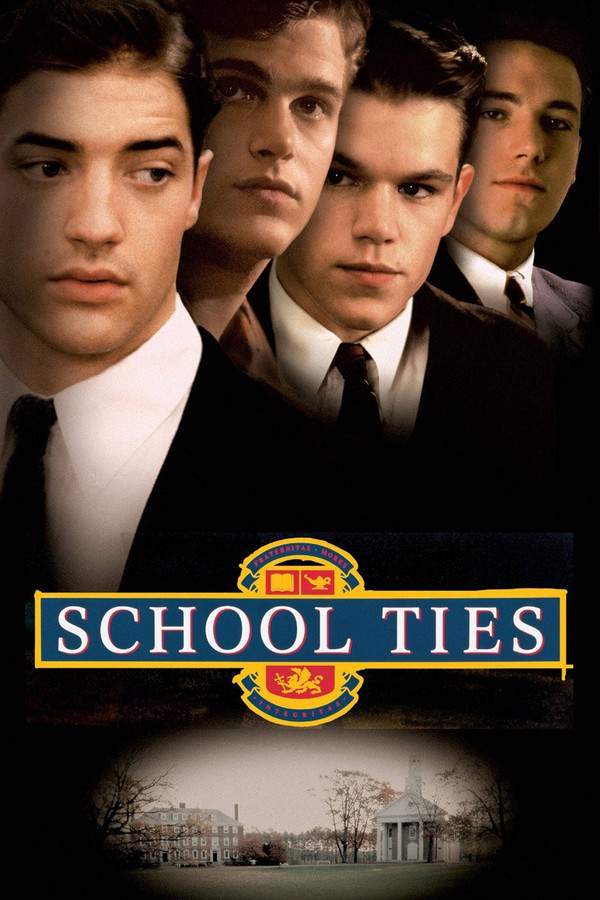


Featured on this page

What's After the Movie?
Not sure whether to stay after the credits? Find out!
Check out our other apps:

SAT Sphere
Build confidence for the Digital SAT.

Mori Atlas
Discover wild places worth protecting.

Luntero
Search smarter for a home in Amsterdam.

Plot Explained
Unravel movie endings and hidden clues.

Pokechamp
Dive into Pokémon data and battle logic.

Driving Theory
Get ready for your European theory test.

Movie Dust
Plan your next cinema trip with ease.

Musemap
Find art and culture as you travel.

Selkobase
Compare credentials before committing.

Local Manual
Turn an unfamiliar country into practical next steps.

Lernavi
Compare school systems before your next move.

GymRoam
Find a workout stop wherever your plans take you.
Explore Our Movie Platform
New Movie Releases (2026)
Famous Movie Actors
Top Film Production Studios
Movie Plot Summaries & Endings
Major Movie Awards & Winners
Best Concert Films & Music Documentaries
Movie Collections and Curated Lists
© 2026 What's After the Movie. All rights reserved.
Privacy Policy