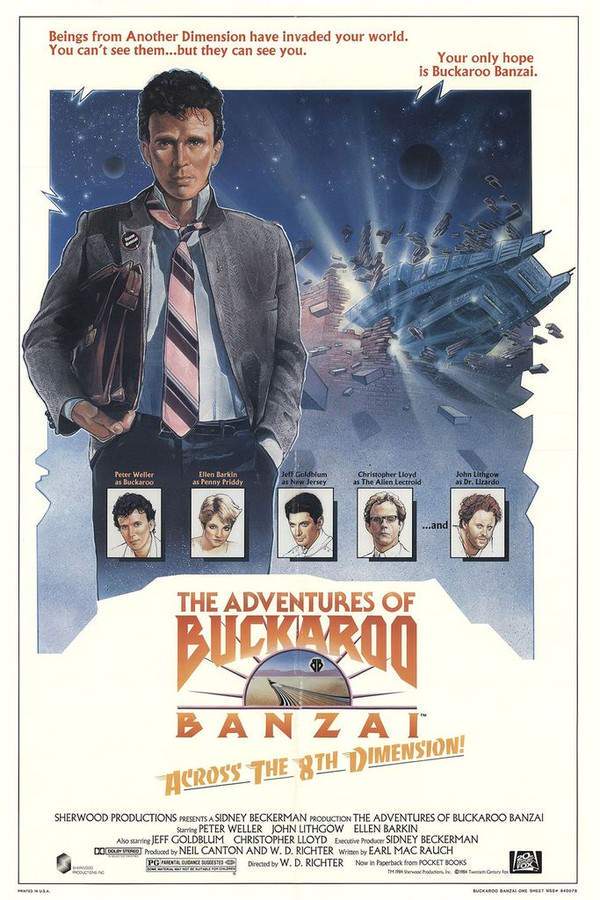
What Is The Bamboo Saucer About?
The premise of The Bamboo Saucer in 406 words, with nothing given away. The full story follows below.
In a remote village tucked away in the mountains of Red China, an otherworldly disc of shining metal crashes, its enigmatic presence instantly turning a quiet landscape into the focal point of a global power struggle. The world is still very much defined by the thin line of Cold‑War tension, and the sudden appearance of alien technology offers both the United States and the Soviet Union a tantalizing glimpse of a weapon—or a breakthrough—that could tilt the balance of power forever. The film’s atmosphere is steeped in the stark, smoky corridors of 1960s intelligence agencies, while the mist‑shrouded Chinese countryside provides a haunting, almost mythic backdrop for the story’s opening act.
At the heart of the mystery is Fred Norwood, a daring test pilot whose acute instincts and unshakable confidence have already earned him a reputation for flirting with the edge of the possible. After a near‑catastrophic encounter with the unknown craft during a high‑speed flight test, Fred becomes obsessed with proving that what he saw was real, not a trick of the mind or a fabricated report. His relentless pursuit of the truth sets him at odds with skeptical officials and underscores the film’s central theme: the clash between hard‑nosed bureaucracy and the raw, intuitive drive of those who live on the front lines of discovery.
The scramble to secure the saucer pulls together a motley crew of operatives, scientists, and military figures from opposite sides of the Iron Curtain. Among them are the steadfast government liaison Hank Peters and a resourceful Chinese guide who navigate a maze of secrecy, cultural mistrust, and the ever‑present threat of hostile forces. Their uneasy collaboration is laced with a quiet tension, as each side weighs the promise of unmatched technological advantage against the risk of handing it to a rival. The film’s tone oscillates between sleek, jet‑engine precision and the eerie, almost reverent awe of confronting the truly unknown.
As the two superpowers finally converge on the alien vessel, they are forced into a reluctant partnership, boarding the craft and igniting its dormant engines. The moment the saucer lifts off, the stakes soar far beyond earthly borders, hinting at a future where the line between cooperation and competition becomes razor‑thin. The story teases the grand possibilities—and perils—of mastering a technology that could redefine humanity’s place in the cosmos, leaving the audience to wonder whether shared ambition or mutual fear will shape the next chapter of the space race.
What Happens in The Bamboo Saucer?
The complete story of The Bamboo Saucer, from the first scene to the last, in 593 words (about 3 minutes). Spoilers throughout. Names in the text link to 7 cast member pages.
Spoilers ahead
Fred Norwood, a skilled test pilot, takes the controls of the experimental X-109, a high-speed U.S. Air Force Lockheed F-104 Starfighter packed with advanced hardware, flying in formation with a chase plane. During the flight testing, a mysterious flying saucer suddenly appears, forcing Norwood into a nerve‑racking sequence of aerobatics as he fights to keep both aircraft safe. In a breathtaking display of precision, he pulls the X-109 out of a deadly dive at Mach 3.12 (about 2,320 mph, 3,402 ft per second from 30,000 feet), and against the odds, the two craft survive the harrowing encounter.
Back on the ground, the radar trace shows no other aircraft near him, and the officials monitoring his vital signs dismiss what he saw as a hallucination or an inversion of reality. The room grows tense as Blanchard, the pilot of the chase plane, echoes the conventional line and urges Fred to accept the skeptical explanation. With the room closing in, Fred’s resolve hardens; he refuses to let the incident slide into a forgotten anomaly.
Determined to prove what he witnessed, Fred takes to the skies again, patrolling in a USAF surplus North American P-51 Mustang equipped with a futuristic laser radar. He pushes himself toward exhaustion, his mind focused on the truth of that eerie craft. While he flies, his closest friend, Joe Vetry, lifts off in the Mustang when the radar picks up an unidentified object. For a while the signal holds, but then Joe’s plane vanishes from the screen entirely. When FAA crash investigators later report that Joe’s Mustang disintegrated in mid‑air—an event eerily reminiscent of the Mantell UFO incident—the emotional weight of Fred’s mission grows heavier.
Fred is summoned to Washington, D.C., where he meets Hank Peters, a formidable government figure who believes his account. Peters shows him a sketch of the same blue saucer, allegedly sourced from intelligence based in Red China, and—tapping Fred’s background with aircraft—confirms there are credible reports of the two humanoid aliens dying from Earth bacteria, their bodies said to have been cremated by villagers.
From there, a covert operation unfolds. In the Chinese drop zone, an American agent named Archibald leads the team to the saucer now hidden inside the ruins of a Catholic church, a site damaged by the authorities. The locals, unsettled by the political upheaval, give them help as they navigate a dangerous route, evading units of the People’s Liberation Army. Soon they cross paths with a party of Russian scientists led by Zagorsky and include the scientist Anna Karachev. The two American sides—led by Peters and Archibald—find themselves reluctantly cooperating with the Russians in the quest to uncover the mystery of the craft.
A blistering firefight erupts as the Chinese Army closes in, leaving a toll of casualties: two Russians, two Americans, and one Chinese soldier are killed. Despite the chaos, the three survivors—two Americans and one Russian scientist—board the saucer, activate its systems, and lift off. An autopilot mechanism seizes control and shoots them beyond Earth’s gravity, guiding their journey past the Moon and Mars on a collision course with Saturn. Faced with an overwhelming challenge, the trio must unite their knowledge and wits to wrest back control, and they succeed in steering the saucer back toward Earth—landing in Geneva, Switzerland.
As the screen fades to the aftermath, a potent reminder of humanity’s shared potential unfolds: a quote from President John F. Kennedy about mutual human cooperation in space flashes across the scene, underscoring the film’s core message that collaboration across nations—and even continents—holds the key to exploring the final frontiers.
The Bamboo Saucer Timeline: Every Key Event in Order
12 key events in the order they happen, from “X-109 test flight and the saucer encounter” to “Kennedy quote about space cooperation”. 12 events name a place, across 12 locations.
- 1
X-109 test flight and the saucer encounter
During flight testing over the test range, Fred Norwood pilots the experimental X-109 with a chase plane in attendance. He is pursued by a flying saucer and must perform a series of tricky aerobatics to protect himself. He manages to pull out of a Mach 3.12 dive, narrowly surviving the encounter.
When:During flight testing Where:Test range
- 2
Ground disbelief and reprimand
Back on the ground, radar data shows no other aircraft near the X-109. Norwood insists he saw something unusual, but the oversight panel dismisses his account and chastises him. Blanchard, the chase pilot, remains frightened and is coached to deny the event.
When:Immediately after the flight Where:USAF facility
- 3
Norwood's solo patrol to prove it
Determined to prove his sighting, Norwood takes to the skies again in a surplus P-51 Mustang equipped with a futuristic laser radar. He patrols the area relentlessly, pushing himself toward exhaustion. His action is a personal crusade to validate what he saw.
When:Post-flight, during subsequent patrols Where:Aerial patrol region
- 4
Joe Vetry's disappearance
While Fred sleeps, his friend Joe Vetry secretly takes off in the Mustang to monitor radar updates. The unidentified object reappears on the screen and Joe's aircraft vanishes from radar. FAA investigators later report the Mustang disintegrated midair.
When:Night Where:Airspace near the base
- 5
Washington summons and Chinese connection
Norwood is summoned to Washington, D.C. There, Hank Peters presents a sketch of the blue saucer and tells him the shapes come from intelligence sources based in Red China. Peters notes that credible sources suggest the encounter involved aliens.
When:Shortly after the Joe incident Where:Washington, D.C.
- 6
Mission planning to Red China
Peters explains there are credible reports of two humanoid aliens dying from Earth bacteria, with their bodies reportedly cremated. Fred is asked to accompany Peters and two scientists parachuted into Red China to locate the craft.
When:Planning phase Where:US government facility
- 7
Drop zone and church ruins discovery
At the drop zone, American agent Sam Archibald leads them to the saucer hidden inside the ruins of a Catholic church. The Communist destruction of the church is evident, but upset locals assist the Americans. They evade units of the People's Liberation Army.
When:During expedition Where:Drop zone, Red China near ruins
- 8
Russian scientists join the mission
A Russian party led by Comrade Zagorsky, including Anna Karachev, arrives and the Americans and Russians reluctantly decide to cooperate to investigate the saucer. Tensions run high, but the shared goal drives collaboration.
When:During expedition Where:Red China region near the saucer
- 9
Firefight and saucer boarding
The Chinese Army closes in, and a fierce firefight erupts with casualties on both sides. The three survivors—two Americans and one Russian scientist—board the saucer, activate it, and escape the Chinese airspace.
When:During firefight Where:Red China region
- 10
Autopilot takes saucer toward Saturn
A pre-programmed autopilot carries the saucer out of Earth’s orbit, past the Moon and Mars toward Saturn. The trio struggles to regain manual control, and they eventually manage to steer back toward Earth in a dramatic return.
When:Immediately after escape Where:Space
- 11
Return to Earth and Geneva landing
The survivors regain control and re-enter Earth’s atmosphere, landing in Geneva, Switzerland. The sequence culminates with a visual message underscoring a broader message about unity in space exploration.
When:Upon return from space Where:Geneva, Switzerland
- 12
Kennedy quote about space cooperation
A quote from President John F. Kennedy about mutual human cooperation in space flashes on screen, framing the film’s takeaway as a hopeful, shared mission beyond Earth.
When:Epilogue Where:Geneva (screen)
Who Are the Main Characters in The Bamboo Saucer?
6 characters, among them Fred Norwood (John Ericson), Archibald (James Hong) and Dorothy Vetry (Nan Leslie): who each one is and the part they play in the story. Every profile links to the actor’s page.
- FN
Fred Norwood (John Ericson)
Played by John Ericson
A test pilot who survives a dramatic encounter with a flying saucer during a jet flight. He becomes fixated on proving what he witnessed, pushing back against skeptical superiors. His persistence drives the story and underscores the film's themes of courage and truth-seeking.
- 🚀 Daredevil
- 🧠 Analytical
- 🕹️ Persistent
-
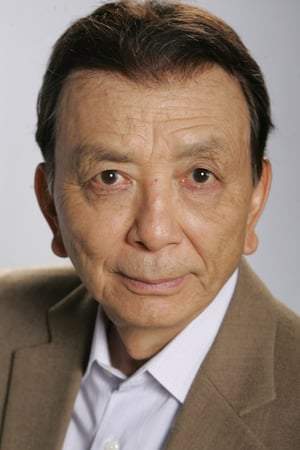
Archibald (James Hong)
Played by James Hong
A government agent who guides Fred into the international investigation and facilitates the joint effort to retrieve the saucer. He embodies the bureaucratic yet pragmatic impulse behind the mission.
- 🧭 Strategic
- 🗣️ Diplomatic
- DV
Dorothy Vetry (Nan Leslie)
Played by Nan Leslie
Dorothy, married to Joe Vetry, accompanies the mission and provides practical support and resilience. She shares in the peril of the pursuit and helps interpret events in the narrative.
- 🧭 Loyal
- 🧩 Collaborative
- AK
Anna Karachev (Lois Nettleton)
Played by Lois Nettleton
A Russian scientist on the joint mission who joins the Americans' search; she contributes technical insight and helps bridge the East-West divide.
- 🔬 Scientist
- 🤝 Collaborative
- Z(
Zagorsky (Vincent Beck)
Played by Vincent Beck
A Russian scientist leading part of the counterpart group; he participates in the tense cooperation with American and Chinese teams.
- 🧭 Rational
- 🗣️ Diplomatic
- HP
Hank Peters (Dan Duryea)
Played by Dan Duryea
An American agency member who believes Fred's account and coordinates the cross-national pursuit. He embodies the internal political dimension of the mission.
- 🧭 Strategist
- 🗣️ Authority
Where and When Is The Bamboo Saucer Set?
The Bamboo Saucer is set in Washington, D.C., China, Geneva and Switzerland. Here is why the place matters to the story.
Where
Washington, D.C., China, Geneva, Switzerland
The action moves from U.S. Air Force testing grounds near Washington, D.C. to a Chinese drop zone and the ruins of a Catholic church sheltering the saucer. The story then shifts to Geneva, Switzerland, where diplomacy frames the interest in alien technology. These locations create a global stage that underscores Cold War tensions and the pursuit of cross-border scientific understanding.
- 🏛️ Military facilities
- 🧪 Research sites
- 🌍 Global stakes
What Are the Themes of The Bamboo Saucer?
3 ideas the story keeps returning to, among them International Cooperation, UFO Encounter and Pursuit of Truth.
-
01
International Cooperation
The mission forces Americans, Russians, and Chinese scientists to work together despite political rivalry. They navigate distrust and danger to study the saucer and its technology. The narrative culminates in a vision of shared exploration, reinforced by a Kennedy-era emphasis on cooperation in space.
-
02
UFO Encounter
A flying saucer and its occupants drive the plot, challenging pilots with unprecedented propulsion and radar signatures. The craft's mysterious behavior raises questions about life beyond Earth and the limits of human technology. The suspense centers on deciphering the unknown while managing the consequences of discovery.
-
03
Pursuit of Truth
Fred Norwood resists official disbelief and pursues evidence of what he saw. He endures skepticism from superiors and puts his career on the line to validate the sighting. The tension highlights the clash between personal conviction and bureaucratic caution.
What Kind of Film Is The Bamboo Saucer?
Tense in tone, with fast pacing and a straightforward story, going by the plot summary.
- Tone
- Tense
- Pacing
- Fast
- Story
- Straightforward
- Intensity
- High
- Ending
- Happy
A tense and fast-paced Cold War thriller that builds suspense from aerial chases to a climactic firefight, ultimately pivoting to a hopeful message about human collaboration in the face of the unknown.
- tense
- suspenseful
- urgent
- cold war paranoia
- curious
- hopeful
- ufo
- cold war
- international cooperation
- first contact
Content notes: war violence, character death.
Quiz
How well do you remember The Bamboo Saucer? Test yourself on the story.
Where to Watch The Bamboo Saucer
Stream it on Amazon MX Player and Amazon Prime Video, or rent or buy it from Amazon Video. US availability and prices from JustWatch.
Stream 4
 Amazon MX Player
  Amazon Prime Video Free with Ads
  Fawesome
  Tubi TV
 Rent or buy 1

Streaming availability in the US, powered by