
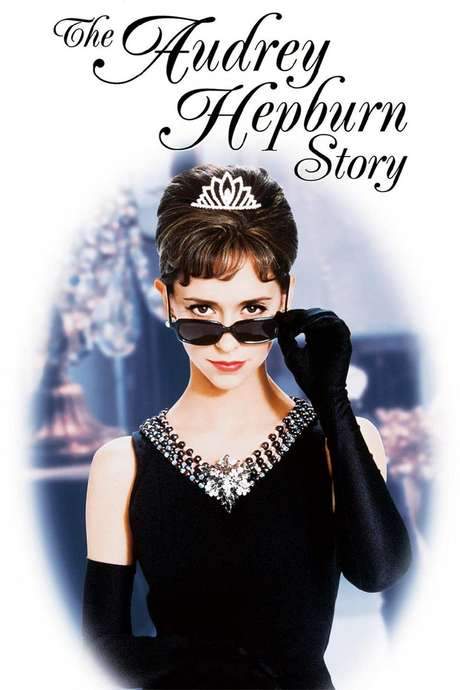
The Audrey Hepburn Story 2000


Directed by

Adam MacDonald
Made by

Robert Greenwald Productions
Where to Watch The Audrey Hepburn Story
See current US streaming, rental, and purchase options for The Audrey Hepburn Story (2000) via JustWatch.

UP Faith & Family Amazon Channel
HD
UP Faith & Family Apple TV channel
HD
The CW
SD
Fandango at Home Free
HD
The Roku Channel
HD
Tubi TV
SD
Xumo Play
HD
Amazon Video
HD Fandango At Home
HD
Google Play Movies
SD
YouTube
SD Streaming availability powered by 
The Audrey Hepburn Story Plot Summary
Read the complete plot summary and ending explained for The Audrey Hepburn Story (2000). From turning points to emotional moments, uncover what really happened and why it matters.
The Audrey Hepburn Story Timeline
Follow the complete movie timeline of The Audrey Hepburn Story (2000) with every major event in chronological order. Great for understanding complex plots and story progression.
Childhood and early Ballet Aspiration
Audrey's father, a Nazi-sympathizer, abandons her and her mother Ella. She is sent to an English boarding school where she grows passionate about ballet. These early years lay the groundwork for her later career in performance.
World War II and Netherlands
When Britain enters WWII, Audrey returns to live with Ella in the neutral Netherlands. The Nazi invasion brings years of hardship and fear. Liberation brings UNICEF resources to a starved population.
Postwar Ballet and Early Screen Work
After the war, Audrey studies ballet in London but does not become a prima ballerina. She dances in musicals and revues to make ends meet and takes small parts in several films. These experiences gradually propel her toward major stardom.
Engagement, Monte Carlo and Gigi Break
Audrey is engaged to James Hanson, a wealthy industrialist who supports her career. While filming Monte Carlo Baby (1951), she is scouted by Colette to star in the Broadway play Gigi, and ultimately breaks off the engagement as her passion for acting deepens.
Stardom and Sabrina Romance
Audrey's leading role in the 1953 film Roman Holiday catapults her to international fame. While filming Sabrina, she falls in love with married co-star William Holden, who proposes marriage but she declines after learning about his vasectomy.
Marriage to Mel Ferrer and Broadway to Switzerland
Actor Mel Ferrer and Audrey co-star in the Broadway play Ondine, and she wins the Academy Award for Best Actress for Roman Holiday. Shortly after, she marries Mel Ferrer and moves to Switzerland, continuing her film work on Funny Face, Love in the Afternoon, and The Nun's Story.
The Nun's Story and Moral Reflection
While filming The Nun's Story in Stanleyville, Belgian Congo, Audrey learns about the area's lack of access to good medical care and questions the value of her work as an actress. Mel insists that her movies matter to millions.
The Unforgiven Accident and Personal Loss
During the production of The Unforgiven, a pregnant Audrey falls from a horse and injures her back. In hospital, she receives a letter from her estranged father and learns that Ella hid his other letters from her. She later miscarries.
Ireland Visit and Reconciliation
After recovering, Audrey travels to Ireland to see her father, but the visit is short and he shows little desire to meet again. She reconciles with Ella and eventually takes a hiatus from acting to start a family.
Hiatus and Breakfast at Tiffany's Offer
Audrey takes a hiatus from acting to have her and Mel's son, Sean Hepburn Ferrer. She is offered the role of Holly Golightly in Breakfast at Tiffany's but initially declines due to concerns about playing a wild 'call girl'. Mel convinces her the role is worth taking.
Breakfast at Tiffany's: Final Scene and Cat Symbolism
Preparing to film the final scene, Audrey theorizes that Holly's abandonment of her cat symbolizes how she feels about herself: lost and unlovable. When the cat reappears, Holly accepts herself, and Audrey gains respect from Truman Capote. The final scene is shot in one take and celebrated.
Later Life, UNICEF and Death
The closing text references Audrey's later film work and the birth of her second son Luca Dotti. In later life she becomes a UNICEF ambassador, with footage of her on a mission; she passes away from cancer in 1993.
The Audrey Hepburn Story Characters
Explore all characters from The Audrey Hepburn Story (2000). Get detailed profiles with their roles, arcs, and key relationships explained.
Audrey Hepburn (Jennifer Love Hewitt)
The adult Audrey Hepburn is the film’s framing centerpiece, charting her ascent from a difficult childhood to becoming a global icon of style and screen. Her choices in love, career, and philanthropy reveal a complex balance between ambition and compassion. The narrative ends by celebrating her humanitarian legacy alongside her cinematic achievements.
Audrey Hepburn (12-16, Young) (Emmy Rossum)
A pre-teen Audrey faces family upheaval and wartime insecurity, forming the early foundations of her resilience. Ballet becomes a lifeline, signaling the discipline that will translate into her film career. The portrayal captures the vulnerability and determination of a girl on the cusp of womanhood.
Audrey Hepburn (8, Young) (Sarah Hyland)
An even younger Audrey is shown amid the shadows of war and family strain, setting the emotional stakes for her future ambitions. The scene hints at the tenderness and curiosity that would command her later public persona. A succinct glimpse of a life shaped by hardship.
Ella van Heemstra (Frances Fisher)
Audrey's mother who endures hardship during the war, shaping her daughter's resilience and drive. She balances tenderness with the realities of displacement and danger. Their relationship provides the emotional core of Audrey's early development.
Mel Ferrer (Eric McCormack)
Audrey's partner in life and career, whose relationship illustrates the intersection of romance, ambition, and the pressures of public life. Their marriage frames a period of personal happiness before fame intensifies. He represents support and conflict within the celebrity milieu.
William Holden (Gabriel Macht)
Co-star and love interest whose romance tests boundaries and highlights the complexities of fame. His proposal and the subsequent heartbreak expose the cost of choosing love within a demanding industry. The relationship remains a defining moment in Audrey's life journey.
Truman Capote (Michael J. Burg)
The cantankerous writer who interacts with Audrey around a major film project, representing critical gatekeeping and the tension between artistry and celebrity. His presence underscores the cultural scrutiny she faces. The dynamic showcases how literary authority can shape an actress's public image.
Kay Kendall (Seana Kofoed)
A fellow actor who reflects the professional camaraderie and competition among women in mid-century cinema. Her interactions with Audrey illuminate gender dynamics in the industry. The portrayal emphasizes female solidarity and rivalry.
James Hanson (Peter Giles)
A wealthy fiancé whose emotional and financial support anchors Audrey during a pivotal career moment. The eventual break with Hanson signals Audrey's commitment to independence and authenticity. The arc demonstrates the tension between personal happiness and professional aspiration.
Mme. Rombert (Catherine Colvey)
A figure within the theatrical world who interacts with Audrey, reflecting the social milieu of stage and screen. The role situates Audrey within the networks that drive her career. The character helps to show the era's professional context.
Gaston (Martin Watier)
A supporting figure within Audrey's social sphere, contributing to the tapestry of friends and rivals in the industry. The character helps illustrate the era's entertainment world. The scene-stealing moment hints at the bustling life behind the camera.
Sister Luc (Lise Roy)
A nun offering moral guidance and education aspects that anchor Audrey's ethical inquiries during her youth and career. The role underscores themes of faith and personal conscience. The presence of Sister Luc adds a dimension of spirituality to the life story.
Uncle Willem (Vlasta Vrana)
A relative figure providing context for Audrey's family background and early life. The character contributes to the portrayal of Audrey's upbringing under challenging circumstances. He serves as a narrative touchstone for family history.
The Audrey Hepburn Story Settings
Learn where and when The Audrey Hepburn Story (2000) takes place. Explore the film’s settings, era, and how they shape the narrative.
Time period
1930s–1990s
The narrative spans from Audrey's childhood during World War II through decades of career milestones in the 1950s–1960s, and into her humanitarian work in later years. It tracks the shift from personal hardship and family estrangement to international fame and public service. The ending commemorates her UNICEF legacy and death in 1993.
Location
Netherlands, London, Switzerland, Belgian Congo (Stanleyville), Ireland, Monaco (Monte Carlo), New York (Broadway)
The story follows Audrey Hepburn across multiple key locations that shaped her life. It begins in wartime Netherlands, continues through London and Switzerland during the postwar era, and moves to Congo and Ireland as her public persona grows. The film also visits Monte Carlo for film work and Broadway as a stage star, underscoring a life lived on global stages.
The Audrey Hepburn Story Themes
Discover the main themes in The Audrey Hepburn Story (2000). Analyze the deeper meanings, emotional layers, and social commentary behind the film.
💪
Resilience
Audrey's life is a study in resilience: enduring abandonment, war, and professional setbacks, she keeps pursuing her art and later uses fame to help others. The story shows how adversity hardens into strength and shapes her ethical choices. Through personal losses and professional joys, she learns to persevere.
🌟
Fame
The film examines how stardom propels Audrey into new opportunities while creating personal tensions. It depicts the lure of Hollywood and the theatre, the sacrifices required to maintain a public image, and the way critics and fans shape a star's trajectory. Fame becomes both a platform and a crossroads.
💔
Love and Sacrifice
Romantic entanglements and marital decisions reveal the costs of love within a demanding industry. Audrey navigates heartbreak and loyalty, choosing independence and family at crucial moments. The narrative frames love as powerful, transformative, and sometimes painful.
🌍
Humanitarian Legacy
Audrey's later work with UNICEF and her efforts to improve global medical access show a shift from screen icon to humanitarian symbol. The film highlights how personal fame can be redirected toward public good. This legacy transforms the public's memory of her as an actress into a lasting philanthropic influence.

Coming soon on iOS and Android
The Plot Explained Mobile App
From blockbusters to hidden gems — dive into movie stories anytime, anywhere. Save your favorites, discover plots faster, and never miss a twist again.
Sign up to be the first to know when we launch. Your email stays private — always.
Explore the mobile appMovies with Similar Twists and Themes
Uncover films that echo the narrative beats, emotional arcs, or dramatic twists of the one you're exploring. These recommendations are handpicked based on story depth, thematic resonance, and spoiler-worthy moments — perfect for fans who crave more of the same intrigue.

Featured on this page

What's After the Movie?
Not sure whether to stay after the credits? Find out!
Check out our other apps:

SAT Sphere
Build confidence for the Digital SAT.

Mori Atlas
Discover wild places worth protecting.

Luntero
Search smarter for a home in Amsterdam.

Plot Explained
Unravel movie endings and hidden clues.

Pokechamp
Dive into Pokémon data and battle logic.

Driving Theory
Get ready for your European theory test.

Movie Dust
Plan your next cinema trip with ease.

Musemap
Find art and culture as you travel.

Selkobase
Compare credentials before committing.

Local Manual
Turn an unfamiliar country into practical next steps.

Lernavi
Compare school systems before your next move.

GymRoam
Find a workout stop wherever your plans take you.
Explore Our Movie Platform
New Movie Releases (2026)
Famous Movie Actors
Top Film Production Studios
Movie Plot Summaries & Endings
Major Movie Awards & Winners
Best Concert Films & Music Documentaries
Movie Collections and Curated Lists
© 2026 What's After the Movie. All rights reserved.
Privacy Policy