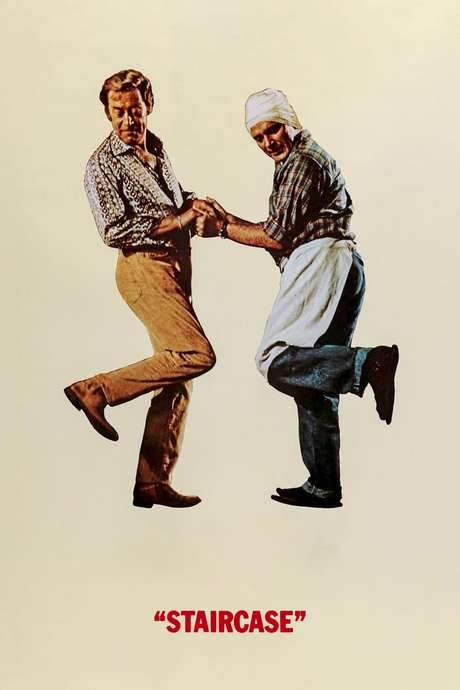
Staircase 1969

Directed by
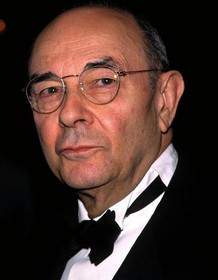
Stanley Donen
Made by

Stanley Donen Films
Staircase Plot Summary
Read the complete plot summary and ending explained for Staircase (1969). From turning points to emotional moments, uncover what really happened and why it matters.
Harry Leeds and Charles Dyer are two queer hairdressers who have shared a life and a business for two decades, running Chez Harry, a bustling barbershop tucked in London’s East End. Their home life is a rough-and-tumble mix of affection and sharp-edged quarrels, with Harry’s bedridden mother living upstairs, watching the world from a distance. Harry, who suffers from alopecia, refuses to wear a toupee, opting instead for a simple bandage that covers his head, a small detail that stubbornly anchors his sense of self. Charlie, ever the showman, is an actor who seems to measure his worth by the flash of a spotlight, constantly dropping mentions of his latest gig or brush with fame. The couple’s banter is relentless—barbed, witty, and laced with a stubborn pride that both sustains and strains their bond. Their home is a surface of practiced ease and beneath it, a lifetime of intimate irritations, even as they navigate a creeping discomfort over Cassy, Charlie’s daughter, and what a future might look like for their unusual family.
One night, Charlie faces a crushing deviation from their routine: he is summoned to court on a charge of lewd public behavior for dressing in drag. The accusation cuts close to the nerve of their shared life—public, performative, and sexual identity laid bare for judgment. The next morning, the couple rides a motorcycle to a park, a quiet, pointed conversation about children and what kind of future they can imagine together. The mood is hushed but weighty, as both wrestle with the possibility of consequences that could upend everything they’ve built. The very next day reveals a new ache: Charlie visits his mother in a nursing home, a place of faded recognition where she does not seem to know him. Outside, Harry offers quiet consolation, and the two wander toward another park filled with young people, a scene that sharpens the stakes of Charlie’s potential punishment and the fragile balance of their relationship.
A further dramatic turn arrives when Charlie invites a younger man, Jack, into their apartment. The interlude triggers another storm of hurt and resentment, with Harry growing weary of Charlie’s insistence on his acting career and his reluctance to bring Cassy into their world. The tension spills over, and when Jack leaves, Harry slips into the bathroom where Charlie finds him unconscious, though Harry quickly recovers. The incident deepens the fault lines between them, turning their domestic space into a theater of fear, regret, and the question of whether their love can endure the mounting pressure from the outside world.
As the day of trial approaches, Charlie, before stepping out, contemplates life without Harry and prays for some form of mercy or clarity. Harry briefly appears downstairs, wearing a dark-haired toupee that tries to disguise another truth, and asks Charlie for his judgment. Charlie, choosing kindness but unable to fully erase the sting of honesty, refrains from the harsher verdict and instead returns to the safer armor of the bandage. The exchange is tender and painful, a meditation on honesty, vulnerability, and the stubbornness that keeps them together. Harry asks to accompany Charlie to the trial, but Charlie declines, insisting he must face the consequences alone. In a final, quiet reversal of the momentum that has pushed them apart, Charlie steps out and, in a small, hopeful moment, calls for Harry. The two walk out of the door together, choosing to face the uncertain road ahead not as lovers divided by fear, but as a pair who have weathered judgment and still find one another in the end.
Throughout, the film frames a relationship that survives not by perfection but by a stubborn commitment to one another, a willingness to confront social norms, and the fragile humanity that appears in every quiet, confessional moment. The stark cityscape, the intimate interiors, and the relentless dialogue all serve to illuminate a love that is at once tender, resistant, and endlessly complicated. The characters’ lives intersect with a broader world that watches and weighs their choices, yet the story remains intensely focused on the private truths that keep Harry and Charlie connected even when the world seems bent on pulling them apart.
Staircase Timeline
Follow the complete movie timeline of Staircase (1969) with every major event in chronological order. Great for understanding complex plots and story progression.
Life at Chez Harry
Harry Leeds and Charles 'Charlie' Dyer run Chez Harry, a barbershop in London's East End, where Harry's bedridden mother stays upstairs. They have been a couple for twenty years, and their relationship is seasoned with sharp verbal banter. Harry hides his alopecia with a bandage rather than wearing a toupee.
Charlie brags about his acting career
Charlie is an actor who frequently boasts about his one television commercial and the opportunities it brings. He uses his acting status to press his point during arguments and to feel superior. The couple's banter is sharpened by his swagger and Harry's stubborn streak.
Charlie summoned to court for lewd behavior
One night, Charlie learns he has been summoned to court on a charge of lewd public behavior for dressing in drag. The looming trial unsettles both men and threatens the stability of their life together. They worry about how society will judge their relationship and whether Charlie's reputation will survive.
Motorcycle ride to a park to discuss children
The next morning, they ride a motorcycle to a park and discuss whether to have children. Their conversation reveals different life goals and concerns about aging and acceptance. The ride shows their reliance on each other even as tensions bubble beneath the surface.
Harry tends to alopecia; reaffirms no toupee
Later that night, Harry tends to his alopecia and reiterates that he will never wear a toupee. He stands by his sense of self and resists the illusion of appearances. This moment reinforces his stubbornness and their ongoing friction.
Charlie visits his mother at the nursing home
The next morning, Charlie visits his mother in a nursing home, but she does not recognize him. The moment highlights Charlie's aging and the fragility of memory. Harry consoles Charlie outside, reminding him that they share a life and history.
Park visit with Charlie's nerves calmed by Harry
Harry consoles Charlie outside, and they head to another park filled with young adults. Charlie contemplates the harsh punishment he could face if convicted. The park scene underscores the tension between social judgment and their intimate relationship.
Charlie invites Jack into their apartment
On another night, Charlie invites a younger man named Jack into their apartment. The invitation triggers insecurities in Harry, who has grown tired of Charlie's boasting about his acting career and his reluctance to meet Cassy. Tensions rise as boundaries blur between longtime couple and a third party.
Argument and Jack leaves; Harry unconscious in the bathroom
After Jack leaves, Harry goes into the bathroom where Charlie finds him lying unconscious, though Harry recovers. The incident intensifies the strain and raises questions about their safety and futures. They are left to confront what they mean to each other in the wake of the event.
Morning before the trial; contemplation of life without Harry
The next morning, before Charlie heads for his trial, he contemplates life without Harry and prays for guidance. He wrestles with fear, guilt, and the possibility of losing their shared life. The moment sets up the emotional stakes for the next events.
Harry wears a toupee; asks for judgment
Harry comes downstairs wearing a dark-haired toupee and asks Charlie for his judgment. Charlie tries to be kind but is honest about his feelings, which devastates the moment. Harry then chooses to return to his bandage as a symbol of authenticity.
Charlie declines to take Harry to the trial
Harry asks to accompany Charlie to his trial, but Charlie declines, intending to face the proceedings alone. The decision underscores the strain in their relationship and the limits of their shared life. Nevertheless, the couple remains connected as they step toward the door.
Charlie leaves for the trial; calls for Harry
As Charlie steps out to begin the trial, he calls for Harry. The two hurry to the doorway and walk out together, signifying a quiet reconciliation. The scene suggests that despite conflicts, they still face the world as a duo.
Closing moment: a fragile but enduring bond
Although their relationship has endured turbulence, the final moment shows them leaving together, suggesting a fragile but enduring bond. The film closes on their union as they confront the unknown future together. This ending emphasizes that truth, love, and mutual support endure beyond conflict.
Staircase Characters
Explore all characters from Staircase (1969). Get detailed profiles with their roles, arcs, and key relationships explained.
Harry Leeds (Richard Burton)
Harry Leeds is a queer hairdresser who co-owns Chez Harry with his partner, Charlie. He copes with alopecia by wrapping a bandage around his head instead of wearing a toupée, a detail that highlights his stubborn pride. He is sharp-tongued and quick to dismiss Charlie’s acting ambitions, yet deeply loyal and protective of their relationship. His relationship with Charlie forms the emotional core of the film, even as they spar in personal and public spaces.
Charles Dyer (Rex Harrison)
Charles Dyer is Harry's partner and an aspiring actor who relishes his career and persona. He uses drama and vanity to mask insecurities, often ridiculing Harry’s aloofness and fashion choices. Their relationship blends affection with vanity, revealing how love can coexist with conflict. He faces choices about honesty and commitment as the trial approaches.
Jack (Stephen Lewis)
Jack is a younger man invited into the couple's apartment, introducing a new dynamic to the relationship. His presence heightens jealousy and prompts self-reflection about Charlie's vanity and Harry's protectiveness. He embodies youth that challenges the couple's established balance and forces them to confront what they want from each other.
Nurse (Pat Heywood)
Nurse serves as a caregiver in the nursing home where Harry's mother resides, representing routine care and institutional involvement. She interacts with Charlie during visits, reinforcing the separation between private life and formal settings. Her presence helps ground the domestic drama within everyday institutional norms.
Harry's Mother (Cathleen Nesbitt)
Harry's bedridden mother lives upstairs and is largely inconsolable to those outside her room. Her condition underscores care dynamics and the strain of balancing affection with duty. She serves as a reminder of vulnerability and the circles of dependents that orbit the couple.
Charlie's Mother (Beatrix Lehmann)
Charlie visits his mother in a nursing home, and the mother does not recognize him, signaling the erosion of memory and shifting relationships. The scene emphasizes the loneliness and distance that sometimes accompany aging family members. This dynamic adds emotional weight to Charlie’s choices and the couple’s ongoing tension.
Drag Singer (as Rogers) (Michael Rogers)
A Drag Singer appears in the milieu surrounding Chez Harry, representing the drag culture integral to the world of the characters. The role contributes to the sense of performance and self-presentation that threads through the film. His presence situates the story within a broader social milieu of nightlife and appearance.
Drag Singer (as Starr) (Royston Starr)
Another Drag Singer in the same social circle, underscoring the prevalence of drag performance in the setting. The character adds texture to the barroom atmosphere and reinforces themes of identity and display. The screen persona of drag artists mirrors the main couple’s own theatricality.
Postman (Gordon Heath)
Postman is a minor figure who appears in the urban setting, contributing to the lived-in London atmosphere. His presence grounds the film in everyday life and the social fabric of the neighborhood.
Matron (Gwen Nelson)
Matron is a figure of authority in the nursing home scenes, reinforcing the formal care environment that contrasts with the couple’s intimate space. She represents institutional constraints and boundaries.
Choirboy (Jake Kavanagh)
Choirboy is a minor character in the surrounding world of the story, contributing to the sense of a bustling community.
Policeman (Neil Wilson)
Policeman appears in the background of the drama, reflecting the law’s presence in everyday life and the potential consequences of the public morality issues at play.
Gravedigger (Dermot Kelly)
Gravedigger is a minor yet atmospheric character in the film’s world, contributing to the mood and pace of the London setting.
Staircase Settings
Learn where and when Staircase (1969) takes place. Explore the film’s settings, era, and how they shape the narrative.
Location
London's East End, Nursing Home, Park, Apartment
The action centers on Chez Harry in London's East End, a barbershop that doubles as home for Harry's bedridden mother. The rough, tight-knit neighborhood provides the backdrop for intimate conversations and social judgment about queer love. Public parks and a modest apartment set the drama in shared, everyday spaces where characters confront daily life and vulnerability. The nursing home also appears, grounding themes of care and memory in a concrete setting.
Staircase Themes
Discover the main themes in Staircase (1969). Analyze the deeper meanings, emotional layers, and social commentary behind the film.
🎭
Identity & Expression
Harry and Charlie navigate nonconforming identity through hair, drag, and appearances within a social landscape that polices gender. Cross-dressing triggers hostility and a court case, forcing them to consider how public identity is performed. Their private rituals and public defiance illuminate both the fragility and resilience of self-representation. The film uses intimate banter and shared moments to argue that love can endure beyond social judgments.
💞
Relationship Dynamics
The twenty-year partnership between Harry and Charlie is marked by tenderness, insults, and mutual dependence. Their clashes over fame, family, and Cassy reveal power struggles beneath a familiar routine. Moments of vulnerability—jealousy, doubt, and care—show how love survives pressure and difference. The ending gesture of walking out together underscores commitment amid conflict.
⚖️
Law and Social Norms
Charlie faces a court charge for lewd public behavior due to dressing in drag, spotlighting social boundaries around gender performance. The story unfolds across streets, parks, and institutions where public morality clashes with private identity. The narrative critiques the rigidity of norms while acknowledging the humanity of those who live outside them. In the end, the couple's decision to walk together suggests a challenge to conformity rather than its triumph.

Coming soon on iOS and Android
The Plot Explained Mobile App
From blockbusters to hidden gems — dive into movie stories anytime, anywhere. Save your favorites, discover plots faster, and never miss a twist again.
Sign up to be the first to know when we launch. Your email stays private — always.
Explore the mobile appStaircase Spoiler-Free Summary
Discover the spoiler-free summary of Staircase (1969). Get a concise overview without any spoilers.
In the bustling heart of London’s East End, a modest barbershop doubles as a home where routine clippers and razor‑sharp banter echo through cramped rooms. The shop, a cornerstone of the neighborhood, is kept alive by two longtime partners who have built both a business and a life together. Their world is a mix of gritty city streets and the warm, intimate corners of a shared flat, where the hum of traffic outside contrasts with the quiet conversations that take place over a mug of tea.
Harry is an aging barber whose own hair loss has become a quiet rebellion; he wears a simple bandage instead of a toupee, a small but stubborn assertion of identity. His partner, Charlie, drifts between the shop floor and the stage, chasing the flicker of spotlight that fuels his self‑esteem. Their relationship crackles with a blend of affection and sharp wit—a constant dance of teasing remarks and hidden tenderness that has weathered two decades of highs and lows. Around them, the presence of Charlie’s young daughter, Cassy, adds another layer of domestic complexity, hinting at a family that’s as unconventional as it is deeply caring.
When a looming legal challenge threatens to upend their carefully balanced routine, the couple finds themselves suspended in a night of reflection. In the quiet moments between the clatter of scissors, they sift through memories of love’s gentler times and the volatile arguments that have defined their bond. The uncertainty ahead forces them to consider what the future might hold for their partnership and the fragile home they’ve cultivated.
The film’s tone is unabashedly intimate, bathing everyday scenes in a bittersweet glow that captures both the grit of the East End and the tender, often volatile, rhythm of a long‑standing love. Sharp dialogue, lingering glances, and the ever‑present cityscape weave together to create a portrait of devotion that is as stubbornly resilient as it is heartbreakingly human.
Movies with Similar Twists and Themes
Uncover films that echo the narrative beats, emotional arcs, or dramatic twists of the one you're exploring. These recommendations are handpicked based on story depth, thematic resonance, and spoiler-worthy moments — perfect for fans who crave more of the same intrigue.


Featured on this page

What's After the Movie?
Not sure whether to stay after the credits? Find out!
Check out our other apps:

SAT Sphere
Build confidence for the Digital SAT.

Mori Atlas
Discover wild places worth protecting.

Luntero
Search smarter for a home in Amsterdam.

Plot Explained
Unravel movie endings and hidden clues.

Pokechamp
Dive into Pokémon data and battle logic.

Driving Theory
Get ready for your European theory test.

Movie Dust
Plan your next cinema trip with ease.

Musemap
Find art and culture as you travel.

Selkobase
Compare credentials before committing.

Local Manual
Turn an unfamiliar country into practical next steps.

Lernavi
Compare school systems before your next move.

GymRoam
Find a workout stop wherever your plans take you.
Explore Our Movie Platform
New Movie Releases (2026)
Famous Movie Actors
Top Film Production Studios
Movie Plot Summaries & Endings
Major Movie Awards & Winners
Best Concert Films & Music Documentaries
Movie Collections and Curated Lists
© 2026 What's After the Movie. All rights reserved.
Privacy Policy