

What Is Srpska: The Struggle for Freedom About?
The premise of Srpska: The Struggle for Freedom in 306 words, with nothing given away. The full story follows below.
Across the valleys and settlements west of the Drina, a community becomes the documentary’s central character. Srpska: The Struggle for Freedom opens its inquiry with the earliest organized institutions surrounding the Bosna River, then traces how Serbs developed their customs, identities, and relationships with neighboring peoples across changing borders and empires. Rather than following one conventional protagonist, the film presents the land and its people as collective figures, giving the story an intimate, reverent, and historically layered tone.
From the medieval Bosnian state, the chronicle moves through Ottoman rule and the final years of Austria-Hungary. The presence of Archduke Franz Ferdinand and the political atmosphere surrounding Sarajevo suggest how regional tensions can become part of a much larger historical reckoning, yet the film remains more interested in cultural continuity, everyday life, and the choices that shape communities. History is treated not as an abstract succession of dates, but as a living relationship between people and place.
The World War II era and the period of socialist Yugoslavia introduce the contrast between collective trauma and relative stability. The experiences of Serbs, Jews, Roma, and others are acknowledged with gravity, while Josip Broz Tito represents the promise of a new social order built around coexistence and shared purpose. A recurring image of the Sarajevo Winter Olympics offers a vision of regional unity, recalling what people can accomplish when ambition and cooperation eclipse division. These strands create a reflective mood, balancing pride in communal achievement with awareness of its fragility.
In its contemporary focus, the documentary turns toward the political strains that reshaped the region, framing Republika Srpska as part of a much older negotiation between identity, unity, and freedom. Rather than arranging history around a simple conflict between heroes and enemies, it invites viewers to consider how inherited loyalties, trauma, and aspirations continue to shape the region’s present.
What Happens in Srpska: The Struggle for Freedom?
The complete story of Srpska: The Struggle for Freedom, from the first scene to the last, in 181 words (about 1 minute). Spoilers throughout. Names in the text link to 2 cast member pages.
Spoilers ahead
This documentary, featuring Emir Kusturica, explores the historical evolution of the region surrounding the river Bosna. It begins by chronicling the rise of the medieval Bosnian state and the subsequent influence of the Ottoman Empire. The narrative highlights a pivotal turning point in global history: the assassination of Archduke Franz Ferdinand in Sarajevo, which triggered the start of World War I.
The film further examines the transition into the first Yugoslav state—the Kingdom of Serbs, Croats, and Slovenes—and the subsequent atrocities faced by Serbs, Jews, Roma, and other groups during World War II. Following this turmoil, the story shifts to a more prosperous era under the leadership of Josip Broz Tito and the Socialist Federal Republic of Yugoslavia.
A central theme of the film is the 1984 Winter Olympics in Sarajevo, presented as a symbol of unity and common achievement. The documentary concludes by detailing the chronological events that led to the violent conflicts in the former Yugoslavia, ending with the 1995 Dayton Agreement and the establishment of Republika Srpska. The production is tied together by the narration of Stefan Popović.
Srpska: The Struggle for Freedom Timeline: Every Key Event in Order
13 key events in the order they happen, from “Rise of the Medieval Bosnian State” to “The Dayton Agreement”. 6 events name a place, across 4 locations.
- 1
Rise of the Medieval Bosnian State
The film opens with the beginnings of organized institutions in the areas around the source and lower course of the river Bosna. It chronicles the gradual rise of the medieval Bosnian state, laying the historical foundation for the entire story that follows.
When:Medieval period Where:River Bosna region, Bosnia
- 2
Life Under the Ottoman Empire
The fate of the Serbs inhabiting the land becomes intertwined with that of the Ottoman Empire. The film presents how centuries of Ottoman rule shaped the character and destiny of the region and its people.
Where:Bosnia
- 3
The Austro-Hungarian Era
The destiny of the land later becomes tied to the fate of Austria-Hungary. The film depicts this imperial chapter in which Bosnia and Herzegovina fell under Austro-Hungarian control, setting the stage for dramatic global events.
Where:Bosnia and Herzegovina
- 4
Assassination of Archduke Franz Ferdinand
The assassination of Archduke Franz Ferdinand takes place in Sarajevo, sparking World War I. The film presents this moment as a pivotal turning point in both regional and world history.
When:1914 Where:Sarajevo
- 5
Formation of the First Yugoslav State
Following World War I, the land becomes part of the Kingdom of Serbs, Croats, and Slovenes, the first Yugoslav state. The film documents the role that this territory played in the newly formed kingdom of the South Slavic peoples.
When:After World War I
- 6
The Kingdom of Yugoslavia
The Kingdom of Serbs, Croats, and Slovenes later becomes the Kingdom of Yugoslavia. The film follows this evolution of the Yugoslav state and the place of Bosnia and Herzegovina within it.
- 7
Suffering During World War II
World War II brings great suffering to the people of the land, predominantly Serbs, Jews, Roma, and others. The film presents the hardships and atrocities endured by the population during the wartime years.
When:World War II
- 8
Peace and Prosperity Under Tito
A more peaceful and prosperous time follows the war under the Socialist Federal Republic of Yugoslavia, led by Josip Broz Tito. The film portrays this period as one of relative stability and progress for the region.
When:Post-World War II era
- 9
The Organization of Socialist Yugoslavia
The film explains the principles according to which socialist Yugoslavia was organized. It also describes the stated goals of that state, which aspired to provide 'centuries of peace' for the region.
- 10
The 1984 Winter Olympics in Sarajevo
The 1984 Winter Olympics in Sarajevo serve as a theme that runs throughout the film. The event is presented as an example of what the people of the region could achieve when they put their differences aside and worked together for the common good and healthy competition.
When:1984 Where:Sarajevo
Show the other 3 events of Srpska: The Struggle for Freedom Hide the last 3 events
- 11
The Road to War
The film briefly and chronologically explains the events that lead to the bloody wars in the former Yugoslavia. This section traces the growing tensions and conflicts from their very beginning.
When:Early 1990s
- 12
The War in Bosnia and Herzegovina
The war in Bosnia and Herzegovina unfolds, shown from its beginning to its end. The film documents the bloodshed and devastation experienced by the region during this brutal conflict.
When:1992-1995 Where:Bosnia and Herzegovina
- 13
The Dayton Agreement
The war in Bosnia and Herzegovina comes to an end with the signing of the Dayton Agreement in 1995. The agreement leads to the formation of the entity called Republika Srpska, shaping the present-day political order of the region.
When:1995
Who Are the Main Characters in Srpska: The Struggle for Freedom?
2 characters, among them Emir Kusturica and The host / Narrator (voice): who each one is and the part they play in the story. Every profile links to the actor’s page.
-
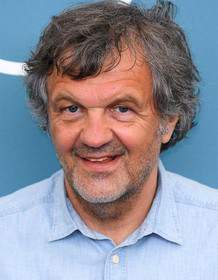
Emir Kusturica
Played by Emir Kusturica
Emir Kusturica serves as the Self in the documentary, providing insights into the historical and cultural context of the events depicted. He is known for his deep connection with the region and offers a personal lens on the struggles faced by its people throughout history. His narration adds a layer of urgency and authenticity to the film’s exploration of identity and conflict.
- 🎬 Filmmaker
- 🗣️ Narrator
- TH
The host / Narrator (voice)
Played by Stefan Popović
The host acts as a guiding voice throughout the documentary, steering the viewer through the narrative of Bosnia's tumultuous history. His narration serves to contextualize the various events and themes presented, effectively bridging the past with the present. By using a compelling storytelling approach, he invites the audience to comprehend the complexities of the region's plight.
- 🎤 Voice
- 📝 Storyteller
Where and When Is Srpska: The Struggle for Freedom Set?
Srpska: The Struggle for Freedom is set in Bosnia and Sarajevo (Medieval to 1995). Here is why the time and place matter to the story.
When
Medieval to 1995
The film spans several significant time periods, including the rise of the medieval Bosnian state and the events leading to World War I. It also documents the impact of World War II on the local populace and the subsequent establishment of a socialist state under Josip Broz Tito. The timeline culminates with the end of the war in Bosnia and Herzegovina in 1995, marked by the signing of the Dayton Agreement.
Where
Bosnia, Sarajevo
The film primarily takes place in Bosnia, particularly around the river Bosna, highlighting its significance in the rise of the medieval Bosnian state. Sarajevo, as a city, is deeply intertwined with pivotal historical events, such as the assassination of Archduke Franz Ferdinand, which triggered World War I. The region is known for its diverse cultural heritage and the struggles faced by its inhabitants throughout history.
- 🌍 Geography
- ⚔️ History
What Are the Themes of Srpska: The Struggle for Freedom?
2 ideas the story keeps returning to, among them Peace and Conflict and Identity.
-
01
Peace and Conflict
The movie explores the duality of peace and conflict in the region, illustrating the aspirations for harmony amidst historical turmoil. It highlights the suffering endured during wars, particularly showing how the hope for a peaceful existence was envisioned during the socialist period. The contrast between moments of collaboration, such as those during the Olympics, and the violence of the Yugoslav wars is a central theme.
-
02
Identity
A significant theme in the film is the complex identity of the people in Bosnia and Herzegovina. It delves into the intertwined fates of various ethnic groups, including Serbs, Jews, Roma, and others, depicting how their historical narratives shaped the region's identity. The film questions how these identities have been formed and transformed through conflict and coexistence.
What Kind of Film Is Srpska: The Struggle for Freedom?
Dark in tone, with variable pacing and a very complex story, going by the plot summary.
- Tone
- Dark
- Pacing
- Variable
- Story
- Very complex
- Intensity
- High
- Ending
- Bittersweet
A sweeping, somber historical documentary tracing Balkan identity through imperial rule, war, unity, and renewed conflict, with heavy subject matter offset by reflective narration and a fragile sense of resolution.
- somber
- reflective
- grave
- tragic
- tense
- meditative
- Bosnian Serb identity
- Balkan history
- ethnic conflict
- Yugoslavia
Content notes: war violence, wartime atrocities, ethnic conflict, political violence, persecution.
Quiz
How well do you remember Srpska: The Struggle for Freedom? Test yourself on the story.
