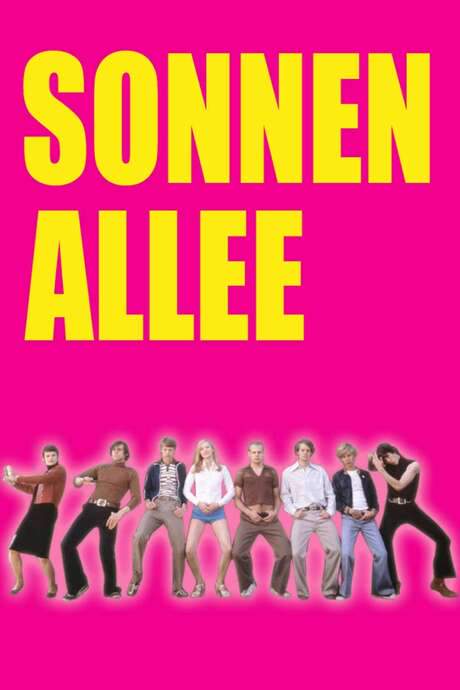


Sonnenallee Plot Summary
Read the complete plot summary and ending explained for Sonnenallee (1999). From turning points to emotional moments, uncover what really happened and why it matters.
Alexander Scheer as Micha Ehrenreich is a 17-year-old growing up on the East Berlin edge of Sonnenallee in the early 1970s, where the allure of Western culture and contraband music tapes shapes his youth. When the neighborhood’s zealous policeman, Officer Horkefeld, confiscates a tape Micha just copied, the moment sparks a rare, quiet kind of awe as Micha catches a glimpse of Teresa Weißbach as Miriam stepping out of her building, leaving him spellbound and curious about life beyond the wall.
Shortly after, Heinz—Micha’s smuggler uncle from the West—visits and pushes him away from dreams of military service, pressing him to consider the political path he wants to follow. Later, at a disco, Micha musters the courage to dance with Miriam, only to see her brush him off for a West German guy, an affront that lands Miriam in trouble when the local authorities eject the West German from the club. The fallout is swift: Miriam is summoned to deliver a self-critical lecture at the next Free German Youth meeting as punishment for the Western contact that sparked the incident.
The next day at school, Mario Alexander Beyer tampers with a government slogan on the classroom wall, crafting a crude joke that soils the teacher’s expectations. When the truth surfaces, Micha deliberately claims responsibility, hoping to impress Miriam with a witnessed stand for personal conscience. The exchange leaves Mario frustrated, accusing Micha of “joining the system” just to win a girl’s admiration. At a black-market gathering, Mario connects with Sabrina, Elena Meißner as Sabrina, and feigns an interest in Sartre in order to sleep with her, painting a portrait of a youth negotiating identity in a world that demands caution.
A tense run-in with a neighbor, Mr. Fromm—a figure many tenants suspect as a Stasi agent—heightens the sense of surveillance, while Micha’s father, Hotte, reveals a farcical ruse: a stolen telephone has kept his family afloat by selling the illusion of illness. Miriam calls Micha, inviting him to visit, but a detour by Officer Horkefeld leaves Micha detained for more than ten hours because he cannot produce his ID.
That night, Mario hosts a chaotic party at home. The two friends retreat to the balcony to escape the crowds, where they are photographed by West observers peeing onto the border wall below. Miriam arrives to the unfurling chaos and leaves after encountering a high on life Micha who claims to have filled countless diaries with his feelings for her. The next day, the headmistress’s office hosts a stern confrontation: a Stasi agent informs the pair that the wall photos have reached the West German press, triggering serious consequences. Mario is expelled from school, and Micha loses his student stipend, forcing him to confront how his choices ripple outward.
Micha encounters Miriam again, and she reminds him of his promise to share his diaries with her. Faced with the truth of his own lies, Micha retreats home and begins to pen years’ worth of diary entries. Doris, Micha’s mother, hatches a bold plan to defect to the West using a stolen passport and makeup, only to falter at the border and turn away at the last moment. The city’s lights flicker as a nearby power outage—caused by a display of confiscated Japanese stereo equipment—throws the streets into darkness, a moment that also reveals Sabrina’s secret: she is pregnant.
In the chaos, Micha’s young friend Wuschel—carrying an illicit copy of Exile on Main St.—is spotted by Horkefeld near the border and is shot. The record miraculously stops the bullet, but the moment shatters Wuschel’s world. With his diary project nearing completion, Micha experiences a transformative realization about his political beliefs and renounces the plan to join the army. He confronts Mario at the recruitment station, and the two share a painful, honest moment, realizing their paths are diverging. The family learns that Heinz has died of lung cancer, a conclusion tied to the asbestos-truth in East German housing, and Doris is permitted back into the West for Heinz’s funeral before she quietly retrieves his ashes to bury them with their mother.
Micha finally returns to Miriam with the diaries, and the two share a quiet, intimate moment that hints at a fragile hope for the future. In Micha’s room, he and Wuschel listen to a new Exile on Main St. album, only to discover it’s a forgery. As the crowd outside gathers to listen to the western music, the border guard tower becomes an unexpected participant in the moment, and one soldier’s accidental gunfire turns into a shared joke for the onlookers. The film closes with a long black-and-white shot of the border gates opening and the street left in quiet, unoccupied aftermath, signaling a new era even as old divisions linger.
Sonnenallee Timeline
Follow the complete movie timeline of Sonnenallee (1999) with every major event in chronological order. Great for understanding complex plots and story progression.
Tape confiscation and Miriam sighting
Officer Horkefeld confiscates Micha's newly ripped Western tape, a moment that highlights the regime's control of culture. Micha then spots Miriam leaving her apartment and is spellbound by her presence. The encounter seeds his fascination with Western life and his own romantic yearning.
Heinz visits and questions Micha's future
Micha's smuggler uncle Heinz visits and admonishes his plan to join the National People's Army. He urges Micha to stay with Western music and family loyalty instead of the regime's path. The scene sets up the tug-of-war between loyalty and personal freedom.
Disco night: West influence and punishment
At a disco, Micha attempts to dance with Miriam, who brushes him off for a West German. The West German is immediately expelled by Officer Horkefeld, underscoring the regime's reach. Miriam is then ordered to deliver a self-critical lecture at the next Free German Youth meeting.
Classroom prank and Micha's self-critique
In class, Mario alters a government slogan with a lewd joke, and the teacher is blamed. Micha claims responsibility to impress Miriam with his own self-critical lecture. The act reveals the performative politics of youth living under surveillance.
Black market, Sabrina, and Sartre
Micha attends a black market gathering and meets Sabrina, an existentialist, feigning interest in Sartre to sleep with her. The encounter shows his willingness to manipulate ideology for personal gain. It also highlights the constant tension between authentic feeling and political performance.
Detention and delayed visit to Miriam
Miriam calls Micha to visit, but Horkefeld detains him for over ten hours due to missing an ID. The extended detention underscores the regime's surveillance and disrupts their budding connection. The delay amplifies his longing and risk.
Raucous party and balcony border photo
Micha hosts a wild party; he and Mario escape to the balcony and are photographed urinating on the border wall below. Miriam arrives amid the chaos, but leaves after encountering a high Micha who claims to have written many diaries. The moment links personal risk with the spectral lure of the outside world.
Photos and consequences at school
The next day, a Stasi agent tells Micha and Mario that the balcony photos made it into the West German press. Mario is expelled from school and Micha loses his student stipend, escalating the personal toll of political exposure. Miriam's interest in his diaries is rekindled by the scandal.
Miriam's diary request and Doris's defection plan
Miriam asks to read Micha's diaries, prompting him to lie about their contents and begin forging diary entries. Meanwhile, Doris privately plans to defect to the West using a stolen passport but hesitates at the last moment. The family situation shows both romantic and political strategies colliding at home.
Power outage, Sabrina's pregnancy
While showing a confiscated Japanese stereo to Heinz, the power grid overloads and the street goes dark. Sabrina confides to Mario that she is pregnant, raising the stakes of everyone’s choices under surveillance. The blackout becomes a catalyst for intimate revelations.
Wuschel shot and record saves him
Wuschel, who has an illicit copy of Exile on Main St., is shot near the border by Horkefeld. The bullet is stopped by the record, and Wuschel appears to die as the album shatters. The tragedy underscores the lethal costs of crossing the line between East and West.
Micha's diary forgery and political awakening
As he nears the end of his diary-forgeries, Micha experiences a sudden realization about his political beliefs and renounces the plan to join the army. He confronts his earlier promises and is forced to redefine his loyalties. The act marks his personal shift from conformity to critical self-reflection.
Mario's recruitment and confrontation
Micha sees Mario at the recruitment station and learns he plans to join the army to provide for his child. The two confront each other in the corridor and end up sobbing together, revealing their shared vulnerability. Their bond resurfaces amidst political pressure.
Heinz dies; Doris returns with ashes
Heinz dies of lung cancer, and the family discovers that neighbor Fromm is not a Stasi agent but works for a funeral company. Doris is allowed back into the West for Heinz's funeral and smuggles his ashes back in a coffee can to bury him with their mother. The homefront story shifts toward closure and reconciliation.
Diaries shared and border's open ending
Micha visits Miriam and gives her the diaries, and they share an intimate moment. In Micha's room, he and Wuschel listen to a new Exile On Main St album that turns out to be a forgery. The crowd outside dances to Western music as border guards join in, and the border gates finally open in a long, symbolic shot.
Sonnenallee Characters
Explore all characters from Sonnenallee (1999). Get detailed profiles with their roles, arcs, and key relationships explained.
Micha (Alexander Scheer)
Seventeen-year-old Micha navigates life on the East Berlin edge, balancing crushes, contraband culture, and a desire to define his own beliefs. He is resourceful, hopeful, and often impulsive, using diaries to process feelings while testing the limits of authority. His evolution from compliance to critical thinking drives the story.
Miriam (Teresa Weißbach)
Miriam is Micha's love interest, intelligent and independent, who challenges him to think beyond the party line. Her presence catalyzes Micha's self-reflection and willingness to question the system. She embodies both affection and a desire for a life beyond East Berlin’s confines.
Mario (Alexander Beyer)
Micha's friend with a reckless streak, Mario is quick-witted and eager to provide for his future child, even if it means joining the army. He serves as a foil to Micha’s introspection, highlighting different paths youth might take under political pressure.
Wuschel (Robert Stadlober)
A younger, energetic friend who loves music and dreams of escape. His fate—being shot near the border by a police officer—becomes a stark reminder of the regime's brutality and the fragility of youth.
Officer Horkefeld (Horst Lebinsky)
The overzealous border policeman who enforces the rules with a blunt, unforgiving demeanor. He embodies the surveillance state, often acting as the obstacle between the teenagers and their desired freedoms.
Mutter (Katharina Thalbach)
Micha’s mother figure who embodies care and caution in a city where defecting could separate families. She wrestles with loyalty to her children and the risks of seeking a Westward future.
Heinz (Ignaz Kirchner)
Micha’s West German uncle and smuggler, a colorful character who exposes Micha to Western life and its temptations, while also hinting at danger and illicitness.
Father (Henry Hübchen)
Micha’s father, a working-class East German figure who outwardly supports his family but is bound by the constraints of the system. His presence underscores the generational tensions and the weight of traditional expectations.
Sonnenallee Settings
Learn where and when Sonnenallee (1999) takes place. Explore the film’s settings, era, and how they shape the narrative.
Time period
Early 1970s
Set during the early 1970s in East Germany, the film situates youth under a regime of surveillance and political conformity. Western music and contraband culture seep in through the cracks of a tightly controlled society. State organizations like the Free German Youth and pervasive border politics color nearly every decision and interaction.
Location
Sonnenallee, East Berlin, Berlin Wall
The story unfolds on Sonnenallee in East Berlin, a dense residential area just inside the communist border. The neighborhood atmosphere blends everyday life with the constant presence of state surveillance and Western cultural undercurrents. The Berlin Wall and border policing loom over daily routines, shaping how the characters dream and act.
Sonnenallee Themes
Discover the main themes in Sonnenallee (1999). Analyze the deeper meanings, emotional layers, and social commentary behind the film.
🎭
Youth Rebellion
Young people push against West/East German constraints through music, jokes, and diary-like reflections. They flirt with danger by sharing forbidden tapes and bending rules at school and at home. The film tracks the cost of defiance on friendships, romance, and family ties. Rebellion is portrayed as both liberating and fraught with risk.
🧭
Identity & Belonging
Characters navigate who they are within East German society and what it means to belong to a world beyond the border. Relationships with Miriam, Mario, and their peers test loyalties to family, country, and personal ideals. The border serves as a constant mirror for internal struggles of identity and desire for freedom. The story examines the pull between conformity and individual expression.
📼
Media & Memory
Western music tapes, forged diaries, and captured photographs become catalysts for connection and rebellion. The characters use media to shape memory, influence decisions, and challenge official narratives. Control over information contrasts with the characters’ hunger for personal history and romance. The film shows how media can both imprison and liberate young minds.

Coming soon on iOS and Android
The Plot Explained Mobile App
From blockbusters to hidden gems — dive into movie stories anytime, anywhere. Save your favorites, discover plots faster, and never miss a twist again.
Sign up to be the first to know when we launch. Your email stays private — always.
Explore the mobile appSonnenallee Spoiler-Free Summary
Discover the spoiler-free summary of Sonnenallee (1999). Get a concise overview without any spoilers.
In the early 1970s, a strip of East‑Berlin called Sonnenallee teeters on the edge of a heavily guarded border crossing that few East Germans ever see. The neighbourhood buzzes with the constant hum of shortages, the watchful presence of uniformed guards, and the occasional whisper of Western music leaking in on smuggled tapes. Daily life is a mix of absurd bureaucratic quirks and quiet rebellion, where even the most ordinary errands can feel like small acts of defiance against a system that monitors every step.
At the heart of the street’s youthful energy is Micha, a seventeen‑year‑old whose curiosity about the West is matched only by his longing for something more than the rigid expectations of school and family. He navigates his world alongside Miriam, a girl whose confidence and flirtations hint at a broader horizon beyond the wall, and Mario, a friend whose sharp wit masks an inner struggle to belong. Their circle expands with Sabrina, whose bright ambition adds a playful counterpoint to the boys’ escapades, while the older generation—Hotte and Doris—offer a generational perspective shaped by survival, hope, and the ever‑present desire for a freer life.
The film paints the alleyways, cramped apartments, and cramped schoolrooms with a warm, almost nostalgic palette, juxtaposing the drab official signage of the GDR with the vivid, illicit bursts of Western pop culture that spill into the teenagers’ rooms. Humor bubbles through their mischievous pranks and daring conversations, yet an undercurrent of tension persists, reminding viewers that every laugh is shadowed by the watchful eyes of the state. The tone is simultaneously light‑hearted and reflective, capturing the paradox of growing up in a place where ordinary adolescence collides with the extraordinary constraints of a divided city.
Through its intimate focus on friendships, first loves, and the everyday absurdities of life under surveillance, the story invites the audience to feel the pulse of a community that clings to hope, humor, and music as small, vital forms of resistance. The audience is left with a vivid impression of a time and place where the ordinary becomes remarkable simply by existing on the edge of a wall that both separates and connects.
Movies with Similar Twists and Themes
Uncover films that echo the narrative beats, emotional arcs, or dramatic twists of the one you're exploring. These recommendations are handpicked based on story depth, thematic resonance, and spoiler-worthy moments — perfect for fans who crave more of the same intrigue.

Featured on this page

What's After the Movie?
Not sure whether to stay after the credits? Find out!
Check out our other apps:

SAT Sphere
Build confidence for the Digital SAT.

Mori Atlas
Discover wild places worth protecting.

Luntero
Search smarter for a home in Amsterdam.

Plot Explained
Unravel movie endings and hidden clues.

Pokechamp
Dive into Pokémon data and battle logic.

Driving Theory
Get ready for your European theory test.

Movie Dust
Plan your next cinema trip with ease.

Musemap
Find art and culture as you travel.

Selkobase
Compare credentials before committing.

Local Manual
Turn an unfamiliar country into practical next steps.

Lernavi
Compare school systems before your next move.

GymRoam
Find a workout stop wherever your plans take you.
Explore Our Movie Platform
New Movie Releases (2026)
Famous Movie Actors
Top Film Production Studios
Movie Plot Summaries & Endings
Major Movie Awards & Winners
Best Concert Films & Music Documentaries
Movie Collections and Curated Lists
© 2026 What's After the Movie. All rights reserved.
Privacy Policy