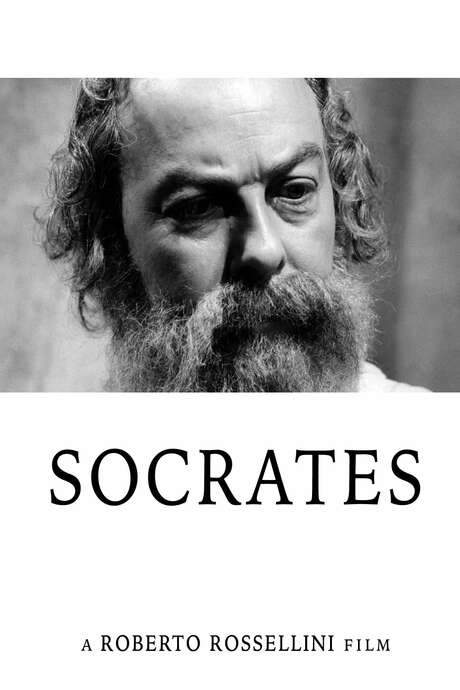
Socrates 1971

Directed by

Roberto Rossellini
Made by

RAI
Where to Watch Socrates
See current US streaming, rental, and purchase options for Socrates (1971) via JustWatch.

Streaming availability powered by 
Socrates Plot Summary
Read the complete plot summary and ending explained for Socrates (1971). From turning points to emotional moments, uncover what really happened and why it matters.
The film centers on Jean Sylvère as Socrates, focusing on the final years of the ancient philosopher’s life amid the turmoil that follows Athens’s defeat in the Peloponnesian War. The city stands under the shadow of the Thirty Tyrants (404 BC), and the Spartans have torn down the city walls, signaling a decisive shift from democratic ideals to a harsher political reality. The drama unfolds against a backdrop of civic fracture, where the memory of a once-vibrant polis weighs on every decision.
Against this upheaval, Socrates—now about seventy—continues his daily philosophical inquiries, drawing a large circle of young followers into long, probing discussions. The narrative weaves in dramatic excerpts from Plato’s dialogues—Hippias Major, Euthyphro, Republic, Crito, Apology, and Phaedo—to sketch his method: a relentless search for truth through dialogue, the awareness of one’s own ignorance, and the maieutic techniques that help reveal knowledge. The film also nods to contemporary critique, citing The Clouds by Aristophanes to show how some detractors painted him as a scheming rhetorician who corrupted youth, yet it emphasizes a defense that centers on virtue, the good life, and the perils of equating wisdom with wealth or power.
The personal dimension is vividly painted through Socrates’s poverty-stricken home life. He lives with his three children and his wife, Xanthippe, a sharp-tongued presence who challenges his single-minded dedication to philosophy. The domestic milieu sharpens the film’s portrait of a man whose public trial and private life collide in a climate of growing suspicion and political danger.
Among the key figures who appear in the frame are Ricardo Palacios as Critone, who presses the charges that catalyze Socrates’s trial; Anne Caprile as Santippe, the wife whose impatience and critique reflect the tensions of a man more devoted to inquiry than to conventional family stability; Antonio Medina as Platone, the aspiring philosopher who follows Socrates and helps illuminate the method through a younger lens; and Giuseppe Mannajuolo as Apollodoro, an ally who embodies the connection between the teacher and his students. Through their interactions, the film maps the philosophical lineage from Socrates to Plato in a living, breathing historical moment.
As Athens’s democracy wanes, Socrates faces formal charges—accused of corrupting the youth and defying the gods. His defense, rendered with the calm, linear logic attributed to Plato’s Apology, argues for a life committed to justice and the rule of law rather than to personal safety or political expediency. He refuses prison or exile, even declining a possible escape, and he proposes a stark, principled punishment: to live as a virtuous citizen within the city’s framework, accepting the outcome of the trial. His stance reflects a core belief in the obligation of the individual to the laws that govern society, however inconvenient or dangerous that may be.
The narrative culminates in Socrates’s acceptance of the death sentence. He drinks hemlock and faces his end with the same rigor with which he pursued truth, continuing to discuss life, death, and the immortality of the soul with his friends right up to his last breath. In its measured, reflective tone, the film presents a concluding meditation on how a philosopher responds to mortality, and how a life devoted to inquiry can leave a durable, if contested, mark on history.
Socrates Timeline
Follow the complete movie timeline of Socrates (1971) with every major event in chronological order. Great for understanding complex plots and story progression.
Spartans demolish Athens' walls and set the Thirty Tyrants in motion
The opening scene shows the Spartans razing the city walls, a dramatic gesture of victory after the Peloponnesian War. This act ushers in the tyrannical regime of the Thirty Tyrants, who tighten their grip on the city. The political shock reverberates through Athenian society from the start.
Regime of the Thirty Tyrants and the fragile peace
The new government tightens its grip on Athens, triggering turmoil and fear. The city becomes a battleground between loyalty to reform and the harsh rule of tyranny. This period sets the stage for a liberation struggle that will soon unfold.
The fall of the Thirty Tyrants and the fragile democratic mood
Although the tyrants are toppled by the following year, democracy is not fully restored; Athens remains volatile and divided. The population struggles with memory of the tyranny while equating reform with risk. The film frames this tense climate as the backdrop to Socrates’ life.
Socrates, a seventy-year-old philosopher in daily dialogue
Socrates is introduced as a seventy-year-old philosopher who teaches daily to a large circle of young followers. He pursues philosophical inquiry amid social turmoil, modeling a life devoted to questioning and dialogue. The portrayal emphasizes his commitment to virtue over wealth or power.
Excerpts from Plato’s dialogues illuminate his method
Throughout the film, scenes reference Hippias Major, Euthyphro, Republic, Crito, Apology, and Phaedo to illustrate his method. These excerpts show the use of dialogue, irony, and maieutics as ways to seek truth. They reveal philosophy as a practice of questioning and examining assumptions.
Public detractors invoke The Clouds to label Socrates
A detractor quotes The Clouds, Aristophanes’ comedy that paints Socrates as a scoundrel and sophist. The reference signals how public perception can shape a person’s fate. The film uses it to contrast popular ridicule with Socrates’ serious search for virtue.
Socrates' poverty and family life
The philosopher lives in poverty with his wife Xanthippe and three children, illustrating the tension between household duties and philosophical work. She criticizes him for wasting time on questions rather than providing for the family. This domestic strain underscores the contrast between his public intellectual status and private hardship.
Athens' political climate grows less tolerant
Even after the fall of the Thirty, Athenians become less tolerant of critics who challenge official culture and tradition. The climate of suspicion makes Socrates vulnerable to accusations and a trial in the court of public opinion. The film portrays this atmosphere as essential to understanding his fate.
Socrates is accused by Meletus of corrupting the youth and impiety
Socrates faces formal charges that he corrupted the young and disrespected the gods. The accusation arises from a charged political moment and a desire to silence dissent. The trial marks the collision between philosophy and Athenian law.
The Apology: Socrates' calm defense and a plan for moral punishment
In the Apology, Socrates delivers a calm, lucid defense that reframes his mission as a public service of truth. He refuses prison or exile and proposes to be honored as a virtuous citizen if punished. His stance embodies his belief that one should respect the laws even when they lead to an undesired outcome.
The verdict and his choice to accept punishment
The jury convicts Socrates and imposes the death penalty by hemlock. He accepts the verdict with stoic resolve, choosing not to escape and upholding his conviction that justice requires compliance with the city’s laws. The scene underscores his commitment to moral law over personal survival.
Death by hemlock and final philosophical conversations
Socrates drinks the poison and faces death with philosophical composure. Even in his last moments, he speaks with friends about life, death, and the immortality of the soul. The ending crystallizes the film’s meditation on virtue, wisdom, and the fate of a life devoted to questions.
Socrates Characters
Explore all characters from Socrates (1971). Get detailed profiles with their roles, arcs, and key relationships explained.
Socrates (Jean Sylvère)
Old, stubbornly virtuous philosopher who pursues truth through relentless questioning. He lives in poverty with his family, values the examined life, and faces a hostile political climate with calm resolve, choosing to respect the laws even at the cost of his life.
Santippe (Anne Caprile)
Xanthippe-like wife who criticizes her husband’s preoccupation with philosophy, viewing it as a waste of time and a burden on the family’s finances. Her rough demeanor highlights the personal strain caused by Socrates’ vocation.
Platone (Antonio Medina)
A young disciple who witnesses Socrates’ method and the philosophical debates of his time. He represents the next generation engaging with virtue, knowledge, and the idea that questioning can illuminate truth.
Apollodoro (Giuseppe Mannajuolo)
A follower of Socrates who participates in the circle of his ideas and the dialogues. He observes the social and political upheavals shaping Athens and the philosopher’s influence on youth.
Critone (Ricardo Palacios)
A loyal friend from Socrates’ circle who urges him to escape prison and avoid death, illustrating the conflict between personal loyalty and respect for law.
Socrates Settings
Learn where and when Socrates (1971) takes place. Explore the film’s settings, era, and how they shape the narrative.
Time period
404–399 BCE
The film unfolds during a turbulent window in late classical Greece: the fall of Athens' democracy after the Peloponnesian War, the brief reign of the Thirty Tyrants, and the moral climate leading to Socrates' trial and death. It juxtaposes civic collapse with the intimate life of Socrates as he questions virtue and the gods. The time captures a clash between tradition and critical inquiry that defines Socrates' final years.
Location
Athens, Greece
After the Peloponnesian War, Athens is in political and social turmoil. The Spartans' victory and the rise of the Thirty Tyrants plunge the city into fear and faction. The setting juxtaposes impoverished households with public spaces where philosophers challenge received wisdom.
Socrates Themes
Discover the main themes in Socrates (1971). Analyze the deeper meanings, emotional layers, and social commentary behind the film.
💬
Philosophy
Socrates pursues truth through dialogue, challenging assumptions and encouraging others to examine their own beliefs. The film shows how questions can unsettle authority and reveal ignorance as a starting point for learning. It portrays the Socratic method as a collaborative search rather than a lecture, revealing virtue as the route to happiness. The film emphasizes the enduring tension between inquiry and conventional wisdom.
⚖️
Justice
The narrative centers on judgment—how a city defines right and wrong, and whether a wise man can be accused of corrupting youth. Socrates' defense highlights the conflict between personal integrity and political convenience. The trial exposes how legal systems can become instruments of fear and control under a volatile regime. The portrayal invites reflection on the relationship between law, virtue, and the common good.
🏛️
Democracy
Athens' political decline provides the backdrop for debates about liberty, authority, and dissent. The film contrasts vibrant philosophical debate with a climate of suspicion and punishment. It shows how populist pressure and military defeat erode civic tolerance. The result is a setting where critical thought is endangered by political fear.
💀
Death and Immortality
Socrates accepts his death with calm inquiry, turning the end into a philosophical dialogue about the soul and its fate. He refuses slights or escape, viewing his life as a continuous rational examination until the last breath. The hemlock becomes a stage for a final discussion with friends about life, death, and the immortality of the soul. The scene emphasizes that true philosophy endures beyond the body's end.

Coming soon on iOS and Android
The Plot Explained Mobile App
From blockbusters to hidden gems — dive into movie stories anytime, anywhere. Save your favorites, discover plots faster, and never miss a twist again.
Sign up to be the first to know when we launch. Your email stays private — always.
Explore the mobile appSocrates Spoiler-Free Summary
Discover the spoiler-free summary of Socrates (1971). Get a concise overview without any spoilers.
In the waning days of a fractured Athens, the city’s streets echo with the aftermath of war and the uneasy silence of a democracy stripped of its walls. Amid the looming presence of the Thirty Tyrants, the atmosphere is one of stark contrasts: marble ruins beside bustling markets, heated debates displaced by whispered fears. The film paints this turbulent polis in muted tones, letting the lingering scent of olives and ash remind viewers that philosophy now breathes in a world teetering between hope and oppression.
At its heart is Socrates, an aging thinker whose relentless curiosity still draws a circle of eager pupils to the stoa each morning. His method—probing questions, gentle contradictions, and an unwavering commitment to the examined life—creates a quiet rebellion against the encroaching cynicism of the age. Home life offers a counterpoint: the modest household he shares with his sharp‑tongued wife Xanthippe and their three children, where the clash of domestic concerns and lofty ideals underscores the human cost of his devotion. Among his companions, a young aspirant named Plato provides a fresh lens through which the philosopher’s teachings are filtered, while a determined civic official, Critone, introduces a tension that threatens to upend their fragile equilibrium.
The tone remains contemplative, inviting the audience to linger over long conversations that drift between humor and gravitas, much like the ancient dialogues that inspired them. Shadows lengthen as rumors of a false accusation begin to stir, hinting at a trial that could test the very foundations of Socrates’s principles. Yet the film resists melodrama, choosing instead to let the weight of ideas and the textures of daily life speak for themselves, leaving viewers to wonder how a man devoted to truth navigates a city slipping into darkness.
Movies with Similar Twists and Themes
Uncover films that echo the narrative beats, emotional arcs, or dramatic twists of the one you're exploring. These recommendations are handpicked based on story depth, thematic resonance, and spoiler-worthy moments — perfect for fans who crave more of the same intrigue.

Featured on this page

What's After the Movie?
Not sure whether to stay after the credits? Find out!
Check out our other apps:

SAT Sphere
Build confidence for the Digital SAT.

Mori Atlas
Discover wild places worth protecting.

Luntero
Search smarter for a home in Amsterdam.

Plot Explained
Unravel movie endings and hidden clues.

Pokechamp
Dive into Pokémon data and battle logic.

Driving Theory
Get ready for your European theory test.

Movie Dust
Plan your next cinema trip with ease.

Musemap
Find art and culture as you travel.

Selkobase
Compare credentials before committing.

Local Manual
Turn an unfamiliar country into practical next steps.

Lernavi
Compare school systems before your next move.

GymRoam
Find a workout stop wherever your plans take you.
Explore Our Movie Platform
New Movie Releases (2026)
Famous Movie Actors
Top Film Production Studios
Movie Plot Summaries & Endings
Major Movie Awards & Winners
Best Concert Films & Music Documentaries
Movie Collections and Curated Lists
© 2026 What's After the Movie. All rights reserved.
Privacy Policy