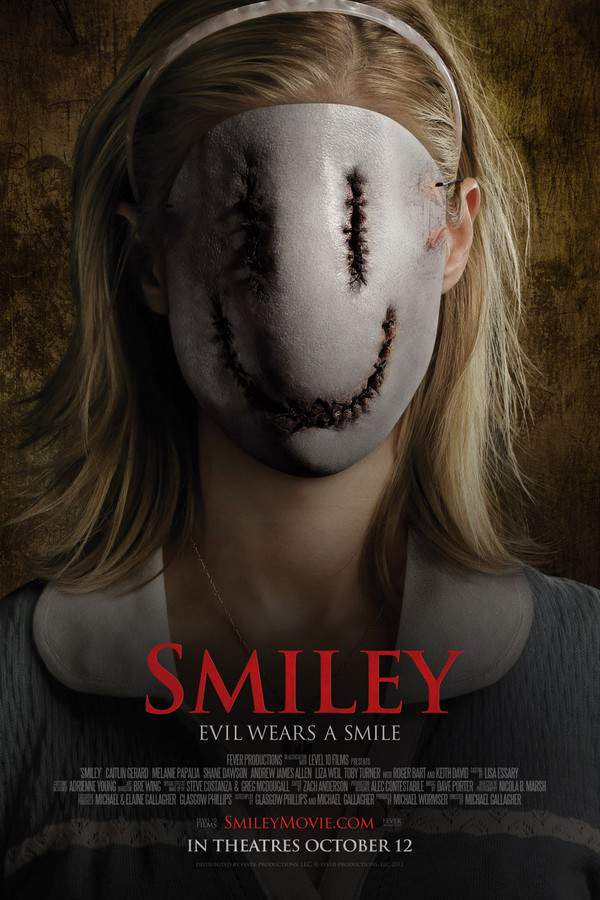
Smiley 2012

Directed by

Michael J. Gallagher
Made by

AMC Theatres
Smiley Plot Summary
Read the complete plot summary and ending explained for Smiley (2012). From turning points to emotional moments, uncover what really happened and why it matters.
The internet legend of Smiley—the killer with eyes stitched shut and a mouth carved into a perpetual grin—drives the chilling events of the story.
College students Ashley and Proxy are roommates. At a party, Ashley meets Zane, Mark, and Binder. One night, the two friends test the Smiley myth with a random person. After they type “I did it for the lulz” three times, they witness the stranger being murdered on screen. Proxy convinces Ashley to stay silent, believing they’ve escaped detection, but the fear festers.
Guilt gnaws at Ashley as she becomes convinced that Smiley is stalking her and intends to kill her, a fear dismissed by friends and a psychiatrist as anxious nightmares. She keeps pushing, trying to persuade the police to investigate the murders tied to Smiley, yet authorities dismiss her claims and treat it as paranoia rather than evidence. The strain of the mystery strains friendships and tests the boundary between online myths and real danger.
The danger escalates when Proxy loses contact with Zane, and she calls Ashley in a state of hysteria. Ashley heads to Zane’s house and discovers him shot dead, holding his own handgun. In a desperate, reckless attempt to confront the threat, Ashley takes the gun and orders Proxy to type “I did it for the lulz” three times, hoping to summon Smiley for a confrontation. The plan spirals out of control when Binder arrives to check on Ashley, and she ends up accidentally shooting him. Moments later, Smiley appears and slits Binder’s throat, and Ashley is overwhelmed as multiple Smileys close in, forcing her to throw herself off in a bid for survival. The sequence underscores the dangerous line between internet folklore and fatal real consequences.
A shocking reveal reshapes everything: Ashley’s classmates, including Proxy, Binder, and the babysitter murdered in the opening, are part of a fringe Anonymous group that created the Smiley myth as a large-scale prank. They’re not merely seekers of thrill but perpetrators of a deadly hoax, and they’re satisfied with Ashley’s death as the final product of their game. Binder even predicts that Smiley will endure far beyond their group, inspiring copycat killings and continuing to shape fear.
The moral fallout continues as Proxy and Zane confront the consequences of their actions. In a later video chat, Proxy questions their shared morality, while Zane dismisses her concerns and types the phrase “I did it for the lulz” three times as a cruel joke. The horror intensifies when a Smiley materializes behind Proxy, kills her, and then waves at Zane through the webcam, leaving him to witness the horror in real time.
A post-credits moment offers a chilling reconsideration of the crash of innocence and consequence. Ashley wakes up with a gasp, revealing she survived her fall, leaving the audience to wonder about the true reach of the Smiley myth and who might still be out there, watching.
Smiley Timeline
Follow the complete movie timeline of Smiley (2012) with every major event in chronological order. Great for understanding complex plots and story progression.
The Smiley myth goes live at a party and online test
At a college party, Ashley and Proxy test the Smiley legend by sending a random stranger a link on a Chatroulette-style site after typing 'I did it for the lulz' three times. The stranger is murdered before their eyes, confirming the myth's deadly potential. The event plants fear and curiosity about Smiley.
Aftermath of witnessing the murder: silence and guilt
Proxy convinces Ashley to stay silent about the murder. Ashley grapples with guilt and increasingly believes Smiley is stalking her, despite her friends and a psychiatrist dismissing the fear as anxiety.
Skepticism from authorities and doctors
Ashley’s fear persists, but she is told that her experiences are anxious nightmares rather than real threats. The panic isolates her from friends who doubt the myth's truth.
Ashley seeks police help, met with disbelief
She attempts to persuade the police to investigate the Smiley killings, but they dismiss her warnings as irrational sensationalism. The case remains unsolved and the killings continue.
Proxy loses contact; panic in online chat
Proxy suddenly loses contact with Zane and then video-chats Ashley in hysterics. They fear the danger is real and the group behind the myth may be closer than they thought.
Zane's death scene
Ashley goes to Zane's house and finds him shot dead, holding his own handgun. The discovery confirms that the Smiley threat is not a rumor but a deadly reality.
Ashley seizes gun power and forces Proxy to type
Ashley seizes the handgun and orders Proxy to type 'I did it for the lulz' three times, hoping to summon Smiley. Proxy complies out of fear, and the atmosphere tightens with dread.
Binder dies at the hands of Smiley
Chaos erupts as Binder is shot by Ashley accidentally; moments later, Smiley appears and slits Binder's throat. The room is engulfed in horror as the myth materializes.
Multiple Smileys attack and Ashley falls to presumed death
Ashley is attacked by several Smileys, fights them off, and then throws herself out of the house in what she believes is her death.
The reveal: a prank by Anonymous fringe group
It is revealed that Ashley's classmates, including Proxy and Binder, along with the babysitter from the opening, are part of a fringe Anonymous group. They created the Smiley myth as a large-scale prank and express satisfaction with Ashley's death.
Smiley's legacy and the prank's lasting impact
Binder states that Smiley will likely live on long after them and inspire copycat killings. The group contemplates the lasting impact of their deception and its real consequences.
Proxy and Zane confront morality; Smiley strikes online
Later, Proxy video-chats Zane about their morality. Zane dismisses her concerns and jokes by typing the phrase three times. A Smiley appears behind Proxy, kills her, and waves at Zane on the webcam.
Post-credits Ashley survives
In a post-credits scene, Ashley wakes up gasping, revealing she survived her fall. The film hints that the nightmare may not truly end.
Smiley Characters
Explore all characters from Smiley (2012). Get detailed profiles with their roles, arcs, and key relationships explained.
Ashley (Caitlin Gerard)
Ashley is a college student who becomes obsessed with proving the Smiley myth real after witnessing a stranger's murder. Plagued by guilt and fear, she spirals into paranoid beliefs that Smiley is stalking her. Her insistence on bringing the case to the police is met with skepticism, which isolates her further. The tragedy centers on her fragile psyche and the consequences of online rumors gone wrong.
Proxy (Melanie Papalia)
Proxy is Ashley's roommate, a thrill-seeker who helps test the myth; she becomes morally conflicted as the consequences unfold. She initially goes along with the prank but wavers as the harm becomes real and she questions their actions. Her involvement highlights the seductive pull of online mischief and the eventual cost of complicity.
Zane (Andrew James Allen)
Zane is a classmate and friend who participates in the prank and is killed by the film's events. He embodies the thrill-seeking impulse of the group and becomes a casualty as the myth spirals out of control. His actions blur the line between friendship and dangerous experimentation.
Binder (Shane Dawson)
Binder is a key member of the fringe group orchestrating the prank and spreading the myth. He underestimates the danger and becomes complicit in the deception. He is ultimately a victim of the very plot he helped spark, illustrating the consequences of reckless manipulation.
Smiley Settings
Learn where and when Smiley (2012) takes place. Explore the film’s settings, era, and how they shape the narrative.
Time period
Early 2010s
The narrative sits in a period when online memes, chat sites, and webcams shaped youth culture. Rumors can spread rapidly across networks, turning fiction into perceived fact. The era’s tech tools enable the myth to escalate from a joke to real danger, blurring lines between online personas and real-world consequences.
Location
College campus, Ashley's dorm/apartment, Zane's house, online Chatroulette-style site
Set primarily on a college campus and students' living spaces, the story unfolds through parties, dorm rooms, and late-night chats. The online segments connect the real world to a Chatroulette-style site where a lethal legend begins to spread. The setting emphasizes the collision of everyday college life with dangerous internet culture. The events also explore how digital rumors spill into physical spaces, driving fear and tragedy.
Smiley Themes
Discover the main themes in Smiley (2012). Analyze the deeper meanings, emotional layers, and social commentary behind the film.
🌐
Internet Myth
An online myth about a killer named Smiley spreads through a chat-based community. The legend promises that typing 'I did it for the lulz' three times will summon a killer who will murder the person you are talking to. The narrative shows how rumors gain power when fueled by anonymity and sensationalism. The twist reveals the myth was manufactured by a fringe group as a large-scale prank, exposing how media can weaponize fear.
👥
Group Dynamics
A close-knit group of college friends fabricates the Smiley myth as a prank, hiding behind the anonymity of online culture. Their complicity reveals how peer pressure can escalate into dangerous actions when everyone wants to go along. The film demonstrates how collective thrill-seeking can erode responsibility and empathy. When the myth spirals, the group's initial amusement gives way to fear, guilt, and denial.
😨
Guilt & Paranoia
Ashley becomes haunted by guilt and fear, convinced that Smiley is after her. Her paranoia is dismissed by friends and professionals as anxiety or nightmares, isolating her from support. She pursues official intervention, but the police push back, leaving her to confront the threat alone. The escalating mental strain culminates in tragedy, underscoring the cost of unresolved guilt.
💀
Violence & Consequences
The film links real violence to a prank, exposing how a staged myth can trigger actual killings. The perpetrators revel in their success even as they become numb to the harm they caused; the line between prank and crime blurs. A twist reveals the killers' desire for the myth to continue, suggesting copycat threats will persist. The post-credits moment reframes the events, reminding viewers that the threat can outlive its creators.

Coming soon on iOS and Android
The Plot Explained Mobile App
From blockbusters to hidden gems — dive into movie stories anytime, anywhere. Save your favorites, discover plots faster, and never miss a twist again.
Sign up to be the first to know when we launch. Your email stays private — always.
Explore the mobile appSmiley Spoiler-Free Summary
Discover the spoiler-free summary of Smiley (2012). Get a concise overview without any spoilers.
In a modern campus where digital whispers travel faster than campus gossip, a chilling internet legend haunts the corridors of student life. The story of “Smiley” – a faceless killer imagined with stitched‑shut eyes and a perpetual grin – circulates on forums and chat rooms, feeding a growing unease that blurs the line between online folklore and real‑world threat. The film settles into this uneasy atmosphere, letting the myth linger in the background like an ever‑present static hum that never quite fades.
Ashley is a diligent college student whose life is upended when she begins to suspect that the terrifying myth could be targeting her specifically. Living with her close‑knit roommate Proxy, the two share the typical push‑and‑pull of youthful camaraderie, yet the creeping dread forces Ashley to question everything she thought she knew about safety, friendship, and the invisible eyes that seem to watch from behind a screen. Their dynamic becomes a quiet battlefield where trust is tested against a growing paranoia that feels both personal and viral.
The tone is a slow‑burning blend of psychological suspense and contemporary dread, drawing the audience into Ashley’s increasingly fraught internal world. Every notification, every cryptic message, and every empty hallway becomes a potential clue, amplifying the feeling that something unseen is closing in. As she seeks validation from friends, professors, and even mental‑health professionals, their reassurances feel hollow, intensifying her sense of isolation and urging her deeper into the mystery that surrounds the Smiley legend.
Beyond the personal stakes, the film offers a meditation on the fragile nature of the human mind in the digital age, probing how myths can blossom into real anxieties when amplified by the internet’s reach. It asks unsettling questions about how easily a rumor can morph into a haunting reality, and whether the very tools designed to connect us can also become the channels through which terror seeps in. The result is a suspenseful, mood‑rich narrative that keeps viewers on edge, wondering just how far the line between imagination and danger truly extends.
Movies with Similar Twists and Themes
Uncover films that echo the narrative beats, emotional arcs, or dramatic twists of the one you're exploring. These recommendations are handpicked based on story depth, thematic resonance, and spoiler-worthy moments — perfect for fans who crave more of the same intrigue.



Featured on this page

What's After the Movie?
Not sure whether to stay after the credits? Find out!
Check out our other apps:

SAT Sphere
Build confidence for the Digital SAT.

Mori Atlas
Discover wild places worth protecting.

Luntero
Search smarter for a home in Amsterdam.

Plot Explained
Unravel movie endings and hidden clues.

Pokechamp
Dive into Pokémon data and battle logic.

Driving Theory
Get ready for your European theory test.

Movie Dust
Plan your next cinema trip with ease.

Musemap
Find art and culture as you travel.

Selkobase
Compare credentials before committing.

Local Manual
Turn an unfamiliar country into practical next steps.

Lernavi
Compare school systems before your next move.

GymRoam
Find a workout stop wherever your plans take you.
Explore Our Movie Platform
New Movie Releases (2026)
Famous Movie Actors
Top Film Production Studios
Movie Plot Summaries & Endings
Major Movie Awards & Winners
Best Concert Films & Music Documentaries
Movie Collections and Curated Lists
© 2026 What's After the Movie. All rights reserved.
Privacy Policy