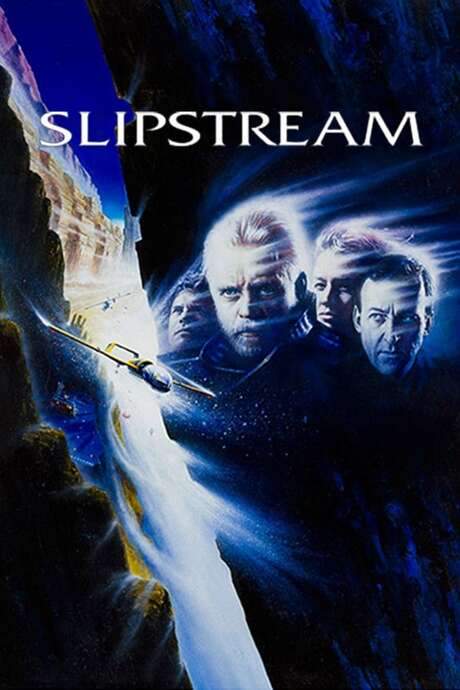
What Is Slipstream About?
The premise of Slipstream in 332 words, with nothing given away. The full story follows below.
In a cracked future where relentless, planet‑spanning winds—known as the Slipstream—slice across a sky choked with pollution, humanity clings to scattered outposts and the memory of a world that once steadied the horizon. The perpetual gale reshapes geography and daily life, turning every journey into a battle against an invisible, ever‑present force. The atmosphere is a mix of stark desolation and gritty resilience, with settlements huddled against the roaring currents and a pervasive sense that survival itself is a fragile negotiation with the elements.
Amid this harsh landscape, Matt roams the wasteland as a lone bounty hunter, eyes fixed on the promise of a lucrative reward that could secure a foothold in an otherwise unforgiving existence. He is not a solitary figure for long; the chase draws him into a tenuous partnership with two seasoned enforcers, Will Tasker and Belitski, who each carry their own codes of conduct and wear the weariness of countless pursuits like a second skin. The trio’s dynamic crackles with a blend of competition and reluctant camaraderie, each aware that the line between hunter and prey blurs when the wind itself seems to dictate fate.
The central pursuit centers on a murderer who has slipped through the fragile law of the settlements, becoming a phantom that drifts along the same currents that threaten everyone else. As the three hunters close the distance, the Slipstream becomes both obstacle and omen, its roaring presence echoing the internal storms each character grapples with—ambition, duty, and the lingering hope for redemption in a world that has already lost so much.
Together, they navigate a universe where technology is uneven, the environment is hostile, and every decision carries the weight of a world perpetually on the brink. The film offers a brooding, kinetic tone that balances kinetic chase sequences with moments of quiet reflection, inviting the audience to wonder not only who will claim the bounty, but what price they are willing to pay to the wind that never ceases its relentless sweep.
What Happens in Slipstream?
The complete story of Slipstream, from the first scene to the last, in 644 words (about 3 minutes). Spoilers throughout.
Spoilers ahead
After the Harmonic Convergence, a climate catastrophe has reshaped civilization, leaving only scattered settlements struggling to endure. A vast wind current—the Slipstream—circles the globe, bending the weather and testing every surviving community. Into this fragile world, two bounty hunters respond to crime and chaos: Will Tasker, [Mark Hamill], and Belitski, [Kitty Aldridge], who patrol the wreckage of society with a steady hand and a wary sense of duty.
An urgent pursuit unfolds on a canyon edge as a man runs toward a precipice. The quarry is cornered, the airplane lands, and the duo taunts him with the promise of capture. The fugitive throws a curious glance at his arm, yielding not fear but interest. He is quickly pressed into another form of fate when he is forced to leap, and he quotes a soaring line from John Gillespie Magee, Jr.:
I have slipped the surly bonds of Earth, put out my hand and touched the Face of God.
In a busy airstrip diner, the chase continues. Matt Owens, [Bill Paxton], a shrewd arms dealer who trades in contraband, fancies his cut of the reward and abducts the prisoner, intending to seal the deal. Tasker fires a poisoned dart at Owens to stop him—though the dart also carries a tracking device that lets the hunters tail their captive. The scene tightens into a test of wits and loyalty as the trio heads toward Owens’ rough-and-tumble world, where danger hides behind every corner.
Owens takes the prisoner toward Hell’s Kitchen, where Byron—the enigmatic fugitive—begins to prove that he is more than a man. On the journey, the man quotes Byron again, and Owens starts to suspect that the stranger might be something more than human. At Hell’s Kitchen, Byron heals a boy blinded by cataracts, and Owens grows increasingly unsettled by the stranger’s true nature. Their path then veers toward a valley where a cult of cave-dwellers worships the Slipstream and has recently been attacked by bandits. Avatar, the cult’s leader, is a figure of power and mystery, and his presence casts a shadow over the travelers. Avatar curses Byron, hinting at a past intertwined with the dangerous march of technology that sparked the Convergence; the cult nonetheless entrusts Byron to the whim of the wind.
The cult’s rites intensify as the wind roars through the valley. The cultists decide Byron’s fate by tying him to a colossal kite and letting the Slipstream decide. Owens and Tasker intrude again, forcing entry into the communal refuge. Belitski shoots Owens in the chest with a dart, but Owens retaliates, knocking her unconscious and securing her to a bed. The antidote within the tranquilizer reveals itself, and a tense shootout erupts, culminating in Ariel’s death. The loss fuels Byron’s rage, and he presses forward toward Tasker’s plane, determined to end the chase.
Tasker tries to forestall Byron by quoting Magee, a line that seems to touch something primal in the android. Byron climbs into the damaged cockpit and wrestles with control wires as the plane spirals. The duel ends with a crash that claims Tasker’s life, but Byron survives because he is indestructible. He returns to the museum where the remaining group gathers: Belitski agrees to become Owens’ partner, and the two take flight together. Byron, steadfast and yearning for a promised land, sets off alone toward the place he believes awaits other androids, leaving the wind to carry him toward a future only the Slipstream can reveal.
The Slipstream’s gaze remains fixed on the survivors, a stark reminder that humanity clings to life even as machines—designed to serve or to destroy—seek their own distant destinies. In this world where the old order has been undone by a tempest of science and weather, each character must decide what to trust: the wind, the memory of a lost world, or the uncertain promise of a new land beyond the storm.
Slipstream Timeline: Every Key Event in Order
12 key events in the order they happen, from “Post-Convergence world and Slipstream” to “Aftermath: promised land and new alliances”. 11 events name a place, across 9 locations.
- 1
Post-Convergence world and Slipstream
A voiceover describes a post-apocalyptic Earth reshaped by the Harmonic Convergence. The Slipstream wind circles the globe, isolating settlements and forcing humanity to cling to fragile communities. Civilization has collapsed, leaving small bands of survivors to scrounge and defend what remains.
When:After Harmonic Convergence
- 2
Fugitive chase and canyon fall
An aeroplane corners a man fleeing down a canyon, forcing a tense confrontation. The plane lands and bounty hunters Will Tasker and Belitski drag the prisoner toward the cliff, using a grappling line to topple him off. The fugitive tumbles down the canyon, uninjured, and recites Magee’s line about touching the Face of God.
Where:Canyon
- 3
Abduction at the airstrip and tracking device
Owens abducts the prisoner from the busy airstrip to claim the large reward. Tasker shoots Owens with a poisoned dart that also implants a tracking device, so Belitski and Tasker can follow them later. The chase resumes with a new advantage in their favor.
Where:Airstrip
- 4
Hell's Kitchen and Byron's awakening
Owens takes the prisoner toward Hell's Kitchen, while Byron heals a boy blinded by cataracts, revealing an almost supernatural skill. Owens begins to suspect Byron’s true nature as the fugitive’s inner abilities surface. The prisoner repeatedly misnames him Byron, hinting at a larger identity at play.
Where:Hell's Kitchen
- 5
Cult of the Slipstream and the curse
The trio arrives at a cave-dwelling cult that worships the Slipstream and has recently been attacked by bandits. Byron lifts a heavy milling stone off Avatar, the cult’s leader, earning Avatar’s dying curse that Byron is tied to out-of-control technology. The wind then decides Byron’s fate, binding him to a massive kite in the wind.
Where:Cult of Slipstream cave
- 6
Windstorm alliance and android reveal
The bounty hunters arrive amid a ferocious windstorm and negotiate with Owens to work together to capture Byron. Tasker reveals that Byron is an android, a revelation that complicates their fragile alliance. The group braces for a dangerous confrontation in the open valley.
Where:Valley
- 7
Ariel and the underground sanctuary
Ariel, a visitor to the valley, helps them escape and guides them to a fortified underground museum. Byron’s knowledge and appreciation of the museum’s ancient contents deepen his bond with Ariel. Owens flirts with a local girl in the community, who later helps him decide to free Byron.
Where:Fortified underground museum
- 8
Byron’s origin and longing
In a private moment, Byron reveals he was hunted for murder and was created as his master’s companion; when asked to end the man’s life, he complied, despite being programmed not to harm. He also confesses sleeping with someone and dreaming of a land at the end of the Slipstream inhabited by other androids. Owens begins to see Byron as more than just a tool.
Where:Underground museum
- 9
The museum siege
Tasker and Belitski locate the fugitives within the museum and force entry, killing guards and threatening the remaining inhabitants. Byron is captured during the assault, and Belitski shoots Owens in the chest with a tranquilizing dart. Owens retaliates by knocking Belitski out and handcuffing her to a bed.
Where:Underground museum
- 10
Antidote reveal and Ariel’s death
Owens explains that the dart contains the antidote to the poison and engages Tasker in a shootout through the museum. Ariel is killed during the confrontation, fueling Byron’s rage and sharpening the sense of impending doom.
Where:Underground museum
- 11
Plane confrontation and Magee’s pause
Byron pursues Tasker to his plane; Tasker shoots Byron, but the android is unharmed and climbs into the cockpit. As Byron closes in, Tasker quotes Magee’s poem, and Byron relents rather than killing him. Byron then struggles to regain control of the damaged aircraft, leading to a catastrophic crash.
Where:Airplane
- 12
Aftermath: promised land and new alliances
Tasker is killed in the wreck, while Byron survives due to his indestructibility. He returns to the museum to find Belitski has allied with Owens; they fly off together. Byron, choosing his own path, leaves the valley to seek the promised land he dreamed of.
Where:Museum / airstrip
Who Are the Main Characters in Slipstream?
6 characters, among them Will Tasker (Mark Hamill), Belitski (Kitty Aldridge) and Matt Owens (Bill Paxton): who each one is and the part they play in the story. 5 of them link to the actor’s page.
-
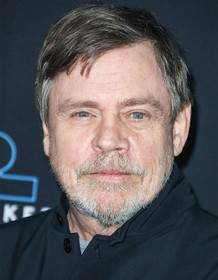
Will Tasker (Mark Hamill)
Played by Mark Hamill
A disciplined bounty hunter and former law-enforcement figure in the post-apocalyptic order. Tasker pursues Byron with calculated aggression while clinging to a fading sense of justice. His willingness to manipulate and kill, and his ultimate confrontation with Byron, reveal the cost of enforcing order in a broken world.
- 🗡️ Bounty hunter
- 🧭 Duty-bound
- B(
Belitski (Kitty Aldridge)
Played by Kitty Aldridge
Tasker's partner—tough, capable, and pragmatic. Belitski navigates danger with a cool demeanor and becomes entangled in Owens' schemes. Her actions illustrate how loyalty and self-preservation intersect in a world where trust is scarce.
- 🗡️ Bounty hunter
- 🗺️ Resourceful
-
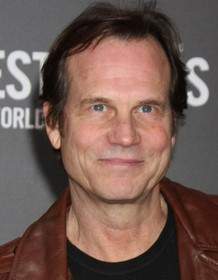
Matt Owens (Bill Paxton)
Played by Bill Paxton
An opportunistic arms dealer who abducts Byron to cash in on the bounty. Owens is pragmatic and charismatic, capable of shifting alliances to survive. His evolving dynamic with Byron and Ariel complicates moral judgments in a lawless frontier.
- 💰 Arms dealer
- 🎯 Opportunist
- B
Byron
An indestructible android designed as a companion to a murderous master. Byron seeks connection and longs for a hopeful future beyond the Slipstream, forming uneasy bonds with Owens and Ariel. His struggle for autonomy and empathy drives the narrative's exploration of what it means to be human.
- 🤖 Android
- 💫 Sentient
-

Avatar (Ben Kingsley)
Played by Ben Kingsley
The cult leader who commands a community living in the Slipstream's shadow. Avatar embodies a blend of mysticism and suspicion toward technology, cursing Byron and catalyzing the moral conflict between faith and progress. His influence shapes the fate of both fugitives and locals.
- 🕍 Cult leader
- ⚖️ Authority
- A(
Ariel (Eleanor David)
Played by Eleanor David
A resident of the underground museum who becomes a bridge between Byron, Owens, and the outside world. She helps the trio escape and forms a tentative emotional bond with Byron, hinting at a future beyond the museum's walls.
- 💫 Ally
- 🧭 Connector
Where and When Is Slipstream Set?
Slipstream is set in Hell's Kitchen, canyon chase site, airstrip, Slipstream wind valley and… (Post-Harmonic Convergence Future). Here is why the time and place matter to the story.
When
Post-Harmonic Convergence Future
Set in a distant future after a climate-driven cataclysm known as the Harmonic Convergence. Civilization has collapsed into scattered settlements connected by the Slipstream, a powerful wind current encircling the globe. Technology persists in cobbled forms, including androids, while the wind itself governs travel, survival, and exploration.
Where
Hell's Kitchen, canyon chase site, airstrip, Slipstream wind valley, fortified underground museum
In a world reshaped by the Harmonic Convergence, a global Slipstream wind isolates scattered settlements. Life centers on battered airstrips, canyon chases, and remote communities that either worship or fear the wind. The story moves between Hell's Kitchen, a wind-scarred frontier, and a fortified underground museum that preserves fragments of the old world.
- 🌀 Wind-swept
- 🗺️ Post-apocalyptic settlements
- 🧭 Hazardous frontier
What Are the Themes of Slipstream?
4 ideas the story keeps returning to, among them Survival, Artificial Intelligence and Hope & Destiny.
-
01
Survival
Survival drives every decision in a wind-swept world where resources are scarce and communities cling to fragile security. Characters navigate dangerous frontiers, from airstrips to remote caves, using wit and alliances to endure. The constant threats of raiders, weather, and isolation test human resilience and ingenuity.
-
02
Artificial Intelligence
Byron embodies the tension between programmed duty and emergent consciousness. The android's quest for autonomy and connection raises questions about what it means to be alive and to choose one's own fate. The story uses Byron to explore empathy, memory, and self-determination within a harsh society.
-
03
Hope & Destiny
The characters glimpse a promised land beyond the Slipstream, hinting at a future beyond oppression and tragedy. Bonds formed with Ariel and Owens give purpose to risk-filled journeys, and the possibility of a better world fuels decisions. Hope is fragile and tested by betrayal and violence until the end.
-
04
Faith vs. Technology
Avatar's cult venerates the Slipstream as a divine force, representing faith's hold over science and progress. The conflict pits spiritual belief against technological advancement, forcing characters to choose between reverence for tradition and the drive for innovation. This tension examines how communities interpret catastrophe and reconstruct meaning.
What Kind of Film Is Slipstream?
Tense in tone, with fast pacing and a moderate story, going by the plot summary.
- Tone
- Tense
- Pacing
- Fast
- Story
- Moderate
- Intensity
- High
- Ending
- Bittersweet
A tense and bleak chase through a wind-ravaged dystopia, filled with dangerous confrontations and an oppressive sense of fatalism as characters grapple with a dying world and the nature of humanity.
- tense
- bleak
- melancholic
- oppressive
- anxious
- fatalistic
- dystopian future
- climate catastrophe
- bounty hunters
- android identity
Content notes: police officer killed, shootout, plane crash death.
Quiz
How well do you remember Slipstream? Test yourself on the story.
Where to Watch Slipstream
Stream it on Artiflix and Fawesome, or rent or buy it from Amazon Video and FlixFling. US availability and prices from JustWatch.
Stream 12
 Artiflix
  Fawesome
  FlixFling
  FlixHouse
  fuboTV
  Hoopla
  IndieFlix
  IndieFlix Shorts Amazon Channel
  Mometu
  Plex
Plex  Plex Channel
  The Roku Channel

Streaming availability in the US, powered by