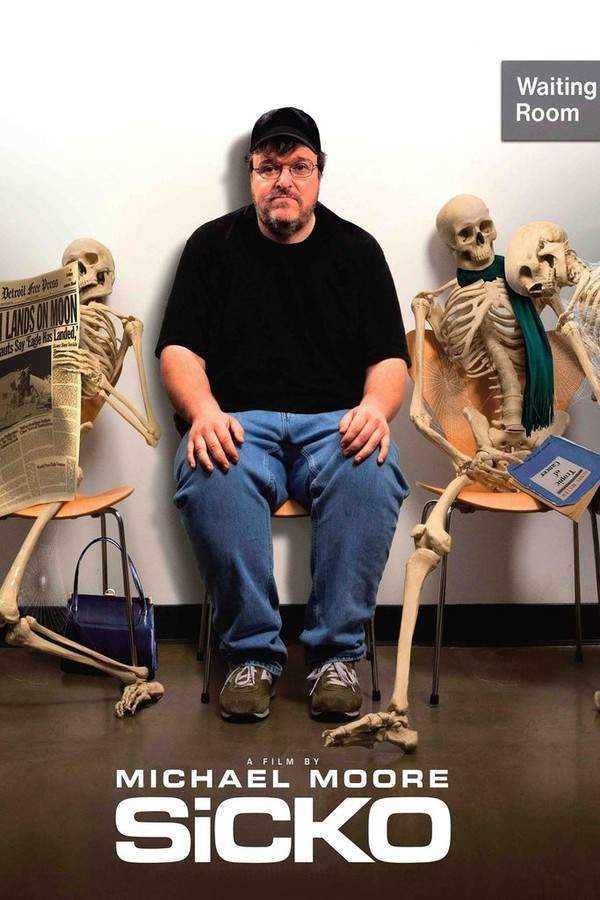
Sicko 2007


Directed by

Michael Moore
Made by
Lionsgate
Where to Watch Sicko
See current US streaming, rental, and purchase options for Sicko (2007) via JustWatch.

Lionsgate+ Amazon Channels
HD
Hoopla
SD
Kanopy
HD
Fandango at Home Free
HD
Plex
HD
Plex Channel
HD
The Roku Channel
HD
Tubi TV
SD
Xumo Play
HD
YouTube Free
HD
Amazon Video
HD
Apple TV Store
HD Fandango At Home
HD
Google Play Movies
SD
YouTube
SD Streaming availability powered by 
Sicko Plot Summary
Read the complete plot summary and ending explained for Sicko (2007). From turning points to emotional moments, uncover what really happened and why it matters.
Writer and producer Michael Moore embarks on a compelling journey to expose the troubling realities faced by Americans who have been denied crucial medical treatment by health care insurance companies. These organizations prioritize profit over essential health services, resulting in devastating outcomes for individuals, often leading to bankruptcy or, even worse, the unnecessary deaths of loved ones.
Moore boldly shifts his focus to evaluate universal free health care systems in countries such as Canada, France, Britain, and Cuba. In doing so, he effectively dismantles the pervasive fears—such as diminished quality of care, inadequate compensation for doctors, and burdensome government oversight—that have deterred Americans from advocating for a similar system at home. By tracing the roots of these successful health care systems, he highlights how the failure to adopt universal coverage in the U.S. can be attributed to President Richard Nixon’s illusory backing of managed care organizations (HMOs) that sought to maximize profits, along with the ongoing pressures on Congress to prioritize corporate interests over sound health care reforms.
One poignant segment of the film features a group of Americans who fell ill after volunteering at the 911 Ground Zero site but were denied health coverage for their ailments. In a striking move, Moore transports these individuals to Cuba, where they receive exceptional, free medical care—an experience that underscores the disparity between health care access at home and abroad.
Through a combination of interviews, historical context, and his signature sarcastic humor, Moore delivers a scathing critique of American health insurance and pharmaceutical companies, along with the politicians who have profited greatly by catering to their interests. He compellingly argues that it is troubling that Americans fail to learn from the successes of other nations, which provide a higher quality of health care than is currently available in the United States.
Sicko Timeline
Follow the complete movie timeline of Sicko (2007) with every major event in chronological order. Great for understanding complex plots and story progression.
Michael Moore's Journey Begins
Writer and producer Michael Moore embarks on a journey to uncover the harsh realities faced by Americans without access to vital medical treatments. His exploration highlights the struggles and frustrations individuals experience when health care insurance companies prioritize profits over essential services.
The Consequences of Denied Care
Moore presents heart-wrenching stories of individuals who have faced bankruptcy and even lost loved ones due to the denial of necessary medical treatments. These narratives serve to illustrate the devastating emotional and financial toll inflicted by the insurance industry.
Exploring Universal Health Care
Shifting his focus, Moore evaluates universal free health care systems in countries like Canada, France, Britain, and Cuba. He contrasts their models with the U.S. system, revealing how these countries successfully prioritize health care access over corporate profits.
Dismantling Fears of Universal Care
In his examination, Moore addresses the deep-seated fears that have prevented Americans from advocating for universal health care. He counters misconceptions about quality of care and government oversight, demonstrating through examples that such systems can function effectively.
Historical Context of HMOs
Moore traces the roots of the current health care debate back to the policies of President Richard Nixon. He outlines how Nixon's support for managed care organizations aimed to benefit corporate interests rather than the health needs of the American populace.
The 911 Ground Zero Volunteers
One poignant segment features Americans who fell ill after volunteering at the 911 Ground Zero site. These individuals, who selflessly helped during a national tragedy, find themselves denied coverage for their subsequent health issues, highlighting a heartbreaking injustice.
Trip to Cuba for Medical Care
In a striking demonstration, Moore takes the sick 911 volunteers to Cuba, where they receive exceptional, free medical treatment. This stark contrast showcases the accessibility and quality of health care abroad, underscoring the failings of the American system.
Critique of Pharmaceutical Companies
Through interviews and research, Moore delivers scathing critiques of American health insurance and pharmaceutical companies. He exposes how these entities profit substantially at the expense of public health, emphasizing the ethical dilemmas embedded in the system.
Politicians and Corporate Interests
The film also scrutinizes politicians who have profited from aligning with corporate interests in the health sector. Moore argues that such alliances have hampered meaningful health care reform, perpetuating a system that benefits a few at the cost of many.
Lessons from Other Nations
Moore emphasizes the troubling tendency of Americans to overlook successful health care models from other countries. By comparing international systems to the U.S., he calls for a serious reevaluation of the American approach to health care coverage.
Sicko Settings
Learn where and when Sicko (2007) takes place. Explore the film’s settings, era, and how they shape the narrative.
Time period
Contemporary
The film takes place in a contemporary setting, reflecting current issues within the American health care system. During this period, significant events like the aftermath of 9/11 and health care reforms were heavily debated. The exploration of health care access and policies presents a critical commentary on the state of America in the early 21st century.
Location
Canada, France, Britain, Cuba, Ground Zero
The film explores health care systems in various countries, including Canada, France, Britain, and Cuba, emphasizing their universal coverage. Ground Zero is also highlighted as a critical location where individuals suffered health issues after volunteering to help in the aftermath of the 9/11 attacks. These places serve as a backdrop to showcase contrasting health experiences and the disparities faced by Americans.
Sicko Themes
Discover the main themes in Sicko (2007). Analyze the deeper meanings, emotional layers, and social commentary behind the film.
💔
Healthcare Inequality
The movie highlights the stark inequalities in healthcare access, exposing how profit-driven motives of insurance companies can jeopardize lives. It contrasts the dire situations faced by Americans with the accessible healthcare systems in other nations. This theme resonates with a growing concern over health care reform and social justice.
📉
Corporate Influence
Michael Moore examines the profound influence of corporate interests on American healthcare policies. The documentary critiques how these corporations prioritize profits over people, leading to devastating consequences for individuals in need of medical care. This theme underscores the need for reforms that prioritize public welfare over corporate gain.

Coming soon on iOS and Android
The Plot Explained Mobile App
From blockbusters to hidden gems — dive into movie stories anytime, anywhere. Save your favorites, discover plots faster, and never miss a twist again.
Sign up to be the first to know when we launch. Your email stays private — always.
Explore the mobile appSicko Spoiler-Free Summary
Discover the spoiler-free summary of Sicko (2007). Get a concise overview without any spoilers.
In a nation where medical bills can eclipse a lifetime’s earnings, a restless filmmaker sets out to pull back the curtain on a system that often feels more like a business than a service. Michael Moore takes the camera into hospitals, insurance offices, and the homes of families whose health crises have become financial crises, framing each encounter with a blend of sharp sarcasm and earnest compassion. The documentary’s world is a stark contrast between the frantic, profit‑driven corridors of American healthcare and the calm, universally accessible clinics found abroad, inviting viewers to question what a society truly owes its citizens when they fall ill.
The tone is unmistakably Moore’s—wry, confrontational, and laced with moments of genuine human warmth. By juxtaposing personal stories of hardship with footage of patients receiving care in countries that have chosen a different path, the film cultivates a mood that oscillates between indignation and hope. Its style is kinetic, alternating between pointed interviews, on‑the‑street commentary, and vivid visual comparisons that keep the audience engaged while never losing sight of the underlying urgency.
At its core, the piece is a portrait of a nation caught in a tug‑of‑war between corporate interests and the promise of universal well‑being. As the filmmaker follows the lives of those entangled in insurance battles, he also peers across oceans to reveal how other societies have navigated similar challenges. This setup promises a compelling exploration of systemic failure and the possibilities that lie just beyond America’s current horizon, leaving viewers eager to see how the contrast might reshape the conversation about health care for all.
Movies with Similar Twists and Themes
Uncover films that echo the narrative beats, emotional arcs, or dramatic twists of the one you're exploring. These recommendations are handpicked based on story depth, thematic resonance, and spoiler-worthy moments — perfect for fans who crave more of the same intrigue.

Featured on this page

What's After the Movie?
Not sure whether to stay after the credits? Find out!
Check out our other apps:

SAT Sphere
Build confidence for the Digital SAT.

Mori Atlas
Discover wild places worth protecting.

Luntero
Search smarter for a home in Amsterdam.

Plot Explained
Unravel movie endings and hidden clues.

Pokechamp
Dive into Pokémon data and battle logic.

Driving Theory
Get ready for your European theory test.

Movie Dust
Plan your next cinema trip with ease.

Musemap
Find art and culture as you travel.

Selkobase
Compare credentials before committing.

Local Manual
Turn an unfamiliar country into practical next steps.

Lernavi
Compare school systems before your next move.

GymRoam
Find a workout stop wherever your plans take you.
Explore Our Movie Platform
New Movie Releases (2026)
Famous Movie Actors
Top Film Production Studios
Movie Plot Summaries & Endings
Major Movie Awards & Winners
Best Concert Films & Music Documentaries
Movie Collections and Curated Lists
© 2026 What's After the Movie. All rights reserved.
Privacy Policy