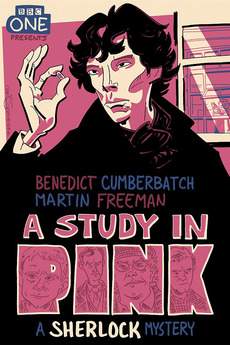


Where to Watch Sherlock: A Study in Pink
See current US streaming, rental, and purchase options for Sherlock: A Study in Pink (2010) via JustWatch.

Streaming availability powered by 
Sherlock: A Study in Pink Plot Summary
Read the complete plot summary and ending explained for Sherlock: A Study in Pink (2010). From turning points to emotional moments, uncover what really happened and why it matters.
On a serendipitous day, John Watson, a former army doctor wounded during Afghanistan’s conflict, crosses paths with the brilliant detective Sherlock Holmes. Their meeting leads to them becoming roommates at 221B Baker Street, under the watchful eye of their kind landlady, Mrs. Hudson. Their partnership quickly becomes a formidable one, especially as they find themselves involved in solving a chilling series of deaths that initially appear to be suicides but reveal deeper, more sinister undertones.
The victims, all seemingly unloved, take poison pills, prompting Inspector Lestrade to suspect a serial killer at work. Sherlock, with his extraordinary deductive skills, begins to analyze the latest victim—a woman dressed in pink—whose body is found with an unfinished note inscribed with the word “Rache.” Sherlock deduces that her note is left incomplete, and despite the forensic expert Anderson’s interpretation that “Rache” is German for “revenge,” Sherlock insists it refers to “Rachel,” suggesting she perished before finishing her message. His keen eye picks up traces of mud on her leg, indicating she came from outside the city, and his persistence leads him to find her abandoned suitcase hidden in a trash bin nearby.
Meanwhile, Dr. John Watson receives an unexpected call from an anonymous source. The call lures him to an empty warehouse, where he encounters a mysterious figure claiming to be Sherlock’s ultimate adversary. This individual offers John money in exchange for information about Sherlock’s activities, but John refuses to betray his friend. Back at 221B, Sherlock demonstrates his resourcefulness by instructing John to send a message from the victim’s phone, even though the phone isn’t in her possession. Sherlock quickly deduces that the killer must have taken the phone—an essential clue in unmasking the killer’s method.
Sherlock’s deductions point to the fact that the victims were abducted from bustling streets without anyone noticing, thanks to the killer’s careful manipulation. Using John’s mobile, Sherlock crafts a fake message to be sent from the victim’s phone, luring the murderer to a specific London street. Sherlock spots a cab and chases it through the crowded city, relying on his exceptional knowledge of the city’s alleyways and shortcuts. After a tense pursuit on foot and in the vehicle, they catch up with the cab, only to find the passenger is a recently arrived American, who has a solid alibi, leading Sherlock to the unsettling realization that the killer is actually a cab driver. This explains how victims disappear so seamlessly—they simply enter the cab, and no one sees their exit.
Suspicion grows when Scotland Yard conducts a drug raid on Sherlock’s apartment, prompting him to use his sharp intuition to interpret clues about the killer. Sherlock suspects that “Rachel” was the victim’s email password and that she intentionally planted her phone on the killer for GPS tracking through her email account. As John traces the signal from the phone, it emanates from their own address, 221B, corroborating Sherlock’s theories. Mrs. Hudson then informs them of a cab driver waiting downstairs, and Sherlock quickly leaves the apartment to confront him.
The cab driver confesses to his crimes but denies actually killing anyone. Instead, he describes a disturbing method—engaging the victims in conversation, leading them to take their own lives. He challenges Sherlock to solve a deadly puzzle involving two bottles—one with a harmless pill and the other with a lethal one—and a gun that turns out to be a cigarette lighter. Sherlock quickly discerns the truth, realizing the driver is dying and just trying to save himself. The driver reveals that he works for a mysterious sponsor, a fervent admirer of Sherlock, who pays him for each murder, and that he uses these killings to provide for his children.
As the scene unfolds, the cab driver presents Sherlock with yet another puzzle—choose one pill to take, while he promises to do the same with the other. Meanwhile, John, following the GPS signal, arrives just in time and shoots the driver, foiling his plans. Sherlock, wounded but composed, questions the dying man about his motives and the identity of his sponsor, who is revealed to be Moriarty—Sherlock’s infamous nemesis.
At the same time, Sherlock deduces that the shooter is actually John Watson himself, acting to protect his friend. To prevent Sherlock from uncovering the truth, Sherlock pretends to be astonished and instructs Inspector Lestrade to ignore everything. As they leave the scene, they encounter a surprising figure—Sherlock’s elder brother, Mycroft Sherlock—who orders his secretary to increase surveillance on Sherlock and John.
Their adventure ends with Sherlock and John returning to Baker Street, their bond stronger than ever, as they prepare for the challenges ahead, knowing that Moriarty’s shadow still looms large over their cases and lives. The story highlights themes of wit, deception, loyalty, and the persistent battle between good and evil amidst the foggy streets of London.
Sherlock: A Study in Pink Timeline
Follow the complete movie timeline of Sherlock: A Study in Pink (2010) with every major event in chronological order. Great for understanding complex plots and story progression.
Introduction of Sherlock Holmes and John Watson
Sherlock Holmes, a brilliant detective, meets John Watson, a former army doctor injured in Afghanistan, through a chance encounter. They decide to become roommates at 221B Baker Street, forming a close partnership. Their meeting is facilitated by a mutual acquaintance, setting the stage for their investigation.
Discovery of the series of mysterious deaths
A series of peculiar deaths involving victims who took poison pills catches the attention of Sherlock and Watson. Police consider them suicides, but Sherlock suspects there is more to these deaths. The victims' circumstances and the pattern intrigue the detectives.
Investigation of the latest victim
Sherlock examines the latest victim, a woman dressed in pink, and deduces she was involved in serial adultery and had an unhappy marriage. He finds an unfinished note on the floor with the word 'Rache,' which he interprets as a reference to 'Rachel' rather than 'revenge.'
Clues at the crime scene
Sherlock notices muddy traces on the woman's leg, indicating she came from outside town. Despite no suitcase being found, Sherlock searches and eventually discovers it in a trash container nearby, uncovering more evidence about the victim’s background.
John receives mysterious call
John Watson receives a cryptic phone call from a public phone, leading him to an empty warehouse. There, he encounters a man claiming to be Sherlock’s adversary who offers money for information, but John refuses, heightening suspicion about the case.
Sherlock’s deduction about the victims
Back at 221B, Sherlock instructs John to send a message to the victim's phone. Sherlock deduces that the killer took the phone and that the victims were abducted quietly from crowded streets, revealing a method of stealth used by the murderer.
Luring the murderer
Sherlock uses a staged message to trick the killer into a specific street. He spots a taxi and chases it through London’s streets with John’s help, eventually catching up to the car. Inside, they find a recent American passenger, providing an alibi for the driver.
Sherlock’s suspicion of the cab driver
Sherlock concludes the murderer is a cab driver who entices victims into his vehicle, explaining the unnoticed disappearances. Scotland Yard conducts a raid on Sherlock’s apartment, attempting to search for evidence, which Sherlock anticipates and evades.
Tracking the killer’s GPS signal
Sherlock deduces that the victim’s email password 'Rachel' was used to plant her phone with the killer. John traces the GPS signal from the victim’s phone back to 221B, confirming the killer’s location before Sherlock leaves in the cab driven by the murderer.
Confrontation with the cab driver
Sherlock meets the cab driver, who confesses to the crimes but claims he only manipulates victims into taking their own lives. He challenges Sherlock by offering a deadly puzzle involving pills, revealing his motive to provide for his children and inspired by a mysterious sponsor.
Sherlock’s realization and intervention
Sherlock sees through the cab driver’s ruse, exposes the gun as a cigarette lighter, and intervenes by shooting him. The driver’s confession links to a wider network, including an ominous 'fan' or sponsor paying for the murders, hinting at a larger threat.
Sherlock’s fake astonishment and wrapping up
Sherlock deduces that John shot the cab driver and covers for him by feigning surprise to the authorities. This act of loyalty helps keep the true story hidden, while they prepare to leave the scene, aware they must confront new dangers.
Encounter with Mycroft Holmes
Outside the crime scene, Sherlock and John encounter Mycroft Holmes, Sherlock’s elder brother. Mycroft orders increased surveillance efforts, indicating the case is part of a bigger conspiracy, and they return to Baker Street to regroup and plan the next move.
Sherlock: A Study in Pink Characters
Explore all characters from Sherlock: A Study in Pink (2010). Get detailed profiles with their roles, arcs, and key relationships explained.
Sherlock Holmes (Benedict Cumberbatch)
Sherlock is a highly intelligent and observant detective with a knack for deduction. He approaches crime-solving with logical rigor and a somewhat aloof demeanor, often relying on evidence and analysis. His sharp mind and unconventional methods make him one of the best detectives in London.
Dr. John Watson (Martin Freeman)
John Watson is a former army doctor and Sherlock’s loyal friend and roommate. He is pragmatic, compassionate, and often provides emotional grounding for Sherlock's deductive pursuits. His medical expertise and street smarts complement Sherlock’s analytical mind.
The Cab Driver (unnamed, confesses as the murderer)
The cab driver is a troubled individual seeking financial stability for his family. He engages victims in conversation, leading them to self-harm, as part of a deadly game sponsored by an anonymous admirer. His actions reveal themes of desperation and exploitation.
Moriarty (referred to in the end)
Moriarty is implied to be the mastermind behind the cab driver’s actions and a significant adversary for Sherlock. His mention signifies an ongoing threat and a larger criminal network operating in the background of London’s underworld.
Mycroft Holmes
Sherlock’s elder brother, who is involved in high-level government surveillance. His appearance indicates the presence of governmental power and additional layers of mystery surrounding Sherlock’s cases.
Sherlock: A Study in Pink Settings
Learn where and when Sherlock: A Study in Pink (2010) takes place. Explore the film’s settings, era, and how they shape the narrative.
Time period
Contemporary period, early 21st century
The events occur in the present day, reflecting modern technology and social behavior. This time period includes the use of mobile phones, GPS tracking, and email communication, which are essential to solving the crimes. The setting aligns with current London's cityscape, emphasizing the relevance of detective work in a modern urban environment.
Location
London, 221B Baker Street, local streets and alleys, school building, warehouse
The movie predominantly takes place in London, a bustling metropolis known for its historic landmarks and vibrant streets. 221B Baker Street serves as the central residence for Sherlock and John, a famous address linked to the legendary detective. The story also features various city locations such as crowded streets, a warehouse, and a school, illustrating London's layered urban environment.
Sherlock: A Study in Pink Themes
Discover the main themes in Sherlock: A Study in Pink (2010). Analyze the deeper meanings, emotional layers, and social commentary behind the film.
🔍
Deduction
Sherlock Holmes exemplifies the detective's skill of deduction, analyzing minute details to uncover the truth. The film demonstrates how careful observation and logical reasoning can solve complex crimes. This theme underscores the importance of intellect and attention to detail in detective work.
🎭
Deception
The story revolves around deception, both by the killer and the detective. The murderer manipulates perceptions to lure victims, while Sherlock uses disguises and misdirection to crack the case. The film explores how appearances can be deceiving and the importance of uncovering hidden motives.
⚖️
Justice
The pursuit of justice drives the narrative, with Sherlock and John working to stop the killer and bring him to account. The film questions moral boundaries, especially when Holmes must decide whether to reveal certain truths or conceal evidence for the greater good. Justice is portrayed as a complex ideal in a modern urban setting.

Coming soon on iOS and Android
The Plot Explained Mobile App
From blockbusters to hidden gems — dive into movie stories anytime, anywhere. Save your favorites, discover plots faster, and never miss a twist again.
Sign up to be the first to know when we launch. Your email stays private — always.
Explore the mobile appSherlock: A Study in Pink Spoiler-Free Summary
Discover the spoiler-free summary of Sherlock: A Study in Pink (2010). Get a concise overview without any spoilers.
In a rain‑slick London of 2010, a baffling series of apparent suicides has left Scotland Yard grasping at shadows. The city’s foggy streets pulse with a mixture of modern urgency and timeless intrigue, setting the stage for a partnership that feels both fresh and inevitable. Sherlock Holmes, a brilliant but socially aloof consultant, is summoned to untangle the mystery, his mind racing ahead of the evidence while the world around him hums with restless energy.
Enter John Watson, a former army doctor adjusting to civilian life after the harsh realities of Afghanistan. Their meeting at 221B Baker Street is as much a clash of personalities as it is a meeting of minds: Watson’s grounded empathy balances Sherlock’s razor‑sharp logic. Overseeing the flat is the ever‑observant Mrs. Hudson, whose quiet demeanor masks a keen awareness of the duo’s eccentricities, while Inspector Lestrade of Scotland Yard provides the official channel through which the case filters into the public eye. The dynamic among them crackles with witty banter, mutual respect, and an unspoken curiosity about what each brings to the table.
Together, they navigate a London that feels simultaneously gritty and elegant, where every alley could hide a clue and every conversation might reveal a hidden pattern. The atmosphere is charged with a blend of cerebral deduction and understated tension, inviting the viewer to wonder how these distinct lives will intertwine to illuminate a truth that remains just out of reach. As the mystery deepens, the partnership’s bond grows stronger, promising a compelling dance of intellect, loyalty, and the relentless pursuit of answers in a city that never stops whispering its secrets.
Featured on this page

What's After the Movie?
Not sure whether to stay after the credits? Find out!
Check out our other apps:

SAT Sphere
Build confidence for the Digital SAT.

Mori Atlas
Discover wild places worth protecting.

Luntero
Search smarter for a home in Amsterdam.

Plot Explained
Unravel movie endings and hidden clues.

Pokechamp
Dive into Pokémon data and battle logic.

Driving Theory
Get ready for your European theory test.

Movie Dust
Plan your next cinema trip with ease.

Musemap
Find art and culture as you travel.

Selkobase
Compare credentials before committing.

Local Manual
Turn an unfamiliar country into practical next steps.

Lernavi
Compare school systems before your next move.

GymRoam
Find a workout stop wherever your plans take you.
Explore Our Movie Platform
New Movie Releases (2026)
Famous Movie Actors
Top Film Production Studios
Movie Plot Summaries & Endings
Major Movie Awards & Winners
Best Concert Films & Music Documentaries
Movie Collections and Curated Lists
© 2026 What's After the Movie. All rights reserved.
Privacy Policy