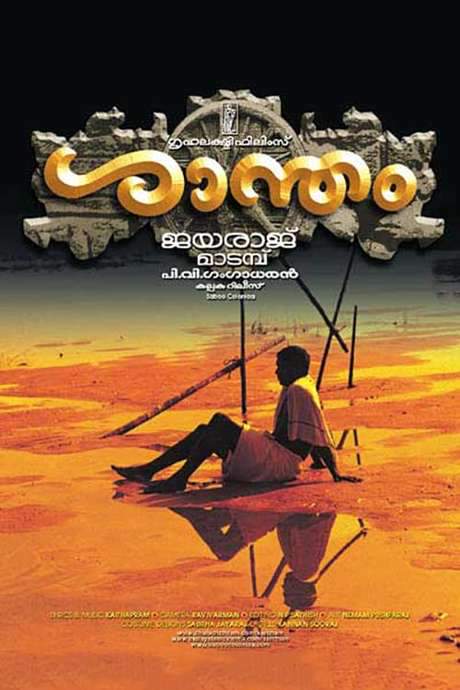



Shantham Plot Summary
Read the complete plot summary and ending explained for Shantham (2001). From turning points to emotional moments, uncover what really happened and why it matters.
In a landscape scarred by civil conflict, two mothers navigate sorrow, guilt, and the search for grace amid the echoes of a brutal street war. Velayudhan, I. M. Vijayan, a young man living in a town torn apart by factional fighting, finds himself driven to a terrible act when he kills his best friend. The weight of that choice shatters him with guilt and remorse, setting off a chain of emotional reckonings that ripple through the lives around him.
Narayani, KPAC Lalitha, the mother of the friend he has slain, struggles to hold herself together as she arranges the funeral and confronts a raw, unmanageable grief. Meanwhile, Karthiyayani, Seema Biswas, Velayudhan’s mother, journeys to a temple to seek forgiveness for her son’s violence, hoping to find some peace in prayer. There, she encounters Narayani, whose grief and rage blaze beneath the surface, and the two women begin an uneasy, powerful exchange.
The film quietly tracks how their initial conflict gives way to a shared awakening. Narayani’s inner turmoil and fierce wounds clash with Karthiyayani’s more restrained, prayerful resolve, and the narrative invites us into the private storms each woman endures. Through conversations with those around them, Narayani starts to glimpse life beyond vengeance, while Karthiyayani is reminded that forgiveness may be possible even for a mother who has borne immense pain. As time passes, the two women move toward a fragile reconciliation, leaving behind their separate burdens.
Yet the echoes of violence return as Narayani uncovers a new danger: her other son has plotted revenge against Velayudhan. This revelation drives a tense dynamic where fear and protective love collide, and Narayani rushes to the exile of Velayudhan to plead for his safety. He, in turn, clasps a knife as a shield against threats, choosing to stand his ground even as the consequences loom. He escapes along the wide riverbed of Bharathapuzha, with armed pursuers closing in, while Karthiyayani and Narayani sprint toward the danger, begging the men to show mercy.
The end unfolds with a moving, grave convergence: the two mothers—along with others who have suffered—advance toward the armed assailants and plead for restraint, insisting that violence be stopped before more lives are shattered. In that charged moment, the final image lingers—a gentle dragonfly resting on the sword poised to spill blood—an emblematic, quiet counterpoint to the violence that surrounds them and a stark reminder of the film’s central theme: the possibility of grace even in the presence of bloodshed.
Shantham Timeline
Follow the complete movie timeline of Shantham (2001) with every major event in chronological order. Great for understanding complex plots and story progression.
Violent onset: Velayudhan kills his best friend
In the midst of a raging street war, Velayudhan kills his best friend. The act shatters the community and plunges him into guilt and remorse. The news of the killing spreads quickly, signaling the start of the film's moral crisis.
Funeral and mother's grief
Narayani, the mother of the slain friend, struggles to hold herself together as she arranges the funeral. She is joined by Karthiyayani, Velayudhan's mother, who prays and seeks forgiveness for her son. The two women confront their shared pain while the living family and town mourn.
Temple encounter: forgiveness and tension
At the temple where Karthiyayani seeks solace, Narayani confronts her grief and rage. The two women exchange harsh words, with Narayani ordering Karthiyayani to move out of sight. The temple becomes the stage where personal wounds intersect with political violence.
Lessons from the people around her
Narayani begins to listen to the people around her, absorbing different perspectives on life and forgiveness. Her inner turmoil slowly shifts as she grapples with loss and the possibility of peace. This leads to a cautious shift in her stance toward the living and the dead.
Political revenge plot
Behind the scenes, political enemies plot revenge on Velayudhan. The risk to him intensifies as factions maneuver to exploit the tragedy for their own ends. The looming threat adds pressure to the fragile relationships that have formed.
Forgiveness in motion: reconciliation of two mothers
Over time, Narayani and Karthiyayani reconcile, letting go of much of their initial anger. Their shared grief opens space for mutual understanding, even as they remember their sons. The reconciliation marks a turning point in their personal journeys.
Narayani learns of her other son's plan
As Narayani continues her spiritual homage to her son, she discovers that another son plans to avenge Velayudhan by killing him. The revelation heightens the danger around Velayudhan and adds a personal dimension to the political feud. She becomes determined to shield him.
Narayani warns Velayudhan and he escapes
Narayani rushes to Velayudhan in exile and pleads with him to run for his life. He refuses to surrender and instead arms himself with a knife to defend against danger. He escapes across the riverbed of Bharathapuzha as pursuers close in.
Pursuit reaches the riverbank
Velayudhan reaches the riverbed as the armed men close in. Narayani and Karthiyayani rush toward the mob, pleading for mercy, but the waiting assailants push the women aside and close in on Velayudhan, who accepts whatever fate awaits.
Mothers confront the killers
In a final, emotionally charged moment, a group of grief-stricken mothers run toward the armed men, shouting for them to retract from their sin. The scene emphasizes collective motherhood as a call for mercy amid vengeance.
Final image: dragonfly on the sword
The film closes on a symbolic image of a dragonfly resting on the very sword that is about to draw blood. The tranquil insect suggests grace and forgiveness outweighing violence, underscoring the movie's themes.
Aftermath: quiet sorrow and forgiveness
The protagonists and mothers remain bound by loss, but there is a sense of slow reconciliation and hope that forgiveness can prevail beyond the violence. The community begins to heal as the mothers reinforce their plea for non-violence.
Shantham Characters
Explore all characters from Shantham (2001). Get detailed profiles with their roles, arcs, and key relationships explained.
Velayudhan (I M Vijayan)
A young man living amid civil strife who is driven to violence when he accidentally kills his best friend. Plagued by guilt, he faces threats from political enemies and must decide whether to flee or confront the consequences. His quest for redemption unfolds against a backdrop of street warfare and personal peril, culminating in a tense exile and confrontation with those who seek vengeance.
Narayani (KPAC Lalitha)
The mother of the slain friend who grapples with grief and a rising tide of anger. She learns from others and begins to see life beyond vengeance, eventually forming a bond with Karthiyayani. Her journey shifts from rage to quiet, spiritual resolve as the community seeks healing.
Karthiyayani (Seema Biswas)
Velayudhan’s mother, who goes to a temple to seek forgiveness and interacts with Narayani in a process of mutual understanding. Her inner turmoil slowly gives way to grace as she reconciles with Narayani amid a climate of retaliation and sorrow.
Shantham Settings
Learn where and when Shantham (2001) takes place. Explore the film’s settings, era, and how they shape the narrative.
Location
Bharathapuzha riverbed, Kerala, India
The story unfolds around the Bharathapuzha riverbed in Kerala, set against a backdrop of street warfare. The river, temple, and nearby settlements form a stage for grief, mercy, and moral choices as families confront the violence around them. The landscape mirrors the emotional turmoil of a community torn by civil strife, with rituals and memory shaping the characters' journeys.
Shantham Themes
Discover the main themes in Shantham (2001). Analyze the deeper meanings, emotional layers, and social commentary behind the film.
🕊️
Forgiveness
Guilt and grief propel the central relationships, particularly between Narayani and Karthiyayani, as they search for grace for their families. Their bond evolves from suspicion to understanding, showing that reconciliation can emerge from shared pain. The film treats forgiveness as a hard-won process rather than a simple pardon, underscored by ritual acts and quiet moments of mercy. The ending hints that mercy and care can outlast vengeance.
⚔️
Violence & Consequences
A brutal act—the killing of a close friend—sparks guilt, fear, and a vendetta that drags more lives into danger. Political enemies exploit the tragedy, creating a circle of retribution that hammers families and communities. The narrative continually tests how individuals respond to violence, and what it costs to survive amid civil strife.
🌸
Grace & Hope
The two mothers’ grief becomes a catalyst for compassion, reminding viewers that mercy can grow from pain. As Narayani seeks balance in her sorrow and Karthiyayani offers support, the film plants a fragile seed of reconciliation. The final imagery of a dragonfly on a sword symbolizes a delicate, almost miraculous, hint of peace amid bloodshed.

Coming soon on iOS and Android
The Plot Explained Mobile App
From blockbusters to hidden gems — dive into movie stories anytime, anywhere. Save your favorites, discover plots faster, and never miss a twist again.
Sign up to be the first to know when we launch. Your email stays private — always.
Explore the mobile appShantham Spoiler-Free Summary
Discover the spoiler-free summary of Shantham (2001). Get a concise overview without any spoilers.
In a town scarred by relentless street fighting and factional rivalries, everyday life trembles under the weight of an ever‑present conflict. The air is thick with the murmurs of unsettled families, whispered prayers, and the uneasy quiet that follows each clash. Within this turbulent landscape, the film breathes a meditative, somber tone, inviting the audience to feel the persistent tension between violence and the desperate search for redemption.
Velayudhan is a young man whose world is upended when a moment of forced violence leaves him bearing the heavy burden of a friend’s death. Crushed by guilt, he becomes a focal point for the surrounding turmoil, as competing political factions see in his tragedy an opportunity for retribution. Alongside him, two mothers navigate the same shattered reality from opposite sides of the loss—Narayani, grieving fiercely for her stolen child, and Karthiyayani, a mother seeking solace and forgiveness through quiet devotion. Their paths intersect in a delicate dance of sorrow, anger, and the faint hope of grace amid the chaos.
The narrative unfolds as a portrait of fragile humanity, using the stark backdrop of civil strife to highlight intimate moments of introspection and connection. The film’s visual language captures the muted colors of a riverbank at dusk, the soft rustle of temple bells, and the lingering presence of unseen threats, all while maintaining a restrained, lyrical rhythm. Through the intertwined lives of Velayudhan, Narayani, and Karthiyayani, the story contemplates how grief can both divide and draw people together, suggesting that even in the shadow of bloodshed, the possibility of compassion and forgiveness remains a quietly persistent pulse.
Featured on this page

What's After the Movie?
Not sure whether to stay after the credits? Find out!
Check out our other apps:

SAT Sphere
Build confidence for the Digital SAT.

Mori Atlas
Discover wild places worth protecting.

Luntero
Search smarter for a home in Amsterdam.

Plot Explained
Unravel movie endings and hidden clues.

Pokechamp
Dive into Pokémon data and battle logic.

Driving Theory
Get ready for your European theory test.

Movie Dust
Plan your next cinema trip with ease.

Musemap
Find art and culture as you travel.

Selkobase
Compare credentials before committing.

Local Manual
Turn an unfamiliar country into practical next steps.

Lernavi
Compare school systems before your next move.

GymRoam
Find a workout stop wherever your plans take you.
Explore Our Movie Platform
New Movie Releases (2026)
Famous Movie Actors
Top Film Production Studios
Movie Plot Summaries & Endings
Major Movie Awards & Winners
Best Concert Films & Music Documentaries
Movie Collections and Curated Lists
© 2026 What's After the Movie. All rights reserved.
Privacy Policy