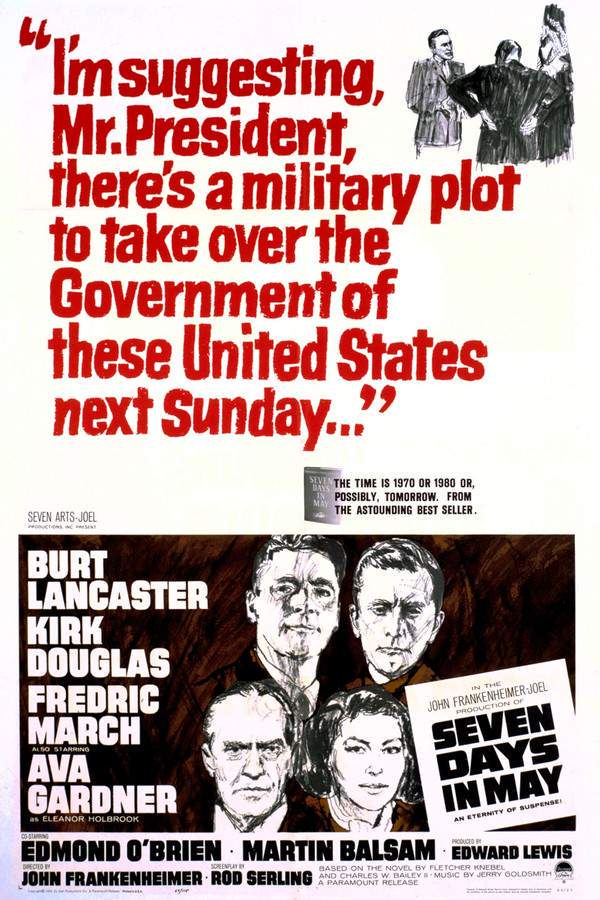
What Is Seven Days in May About?
The premise of Seven Days in May in 287 words, with nothing given away. The full story follows below.
In a world still trembling from the Cold War’s shadow, the United States finds itself at a crossroads. A fragile peace hangs on a bold nuclear‑disarmament treaty, and the nation’s conscience is split between the promise of a safer future and the fear that letting go of the atomic arsenal could invite danger. The capital’s streets pulse with protest, the media buzzes with debate, and every corner of the White House feels the weight of history pressing down on its leaders.
President Jordan Lyman embodies the idealism of a leader willing to gamble on diplomacy, yet he is relentlessly tested by political opposition and personal strain. His calm demeanor masks the intense pressure of navigating a divided public, a skeptical press, and a cabinet that sometimes doubts his resolve. By his side, a diligent aide works tirelessly to sift through intelligence and counsel the commander‑in‑chief, offering both loyalty and a sobering view of the administration’s standing.
General James Scott represents the military establishment’s unease with rapid disarmament, championing a more cautious approach to national security. As chairman of the Joint Chiefs, he commands respect and exerts influence over a network of officers who question whether the president’s gamble is prudent. His confidence in the armed forces’ role creates a palpable tension with the civilian leadership, hinting at a clash of philosophies that could redefine the balance of power.
Against this backdrop of high‑stakes politics, the film exudes a tense, cerebral atmosphere where every conversation carries the potential for far‑reaching consequences. The stakes are not just diplomatic—they touch the very core of American democracy, urging viewers to wonder how far leaders will go to protect the nation’s ideals when the line between duty and ambition begins to blur.
What Happens in Seven Days in May?
The complete story of Seven Days in May, from the first scene to the last, in 670 words (about 3 minutes). Spoilers throughout. Names in the text link to 8 cast member pages.
Spoilers ahead
The film takes place on Monday, May 12, against the backdrop of impending chaos in the United States, where strikes are on the verge of crippling the coal industry. Tensions escalate on Pennsylvania Avenue, outside the White House, as two opposing groups of demonstrators gather. One side expresses gratitude towards President Jordan Lyman for his recent nuclear disarmament treaty with the Soviet Union, holding placards that declare, > “Peace On Earth Or No Earth At All.” The opposing group, however, belligerently condemns both Lyman and the treaty, promoting a potential presidential bid for four-star Air Force General James Mattoon Scott, the Chairman of the Joint Chiefs of Staff. The situation erupts into chaos when a supporter of Scott disrupts the peaceful demonstration by cutting the banner, prompting a swift response from the Capitol Police.
Inside the White House, Lyman’s physician points out the toll that stress is taking on the President, noting a rise in his blood pressure correlating to the criticisms he faces. Paul Girard, Lyman’s aide, reluctantly reveals a dismal Gallup Poll indicating only 29 percent approval for the treaty. Despite being urged to take a break, Lyman opts for a swim in the White House’s pool.
During his time with Senator Raymond Clark, Lyman explains his rationale for the treaty: without it, the precarious balance could lead to an uncontrollable nuclear war initiated by a deranged officer. He also offers a piece of advice to Clark, an evident alcoholic: to stay sober.
Later, Clark heads to a Senate Committee on Armed Services meeting, where General Scott presents his counterarguments against the treaty, claiming it represents either naivety or negligence. Senator Frederick Prentice appears sympathetic, throwing soft questions to Scott, while Clark mocks the proceedings. It becomes clear that Scott’s support base is limited to those who already share his views.
Scott is closely aided by Colonel Martin “Jiggs” Casey, who, as they leave the Capitol, is instructed to keep a planned alert under wraps. Within the Joint Chiefs’ office, Casey hears rumors about Scott’s questionable behavior, including a request for bets on the upcoming Preakness race. Casey later meets Colonel William “Mud” Henderson, who unveils the existence of a secret unit named EComCon, located in El Paso, Texas, which has been training for offensive operations rather than defense.
Tension mounts when Casey’s inquiries into Scott’s operations are met with hostility from Scott’s aide, Colonel Murdock, who warns him against prying. After a particularly tense social event, Casey meets Eleanor Holbrook, Scott’s former lover, and attempts to comfort her amidst her struggles with alcohol.
Days pass, and Casey’s observations lead him to suspect Scott is organizing a military coup against Lyman. His fears intensify when he discovers evidence pointing to Scott’s plans, culminating in an emergency meeting with the President on Tuesday, May 13. Despite resistance from Girard and Secretary Chris Todd, who doubt the existence of such a plot, Lyman assembles a task force to investigate further.
As tensions rise through mid-week, Casey digs deeper into Scott’s operations, ultimately acquiring incriminating letters from Ellie. Kamikaze-like, Lyman orders his team to hunt down evidence while keeping tabs on Scott. The need for evidence is underscored when Casey discovers Scott’s manipulative ties with Senator Prentice, prompting the President to consider his next moves carefully.
By Friday, May 16, Casey believes he has sufficient evidence to confront Scott. As the plot unfolds, Lyman grapples with civilian and military balances of power, culminated by an emergency press conference planned for Sunday, May 18. Events spiral toward a climax as Lyman weighs his options for a public reveal, knowing the nation’s peace hangs in the balance.
In a suspenseful conclusion, Lyman’s resilience against Scott’s attempt at a military takeover reflects the film’s core message: the enduring belief in democratic processes and the promotion of peace through dialogue rather than force. The story culminates as Lyman expresses that it’s “slander” to suggest the nation’s strength lies not in peaceful negotiation, further solidifying its stance on constitutional authority as the film draws to a close.
Seven Days in May Timeline: Every Key Event in Order
15 key events in the order they happen, from “Morning of May 12” to “Final Reflections”. 15 events name a place, across 8 locations.
- 1
Morning of May 12
The film opens on Monday, May 12, amidst rising tensions across the United States. Strikes threaten to cripple the coal industry, foreshadowing a chaotic environment.
When:Morning Where:Washington D.C.
- 2
Demonstrators Gather
Outside the White House, two distinct groups of demonstrators form, showcasing the nation's divided sentiments. One group expresses gratitude towards President Lyman for a nuclear disarmament treaty with the Soviet Union, while the other vehemently condemns him and promotes General Scott.
When:Afternoon Where:Pennsylvania Avenue
- 3
Chaos Erupts
Tensions escalate when a supporter of General Scott disrupts a peaceful protest by cutting down a banner. The Capitol Police quickly respond to regain control of the situation, marking the day's growing unrest.
When:Afternoon Where:Pennsylvania Avenue
- 4
Lyman's Stress
Inside the White House, President Lyman's physician raises concerns about the stress affecting his health. With blood pressure rising due to mounting criticisms, Lyman is advised to take a break but decides instead to go for a swim.
When:Late Afternoon Where:White House
- 5
Discussion with Senator Clark
During a swim, Lyman meets Senator Raymond Clark, where he discusses the rationale behind his nuclear treaty. Lyman warns Clark about the risks of a deranged officer initiating a nuclear war, while also advising him to stay sober.
When:Late Afternoon Where:White House Pool
- 6
Senate Armed Services Meeting
Senator Clark attends a Senate Committee meeting where General Scott challenges Lyman’s treaty. Scott is well-received by certain senators, indicating a split in support for the treaty, and Clark expresses his mockery of the proceedings.
When:Evening Where:Senate Building
- 7
Secrets in the Joint Chiefs
Colonel Martin Casey learns about a secret operations unit, EComCon, that is being trained for offensive strategies. Rumors swirl around General Scott's behavior, hinting at unsettling developments within the military hierarchy.
When:Subsequent Days Where:Joint Chiefs’ Office
- 8
Intensifying Suspicion
As Casey investigates further, he becomes convinced that Scott is orchestrating a military coup against Lyman. This suspicion is fueled by a tense social event and his interactions with Scott’s former lover, Eleanor Holbrook.
When:Subsequent Days Where:Various Locations
- 9
Emergency Meeting
On Tuesday, May 13, Lyman calls for an urgent meeting to address the potential coup after Casey presents his findings. Despite skepticism from his aides, Lyman insists on forming a task force to investigate Scott's activities.
When:Tuesday, May 13 Where:White House
- 10
Gathering Evidence
Throughout the week, Casey intensifies his search for incriminating evidence against Scott. He gathers letters and documents, fearing the implications of Scott's relationships and manipulative tactics within the Senate.
When:Mid-week Where:Various Locations
Show the other 5 events of Seven Days in May Hide the last 5 events
- 11
Confronting the Threat
By Friday, May 16, Casey believes he has enough evidence to confront General Scott about his schemes. Lyman is caught in a delicate balance of power between civilian governance and military allegiance.
When:Friday, May 16 Where:White House
- 12
Preparing for the Press Conference
As the situation escalates, Lyman prepares for an emergency press conference scheduled for Sunday, May 18. This critical moment comes as Lyman weighs the implications of revealing the truth about Scott's plans to the public.
When:Days leading to May 18 Where:White House
- 13
Culmination of Tensions
The climax builds as Lyman reflects on his options, knowing that his next steps could define the future of the nation. He resolves to uphold democratic principles and the importance of peaceful negotiations.
When:Sunday, May 18 Where:White House
- 14
Defending Democracy
In a decisive moment, Lyman publicly counters Scott's coup attempt, emphasizing the strength found in democratic processes. His unwavering commitment to peace resonates with the core message of the film, demonstrating the power of dialogue over force.
When:Sunday, May 18 Where:Press Conference
- 15
Final Reflections
The film concludes with Lyman denouncing the notion that military strength is the ultimate solution, reinforcing his belief in peaceful negotiation as the cornerstone of the nation's authority. His stance reiterates the theme of constitutional values against the backdrop of military ambition.
When:End of Film Where:White House
Who Are the Main Characters in Seven Days in May?
4 characters, among them President Jordan Lyman (Fredric March), General James Mattoon Scott (Burt Lancaster) and Colonel Martin 'Jiggs' Casey (Kirk Douglas): who each one is and the part they play in the story. Every profile links to the actor’s page.
-

President Jordan Lyman (Fredric March)
Played by Fredric March
President Lyman is a steadfast leader grappling with immense external pressures from both political adversaries and public opinion. His commitment to peace through diplomacy reflects his resilience and belief in the power of democratic processes.
- 💼 Leadership
- 🔄 Diplomacy
-
General James Mattoon Scott (Burt Lancaster)
Played by Burt Lancaster
General Scott is depicted as a powerful military figure poised to challenge President Lyman’s authority. His ambitions for a potential coup signify a threat not only to the President but to the democratic ideals of the nation.
- ⚔️ Militarism
- 🏆 Power
-
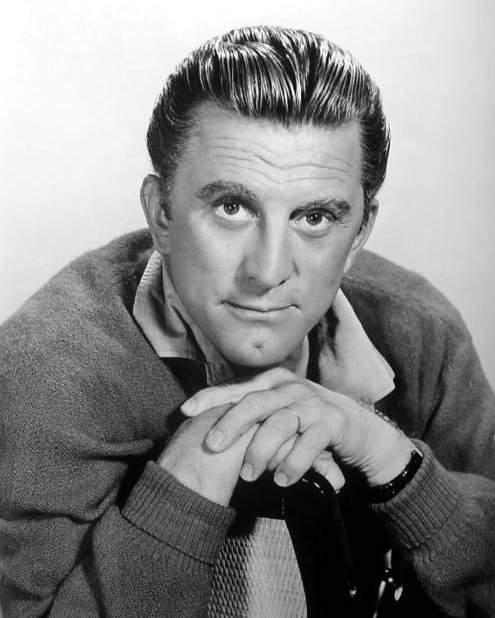
Colonel Martin 'Jiggs' Casey (Kirk Douglas)
Played by Kirk Douglas
As Lyman's ally, Colonel Casey is critical in uncovering Scott’s covert activities. His determination and investigative skills reflect a commitment to democracy and highlight the personal risks involved in standing against a military takeover.
- 🔎 Investigation
- 💪 Courage
-
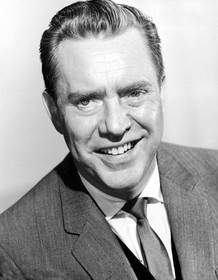
Senator Raymond Clark (Edmond O'Brien)
Played by Edmond O'Brien
Senator Clark is portrayed as a conflicted politician dealing with personal issues like alcoholism, which affect his political judgment. His interactions with Lyman reveal the complexities of governance and personal accountability.
- 💧 Struggle
- 💼 Politics
Where and When Is Seven Days in May Set?
Seven Days in May is set in United States, El Paso and Texas (May 1964). Here is why the time and place matter to the story.
When
May 1964
The events occur in May 1964, during a tumultuous period marked by significant political strife over nuclear disarmament and military policy. This era saw intense public debates regarding peace and the responsibilities of government, reflective of the Cold War tensions.
Where
United States, El Paso, Texas
The film is set against the political landscape of the United States, specifically focusing on the actions taking place near the White House in Washington, D.C. El Paso, Texas, is highlighted as a location for the secretive operations of a military unit, emphasizing the tension between civilian government and military power.
- 🇺🇸 Country
- 🏛️ Government
What Are the Themes of Seven Days in May?
3 ideas the story keeps returning to, among them Peace, Democracy and Conflict.
-
01
Peace
The central theme of the movie revolves around the pursuit of peace, particularly through dialogue and negotiation. President Lyman's efforts to achieve a nuclear disarmament treaty highlight the challenges of maintaining peace amidst rising military tensions and the potential for conflict.
-
02
Democracy
The film explores democracy's fragility, particularly in the face of a military coup. Lyman's struggle against General Scott's ambitions represents the tension between civilian authority and military power, emphasizing the importance of constitutional governance.
-
03
Conflict
Conflict is a pervasive theme, manifested in both physical confrontations and ideological battles over military policy and nuclear disarmament. The movie captures the societal divisions on these issues, exacerbated by the challenges of modern warfare.
What Kind of Film Is Seven Days in May?
Tense in tone, with fast pacing and a moderate story, going by the plot summary.
- Tone
- Tense
- Pacing
- Fast
- Story
- Moderate
- Intensity
- High
- Ending
- Happy
A fast-paced, politically charged thriller that builds relentless tension and a palpable sense of urgency as a small group of loyalists races to expose and prevent a military coup from within the highest ranks of government.
- tense
- anxious
- paranoid
- urgent
- claustrophobic
- suspenseful
- political thriller
- military coup
- conspiracy
- cold war
Content notes: political violence, military coup, sedition.
Quiz
How well do you remember Seven Days in May? Test yourself on the story.
Where to Watch Seven Days in May
Stream it on YouTube Free, or rent or buy it from Amazon Video and Apple TV Store. US availability and prices from JustWatch.
Stream 1
 YouTube Free




Streaming availability in the US, powered by