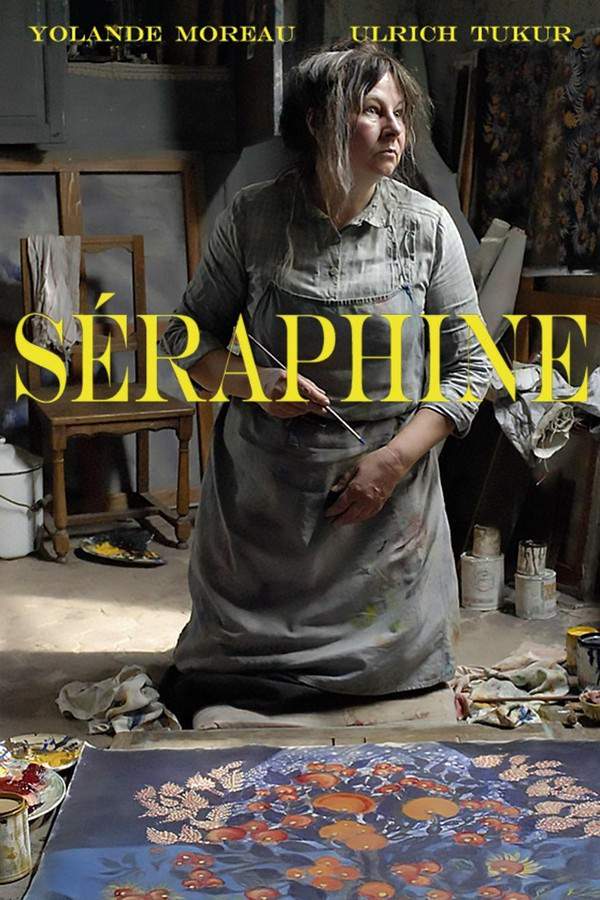
Séraphine 2009

Directed by

Martin Provost
Made by

Music Box Films
Where to Watch Séraphine
See current US streaming, rental, and purchase options for Séraphine (2009) via JustWatch.

Cineverse Amazon Channel
HD
Fandor Amazon Channel
HD
OVID
SD
Philo
HD
Hoopla
SD
Kanopy
SD
Cineverse
HD
Plex
HD
Plex Channel
HD
Tubi TV
SD
Amazon Video
SD
Apple TV Store
HD
Fandango At Home
SD
Google Play Movies
SD
YouTube
SD Streaming availability powered by 
Séraphine Plot Summary
Read the complete plot summary and ending explained for Séraphine (2009). From turning points to emotional moments, uncover what really happened and why it matters.
Séraphine tells the quiet, remarkable story of Séraphine Louis, a middle‑aged housekeeper whose untaught gift for painting slowly emerges as something deeply profound and uniquely expressive. Drawing on what she believes to be religious guidance, she moves through a world of modest means with an unshakable reverence for beauty found in nature. Her daily walks to work become small pilgrimages—moments where she pauses to admire trees, to breathe, and to let the natural world seep into her art. Early on, the film notes the unusual materials that feed her palette: soil from plants and even a trace of blood from a dead pig. Back in her candle‑lit home, these humble ingredients are transformed into images that feel both intimate and otherworldly, and she guards the secrecy of the reds she uses, hinting at a personal alchemy that others cannot easily decipher.
A chance encounter with a German art critic, Uhde, marks the first real crack in Séraphine’s private life. He sees real potential in her work and promises to advocate for her, insisting that she should trust her gift and keep painting. For a time, this faith remains enough to sustain her, even as the world outside grows darker with the onset of war. When World War I interrupts their connection, Uhde is forced to flee France, leaving Séraphine to continue her practice in solitude. Yet she does not abandon her canvas; she sustains herself through her creative discipline, painting as a form of quiet resilience.
Years later, in 1927, Uhde reappears with a new sense of her progress. He is moved by how much her technique has matured and begins to purchase her works, offering a steady monthly stipend and urging her to dedicate herself to painting above all else. For Séraphine, this moment feels like a rare windfall, a doorway into a possible future she had not dared to imagine. The prospect of financial stability brings a strange, almost intoxicating sense of prosperity. She indulges in small luxuries and, perhaps, a touch of vanity—buying an expensive bridal gown even though a suitor never materializes—and she speaks of messages from angels as if they confirm a grand, cosmic purpose behind her art.
As the Great Depression tightens its grip, the market for her paintings shrinks. Uhde finds himself unable to sustain his previous generosity, and the optimistic certainty that had carried Séraphine begins to crumble. The sudden turn of fortune unsettles her, pushing her toward a more fragile mental state. She experiences a powerful sense of self‑sufficiency and suddenly measures the worth of her life by the wealth she once imagined, a shift that unsettles those around her and distorts her self‑image.
The crisis comes to a head when Séraphine, dressed in her bridal gown, moves the town emotionally and provocatively, and the authorities intervene. She is placed in a lunatic asylum, and painting becomes something she can no longer sustain. Uhde visits, but the situation grows delicate; he is advised not to press contact, and he learns only that some of her artworks have found buyers. In a compassionate turn, he decides to look after her well‑being by securing her a room within the institution that still allows her to step outside and reconnect with the beauty of the world she so obviously loves. This renewed contact with nature becomes a lifeline, a thread of memory and sensation that returns as a gentle balm to her life.
The film closes with a retrospective look at Séraphine Louis’s life. She dies in 1942, and the final note of the story reveals that her art would go on to gain fame and respect, long after the storms of her time had passed. The portrait that emerges is of a woman whose work, born from humble materials and steadfast conviction, endures because it speaks to an essential human longing to see and to be seen, to find meaning in the ordinary, and to transform the world around us through simple acts of vision. In the end, the film honors how a painter who began as a servant could become a lasting voice in the gallery of art, remembered for the sincerity, purity, and quiet power of her nearly sacred images.
Séraphine Timeline
Follow the complete movie timeline of Séraphine (2009) with every major event in chronological order. Great for understanding complex plots and story progression.
Humble beginnings and religious-inspired painting
Séraphine Louis is a middle-aged housekeeper who paints in a candle-lit home, guided by what she believes is religious inspiration. She frequently stops during her daily walks to admire trees and the beauty of nature. She even collects soil from plants and blood from a dead pig, using these elements in her artwork.
Uhde discovers talent and promises support
Uhde, a respected art critic, encounters Séraphine while she works as a housekeeper and recognizes genuine promise in her paintings. He assures her that her talent is real and that he will look after her career. He urges her to follow her gift and to trust in his help.
Mystery of her crimson tones
As her work gains attention, critics notice the unusual red tones in her paintings. Séraphine is asked how she achieves this effect, but she insists that keeping the secret is part of her process. The aura of mystery adds to the impression of divine inspiration around her art.
World War I divides artist and patron
With the outbreak of World War I, Uhde, who is German, must flee France, leaving Séraphine behind. She continues painting in her modest home, undeterred by the separation. The loss of her patron creates a quiet pressure on her work as she persists alone.
1927 reunion and patronage
In 1927 Uhde returns and is impressed by how much her art has improved. He begins buying her paintings and encourages her to focus solely on painting, providing a generous monthly stipend. The relationship transforms a hidden talent into a supported, professional practice.
Prosperity brings vanity and the bridal gown
Prosperity unsettles Séraphine; she buys an expensive bridal gown despite not having a suitor. She claims to have received an important message from the angels, heightening her sense of special status. Her confidence in the divine resonance of her work grows as others begin to take notice.
Depression-era setback and dwindling sales
As the Great Depression unfolds, Uhde can no longer sell her paintings and cannot sustain the stipend. Séraphine discovers herself as a woman of means, a status that unsettles her balance and distorts her sense of reality. The financial blow triggers mental strain, altering the course of her career.
Public stir: rousing the town in bridal dress
After she publicly wears the bridal gown, she stirs the town and attracts scrutiny from the community. The episode deepens concerns about her wellbeing and distracts from her artistic reputation. Those around her begin to fear for her grasp on reality.
Confinement to a lunatic asylum
Séraphine is put into a lunatic asylum, and her painting career ends for a time. The isolation marks a stark turn from acclaimed artist to patient under care. Yet the memory of her devotion to nature and color remains in her story.
Uhde's discreet care and securing her a room
Uhde visits her but is advised not to contact, to avoid upsetting her. He prioritizes her well-being and secures her a room in the institution that allows her some outdoor exposure. His quiet intervention emphasizes his role as guardian rather than agent.
Return to nature and renewed freedom within the asylum
Within the institution, Séraphine begins to enjoy the beauties of nature again by going outside into the grounds. The experience rekindles the appreciation that once fueled her art and offered solace amid hardship.
Death in 1942 and posthumous fame
She dies in 1942, ending a life marked by poverty and resilience. Her paintings later gain fame and critical respect, ensuring Séraphine Louis's place in art history. The legacy of her spiritual approach to color continues to inspire.
Séraphine Characters
Explore all characters from Séraphine (2009). Get detailed profiles with their roles, arcs, and key relationships explained.
Séraphine Louis
A humble, self-taught painter who regards her gift as a religious inspiration. She is practical and reserved, yet intensely devoted to her art, drawing strength from nature during her daily walks. Her art uses unconventional materials she gathers herself, and she guards the secret of her vivid rouge as part of her creative identity.
Wilhelm Uhde
A respected German art critic who recognizes Séraphine's talent and becomes her patron. He encourages her to paint and provides financial support, hoping to promote her work. His faith in her artistry is tested by war and economic downturn, ultimately forcing him to re-evaluate his role in her life.
Séraphine Settings
Learn where and when Séraphine (2009) takes place. Explore the film’s settings, era, and how they shape the narrative.
Time period
1910s-1940s
The tale spans from the onset of World War I through the interwar period and into World War II. It begins around 1914 when war forces the German critic Uhde to flee, and passes through the late 1920s prosperity, the Great Depression, and culminates in a 1942 death. Throughout, the era's upheavals intersect with Séraphine's personal and artistic development.
Location
France
Séraphine's story unfolds in a French provincial setting, where a modest home illuminated by candles sits at the heart of daily life. The town and its outskirts provide a quiet backdrop for her walks among trees and fields, and for the budding artist's emergence amid modest means. The socio-historical backdrop—war, economic hardship, and shifting fortunes—shapes the world she inhabits.
Séraphine Themes
Discover the main themes in Séraphine (2009). Analyze the deeper meanings, emotional layers, and social commentary behind the film.
🎨
Creativity
Séraphine's untrained talent emerges from quiet, devout inspiration rather than formal training. Her art relies on a deep connection with nature—trees, soil, and even unconventional pigments she gathers herself. The film highlights how creativity can flourish in isolation and modest surroundings, drawing attention from a discerning critic who sees real promise. The secret behind her vibrant reds hints at a personal, mystical process that fuels her work.
🕊️
Mental Health
Prosperity brings pressure that unsettles Séraphine's balance, showing how mental well-being can be fragile under fame's lure. The story chronicles a gradual shift from humble contentment to delusions of grandeur, including believing she has messages from angels. The Great Depression intensifies insecurity as markets falter and support wanes. Her subsequent institutionalization marks a stark downturn, followed by a return to nature's calm that restores some sense of self.
💼
Prosperity
Uhde's patronage initially lifts Séraphine from obscurity and offers steady income, changing her social standing. The material comforts bring new desires, such as the bridal gown she buys for herself, which reveals a longing for recognition beyond her status. As markets collapse, the illusion of financial security fractures, testing her sense of worth and triggering a psychological crisis. The arc shows how wealth can become a burden when the source of inspiration remains spiritual rather than transactional.

Coming soon on iOS and Android
The Plot Explained Mobile App
From blockbusters to hidden gems — dive into movie stories anytime, anywhere. Save your favorites, discover plots faster, and never miss a twist again.
Sign up to be the first to know when we launch. Your email stays private — always.
Explore the mobile appSéraphine Spoiler-Free Summary
Discover the spoiler-free summary of Séraphine (2009). Get a concise overview without any spoilers.
In the quiet towns and rolling countryside of France between the World Wars, everyday life hums with a gentle austerity that feels both timeless and fraught with the undercurrents of a continent on edge. The film paints this world in muted, natural tones, allowing the simple rituals of work, prayer, and wander‑through the woods to become an unspoken backdrop for something far more luminous. Light filters through candle‑lit rooms and sun‑dappled forests alike, creating a visual language that is at once intimate and reverent, inviting the viewer to linger on the beauty of the ordinary.
At the heart of this setting is Séraphine Louis, a middle‑aged housekeeper whose untrained hand discovers an uncanny ability to translate the textures of nature onto canvas. She gathers pigments from the soil, the bark of trees, even the faintest trace of blood, turning these modest materials into colors that pulse with a quiet mysticism. Guided by a deep‑seated belief that her art is a dialogue with a higher presence, she walks her daily routes as though on pilgrimage, each pause a chance to absorb the world and let it seep into her work. Her paintings emerge as naïve yet profoundly expressive visions, reflecting a soul that finds sanctuary in the act of creation.
A chance encounter introduces Uhde, a German art critic whose keen eye recognizes the raw potency of Séraphine’s canvases. He offers encouragement that feels like a lifeline, promising to bring her work into a broader conversation while urging her to trust the gift that has long been hidden. Their uneasy partnership balances the pragmatic demands of survival with the intoxicating promise of artistic recognition, hinting at both opportunity and the fragile equilibrium that sustains her.
Through its measured pace and lyrical imagery, the film maintains a tone that is simultaneously hopeful and melancholic, suggesting that the border between devotion and obsession is thin. The impending shadows of economic hardship and political upheaval loom quietly, casting an uncertain light on the path that lies ahead for a woman whose only compass is the beauty she captures on each humble sheet of paper.
Featured on this page

What's After the Movie?
Not sure whether to stay after the credits? Find out!
Check out our other apps:

SAT Sphere
Build confidence for the Digital SAT.

Mori Atlas
Discover wild places worth protecting.

Luntero
Search smarter for a home in Amsterdam.

Plot Explained
Unravel movie endings and hidden clues.

Pokechamp
Dive into Pokémon data and battle logic.

Driving Theory
Get ready for your European theory test.

Movie Dust
Plan your next cinema trip with ease.

Musemap
Find art and culture as you travel.

Selkobase
Compare credentials before committing.

Local Manual
Turn an unfamiliar country into practical next steps.

Lernavi
Compare school systems before your next move.

GymRoam
Find a workout stop wherever your plans take you.
Explore Our Movie Platform
New Movie Releases (2026)
Famous Movie Actors
Top Film Production Studios
Movie Plot Summaries & Endings
Major Movie Awards & Winners
Best Concert Films & Music Documentaries
Movie Collections and Curated Lists
© 2026 What's After the Movie. All rights reserved.
Privacy Policy