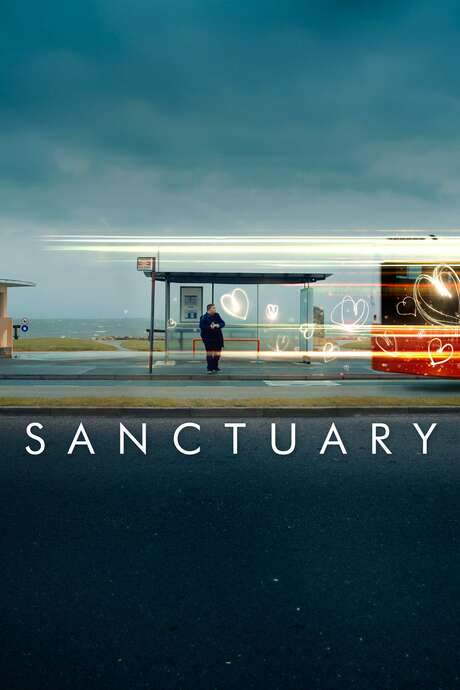
Sanctuary 2016

Directed by

Richard Hickey
Made by

Where to Watch Sanctuary
See current US streaming, rental, and purchase options for Sanctuary (2016) via JustWatch.










Sanctuary Plot Summary
Read the complete plot summary and ending explained for Sanctuary (2016). From turning points to emotional moments, uncover what really happened and why it matters.
In the summer of 1968, a 14-year-old boy named Wolfgang from Osnabrück, known for tinkering with mopeds, is uprooted from his home after a tense moment with his stepfather and sent to Freistatt, a Christian-oriented educational center. His mother promises a Christmas return, and he even carries a photograph of her to the new place. What unfolds is a stark portrait of life inside a tight, punitive regime that treats the residents like a tightly controlled team rather than individual youths in need.
From the moment Wolfgang arrives, he encounters a household run with a austere, almost militaristic rhythm. The housefather, a stern man who has led the establishment for decades, presides over the grounds with a mix of outward kindness and blunt, sometimes harsh discipline. Pupils are addressed as “brothers,” a language that frames the space as a closed community where obedience is prized above personal desire. The Youth Office’s records label Wolfgang as aggressive, resistant, and disobedient, and the staff quickly place him in a social order where punishment is the primary tool for order. The daily life inside the home resembles a barracks: timetables, chores, and an atmosphere where individual grievances are absorbed into the needs of the group.
Within this hierarchy, Wolfgang is repeatedly tested. When he clashes with Bernd, a fellow pupil who is tasked with administering discipline, the tension surfaces through a series of confrontations that underscore the limits of autonomy within the system. He befriends Anton, an Afro-German peer who shares a sense of alienation, and the two navigate the hard labor of peat digging, where physical strain becomes a backdrop to their persistence. As Wolfgang endures the demanding work, he endures beatings—such as a brutal punishment with a spade at the hands of Brother Wilde—before continuing to press on, even as food rationing and the threat of further punishment hang over the group.
Escape attempts punctuate Wolfgang’s stay. One early effort in the mire fails, and discipline is meted out with collective or individual penalties, including periods of deprivation and social shaming. The housefather’s method—punishing withholdings and a mixture of stern lectures and practical punishments—keeps the youths in a tense, watchful state. Despite this, small acts of resistance emerge, including a moment when the group rises in solidarity during a recreation period, signaling a longing for freedom and a sense of justice beyond the moor’s routines.
Personal touches surface amid the routine cruelty. Wolfgang sends a note to Angelika, the daughter of the housefather, asking his mother to bring him home, a gesture that highlights the fragile thread connecting him to his family and the hope of rescue. The housefather discovers the letter, and the consequences unfold with another round of punitive measures, including food deprivation. The tension thickens when Wolfgang attempts to steal tomatoes from the garden and is submerged in a water barrel, an act that reveals both his stubborn will and the brutal constraints placed on him. The film traces how the group’s dynamics shift as Wolfgang’s resolve grows, even as the adults in charge manipulate the youths’ sense of agency.
A dramatic uprising erupts during a moment of recreation, sparked by Brother Wilde’s attempt to confiscate a piece of radio equipment. In a songful protest, Anton leads with a Gospel lyric, and the children find unity in defiance—an echo of broader movements of the era seeking autonomy and dignity. The calm of Christmas Eve is shattered when a scandal breaks: an overseer named Krapp is implicated in sexual abuse toward a resident named Mattis. The revelation shakes the house, leaving a visible scar on the youths who witness it and complicating the already fragile trust between caretakers and residents. The events culminate in a sequence of disturbing visions and a sense of danger that hangs over the basement, where Wolfgang endures a harrowing sequence linked to the day’s darker revelations.
The narrative intensifies with a violent escape and a harrowing escape route. Wolfgang injures Brother Wilde’s eye during a moor conflict and, with Anton, flees toward Osnabrück. The two travel by a horse-drawn transport, but the plan to start anew frays when Anton’s own origins become murky and he isn’t fully connected to the place Wolfgang yearns to return to. Back at Freistatt, the mother and stepfather make a difficult choice: the car doors are closed, and a promise of return is turned away as the couple drives away, leaving Wolfgang to confront the next chapter of his life on his own terms.
The film’s most devastating turn comes when Brother Wilde exacts revenge in a brutal act that seems to bury Wolfgang alive. Brockmann, the housefather, arrives unexpectedly and pulls him from the “grave,” a stark image that frames the precariousness of every child’s fate within the walls. Angelika says goodbye as she leaves for Hamburg to study, and a moment of tenderness surfaces briefly between Wolfgang and the girl before a disturbing development shatters it: Wolfgang’s growing impulse and a disturbing incident threaten to derail any fragile relief he had found.
Tragedy deepens when Anton commits suicide, setting off a violent backlash as the other residents turn on Brother Wilde and attempt to resist the regime’s control. In the aftermath, the youths’ night rituals and routines give way to a shaken solidarity, and Wolfgang appears to adapt to the routines of life inside the home, even as his inner will feels increasingly fractured. The stepfather’s fate—fatally injured in a later incident—prompts Wolfgang to return briefly to the outside world, only to retreat again when confronted with the reality of his broken relationships and the weight of his past. He exits Freistatt with a mix of relief and resignation, his gait heavy with the sense that home and safety are now elusive concepts.
On a final note, the film leaves audiences with a meditation on trauma, power, and the desperation for home. Wolfgang’s journey—from a child pushed into an institutional system to a young person who has endured abuses, witnessed betrayals, and faced life-altering choices—offers a somber reflection on how institutions can shape, and sometimes distort, a young life. The ending—ambiguous and open—suggests that the road to healing is long and uncertain, and that the line between guard and captor can blur in the shadows of harsh rules, broken promises, and the enduring human need for care, connection, and, above all, a place to call home.
Sanctuary Timeline
Follow the complete movie timeline of Sanctuary (2016) with every major event in chronological order. Great for understanding complex plots and story progression.
Arrival at Freistatt
Wolfgang, a 14-year-old from Osnabrück, is sent to Freistatt and meets the housefather Brockmann in the garden. The staff notes his aggression and disobedience, while his mother promises a Christmas return. The first impression is tense, as the home is introduced as a harsh, regimented place.
Record of aggression
The Youth Office documents Wolfgang as aggressive, renitent, and disobedient. He defends himself, insisting he has learned to protect himself rather than become violent. His mother still promises a return at Christmas, and he even brings a photo of her to Freistatt.
Life under the housefather
The home is run like a barracks, with leaders addressed as brothers. Brockmann has controlled the place for decades, presenting a strict, missionary Christian order. The atmosphere underscores the routine of surveillance, punishment, and obedience.
Punishment of Mattis and group discipline
Wolfgang participates in the punishments meted out by Bernd when Mattis is singled out by the group. The so-called 'ranks' of the group enforce discipline, reinforcing the harsh social order. Wolfgang clashes with the system as it tightens its grip on the pupils.
Hard labor and the first escape attempt
The boys toil in the peat mire under grueling conditions, and Wolfgang is beaten with a spade when he complains about not receiving boots for months. A first escape attempt in the confusing mire ends in failure, illustrating the futility of rebellion.
Letter to Angelika and punishment
Wolfgang acobbles a letter to Angelika asking his mother to pull him out of the home. The group is punished with food deprivation after the letter is found, demonstrating how personal communications are controlled. The atmosphere tightens as the attempt to escape is thwarted.
Tomato theft and retaliation
Wolfgang tries to steal tomatoes from the housefather’s garden and is submerged briefly in a water barrel as punishment. He is beaten with a baton for his stubbornness, yet his resilience earns a quiet, grim respect from his peers. The incident intensifies his defiance in small but meaningful ways.
Hedgehog slice and broken family symbol
Wolfgang receives a Hedgehog slice from his mother for his birthday, a rare token of home. The housefather keeps it for himself and consumes what Wolfgang finds. Bernd also burns the photo of Wolfgang’s mother, deepening the emotional strain.
Recreation uprising and song of resistance
During recreation, the pupils revolt when the trunk radio is threatened. Anton leads with a Gospel song, 'Sometimes I Feel Like a Motherless Child,' and the group responds with a collective shout for 'Freedom.' The moment crystallizes a spark of solidarity among the youths.
Christmas Eve scandal and key incident
On Christmas Eve, a scandal erupts involving Brother Krapp and abuse; Mattis resists, and the service scene culminates with Angelika receiving a house key. She opens a bell bag and the key scene unfolds, but her father blocks entry, underscoring the tension between authority and rebellion.
Basement memory and implied past
In the basement, Wolfgang is seen chained and nearly unconscious, with visions of the past. The opening credits reveal a beach moment with his mother, hinting at an incestuous subtext that haunts him. The scene marks a disturbing emotional low point.
Moor escape with Anton toward Osnabrück
A moor conflict erupts as Wolfgang injures Brother Wilde’s eye with a spade, and the two flee with Anton. They head toward Osnabrück, a perilous journey across unforgiving terrain. The escape exposes the fragility of their ties and their longing for freedom.
Return to Freistatt and Anton’s fate
The journey reveals Anton is not from Osnabrück and has no real family there. Wolfgang’s mother and his stepfather have already started another child, complicating his sense of belonging. Brockmann arrives to take Wolfgang back to Freistatt, while Anton has already been placed elsewhere.
Anton’s suicide and the revolt against Wilde
Anton hangs himself, triggering a violent response as the pupils attack Brother Wilde, who tries to return to the old agenda. Wolfgang remains with Anton, seemingly resigning to the chaos around him. The dynamics of control and resistance reach a brutal peak.
Release and return to life outside Freistatt
Wolfgang is released because his stepfather has been fatally injured, freeing him from the immediate hold of the institution. He returns home briefly, only to confront the new child on the terrace and walk away again. He borrows money from a former friend and, after slapping him when he tries to take his cake, he boards a train with an uncertain destination, watching Freistatt recede and the mire-drawn draisines drift by.
Sanctuary Characters
Explore all characters from Sanctuary (2016). Get detailed profiles with their roles, arcs, and key relationships explained.
Wolfgang
A 14-year-old from Osnabrück who is defiant and resourceful, he challenges the harsh rules of Freistatt. His attempts to cope with the abusive regime—through stubborn persistence and small acts of rebellion—drive the narrative. He forms tentative alliances and endures punishing ordeals in hopes of returning home.
Brockmann
The housefather who runs Freistatt with a strict, punitive hand. He wields authority through fear, routine, and religious rhetoric, enforcing the system's rules on the boys. His presence embodies the institutional power that crushes individuality.
Anton
An Afro-German pupil who befriends Wolfgang but comes from a troubled background. He reveals the emptiness of the system and ultimately faces despair, highlighting the precariousness of belonging in postwar Germany. His arc underscores themes of loss and alienation.
Angelika
The housefather’s daughter who plays a complicated role, offering moments of interaction and ambiguity. She becomes a channel through which the boys navigate the interior of Freistatt and the coercive dynamics around them.
Brother Wilde
An overseer who participates in brutal punishments and retaliations against the pupils. His actions epitomize the threat of institutional violence and the cycles of retaliation within the home. He stands as a representative of the system’s most severe disciplines.
Sanctuary Settings
Learn where and when Sanctuary (2016) takes place. Explore the film’s settings, era, and how they shape the narrative.
Time period
Summer 1968
The events unfold during the summer of 1968 in West Germany, a period of social upheaval and questioning of authority. The Youth Office oversees punitive centers like Freistatt, reflecting the era's debates about youth delinquency and rehabilitation. The setting situates the film in a specific historical moment when traditional institutions faced scrutiny.
Location
Osnabrück, Freistatt, Heidequell (near Bielefeld)
Sanctuary takes place primarily in Osnabrück, where Wolfgang is from, and in Freistatt, a Christian educational center he is sent to. The setting is a tightly controlled, barrack-like home run under religiously inflected discipline. The nearby Heidequell area near Bielefeld is referenced as Wolfgang's former school, hinting at a broader system of juvenile placements in postwar Germany.
Sanctuary Themes
Discover the main themes in Sanctuary (2016). Analyze the deeper meanings, emotional layers, and social commentary behind the film.
🕊️
Freedom vs. Confinement
The story centers on the tension between a desire for personal freedom and the confinement of a closed institutional space. Bonds among the residents provide moments of solidarity and subtle resistance. These dynamics show how space and power shape choices, hope, and encroaching despair.
🔥
Rebellion and Resilience
The pupils push back against brutal rules and punishments, culminating in uprisings and risky escapes. Wolfgang's endurance under harsh treatment reveals a stubborn will to survive and reclaim agency. The narrative frames resilience as a quiet rebellion rather than a dramatic breakout.
🩹
Trauma and Healing
The film foregrounds abuse, fear, and the scars of control, including sexual abuse and coercion within the system. Characters carry physical and emotional wounds that affect their future interactions. Healing, when it happens, is partial and ambiguous, reflecting a lingering sense of damage.

Coming soon on iOS and Android
The Plot Explained Mobile App
From blockbusters to hidden gems — dive into movie stories anytime, anywhere. Save your favorites, discover plots faster, and never miss a twist again.
Sign up to be the first to know when we launch. Your email stays private — always.
Explore the mobile appSanctuary Spoiler-Free Summary
Discover the spoiler-free summary of Sanctuary (2016). Get a concise overview without any spoilers.
In a sun‑washed corner of contemporary life, a small, intimate world unfolds where everyday places—quiet streets, modest homes, a modest hotel—hold the promise of a fleeting sanctuary. The film paints a landscape that is at once ordinary and charged with the invisible weight of expectations, hinting at a society that often looks away while its most vulnerable seek connection. Light filters through the windows, and the subtle hum of routine is underscored by a lingering sense of yearning, inviting viewers to feel both the comfort of the familiar and the tension of unseen barriers.
Larry moves through this world with a gentle optimism rooted in his Down’s syndrome, while Sophie, who lives with epilepsy, shares his desire for companionship that transcends the labels placed upon them. Their bond is built on shared moments of laughter, quiet understanding, and a mutual hope that love can be simple, honest, and unguarded. Their relationship feels like a quiet rebellion against a culture that too often marginalizes them, and the chemistry between them is conveyed through tender glances and the unspoken language of two hearts that have learned to read each other’s rhythms.
Enter Tom, their devoted carer, who becomes the bridge between the couple’s longing and the practicalities of everyday life. He helps arrange a short retreat to a hotel, a modest yet symbolic escape where the trio can explore the possibility of deeper intimacy away from the prying eyes of a world that doesn’t always understand. The tone is warm and observational, blending moments of gentle humor with an undercurrent of melancholy, creating a cinematic space where hope flickers, doubts linger, and the simple act of being together feels both revolutionary and profoundly human.
Featured on this page

What's After the Movie?
Not sure whether to stay after the credits? Find out!
Check out our other apps:

SAT Sphere
Build confidence for the Digital SAT.

Mori Atlas
Discover wild places worth protecting.

Luntero
Search smarter for a home in Amsterdam.

Plot Explained
Unravel movie endings and hidden clues.

Pokechamp
Dive into Pokémon data and battle logic.

Driving Theory
Get ready for your European theory test.

Movie Dust
Plan your next cinema trip with ease.

Musemap
Find art and culture as you travel.

Selkobase
Compare credentials before committing.

Local Manual
Turn an unfamiliar country into practical next steps.

Lernavi
Compare school systems before your next move.

GymRoam
Find a workout stop wherever your plans take you.
Explore Our Movie Platform
New Movie Releases (2026)
Famous Movie Actors
Top Film Production Studios
Movie Plot Summaries & Endings
Major Movie Awards & Winners
Best Concert Films & Music Documentaries
Movie Collections and Curated Lists
© 2026 What's After the Movie. All rights reserved.
Privacy Policy