
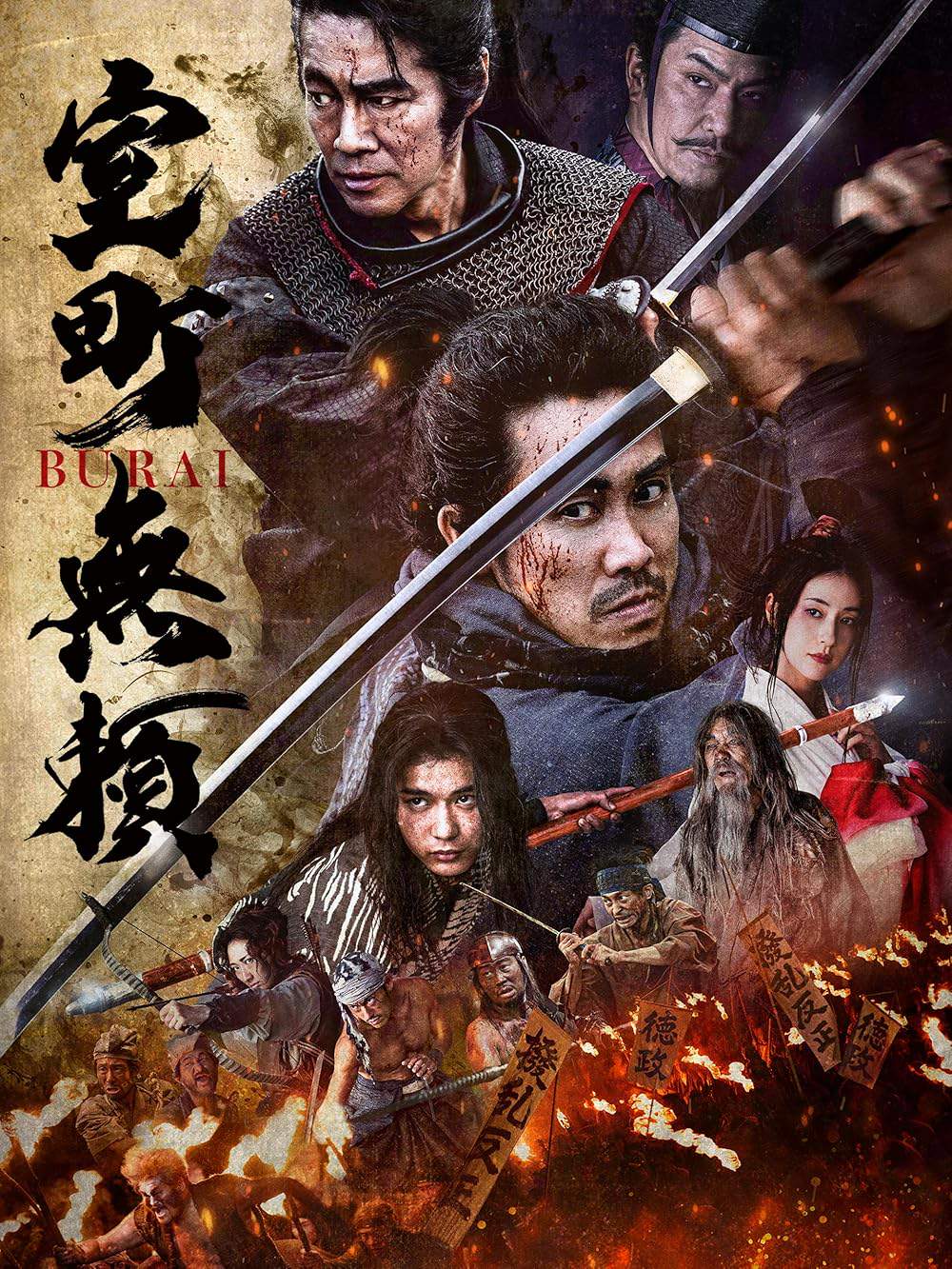
What Is Samurai Fury About?
The premise of Samurai Fury in 300 words, with nothing given away. The full story follows below.
against the shadow of 15th-century Japan, where famine and plague tighten their grip on the land, a weary populace endures under the rule of a shogun whose indifference borders on cruelty. Court excess flourishes while villages crumble, and the weight of suffering presses down on every road and rice field. The atmosphere is one of quiet desperation, where the gap between rulers and ruled has stretched into something almost unbridgeable.
Into this fractured world steps Hasuda Hyoe, a wandering rōnin whose restless spirit refuses to bend to the corruption around him. Disillusioned by the shogun’s apathy and haunted by the plight of common folk, Hyoe carries the swagger of a seasoned swordsman and the conviction of a man who has seen too much injustice to look away. Played by Ôizumi Yô, he embodies the kind of rebel who moves through the countryside with both charm and a simmering anger, questioning an order that keeps an entire nation shackled to suffering.
Driven by a fierce desire to liberate his homeland from the grip of its negligent ruler, Hyoe begins to lay the groundwork for a confrontation that could shake the very foundations of Kyoto itself. His journey is not merely one of steel and strategy, but of rallying those who have lost hope and daring to challenge an authority few would dare oppose. Each step forward carries the risk of drawing the attention of powerful forces determined to preserve their hold on a crumbling realm.
Samurai Fury blends the grounded grit of historical drama with the kinetic energy of a rebellion tale, painting a portrait of an era teetering on the edge of upheaval. It is a story about defiance, sacrifice, and the dangerous allure of standing alone against an empire that has forgotten the people it was meant to serve.
What Happens in Samurai Fury?
The complete story of Samurai Fury, from the first scene to the last, in 650 words (about 3 minutes). Spoilers throughout.
Spoilers ahead
In the year 1461, western Japan is gripped by the devastating Kanshō famine, leading to the tragic deaths of 82,000 individuals due to resultant epidemics. During this tumultuous time, Nawa, the shōgun of Kyoto, imposes heavy taxes to sustain his extravagant lifestyle, while corrupt priests oppress villagers unable to repay their debts. Enter Hasuda Hyoe, a rōnin whose fate intertwines with that of Honekawa Doken, the chief of security in Kyoto and Hasuda’s old comrade. Honekawa hires Hasuda to thwart an uprising in Yoshizaka, located in Kawachi Province, offering him 600 mon and Saizō, an orphan who was captured during a raid on a monastery led by Honekawa’s men.
After igniting tension by incinerating a customs station, Hasuda and Saizō successfully defend Yoshizaka from a bunch of bandits. Following this, Hasuda cautions the villagers about the shōgunate’s awareness of their insurrection plans, advising them to remain patient while he devises a strategy to support their cause. Though Saizō is granted his freedom, he opts to align himself with Hasuda, eschewing the path of the ordinary for that of an insurgent.
The duo journey to Imazu, where Hasuda leaves Saizō to undergo a year of training under Master Karasaki, honing his skills with the bō and combat techniques. After their year apart, Hasuda reunites with Saizō, now armed with newfound skills, and discloses his intentions to lead an insurgency against the shōgunate in Kyoto, planning to launch their attack within the month. In a heart-wrenching exchange, Honekawa confronts Hasuda regarding his decision to lead this uprising, during which Hasuda recounts the extreme suffering he has witnessed under the shōgunate’s rule. He asserts it’s time to dismantle the oppressive system by declaring that he can obliterate the promissory notes and reclaim the women ensnared by the monasteries within just one hour.
As the word of the impending uprising spreads, more rōnin join forces with Hasuda and Saizō. In a strategic move, Hasuda sends a letter to Honekawa stating that the attack on Kyoto is set for 12 September at sunrise. However, this strategy backfires as Nawa commands his army to launch a massacre on Yoshizaka as a grim warning to any would-be insurgents. In a bid to protect his former lover, Ho-ōji, Saizō sends her a message the day before the attack, urging her to flee Sanjō to safety.
The insurgency astounds the city with a surprise attack at midnight instead of the anticipated sunrise, leading a formidable army of 10,000 through customs stations and arming every villager encountered on the way to Nijō. Utilizing directions provided by Hasuda at the great pagoda, the insurgents cleverly navigate around samurai forces. Upon reaching Nijō, they ignite flames in the monasteries and destroy the promissory notes, but soon find themselves encircled by samurai and Honekawa’s troops. In a dramatic moment, Hasuda and Saizō arrive to bolster their comrades during the fierce battle. As the insurgents revel in song and dance, Honekawa unjustly orders Hasuda and his army to vacate the city.
With the break of dawn, Hasuda, Saizō, and their followers advance toward Nawa’s palace, where they face off against a drunken Nawa and Honekawa’s forces. Initially overpowered, the insurgents regroup and counterattack as Saizō bravely eliminates Honekawa’s army and Nawa’s guards. In a moment of vengeance, a wounded Hasuda slays Nawa, avenging the villagers of Yoshizaka. The duo makes it to the main gate of the palace, erecting a sign labeled “outsider,” symbolizing the conclusion of Nawa’s tyranny.
Later that day, Honekawa tracks down Hasuda and Saizō by the river, leading to a fatal duel where Hasuda pays the ultimate price. Surprisingly, Honekawa spares Saizō, exiling him from Kyoto for a decade. Fast forward five years into the future, during the tumultuous Ōnin War, Honekawa faces capture and execution at the hands of the Hosokawa clan. Meanwhile, after enduring his exile, Saizō reunites with Ho-ōji, hopeful for their future amidst turmoil and change.
Samurai Fury Timeline: Every Key Event in Order
15 key events in the order they happen, from “The Kanshō Famine” to “The Aftermath”. 14 events name a place, across 11 locations.
- 1
The Kanshō Famine
In the year 1461, western Japan suffers from the devastating Kanshō famine, leading to the deaths of 82,000 people due to resulting epidemics. This catastrophe occurs while the shōgun, Nawa, continues to raise taxes to support his extravagant lifestyle, ignoring the plight of the people.
When:1461 Where:Western Japan
- 2
Honing the Resolve
Hasuda Hyoe, a skilled rōnin, is called upon by Honekawa Doken, the chief of security in Kyoto, to help suppress growing unrest in Yoshizaka, Kawachi Province. Accepting the challenge, Hasuda receives both a monetary reward and an unexpected ally, an orphan named Saizō.
Where:Kyoto, Kawachi Province
- 3
Saving Yoshizaka
Hasuda and Saizō demonstrate their prowess when they confront and defeat a group of bandits threatening the village of Yoshizaka. After successfully defending the villagers, Hasuda warns them that the shōgunate is aware of their planned uprising, advising patience until he can assist further.
Where:Yoshizaka
- 4
The Bonding of Heroes
Saizō, despite being offered his freedom, decides to stay with Hasuda, eager to follow in his footsteps. They journey to Imazu, where Hasuda entrusts Saizō to Master Karasaki, allowing him to train as his apprentice for a year.
Where:Imazu
- 5
The Year of Training
During his year with Master Karasaki, Saizō hones his skills in combat, mastering the bō, a traditional weapon. This training fortifies his resolve for the upcoming conflict against the shōgunate, strengthening the bond between him and Hasuda.
Where:Master Karasaki's Training Hall
- 6
Plans of Uprising
Hasuda reunites with Saizō after his training and reveals his grand plan to lead an insurgency against the shōgunate in Kyoto. He articulates the suffering he has witnessed and claims he will only need one hour to destroy the promissory notes imprisoning the villagers.
Where:Undisclosed Location
- 7
Call to Arms
Word of the impending uprising spreads throughout the area, drawing in allies from other rōnin who align with Hasuda and Saizō's cause. This growing support hints at the scale of the rebellion that is about to unfold in Kyoto.
- 8
The Date is Set
Hasuda sends a crucial letter to Honekawa, announcing that the attack on Kyoto will occur on 12 September at sunrise. This planned timing is a strategic maneuver that will soon catch their enemies off guard.
When:12 September Where:Kyoto
- 9
The Night Before
As the eve of battle approaches, Saizō sends a warning to Ho-ōji, a courtesan and Hasuda's former lover. He urges her to flee Sanjō for safety before violence erupts in the city, demonstrating the personal stakes involved.
When:11 September Where:Sanjō
- 10
The Surprise Attack
In a tactical twist, the insurgents strike at midnight instead of the predicted sunrise, catching the city and its defenders off guard. With a formidable force of 10,000, they cut through customs stations and arm the villagers en route to Nijō.
When:Midnight Where:Kyoto
Show the other 5 events of Samurai Fury Hide the last 5 events
- 11
The Blaze of Rebellion
Upon reaching Nijō, the rebels unleash their fury by igniting the monasteries and destroying the oppressive promissory notes. Although they initially celebrate their victories, they soon find themselves cornered by Honekawa's formidable samurai forces.
Where:Nijō
- 12
The Climactic Battle
Hasuda and Saizō rush to the scene as the insurgents face overwhelming odds, joining the brawl to support their comrades. As the battle rages on, Honekawa commands the insurgents to vacate the city amidst mounting chaos.
Where:Nijō
- 13
Confrontation at the Palace
By sunrise, Hasuda, Saizō, and their insurgents march bravely to Nawa's palace, where they confront Honekawa and a disoriented Nawa. Despite being temporarily overwhelmed, the rebels retaliate and engage in a fierce battle.
When:Sunrise Where:Nawa's Palace
- 14
The Fall of Nawa
In a moment of revenge and justice, a wounded Hasuda confronts and kills Nawa, avenging the suffering of the villagers. The end of Nawa’s reign is symbolized by the rebels marking the palace gate with a sign that boldly reads 'outsider'.
Where:Nawa's Palace
- 15
The Aftermath
Later that day, Honekawa finds Hasuda by the river and challenges him to a duel, ultimately killing him. Saizō is spared but exiled from Kyoto for ten years, foreshadowing future conflicts and transformations in the region.
Where:The River
Who Are the Main Characters in Samurai Fury?
4 characters, among them Hasuda Hyoe, Saizō and Nawa: who each one is and the part they play in the story. 2 of them link to the actor’s page.
- HH
Hasuda Hyoe
A rōnin disillusioned by the corrupt shōgunate, Hasuda emerges as a leader driven by a sense of justice. His experiences have hardened him, but his resolve to fight for the oppressed illustrates a complex character caught between vengeance and righteousness. His ultimate sacrifice marks a poignant moment in the film's exploration of duty and heroism.
- 🗡️ Warrior
- ❤️ Justice
- 🔥 Leader
- S
Saizō
Played by Yûya Endô
An orphaned boy turned warrior, Saizō evolves from a captive into a fierce fighter under Hasuda's mentorship. His choice to accompany Hasuda in the insurgency demonstrates his growth and determination to change his fate. Saizō's journey epitomizes the themes of loyalty and resilience, forging his identity amid chaos.
- 👦 Orphan
- ⚔️ Apprentice
- 🌟 Resilient
- N
Nawa
As the shōgun of Kyoto, Nawa represents the corruption and greed that plague the ruling class. His extravagant lifestyle comes at the cost of innocent lives, revealing the moral decay of power. Nawa's eventual confrontation with Hasuda underscores the film's conflict between tyrants and rebels.
- 👑 Corruption
- 💰 Greed
- ⚔️ Tyrant
- HD
Honekawa Doken
Played by Tateto Serizawa
Formerly a comrade of Hasuda, Honekawa's role as a chief of security complicates their relationship. Torn between loyalty to the shōgunate and his past with Hasuda, Honekawa becomes an antagonist embodying the struggles of individuals caught in a corrupt system. His actions throughout the film reflect the moral dilemmas faced by those in power.
- ⚔️ Antagonist
- 🔄 Loyalty
- 🤔 Conflict
Where and When Is Samurai Fury Set?
Samurai Fury is set in Kyoto, Yoshizaka, Kawachi Province and Imazu (1461). Here is why the time and place matter to the story.
When
1461
The events unfold during the year 1461, a time marked by the Kanshō famine, which claimed the lives of thousands in Japan. This period saw rampant corruption as the ruling shōgun, Nawa, imposed heavy taxes on the suffering populace, leading to a desperate need for rebellion against oppressive forces. The political landscape is fraught with conflict, setting the stage for an insurgency against the ruling class.
Where
Kyoto, Yoshizaka, Kawachi Province, Imazu
The movie is set in historical locations in western Japan during the tumultuous period of the 15th century. Kyoto, as the shōgun's capital, is characterized by political corruption and social unrest due to the Kanshō famine. Yoshizaka, a provincial village, becomes a symbol of resistance as villagers rise against oppressive forces, while Imazu serves as a place of training and transformation for the protagonist.
- 🏯 Historical
- 🌾 Famine
- ⚔️ Uprising
What Are the Themes of Samurai Fury?
2 ideas the story keeps returning to, among them Rebellion and Sacrifice.
-
01
Rebellion
The film portrays the struggle and quest for justice during a time of oppression. The characters rally together against the corrupt shōgun who exploits the suffering of the villagers, emphasizing themes of resistance and the fight for freedom. Hasuda's leadership and Saizō's transformation from an orphan into a skilled warrior symbolize hope amidst despair.
-
02
Sacrifice
Central to the narrative is the theme of sacrifice as the characters navigate their paths fueled by love, vengeance, and loyalty. Hasuda sacrifices his life for the greater good of his people, and Saizō embodies the emotional toll of choosing between personal desires and collective responsibility. These sacrifices highlight the harsh realities of war and the cost of freedom.
What Kind of Film Is Samurai Fury?
Dark in tone, with variable pacing and a moderate story, going by the plot summary.
- Tone
- Dark
- Pacing
- Variable
- Story
- Moderate
- Intensity
- High
- Ending
- Bittersweet
A dark, brutal feudal Japanese epic about a ronin's desperate uprising against a corrupt shogun, blending intense battle sequences with a tragic mentor-apprentice bond.
- dark
- gritty
- epic
- tragic
- heroic
- somber
- political corruption
- rebellion
- feudal japan
- mentor and apprentice
Content notes: war violence, massacre, famine, plague, death of mentor figure, child endangerment.
Quiz
How well do you remember Samurai Fury? Test yourself on the story.
