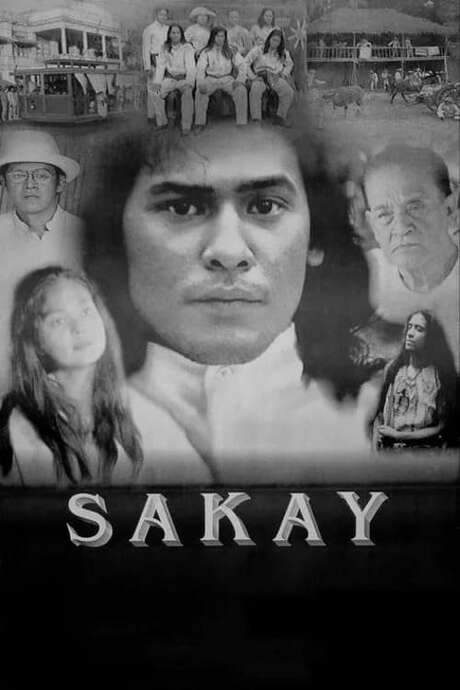
Sakay 1993

Directed by

Raymond Red
Made by

Zeta Entertainment
Sakay Plot Summary
Read the complete plot summary and ending explained for Sakay (1993). From turning points to emotional moments, uncover what really happened and why it matters.
Macario Sakay, Julio Díaz, a carriage factory worker and stage actor from Tondo, Manila, joins Andres Bonifacio’s revolutionary secret society, the Katipunan. He fights during the Philippine Revolution against Spain and later in the Philippine–American War. Sakay remains in the field even after the capture of President Emilio Aguinaldo and the fall of the First Philippine Republic, and he is eventually captured, but released during an amnesty.
Sakay then retreats to the mountains to revive the Katipunan, standing with fellow leaders such as Karlo Altomonte as Francisco Carreon, Raymond Keannu as Julian Montalan, and Ray Ventura as Cornelio Felizardo, along with other rebel commanders. He proclaims himself General and President of the Republika ng Katagalugan (the “Tagalog Republic”), and he engages the United States Army and the Philippine Constabulary in prolonged guerrilla warfare. On occasion, he is aided by talisman-wearing cultist warriors.
After years of fighting, Sakay is convinced to surrender by Filipino labor leader Dr. Dominador Gomez, Nanding Josef, who argues that the establishment of a Philippine National Assembly, rather than continued armed resistance, offers the soundest path toward independence. On the understanding that the American government offered amnesty, Sakay and his officers descend from the mountains. However, as a ruse, they are invited to a reception in Cavite and arrested by the Americans. Tried and convicted for brigandage, Sakay and Col. Lucio de Vega, Pen Medina, are hanged, while Montalan and others receive life imprisonment.
Sakay Timeline
Follow the complete movie timeline of Sakay (1993) with every major event in chronological order. Great for understanding complex plots and story progression.
Joins Katipunan and begins revolutionary activity
Macario Sakay, a carriage factory worker and stage actor from Tondo, Manila, joins the Katipunan and becomes part of the revolutionary movement. He fights against Spanish forces during the Philippine Revolution and later participates in the Philippine–American War. This marks the start of his long involvement in organized resistance.
Fights across the Revolution and the Philippine–American War
Sakay wages combat against colonial forces across multiple fronts in the Philippines. He remains an active participant in the broader struggle as the conflict shifts from Spanish to American rule. The timeline underscores his commitment to continuing resistance.
Stays in the field after Aguinaldo's capture
Even after the capture of President Emilio Aguinaldo and the fall of the First Philippine Republic, Sakay refuses to surrender. He keeps operating in the field, maintaining pressure on occupying forces. His continued presence signals a broader rebellion beyond the formal republic.
Retreat to mountains and revival of Katipunan
Sakay moves to mountain strongholds to restart the Katipunan's organizational network. He gathers fellow leaders such as Carreon, Montalan, and Felizardo to rebuild the rebellion. The move marks a shift from conventional warfare to guerrilla operations.
Proclaims himself General and President of Tagalog Republic
From the mountain base, Sakay declares himself General and President of the Tagalog Republic, signaling a formal rejection of colonial governance. He seeks to organize resistance under a national banner. This proclamation solidifies his role as a leading rebel figure.
Guerrilla warfare against US Army and Philippine Constabulary
Sakay engages the United States Army and the Philippine Constabulary in ongoing guerrilla warfare. The campaign relies on hit-and-run tactics, mobility, and the terrain of the mountains. The strategy aims to sustain resistance despite superior force.
Aid from talisman-wearing cultist warriors
At times he is aided by talisman-wearing cultist warriors, adding a supernatural dimension to the campaign. Their presence boosts morale and complicates enemy operations. These episodes contribute to the mythic aura around Sakay's rebellion.
Convinced to surrender by Dr. Dominador Gomez
Filipino labor leader Dr. Dominador Gomez persuades Sakay to consider surrender by arguing that a Philippine National Assembly could advance independence. He outlines a path that could win amnesty or a political settlement. The dialogue reflects a strategic pivot away from long-term armed resistance.
Down from the mountains with amnesty understanding
Following Gomez's argument, Sakay and his officers descend from the mountains with the understanding that the American government offers amnesty. The departure signals a potential political settlement rather than ongoing fighting. It sets the stage for the subsequent trap.
Ruse invitation to Cavite and arrest
As part of a trap, Sakay and his officers are invited to a reception in Cavite and are arrested. The invitation is presented as a peaceful gathering, but it serves to capture the rebel leaders. The capture interrupts the planned transition to a political settlement.
Trial and conviction for brigandage
Sakay and his fellow leaders are tried and convicted for brigandage. The trial marks the formal end of the rebellion in legal terms, with heavy sentences and public condemnation. It demonstrates the resolve of the new government to suppress the rebellion.
Execution of Sakay and de Vega; life imprisonment for others
Sakay and Colonel Lucio de Vega are hanged, while Montalan and others receive life imprisonment. The executions seal the fate of the movement's leadership. The event closes a chapter in the struggle for independence and catalyzes reflection on the means and ends of resistance.
Sakay Characters
Explore all characters from Sakay (1993). Get detailed profiles with their roles, arcs, and key relationships explained.
Macario Sakay (Julio Díaz)
A carriage factory worker and stage actor who becomes the central revolutionary leader. He drives the guerrilla campaigns from the mountains, proclaims himself General and President of the Tagalog Republic, and remains steadfast despite the collapse of the First Philippine Republic. His capture and execution underscore the high cost of anti-colonial struggle.
Francisco Carreon (Karlo Altomonte)
A trusted ally who helps revive the Katipunan and coordinates the rebellion alongside Sakay. He contributes to mountain-based operations and the effort to sustain an independent Filipino state. His role highlights the importance of coalition leadership in a prolonged struggle.
Julian Montalan (Raymond Keannu)
One of the rebel leaders who joins Sakay in the mountains and fights alongside him. He embodies dedication and camaraderie essential to long-term guerrilla warfare. The narrative follows his experiences within the broader movement and its consequences for captives.
Cornelio Felizardo (Ray Ventura)
A general allied with Sakay, providing leadership in mountain campaigns and helping coordinate operations. He represents the disciplined focus of the insurgency and the shared goal of building a free Filipino nation. His role emphasizes the collective effort behind the rebellion.
Dr. Dominador Gomez (Nanding Josef)
A Filipino labor leader who argues for a constitutional path to independence, advocating a national assembly as the soundest route to statehood. He influences Sakay toward considering amnesty and political avenues rather than continued armed conflict. His diplomacy contrasts with the violence of guerrilla warfare.
Col. Lucio de Vega (Pen Medina)
A colonel who represents the military power pursuing Sakay and his followers. He is involved in the crackdown that culminates in the execution of Sakay and his associates, embodying the colonial effort to extinguish rebellion by force.
Sakay Settings
Learn where and when Sakay (1993) takes place. Explore the film’s settings, era, and how they shape the narrative.
Time period
late 19th century to early 20th century
The events unfold during the Philippine Revolution against Spain in the 1890s and the subsequent Philippine-American War in the early 1900s. The narrative follows the rise of the Tagalog Republic and ongoing guerrilla campaigns, set against shifting promises of amnesty from American authorities. Time and geography shape the struggle for independence and its tragic costs.
Location
Manila (Tondo), Mountains, Cavite
The story moves from the crowded streets of Manila, where Sakay works as a carriage factory worker and stage actor, to secret mountain strongholds where the Katipunan revives its struggle. Remote rebel camps become the setting for guerrilla warfare against colonial forces, while Cavite serves as the backdrop for key capture and surrender events. The locations together trace the arc of a nationalist uprising across urban centers and rugged hideouts.
Sakay Themes
Discover the main themes in Sakay (1993). Analyze the deeper meanings, emotional layers, and social commentary behind the film.
🕊️
Independence
The film centers on a determined push for national self-rule through Katipunan mobilization and the creation of a Tagalog Republic. It shows how ordinary citizens rise to leadership and sustain resistance across difficult terrains. The pursuit of freedom drives strategic choices and personal sacrifices throughout the rebellion.
🗺️
Leadership
Sakay's ascent from worker to General and President frames the film's focus on decisive leadership under pressure. Alliances with Carreon, Montalan, and Felizardo demonstrate how collective leadership sustains a revolt in harsh environments. The narrative also examines how top-level decisions affect followers and the movement's fate.
🤝
Amnesty vs Ideology
The film juxtaposes revolutionary resolve with political negotiation as leaders are drawn toward constitutional options under amnesty. Dr. Dominador Gomez advocates a national assembly as a path to independence, presenting a tension between ideals and pragmatism. The ruse leading to Sakay's capture highlights the uneasy balance between resistance and negotiated settlement.

Coming soon on iOS and Android
The Plot Explained Mobile App
From blockbusters to hidden gems — dive into movie stories anytime, anywhere. Save your favorites, discover plots faster, and never miss a twist again.
Sign up to be the first to know when we launch. Your email stays private — always.
Explore the mobile appSakay Spoiler-Free Summary
Discover the spoiler-free summary of Sakay (1993). Get a concise overview without any spoilers.
In the waning years of the Philippine struggle for self‑rule, the islands pulse with a restless energy that refuses to be silenced. The streets of Manila echo with the remnants of revolution, while the dense mountains beyond become a refuge for those unwilling to accept the new order imposed by distant powers. The film captures this tension‑filled landscape with a palette of smoky horizons and cramped urban alleys, painting a world where hope and oppression collide in everyday life.
At the heart of the story stands Macario Sakay, a former carriage‑factory worker whose days on a modest stage gave way to the electrifying fervor of the Katipunan. His early brush with the secret society that sparked the fight against Spanish rule ignites a fire that refuses to dim, even as the formal structures of rebellion crumble. Sakay carries the weight of those formative moments, channeling them into a quiet, relentless resolve that defines his every move.
Surrounded by a close‑knit circle of fellow insurgents, Sakay retreats to the rugged highlands, where the rhythm of guerrilla warfare becomes both a survival strategy and a statement of defiance. Together with comrades who share his vision, he sketches the outline of a new political entity—a Tagalog Republic that aims to give shape to the aspirations of a people still yearning for true sovereignty. The film moves through this terrain with a gritty realism, letting the harshness of the jungle and the camaraderie of the rebels speak louder than any grand speeches.
Amidst the clash of arms and ideals, voices of moderation begin to surface, most notably that of a labor leader who argues for a different path toward independence. Their debates linger in the air, hinting at the profound choices the protagonists must confront. The narrative lingers on the weight of those decisions, inviting the audience to feel the pull between steadfast resistance and the possibility of a new, political avenue—without revealing which road will be taken.
Movies with Similar Twists and Themes
Uncover films that echo the narrative beats, emotional arcs, or dramatic twists of the one you're exploring. These recommendations are handpicked based on story depth, thematic resonance, and spoiler-worthy moments — perfect for fans who crave more of the same intrigue.



Featured on this page

What's After the Movie?
Not sure whether to stay after the credits? Find out!
Check out our other apps:

SAT Sphere
Build confidence for the Digital SAT.

Mori Atlas
Discover wild places worth protecting.

Luntero
Search smarter for a home in Amsterdam.

Plot Explained
Unravel movie endings and hidden clues.

Pokechamp
Dive into Pokémon data and battle logic.

Driving Theory
Get ready for your European theory test.

Movie Dust
Plan your next cinema trip with ease.

Musemap
Find art and culture as you travel.

Selkobase
Compare credentials before committing.

Local Manual
Turn an unfamiliar country into practical next steps.

Lernavi
Compare school systems before your next move.

GymRoam
Find a workout stop wherever your plans take you.
Explore Our Movie Platform
New Movie Releases (2026)
Famous Movie Actors
Top Film Production Studios
Movie Plot Summaries & Endings
Major Movie Awards & Winners
Best Concert Films & Music Documentaries
Movie Collections and Curated Lists
© 2026 What's After the Movie. All rights reserved.
Privacy Policy