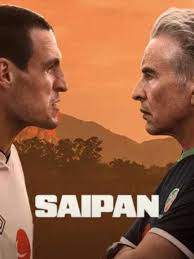
Saipan 2026

Directed by

Glenn Leyburn
Made by

Wild Atlantic Pictures
Saipan Plot Summary
Read the complete plot summary and ending explained for Saipan (2026). From turning points to emotional moments, uncover what really happened and why it matters.
In 1980, a young Roy Keane plays football in a field in Cork, and the film traces how his early talent foreshadows a journey from local fields to international fame, all while the shadows of injury and doubt linger over his rise. Years later, he has become a standout figure, but a period away from the game arrives after rumors of an injury begin to blur the line between reality and narrative.
In December 2001, in Barnsley, an interviewer discusses the upcoming sporting event with Mick McCarthy, who decides he should travel to Tehran to oversee the Irish team. The scene sets up a clash of personalities: a seasoned coach navigating national expectations while preparing for a demanding assignment, and a star player whose ego and frustrations are reaching a tipping point.
In April 2002, Roy Keane travels to Dublin with the Irish squad to Saipan. On the flight, he voices his unease about the team’s preparation, sharing his grievances with McCarthy and signaling a growing fracture in the harmony of the squad. Upon arrival, the conditions on the ground confirm his worst fears—the hotel is subpar, the food is lacking, and his mood quickly darkens, fueling a pattern of sharp, anti-social behavior that unsettles teammates and staff alike.
A morning meeting reveals further stress: there has been an error in supply delivery, compounding the already poor training pitch conditions. This combination sparks a confrontation between Roy Keane and Mick McCarthy in a sauna, a tense moment that becomes a turning point in how the coach’s decisions are perceived. As questions about McCarthy’s leadership surface—some influenced by his English origins—he defends his method by drawing a lines between “men from Ireland” and “Irish men,” underscoring a divide that runs through the team.
Eleven days before the match, Roy Keane plays a practice game and fires off sharp insults at some of the managers present, signaling the depth of his discontent. The following day, he complains about players taking time off after only an hour, then storms off. That night, he asks McCarthy to send him home for “personal problems,” though he wavers and reconsiders the next day.
Yet the pressure intensifies when, eight days before the match, it emerges that Roy Keane has leaked his candid thoughts to a reporter who sold the story to the press. When McCarthy calls a team meeting to address the matter, Keane insists he did nothing wrong. McCarthy accuses him of faking an injury, and Keane concedes that he believes the Irish team has become a joke under the current leadership and that he does not “rate him as a person.” The confrontation and subsequent insults culminate in McCarthy’s decision to part ways with Keane.
On May 23, Keane returns home to mixed reactions, and in Tokyo the team watches an interview in which he openly says he does not regret leaving. A few days later, McCarthy reaches out, asking if he wants to return, but Roy Keane declines.
In a closing title sequence, the film reveals that Ireland exits the 2002 World Cup on penalties to Spain after making it to the last 16. Back in Manchester, Keane plays alone, the memory of his childhood field in Cork echoing as a quiet reminder of the years that shaped him, closing a chapter that began in 1980 and ended with a controversial, unresolved chapter in 2002.
Saipan Timeline
Follow the complete movie timeline of Saipan (2026) with every major event in chronological order. Great for understanding complex plots and story progression.
Young Roy Keane's football beginnings in Cork
In 1980, eight-year-old Roy Keane plays football in a field in Cork. The scene shows his early talent and love for the sport. It foreshadows a later rise in his career, hinting at the challenges to come.
Rise to stardom and time off after injury claims
Years after his Cork field days, Keane has risen to stardom in football. He takes time off following claims of an injury and the controversy surrounding it. The summary sketches a career under public scrutiny that tempers his future decisions.
McCarthy decides to go to Tehran to watch the Irish team
An interviewer in Barnsley discusses the upcoming World Cup with manager Mick McCarthy, who decides he should go to Tehran to monitor the Irish team. This decision foreshadows the intense scrutiny and travel plans surrounding the squad. The note sets the stage for the broader tension between McCarthy and the players.
Keane travels to Dublin to join the Saipan trip
In April 2002, Keane travels to Dublin to join the Irish team as they head to Saipan. On the plane, he voices frustration about the lack of preparation. Upon arrival, he is appalled by the hotel conditions and the lack of proper food, fueling anti-social behavior.
Supply issues, poor pitch, and a sauna confrontation
A morning meeting reveals a supply delivery error and a poor training pitch. Keane confronts McCarthy in a hotel sauna about the situation. The clash highlights the growing tension between player and coach.
Pressure at the press conference: McCarthy's Irish identity questioned
During a press session, McCarthy is questioned about his English origin. He responds by distinguishing between 'men from Ireland' and 'Irish men'. The moment underscores the cultural tensions surrounding the team.
Keane's harsh practice game and insult to managers
Eleven days before the match, Keane plays a practice game and insults several managers present. The incident marks a further break with the coaching staff. It signals the unraveling relationship ahead of the World Cup.
Keane's outburst: time-off complaint and personal problems remark
The following day, Keane complains about teammates taking time off after an hour and storms off the session. Later that night, he asks McCarthy to send him home for 'personal problems', but reverses his decision the next day.
Leak, confrontation, and accusation of faking injury
Eight days before the match, it is revealed that Keane leaked his thoughts to a reporter who sold the story. In a team meeting, Keane insists he did nothing wrong. McCarthy accuses Keane of faking an injury, and Keane admits he thinks the Irish team has become a joke under his coaching and that he doesn't 'rate him as a person'.
Keane is fired by Mick McCarthy
The escalating confrontation leads to Mick McCarthy firing Keane. The decision marks a dramatic break between player and coach and reshapes the team dynamics.
Keane returns home; media impressions in Tokyo
On 23 May, Keane returns home, with mixed reactions. In Tokyo, the team watches an interview of Keane, where he states that he does not regret leaving. The sequence highlights the divided sentiment within the squad and the media's role.
McCarthy reaches out, Keane refuses to return
On 29 May, McCarthy calls Keane and asks him to come back to the team. Keane declines the offer, remaining firm in his decision and maintaining the rift between them.
World Cup 2002: Ireland's run ends against Spain
In a World Cup title sequence, Ireland loses to Spain on penalties after supposedly reaching the last 16 teams in the tournament. The outcome underscores the fragility of the team's campaign and Keane's erstwhile impact on it.
Manchester quiets down: Keane reflects on 1980
Back in Manchester, Keane plays football alone, reminiscing about his childhood in 1980. The solitary moment frames the long arc from a Cork field to a complex international career.
Saipan Characters
Explore all characters from Saipan (2026). Get detailed profiles with their roles, arcs, and key relationships explained.
Roy Keane (Éanna Hardwicke)
A gifted, volatile star who commands attention and cultivates high expectations. He grapples with perceived mismanagement, fights for preparation and respect, and moments of sincerity clash with outbursts. His willingness to challenge authority underscores a complex mix of pride, ambition, and fear of failure.
Mick McCarthy (Steve Coogan)
Ireland's manager who believes in discipline and tactical pragmatism, often clashing with Keane's candid intensity. He must navigate media pressure, player egos, and the fallout of controversial decisions. His leadership is tested as the team battles internal tensions and external expectations.
Saipan Settings
Learn where and when Saipan (2026) takes place. Explore the film’s settings, era, and how they shape the narrative.
Time period
1980, 2001-2002
The narrative spans from Keane's childhood in 1980 to the 2001-2002 period surrounding the Ireland team and their World Cup campaign. It juxtaposes domestic life in Ireland with the high-stakes world tour and media scrutiny that accompanies major tournaments. The timeline shows two decades of growth, conflict and national pride.
Location
Cork, Barnsley, Dublin, Tehran, Saipan, Tokyo
From a field in Cork in 1980 where Roy Keane begins his story, the film follows his rise and the Irish team's turbulent journey. It moves through Barnsley, Dublin, Tehran and Saipan, culminating in the global spotlight of the World Cup cycle in Tokyo. The varied locations reflect the pressures of domestic life meeting international football drama, highlighting how place shapes the team and its rivals.
Saipan Themes
Discover the main themes in Saipan (2026). Analyze the deeper meanings, emotional layers, and social commentary behind the film.
⚔️
Conflict
A central tension pits Roy Keane's uncompromising approach against Mick McCarthy's management, driving clashes over injury, preparation, and team discipline. The film concentrates on how power struggles and pride fray relations within a national squad. These confrontations reveal the personal costs of leadership under pressure.
🗞️
Media
The narrative pivots on how a reporter's leak inflames public perception and derails plans. It explores the role of the press in shaping a team's legacy and a coach's credibility. Keane's outspoken comments become a catalyst that exposes the fragility of professional relationships under scrutiny.
🏟️
Football & Pride
Football serves as a metric of national identity, with the Ireland team under the microscope of fans and pundits. The World Cup journey heightens expectations and pressure to perform. The film frames the sport as both a unifying force and a flashpoint for conflict within the squad.

Coming soon on iOS and Android
The Plot Explained Mobile App
From blockbusters to hidden gems — dive into movie stories anytime, anywhere. Save your favorites, discover plots faster, and never miss a twist again.
Sign up to be the first to know when we launch. Your email stays private — always.
Explore the mobile appSaipan Spoiler-Free Summary
Discover the spoiler-free summary of Saipan (2026). Get a concise overview without any spoilers.
In the humid heat of a remote Pacific island, the Irish national football team gathers for its final preparations before the 2002 World Cup. The base, a modest hotel overlooking turquoise waters, is meant to be a sanctuary for focus, but the cramped rooms, limited supplies, and makeshift training pitches create an undercurrent of unease. The film captures this isolated world with a gritty realism, letting the audience feel the clash between the grand expectations of an entire nation and the stark, sometimes uncomfortable reality of the squad’s temporary home.
At the heart of the story is the mercurial captain, Roy Keane, whose fierce drive and uncompromising standards have propelled him from an eight‑year‑old kicking a ball in Cork to the leader of his country’s most coveted team. His presence radiates intensity, and his reputation for demanding excellence sets the tone for every interaction. Across from him stands the newly appointed manager, Mick McCarthy, whose calm demeanor and Anglo‑Irish background place him in the uneasy position of navigating the team’s culture while asserting his own authority. Their relationship is a study in contrasting leadership styles—Keane’s raw passion meets McCarthy’s measured pragmatism.
The atmosphere in Saipan is one of mounting pressure, where the weight of national pride hangs over every practice session and every conversation in the staffroom. The film’s tone intertwines the solemnity of a high‑stakes sporting drama with the claustrophobic tension of a group forced to coexist under scrutiny. As the World Cup draws nearer, the simmering conflict between the captain’s stubborn perfectionism and the manager’s strategic vision threatens to fracture the solidarity of the squad, hinting at a pivotal showdown that could determine not just a tournament spot, but the very identity of the team itself.
Featured on this page

What's After the Movie?
Not sure whether to stay after the credits? Find out!
Check out our other apps:

SAT Sphere
Build confidence for the Digital SAT.

Mori Atlas
Discover wild places worth protecting.

Luntero
Search smarter for a home in Amsterdam.

Plot Explained
Unravel movie endings and hidden clues.

Pokechamp
Dive into Pokémon data and battle logic.

Driving Theory
Get ready for your European theory test.

Movie Dust
Plan your next cinema trip with ease.

Musemap
Find art and culture as you travel.

Selkobase
Compare credentials before committing.

Local Manual
Turn an unfamiliar country into practical next steps.

Lernavi
Compare school systems before your next move.

GymRoam
Find a workout stop wherever your plans take you.
Explore Our Movie Platform
New Movie Releases (2026)
Famous Movie Actors
Top Film Production Studios
Movie Plot Summaries & Endings
Major Movie Awards & Winners
Best Concert Films & Music Documentaries
Movie Collections and Curated Lists
© 2026 What's After the Movie. All rights reserved.
Privacy Policy