What Is Running Against Time About?
The premise of Running Against Time in 315 words, with nothing given away. The full story follows below.
In the quiet corridors of a university history department, David Rhodes teaches the past while mourning a loss that still feels raw: the death of his older brother during the Vietnam War. A chance encounter with a brilliant but eccentric physicist, Dr. Koopman, opens a door that most would consider impossible—a method to step beyond the linear flow of years. Fueled by grief and a fierce sense of responsibility, David’s obsession turns into a daring plan: travel back to the early 1960s, intervene in the events that set the conflict in motion, and perhaps spare his brother’s life.
The film unfolds in a world where the sleek, academic present collides with the charged, turbulent atmosphere of the 1960s. The tone is a careful blend of intellectual curiosity and emotional urgency, each scene pulsing with the weight of history and the fragile hope of rewriting it. As David steps into a bygone era, the narrative captures the stark contrast between the orderly lecture halls he knows and the streets alive with political tension, cultural upheaval, and the palpable sense that a single action could echo across decades.
By his side is Laura Whittaker, David’s partner whose own resolve and ingenuity become essential as they navigate the paradoxes that time travel inevitably presents. Their dynamic is grounded in shared love and a mutual willingness to risk everything for a chance at redemption. Together they confront the unsettling reality that the past may resist alteration, and that the very act of reaching back could strand them in a liminal space where cause and effect blur.
“Running Against Time” balances sleek, cerebral sci‑fi concepts with gritty, period‑specific texture, inviting the audience to contemplate how far one might go to protect those we love and what it means when history proves stubbornly immutable. The story promises a haunting exploration of memory, loss, and the thin line between destiny and choice.
What Happens in Running Against Time?
The complete story of Running Against Time, from the first scene to the last, in 588 words (about 3 minutes). Spoilers throughout. Names in the text link to 5 cast member pages.
Spoilers ahead
David Rhodes is a college history professor who becomes obsessed with the death of his older brother Chris Rhodes during the Vietnam War in 1966. When his girlfriend, Laura Whittaker, arranges an interview with the brilliant yet quirky physicist Dr. Koopman, David learns that Koopman’s time-travel theories are no longer theoretical dreams but a practical method to move through time. The possibility of rewriting a painful past ignites a desperate resolve in him: could he save his brother by preventing the Kennedy assassination in 1963, with the hope that Kennedy would pull troops out of Vietnam?
David materializes on the rooftop of the Texas School Book Depository on the day of the fateful shooting, intent on stopping the events that lead to his brother’s fate. Yet fate proves stubborn. He cannot prevent Lee Harvey Oswald from killing Kennedy, and his presence in the past raises suspicions and alarms that quickly turn him into a target. As the authorities piece together his inexplicable knowledge of Oswald’s life, David finds himself framed for murder, his future memories both a bridge and a trap. The tension crescendos when Jack Ruby, the man who shrouds the era in further tragedy, kills David, sealing his first experiment in time travel with a tragic, public end.
Back in the present, Laura discovers the grim newspaper reports of David’s fate and slices through time to the day before the assassination. Her mission is precarious and perilous: she survives a brutal car accident on the way back to the moment she left, spending a day at Parkland Memorial Hospital as she regroups. After she recovers and escapes the hospital, she likewise fails to alter history in a way that saves Kennedy, yet she succeeds in saving David from capture, a small but meaningful victory that plants the seed for a more hopeful outcome.
Meanwhile, David confronts the astonishing consequence of his leap through time: his younger self has slipped into a coma, a medical manifestation of his mind occupying two places at once. The pair—rooted in a shared purpose and driven by fragile hope—reaches out to 1963’s Koopman, convincing him that they are from a timeline yet to be written. The exchange of information becomes a turning point, and Koopman delivers a warning to the newly elected President about the consequences of the war in Vietnam, a warning that ironically pushes Johnson toward a harsher, more aggressive course.
In a twist that tests the limits of causality, present-day Koopman returns to intervene again, urging David and Laura to abandon their efforts to modify history. The moral and practical hazards of meddling with time loom large as they are pulled back toward the reality they inhabit. A subsequent visit to his brother reinforces a fragile sense of loyalty and care; Chris promises to look after his younger sibling, offering a quiet, human counterpoint to the sprawling, dangerous experiments of time travel.
When the dust settles and the trio reappears in the present, David makes a heartfelt proposal to Laura, embracing the possibility of a shared future. Yet the final revelation arrives with a quiet, almost understated certainty: the conversation with his brother—an unresolved moment from the past—seems to have persuaded Chris not to enlist, and, crucially, it reveals that he is alive. In a story where every action echoes through time, the outcome is not simply a rescue mission thwarted or a paradox avoided—it is a redefined family fate, reshaped by love, memory, and the stubborn hope that some lives can endure beyond the rupture of history.
Running Against Time Timeline: Every Key Event in Order
15 key events in the order they happen, from “David materializes on the Dallas rooftop” to “Chris is alive because he didn't enlist; revised history”. 13 events name a place, across 6 locations.
- 1
David materializes on the Dallas rooftop
David Rhodes materializes on the roof of the Texas School Book Depository in Dallas, stepping into history as the gunshots are about to ring out. He intends to save Kennedy but quickly realizes his presence cannot simply rewrite the moment. The scene establishes his mission and the fragility of time travel in a world where one observer can alter events only subtly.
When:1963-11-22 Where:Dallas, Texas - Texas School Book Depository rooftop
- 2
Kennedy is shot; David witnesses the moment
Oswald fires at Kennedy, and the tragedy unfolds before David's eyes. He witnesses the assassination from his anomalous vantage point, understanding that history is slipping away in unpredictable ways. The moment confirms the gravity of his interference.
When:1963-11-22 Where:Dallas, Texas
- 3
David is framed and arrested
David is charged with Kennedy's murder and cannot convince authorities of his true origin. He struggles as Oswald's life details slip out, making his supposed guilt seem plausible to investigators. The investigation tightens around him as he tries to explain what he is and where he came from.
When:1963-11-22 Where:Dallas, Texas
- 4
Jack Ruby kills David
Jack Ruby shoots David, erasing him from the timeline in a brutal act that mirrors the era's violence. The death triggers a cascade of confusion as newspapers recount the incident within a wider conspiracy narrative. The event underscores the danger of meddling with history.
When:1963-11-24 Where:Dallas, Texas
- 5
Laura travels back to the day before the assassination
Laura uses Koopman's research to jump back to the day before Kennedy's assassination. She hopes to avert the tragedy or influence events from the ground up. Her mission marks a second round of time travel, testing how future knowledge can reshape the past.
When:1963-11-21 Where:Dallas, Texas
- 6
Laura is injured and hospitalized at Parkland Memorial
Laura is struck by a car and lands at Parkland Memorial Hospital for a day. The hospital stay interrupts her attempt to alter history but deepens her resolve to protect David. The incident illustrates the personal cost of time-travel interventions.
When:1963-11-21 Where:Parkland Memorial Hospital, Dallas
- 7
Laura escapes and tries to stop the assassination again
After recovering and leaving the hospital, Laura continues her efforts, but she still fails to prevent the assassination. Nevertheless, she manages to help David avoid capture in some fashion, showing that even in failure, their actions ripple through the moment. The failure underscores the paradoxes of changing time.
When:1963-11-22 Where:Dallas, Texas
- 8
David's younger self enters a coma
David learns that his younger self has slipped into a coma because his mind is split between two timelines. The younger body remains alive while the mind grapples with two different moments in time. This physical and psychological strain highlights the high stakes of their temporal meddling.
When:1963-11-22 Where:Dallas, Texas
- 9
Koopman in 1963 is contacted and learns of the future
The time travelers locate 1963's Koopman and reveal they come from the future. Koopman processes a startling revelation about time and begins considering its implications for history. His cooperation becomes a pivotal factor in whether anyone can alter the past.
When:1963 Where:Dallas (Koopman's laboratory)
- 10
Koopman warns LBJ about Vietnam; war becomes harsher
Using the future knowledge, Koopman warns President Lyndon B. Johnson about Vietnam, which paradoxically leads to a more brutal war. The alternate history outcome shows how even honest warnings can backfire in a complex chain of events. The escalation reshapes the political landscape of the era.
When:1963-1964 Where:Washington, D.C.
Show the other 5 events of Running Against Time Hide the last 5 events
- 11
Present-day Koopman returns to intercept the pair
In the present day, Koopman travels back to intervene, aiming to prevent David and Laura from altering history. He seeks to restore the timeline by dissuading their interference. His intervention marks a key shift back toward the original flow of events.
When:Present-day
- 12
Koopman persuades them not to meddle
Koopman explicitly convinces David and Laura not to interfere with the past, acknowledging the risks of changing history. The pair accepts a more cautious stance, choosing restraint over drastic action. The decision reframes their relationship and future plans.
When:Present-day
- 13
David visits his brother Chris in the present
After returning to the present, David makes a brief visit to his younger brother Chris, who is ill but alive. The exchange reveals a protective bond and a sense that Chris will be cared for. This moment hints that their choices might have spared Chris from the earlier fate.
When:Present-day Where:Present-day
- 14
David proposes to Laura
David proposes to Laura, sealing a personal commitment after months of perilous travel. They reaffirm their bond in the wake of altered memories and shared danger. The moment crystallizes their hope for a future together.
When:Present-day Where:Present-day
- 15
Chris is alive because he didn't enlist; revised history
A final glimpse shows Chris alive and well, attributing his survival to the choice not to enlist. The couple realizes that saving David and Laura's relationship also altered Chris's fate. The present ends on a hopeful note, with a life that could have been under different circumstances.
When:Present-day Where:Present-day
Who Are the Main Characters in Running Against Time?
6 characters, among them David Rhodes (Robert Hays), Doctor Koopman (Sam Wanamaker) and Chris Rhodes (Paul Scherrer): who each one is and the part they play in the story. Every profile links to the actor’s page.
- DR
David Rhodes (Robert Hays)
Played by Robert Hays
David Rhodes is a college history professor driven by the grief of his brother's death in Vietnam in 1966. He becomes determined and resourceful as he uses time travel in a desperate bid to save Chris. His plan leads to being framed for murder by Oswald and a deadly confrontation.
- 🎓 Professor
- 💔 Grieving
- 🔎 Curious
-
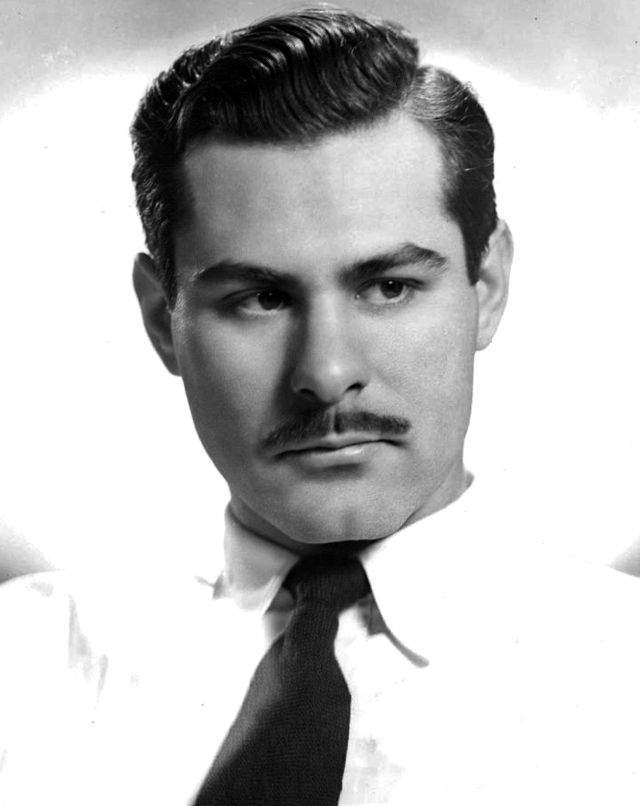
Doctor Koopman (Sam Wanamaker)
Played by Sam Wanamaker
An eccentric physics professor whose revolutionary time-travel theory becomes a reality through the protagonists' experiments. He acts as a mentor and moral counterpoint, warning against interference with history. In the end, he helps ensure the travelers abandon their plan.
- 🧪 Scientist
- 🧭 Eccentric
- 🧠 Visionary
- CR
Chris Rhodes (Paul Scherrer)
Played by Paul Scherrer
David's older brother, a Vietnam veteran whose death haunts him. In the altered timeline, he returns as a living presence, offering protection and support to his younger brother. He embodies the consequences and hope of changing history.
- 🪖 Veteran
- 🫶 Brother
- ❤️ Protective
- LW
Laura Whittaker (Catherine Hicks)
Played by Catherine Hicks
David's girlfriend, a determined and resourceful ally who seeks answers about Koopman's work. She becomes entwined in the time-travel mission, navigating danger and personal loss. She ultimately accepts a future with David.
- 💪 Determined
- ❤️ Partner
- 🧭 Adventurous
- LH
Lee Harvey Oswald (James DiStefano)
Played by James DiStefano
Lee Harvey Oswald is the assassin who carries out the fateful act in 1963 and frames David, intensifying the danger. He remains a predatory figure who shapes the timeline through his actions. His presence drives the suspense of the original moment.
- 🎯 Assassin
- 🧭 Cunning
- 🗡️ Dangerous
- FA
FBI Agent Landry (Wayne Tippit)
Played by Wayne Tippit
FBI Agent Landry pursues the time travelers, representing governmental oversight and the risk of arrest. He is skeptical of the travelers' stories and pushes for containment.
- 👮 Investigator
- 🧭 Skeptical
- 🧩 Bureaucratic
Where and When Is Running Against Time Set?
Running Against Time is set in Dallas, Texas, Texas School Book Depository and Parkland Memorial Hospital (1963, 1966, present day). Here is why the time and place matter to the story.
When
1963, 1966, present day
Primary events unfold during the 1963 JFK assassination in Dallas. The story also nods to Chris's death in 1966 Vietnam, shaping David's fixation with altering history. A present-day thread shows the consequences of their time-travel actions, including encounters with Koopman and LBJ.
Where
Dallas, Texas, Texas School Book Depository, Parkland Memorial Hospital
Most of the action centers on Dallas, Texas, with the key site being the Dallas School Book Depository on the day of the assassination. Parkland Memorial Hospital also features as the place where the aftermath unfolds. The city serves as the historical stage for the attempted alteration of a defining moment.
- 🗺️ Dallas
- 🕰️ JFK assassination
- ⏳ Time travel
What Are the Themes of Running Against Time?
3 ideas the story keeps returning to, among them Time Paradox, Grief and Obsession and History's Drift.
-
01
Time Paradox
Time travel in Running Against Time creates paradoxes that ripple through people and politics. The attempt to erase or alter a defining moment — Kennedy's assassination — shows how knowledge of the future can destabilize events, including the Vietnam War outcome. The film emphasizes that even well-intentioned changes can backfire in unpredictable ways. The narrative suggests history resists easy manipulation, revealing the cost of playing with fate.
-
02
Grief and Obsession
David Rhodes is driven by the grief of losing his older brother Chris in Vietnam in 1966. He becomes determined and resourceful as he uses time travel in a desperate bid to save Chris. His plan leads to being framed for murder by Oswald and a deadly confrontation.
-
03
History's Drift
History appears to have a direction, yet the characters discover that interfering with the past shifts outcomes in unpredictable ways. The film threads a tension between fixed moments and flexible timelines, culminating in an ending where the living brother remains alive due to altered choices. The act of warning LBJ about the war shows how knowledge of the future can redirect political decisions, sometimes with unintended harm.
What Kind of Film Is Running Against Time?
Tense in tone, with steady pacing and a complex story, going by the plot summary.
- Tone
- Tense
- Pacing
- Steady
- Story
- Complex
- Intensity
- Medium
- Ending
- Bittersweet
A tense and melancholic time-travel thriller that maintains a steady pace of danger and desperation as its characters risk everything to rewrite a painful past, ultimately finding a bittersweet and reflective resolution.
- tense
- anxious
- desperate
- hopeful
- melancholic
- reflective
- time travel
- changing destiny
- historical intervention
- grief and loss
Content notes: assassination, war casualty, car accident, framed for murder.
Where to Watch Running Against Time
. US availability and prices from JustWatch.
Streaming availability in the US, powered by