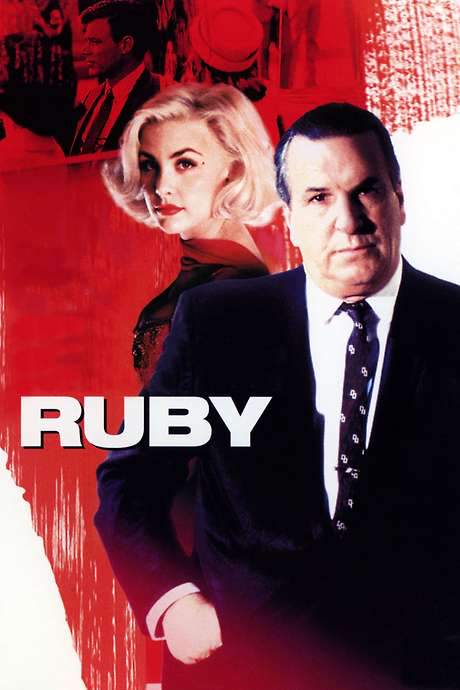
What Is Ruby About?
The premise of Ruby in 262 words, with nothing given away. The full story follows below.
In a smoky slice of 1960s Dallas, the city’s glittering neon signs hide a network of back‑room deals and whispered loyalties. The film paints a world where real history bleeds into stylized myth, letting the viewer feel the pulsing tension of a nation on the brink. Nightlife thrives in dimly lit clubs, while the streets outside whisper rumors of corruption, espionage, and a looming national tragedy that still feels distant yet inevitable.
At the heart of this restless landscape is Jack Ruby, the proprietor of the fading Carousel Club, a man whose ordinary business masks a deeper entanglement with the city’s shadow economy. Across the stage, Candy Cane—a daring dancer with a fierce presence—captures the audience’s attention, embodying both the allure and the danger of the underworld she inhabits. Their partnership, forged in the gritty reality of a struggling venue, quickly becomes a conduit to forces far beyond the club’s velvet curtains.
Together, they find themselves pulled toward a clandestine web that hints at the assassination of a president—a plot that blurs the line between documented fact and cinematic imagination. The story’s tone is relentlessly gritty, balancing historical gravitas with the visceral immediacy of street‑level survival. As Ruby and Candy Cane navigate the treacherous corridors of power, organized crime, and opaque government intrigue, the film sustains a mood of mounting suspense, suggesting that every step they take could ripple into the nation’s most infamous day. The atmosphere is one of restless curiosity, inviting the audience to wonder how far the reach of a city’s darkness can extend into the annals of history.
What Happens in Ruby?
The complete story of Ruby, from the first scene to the last, in 833 words (about 4 minutes). Spoilers throughout. Names in the text link to 3 cast member pages.
Spoilers ahead
Jack Ruby, Danny Aiello stands at the center of a sprawling, troubled world as the film opens with him revisiting a past he can’t quite place as real or imagined—a dream that lingers in the air. A shockingly brutal image follows: a suited man tortured, hung on a meat hook, and drained of blood, a graphic warning that hints at the danger simmering beneath Dallas’s surface.
In 1962 Dallas, Ruby runs the struggling Carousel Club, a once-thriving burlesque venue now showing signs of neglect. He endures a lackluster night as an aging dancer named Telephone Trixie performs, and he laments the club’s faltering fortunes. That same night, he makes a quiet, pragmatic link with two corrupt Dallas cops to supply narcotics, underscoring how deeply entangled he is in a corrupt ecosystem.
A young, battered woman named Sheryl Ann DuJean crosses Ruby’s path, hinting at a life wrecked by abuse. When she ends up alone in a diner near the bus station, Ruby offers her care without any sexual motive, and she steps into the apartment above the Carousel Club. The next day, Ruby speaks with Diego, Maurice Benard, the Cuban exile who works behind the bar, about the club’s bleak future. When a scheduled dancer cancels, Sheryl Ann—now stepping into a new chapter—volunteers to perform. Ruby, taken by her resolve, gives her a chance, and she takes on the stage name Candy Cane, delivering a bold and fearless routine that reinvigorates the crowd. A genuine friendship blossoms between them, built on honesty and shared risk.
Ruby’s past life resurfaces when his old mob associate, Louie Vitali, arrives with a dangerous proposition: take on a secret assignment in Cuba, originally meant for the man killed at the outset. Joe Cortese portrays Vitali, who pushes Ruby toward a life of higher stakes. He brings Candy along, and the trio heads to Havana. There they encounter Santos Alicante, an elderly mobster imprisoned since the Cuban Revolution. The mission is officially to extract Santos, but in private Vitali reveals a hidden order—to kill him with a disguised pistol-camera. Ruby disobeys, kills Vitali, and, with the help of guards, frees Santos. The escape by boat leads them to New Orleans, where Ruby secures new identity papers for Santos through an old contact, David Ferrie. Candy and Ruby part ways with Santos, who goes his own direction, and the lovers return to Dallas with a renewed sense of purpose.
Back at the club, Candy rises to become the main attraction, and business booms again. She endures a brutal intrusion from her abusive ex-husband Hank, whom Ruby defeats and warns to stay away. A mysterious visitor named Maxwell arrives, hinting at government ties and demanding that Ruby begin informing on Santos and his circle, providing a tape recorder as leverage. Ruby suspects Maxwell’s CIA connections, even as Maxwell remains evasive about his true role.
Ruby and Candy venture to Las Vegas, where Santos opens a flashy casino. At a lavish gala, President John F. Kennedy appears by helicopter, and Candy sits at the President’s table with Ferrie while Ruby records mob discussions about a plan to smuggle explosive cigars to Fidel Castro. Maxwell later meets Ruby outside Las Vegas and implies a larger target—perhaps another assassination—though he withholds specifics. Candy, meanwhile, is offered a singing contract backed by powerful figures and decides she will stay in Vegas, leaving Ruby to confront the danger alone. Ruby trains with firearms, while Ferrie and Diego head to New Orleans and approach Lee Harvey Oswald to recruit him for their schemes.
Back in Dallas, Ruby meets with Santos and Sam Giancana, who inform him that the original plan to target Castro has shifted to something bigger and more destructive. After he leaves, Giancana speaks with Maxwell, tightening the web of influence around Ruby. Candy returns abruptly, confessing she walked away from the Vegas job, and Ruby senses a broader conspiracy between the CIA and the mob. Proby, his boss, urges him to drop the matter.
On November 22, 1963, Dallas is shaken by the assassination of JFK. The film depicts Diego firing from the Texas School Book Depository with Oswald acting as his handler, while a second team fires the fatal shot from the grassy knoll. Ruby watches the catastrophe unfold on television and, when Ferrie visits the club, is warned to stay silent and fade away. But Ruby resolves to act. The following day, he fatally shoots Oswald during a police transfer, a moment that seals his fate in the public eye.
In prison, Ruby refuses to plead insanity or offer explanations, insisting he should be taken to Washington to testify. Maxwell’s watching presence lingers as he is convicted and sentenced to death. Ruby presses for a Congressional hearing, but the request is ignored. Candy visits him in prison, urging discretion for her own safety, while Ruby suspects he is being slowly poisoned by injections. He ultimately dies of cancer in 1967, his long-shot bid to testify before Congress left unrealized and unresolved.
Ruby Timeline: Every Key Event in Order
15 key events in the order they happen, from “Opening: Ruby's dreamlike recollection” to “The trial, imprisonment, and death”. 13 events name a place, across 7 locations.
- 1
Opening: Ruby's dreamlike recollection
The film opens with Jack Ruby reflecting on his past, describing it as a dream and questioning whether it truly happened. The narration establishes a subjective, memory-forward tone that colors the entire story. Viewers sense that what unfolds will blur fact and imagination.
- 2
A brutal warning materializes
A disturbing image appears: a man in a suit tortured, hung on a meat hook, and drained of blood. The scene serves as a brutal warning to an unseen target and signals the dangerous forces surrounding Ruby. The stark violence sets the film's mood of menace and conspiracy.
- 3
Carousel Club in 1962 Dallas
In 1962 Dallas, Ruby runs the Carousel Club, a burlesque venue that is slipping into decline. He observes an aging dancer with disappointment and frets about the club's future. The financial and reputational pressures frame Ruby's subsequent choices.
When:1962 Where:Dallas
- 4
Narcotics deal with corrupt cops
Ruby delivers narcotics to two corrupt Dallas police officers, illustrating his connection to criminal underworld networks. The arrangement exposes the complicity between law enforcement and organized crime that permeates the story. This alliance helps sustain the club and Ruby's power in the city.
When:1962 Where:Dallas
- 5
Sheryl Ann bears a bruise
Sheryl Ann DuJean is seen with a facial bruise, signaling domestic abuse and vulnerability. The moment hints at a life of hardship and the possibility of rescue or exploitation. It plants the seed for her later appearance in Ruby's orbit.
Where:Bus station diner
- 6
Ruby offers shelter and a new home
Ruby meets Sheryl Ann in a diner and offers her food and a place to stay, making clear that his concern is protective rather than romantic. She accepts and moves into the apartment above the Carousel Club. This marks the start of a tense, evolving partnership.
Where:Dallas
- 7
Candy Cane debuts and sparks a revival
When a dancer cancels, Sheryl Ann volunteers to perform as Candy Cane, delivering a bold, skilled routine. Ruby realizes she’s no stranger to the stage and could revitalize the club. A candid, honest friendship forms between Ruby and Candy as the crowds respond.
Where:Dallas
- 8
Vitali pushes a Cuba mission
Old mob associate Louie Vitali arrives with a secret job in Cuba that Ruby is expected to take over. Ruby invites Candy to come along, signaling a shift from local scheming to international crime. The trip to Havana sets the plot on a broader stage.
Where:Havana
- 9
In Havana, Vitali is killed and Santos is freed
In private, Vitali urges Ruby to kill Santos Alicante, but Ruby instead shoots Vitali and bribes guards to free Santos. Candy and Ruby escape by boat and make their way to New Orleans. The sequence pivots Ruby away from Vitali’s plan and into a new circle of survivors.
Where:Havana, then New Orleans
- 10
Santos secures papers; a return to Dallas
Ruby uses an old contact to obtain new identity papers for Santos, enabling him to disappear on his own path. Candy and Ruby return to Dallas, where Candy begins to emerge as the club’s main attraction. Santos goes his own way, separating from Ruby’s inner circle.
Where:New Orleans to Dallas
Show the other 5 events of Ruby Hide the last 5 events
- 11
Maxwell enters: pressure to inform
Back at the club, Maxwell visits Ruby and implies government ties, pressing him to start informing on Santos and his associates. The encounter heightens the sense of a CIA-mob conspiracy framing Ruby’s every move. The pressure intensifies as the political stakes rise.
Where:Dallas
- 12
Las Vegas: Kennedy, cigars, and conspiracy
Ruby and Candy travel to Las Vegas, where Santos has opened a casino and President John F. Kennedy attends a gala. Candy sits at the President’s table as Ferrie and others discuss plans to smuggle explosive cigars to Fidel Castro. Maxwell hints at an even bigger target, deepening the sense of looming danger.
When:1963 Where:Las Vegas
- 13
Oswald plot thickens; Oswald’s handler
Ferrie and Diego travel to New Orleans to recruit Lee Harvey Oswald, with Oswald acting as a handler for a larger operation. The scene ties local mob plots to national political violence and foreshadows the upcoming tragedy. Tension builds as Ruby’s world edges toward a historic conspiracy.
Where:New Orleans
- 14
JFK’s assassination and Oswald’s murder by Ruby
On November 22, 1963, JFK is assassinated in Dallas, with on-screen depictions of multiple shooters and Ruby watching the aftermath on television. Later, Ruby fatally shoots Oswald during a police transfer, a decision that seals his fate. The act intertwines personal vendetta with a national trauma.
When:Nov 22, 1963 Where:Dallas
- 15
The trial, imprisonment, and death
In prison, Ruby refuses to plead insanity or explain himself, insisting on testifying in Washington, which never comes. He is convicted and sentenced to death, and he dies of cancer in prison in 1967. His death closes a chapter on a life tangled in crime, myth, and political intrigue.
When:1967 Where:Dallas
Who Are the Main Characters in Ruby?
11 characters, among them Jack Ruby, Candy Cane and Santos Alicante: who each one is and the part they play in the story. Every profile links to the actor’s page.
-
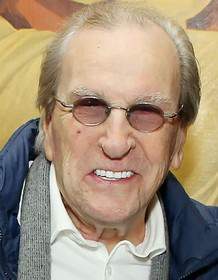
Jack Ruby
Played by Danny Aiello
Dallas nightclub owner who navigates mob ties and police corruption while trying to keep his business afloat. He becomes entangled in a larger conspiracy and ultimately shoots Oswald, facing a controversial legal battle and dying of cancer in prison in 1967.
- 💼 Mob ties
- 🔫 Violence
- 🎭 Private life
-

Candy Cane
Played by Sherilyn Fenn
Sheryl Ann DuJean, renamed Candy Cane, becomes the Carousel Club's bold new star who captivates the crowd with a fearless act and forms a bond with Ruby. Her rise is tempered by personal danger and an offer that unsettles her, reflecting resilience amid turmoil.
- 🎤 Performer
- 💔 Personal turmoil
-

Santos Alicante
Played by Marc Lawrence
An elderly mobster imprisoned since the 1959 Cuban Revolution, he is freed when Ruby overthrows Vitali. After escaping Cuba, he goes his own way, becoming a central figure the film ties to transnational mob networks.
- 🗺️ Cuban exile
- 💼 Mobster
-
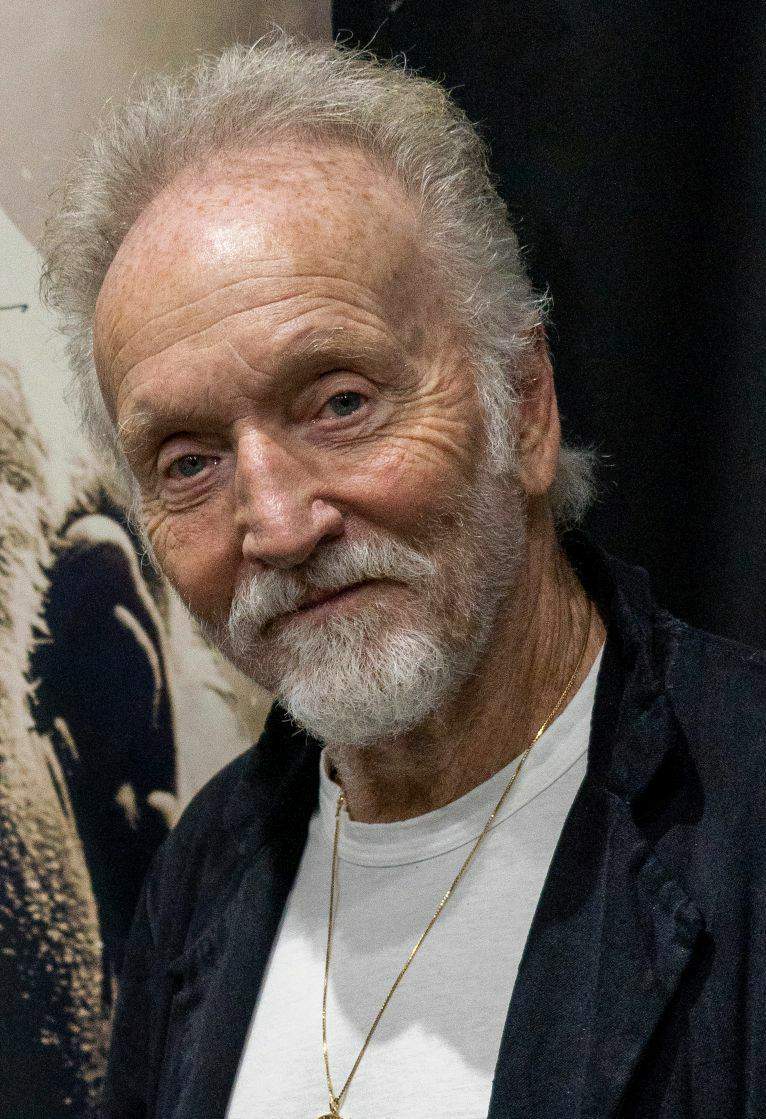
David Ferrie
Played by Tobin Bell
A Cuban exile contact in New Orleans who helps recruit Oswald for a Cuba job. He travels between New Orleans and Cuba, intersecting with mob and political plots tied to Oswald and the broader conspiracy stream.
- 🗽 Era figures
- 🪓 Plotter
- LH
Lee Harvey Oswald
Played by Willie Garson
The man connected to the Dallas assassination plot who is approached by Ferrie and Diego. He becomes a focal point in Ruby's attempts to uncover a wider conspiracy, culminating in the Dallas shootings.
- 🔫 Assassin
- 🗺 US history
- JF
John F. Kennedy
Played by Kevin Wiggins
President Kennedy, a central historical presence in the Vegas gala and Dallas events. His assassination anchors the film's political stakes and the sense of national crisis surrounding the era.
- 🎖 Leader
- 🏛 US politics
- LV
Louie Vitali
Played by Joe Cortese
Ruby's mob associate who urges him toward a Cuba mission, escalating the danger and pulling him deeper into the conspiracy.
- 💼 Mobster
- 🔪 Betrayal
- SG
Sam Giancana
Played by Carmine Caridi
A powerful mob boss who signals a shift in plans, warning that a Castro-related plot is off in favor of a larger operation, while coordinating with Maxwell behind the scenes.
- 💼 Mob boss
- 🕵️ Conspiracy
- P
Proby
Played by Richard C. Sarafian
Ruby's boss who urges him to drop the investigation, embodying institutional pressures and the politics of keeping quiet in the face of dangerous truths.
- 🏛 Authority
- 🧭 Pressure
- H
Hank
Played by Jeffrey Nordling
Candy Cane's abusive husband, a figure Ruby confronts and overpowers, illustrating personal danger amid the era's volatility.
- 💔 Domestic abuse
- 🥊 Violence
- D
Diego
Played by Maurice Benard
A Cuban exile bartender who anchors the Havana and New Orleans chapters, connecting Santos, Ferrie, and Oswald within a web of expatriate networks.
- 🌴 Cuban exile
- 🍹 Bartender
Where and When Is Ruby Set?
Ruby is set in Dallas, Havana, New Orleans and Las Vegas (1962–1967). Here is why the time and place matter to the story.
When
1962–1967
The narrative travels from 1962 Dallas to 1967, tracing Ruby's rise and the escalating web of mob and political intrigue. It intersects the Cuban exile network, the Kennedy era, and covert operations that hint at a larger conspiracy. The timeline culminates with JFK's assassination and Ruby's trial, imprisonment, and death.
Where
Dallas, Havana, New Orleans, Las Vegas
Dallas anchors the story as a gritty nightlife hub where Jack Ruby runs the Carousel Club amid mob influence and police corruption. Havana serves as the volatile nexus for the Cuba operation and Santos Alicante's case. New Orleans is a staging ground for Ferrie and Diego's recruitment of Oswald and the mob's broader schemes. Las Vegas provides a glittering backdrop where mob power intersects with national politics, highlighted by JFK's visit.
- 🌆 Dallas
- 🗺 Havana
- 🏛 New Orleans
- 🎰 Las Vegas
What Are the Themes of Ruby?
3 ideas the story keeps returning to, among them Conspiracy, Identity and Violence.
-
01
Conspiracy
Hidden alliances between mob figures and government agents drive the plot, suggesting hidden hands shaping public events. Maxwell's presence hints at covert surveillance and manipulation behind the scenes. Ruby's suspicions of a larger scheme drive much of the tension and moral ambiguity.
-
02
Identity
Ruby navigates a precarious public persona as a club owner and a figure stirred by unseen powers. Candy Cane's ascent contrasts with personal vulnerability, while Oswald and Ferrie blur lines between ally and instrument. The film explores how individuals adapt or resist in a dangerous, politicized world.
-
03
Violence
Brutality punctuates the narrative as a method of control, from the club's brutal jealous husband to the assassination and execution-style killings. The violence exposes how power operates through fear, coercion, and calculated risk. The characters justify extreme actions as necessities in a corrupt system.
What Kind of Film Is Ruby?
Dark in tone, with steady pacing and a complex story, going by the plot summary.
- Tone
- Dark
- Pacing
- Steady
- Story
- Complex
- Intensity
- High
- Ending
- Bleak
A dark and steadily paced crime thriller that plunges viewers into a gritty, paranoid world of political conspiracies and mob dealings, leading to a bleak and fatalistic conclusion.
- paranoid
- gritty
- conspiratorial
- oppressive
- fatalistic
- anxious
- political conspiracy
- historical fiction
- crime and corruption
- assassination plot
Content notes: graphic violence, torture, domestic abuse, political assassination.
Quiz
How well do you remember Ruby? Test yourself on the story.