
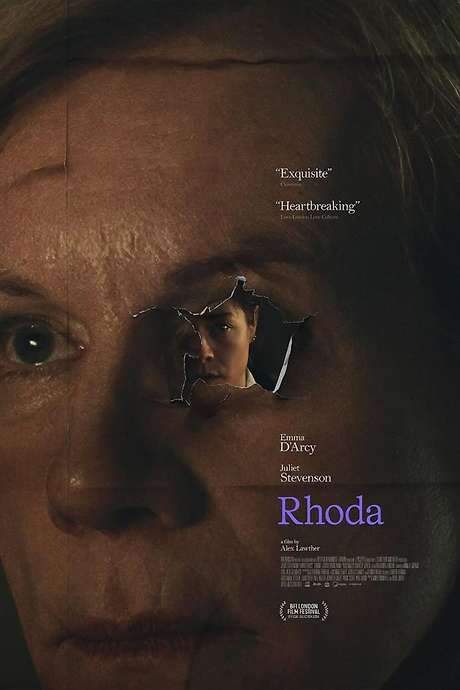
What Is Rhoda About?
The premise of Rhoda in 268 words, with nothing given away. The full story follows below.
In Rhoda, Rhoda Morgenstern returns to Manhattan after years of carefully maintained independence. Born in the Bronx and long accustomed to life in Minneapolis, she approaches the city with a mix of nostalgia, caution, and restless possibility. A self-made window dresser with a sharp tongue and tender streak, Rhoda has made solitude feel less like loneliness; now, homecoming means confronting the people, rooms, and expectations she left behind.
Family quickly supplies both warmth and friction. Her younger sister Brenda is warm but insecure, especially about her romantic prospects, while their parents, Ida and Martin, bring a dizzying combination of devotion, matchmaking ambitions, and traditional family rhythms. Ida’s affectionate interference and Martin’s quiet diplomacy make the Bronx household lively and occasionally overwhelming, while Brenda’s company grounds Rhoda in the familiar worries of work, dating, and self-confidence.
Into this mix comes Joe Gerard, a confident, divorced contractor and father whose easy charm contrasts with Rhoda’s guarded independence. Their immediate attraction suggests the possibility of a deeper bond, but years of living alone have made Rhoda cautious about sharing her space and routines. The prospect of taking in a lodger—and, more personally, of welcoming someone into her domestic life—threatens the equilibrium she has carefully built.
Against the vivid backdrop of Manhattan streets, Bronx apartments, neighborhood shops, and shifting family plans, the tone blends affectionate sitcom warmth with sharper moments of self-doubt. Rhoda’s work, friendships, family entanglements, and unexpected romantic possibilities keep the story buoyant and curious. The central question remains inviting rather than resolved: whether independence means preserving one’s distance or finding room for another person in both home and life.
What Happens in Rhoda?
The complete story of Rhoda, from the first scene to the last, in 253 words (about 1 minute). Spoilers throughout. Names in the text link to 2 cast member pages.
Spoilers ahead
Rhoda Morgenstern, played by Juliet Stevenson, is a New York native who returns to Manhattan for a vacation after spending years living in Minneapolis. While visiting her sister Brenda, Rhoda meets and falls instantly in love with Joe Gerard, a handsome divorcé. Their whirlwind romance leads to a decision for Rhoda to move back to New York permanently, initially staying with her overbearing but loving parents in the Bronx.
The couple’s relationship progresses quickly, leading to a high-profile wedding that became a television phenomenon of the 1970s. The ceremony is most remembered for a chaotic moment where Rhoda is forced to take the subway in her full wedding attire, dashing through the streets to reach her parents’ apartment. Following the wedding, the story follows the couple’s married life as Rhoda balances her personal life with her professional ambitions as a window dresser.
However, the marriage eventually hits a rocky patch. In a dramatic turn, Joe reveals he only married Rhoda because he felt pressured, leading to a painful separation. This plot twist was highly controversial among viewers, resulting in a significant decline in ratings. Following the divorce, Rhoda focuses on her career, eventually transitioning to a job at the Doyle Costume Company.
Throughout the series, the show explores Rhoda’s journey as a thirty-something divorcée, her evolving relationship with her family, and her struggle for independence. The series concludes after five seasons, documenting the various romantic and professional trials of Rhoda and those around her, including the supporting role of Emma D’Arcy as Louis.
Rhoda Timeline: Every Key Event in Order
15 key events in the order they happen, from “Rhoda Morgenstern is born” to “CBS cancels Rhoda”. 13 events name a place, across 6 locations.
- 1
Rhoda Morgenstern is born
Rhoda Morgenstern is born to Ida and Martin Morgenstern in the Bronx, New York. In her famous opening narration, she humorously claims she has 'always felt responsible for World War II' and that the first thing she remembers liking that liked her back was food. These details establish her self-deprecating comedic voice and her Bronx upbringing.
When:December 1941 Where:The Bronx, New York City
- 2
Rhoda leaves home for Minneapolis
A high school graduate who attended art school (where her entrance exam was famously on a book of matches), Rhoda decides to move out of her parents' house at the age of 24. Her mother still refers to this as the time she 'ran away from home.' Rhoda eventually runs to Minneapolis, joking that she figured she would 'keep better' somewhere cold.
When:When Rhoda was 24 (circa 1965) Where:Minneapolis
- 3
The pilot episode 'Joe' makes history
The pilot airs on CBS on Monday at 9:30 p.m. and immediately becomes the first television series ever to achieve a number-one Nielsen rating for its premiere episode. It defeats ABC's ratings juggernaut Monday Night Football, which that week aired a Notre Dame versus Georgia Tech college football game. The debut instantly establishes Rhoda as a phenomenon.
When:September 9, 1974, 9:30 p.m. Where:CBS network, nationwide broadcast
- 4
Rhoda returns to New York and meets Joe
Rhoda travels from her home in Minneapolis to New York City for a two-week vacation, staying with her younger sister Brenda, a bank teller suffering from low self-esteem and dating problems. Following Brenda's prompting, Rhoda meets Joe Gerard, a handsome divorcé who owns a wrecking company and has a ten-year-old son named Donny. The two develop an instant attraction and date nightly for the remainder of her vacation.
When:September 1974 Where:New York City
- 5
Rhoda decides to stay in New York
After an argument about their feelings for each other, Joe asks Rhoda to stay in New York City, and she agrees. She initially moves in with Brenda at 332 E. 64th Street, but the two soon realize the small studio apartment cannot hold them both. Rhoda moves in with her parents in the Bronx, where overbearing Ida babies her until she notices Rhoda sliding into a rut in her childhood bedroom and forces her to move out for her own good.
Where:Manhattan and the Bronx, New York City
- 6
'Pop Goes the Question': Rhoda wants marriage
In the series' sixth episode, an insecure Rhoda asks Joe where their relationship is heading, and his response is to invite her to move in with him. After careful thought and consultation with her sister and father, Rhoda accepts, but within minutes of moving in she decides she would rather be married than live together out of wedlock. After some hesitation, Joe agrees, and a wedding is planned.
When:Season 1, Episode 6 Where:New York City
- 7
Rhoda and Joe wed in a record-breaking special
Eight weeks into the series, Rhoda and Joe marry in a special hour-long episode that breaks several television viewership records. Watched by more than 52 million Americans, it becomes the highest-rated television episode of the 1970s and the second-most-watched episode of all time at that point, behind only the 1953 I Love Lucy birth of Little Ricky. The episode features guest appearances by Mary Richards, Lou Grant, Murray Slaughter, Georgette Franklin, and Phyllis Lindstrom from The Mary Tyler Moore Show. Hundreds of fan 'wedding parties' are held across the country, and CBS studios are inundated with wedding gifts.
When:October 28, 1974 Where:Ida and Martin's apartment, the Bronx, New York City
- 8
Phyllis's blunder and the wedding-day dash
Phyllis, uninvited but flown in anyway, is given the job of picking up Rhoda at Brenda's apartment and driving her to the Bronx ceremony, but the self-absorbed and forgetful Phyllis neglects her promise. Forced to take the subway, Rhoda dashes through the streets of Manhattan and the Bronx fully regaled in her wedding dress and veil, in one of the most memorable moments in series television history. A shocked Ida refuses Phyllis's profuse apologies, and only sweet Georgette forgives her.
When:October 28, 1974 Where:Manhattan and the Bronx, New York City
- 9
Newlywed life and 'Windows by Rhoda'
For the remainder of the first and second seasons, the show focuses on Rhoda and Joe's new married life as they move into a penthouse suite in the same building as Brenda. Rhoda advances her career as a window dresser by opening a small business called 'Windows by Rhoda' with her old high school friend Myrna Morgenstein, using her maiden name professionally and her married name personally. The series becomes a massive Monday-night hit, staying near the top of the ratings and even faring better than its parent show, The Mary Tyler Moore Show.
When:Seasons 1–2 (1974–1976) Where:New York City
- 10
Joe walks out
In a particularly dramatic scene in the first episode of season three, Joe leaves Rhoda, and the two remain separated for the entire season, with David Groh appearing in only nine episodes. A few weeks later they agree to see a marriage counselor, where Joe reveals to a stunned Rhoda that he never wanted to be married and only did so because she pressured him after inviting her to live with him. Ida and Martin are absent for the remainder of the season, explained as traveling across the country in an RV.
When:Season 3 premiere (1976) Where:New York City
Show the other 5 events of Rhoda Hide the last 5 events
- 11
Fans revolt and ratings tumble
The separation plot provokes an overwhelmingly negative and hostile response, with CBS inundated by thousands of angry letters and both 'Rhoda' and 'Joe' receiving sympathy cards and letters of condolence. David Groh later reports receiving hate mail for as much as a year after the season ended. The backlash translates into a steep ratings decline, with the show falling from #7 to #25 for the 1976–77 season.
When:1976–77 season
- 12
Joe's farewell and Rhoda's single life
As the season progresses, Joe is seen less frequently, and the couple never reconciles, with his final appearance coming in the eighteenth installment, 'The Ultimatum.' Rhoda trades apartments with downstairs neighbor Gary Levy, a jean-store owner who becomes a platonic friend, while lounge singer Johnny Venture becomes an occasional suitor she begrudgingly tolerates. In the same episode in which Joe makes his final appearance, Mary Tyler Moore makes her last guest appearance as Mary Richards.
When:Later Season 3 (1977) Where:New York City
- 13
Divorce finalized and a career change
For the fourth season, Rhoda re-emerges with a new, slimmer look, as Valerie Harper had controversially dropped 40 pounds on a liquid protein diet before the season began. Rhoda's divorce is finalized and she resumes using her maiden name 'Morgenstern' full time, with Joe never mentioned again. Seeking a career transition, she finds a job at the Doyle Costume Company working for the gruff Jack Doyle. The season ranks #21, higher than season three, but the show never regains the popularity of its early years.
When:Season 4 (1977–78) Where:New York City
- 14
Season five family shake-ups
Ida and Martin go through a separation of their own, with Martin heading off to Florida to 'find himself' before returning, at which point Ida insists on being wooed back through dating and romantic rituals. Brenda and Benny Goodwin get engaged, with their wedding planned for later in the season, though it never comes to pass. A new coworker, Tina Molinari, joins Rhoda and Jack at the costume shop, while Gary Levy is written out after moving to Chicago.
When:Season 5 (begins September 1978) Where:New York City
- 15
CBS cancels Rhoda
Moved to Saturday nights opposite NBC's popular police series CHiPs, the show's ratings decline drastically, and it ends its final season ranked #95 out of 114 shows. CBS cancels Rhoda in December 1978, midway through its fifth season, leaving four episodes unaired, though they later air in syndication. Within a few months, CBS also cancels its Saturday-night companion Good Times.
When:December 1978
Who Are the Main Characters in Rhoda?
2 characters, among them Rhoda Morgenstern (Juliet Stevenson) and Louis (Emma D'Arcy): who each one is and the part they play in the story. Every profile links to the actor’s page.
- RM
Rhoda Morgenstern (Juliet Stevenson)
Played by Juliet Stevenson
Rhoda is a strong-willed New York native navigating the complexities of love, family, and career. Her journey from a whirlwind romance to self-discovery showcases her resilience and determination. Rhoda's character evolves significantly through the series as she seeks to balance her personal desires with societal pressures.
- 👩❤️👨 Romance
- 💪 Resilience
- L(
Louis (Emma D'Arcy)
Played by Emma D'Arcy
Louis serves as a supportive figure in Rhoda's life, embodying the evolving dynamics of friendship and love. As Rhoda navigates her trials, Louis provides a contrasting perspective on relationships and independence. The character adds depth to Rhoda's story, emphasizing the importance of having a supportive network.
- 🤝 Friendship
- 💔 Support
Where and When Is Rhoda Set?
Rhoda is set in New York, Manhattan and Bronx (1970s). Here is why the time and place matter to the story.
When
1970s
The 1970s was a time of significant social and cultural change in America, marked by the rise of feminism and evolving family dynamics. This decade saw an increase in television viewership, with popular shows reflecting the complexities of modern life, including marriage, career aspirations, and women's independence. Rhoda's storyline resonates with the struggles and triumphs of women during this transformative era.
Where
New York, Manhattan, Bronx
New York City, known for its vibrant energy and iconic skyline, serves as the backdrop for Rhoda's journey. Manhattan is particularly noted for its bustling streets and cultural diversity, making it a fitting setting for Rhoda's whirlwind romance and personal growth. The Bronx, where Rhoda stays with her family, is known for its rich history and close-knit communities, highlighting the contrasts in Rhoda's life.
- 🏙️ City
- 🏢 Urban
What Are the Themes of Rhoda?
2 ideas the story keeps returning to, among them Love & Heartbreak and Career & Independence.
-
01
Love & Heartbreak
The theme of love and heartbreak is central to Rhoda's narrative, showcasing the complexities of romantic relationships. Rhoda's initial joy in her whirlwind romance quickly turns to sorrow as pressures and misunderstandings lead to separation. This theme reflects the challenges many face in balancing love with personal ambition and societal expectations.
-
02
Career & Independence
Rhoda's journey highlights the struggle for independence and success in a professional realm, notably through her work as a window dresser. After her divorce, she shifts her focus to her career, symbolizing the empowerment and self-discovery of women in the 1970s. The theme illustrates the importance of personal ambition and identity beyond relationships.
What Kind of Film Is Rhoda?
Bittersweet in tone, with steady pacing and a moderate story, going by the plot summary.
- Tone
- Bittersweet
- Pacing
- Steady
- Story
- Moderate
- Intensity
- Medium
- Ending
- Mixed
A warm, witty New York comedy-drama whose brisk sitcom energy is tempered by the ache of a sudden divorce, following a woman as she rebuilds independence, career, and family ties.
- bittersweet
- witty
- warm
- heartfelt
- nostalgic
- melancholy
- romance
- marriage and divorce
- personal independence
- self discovery
Quiz
How well do you remember Rhoda? Test yourself on the story.
