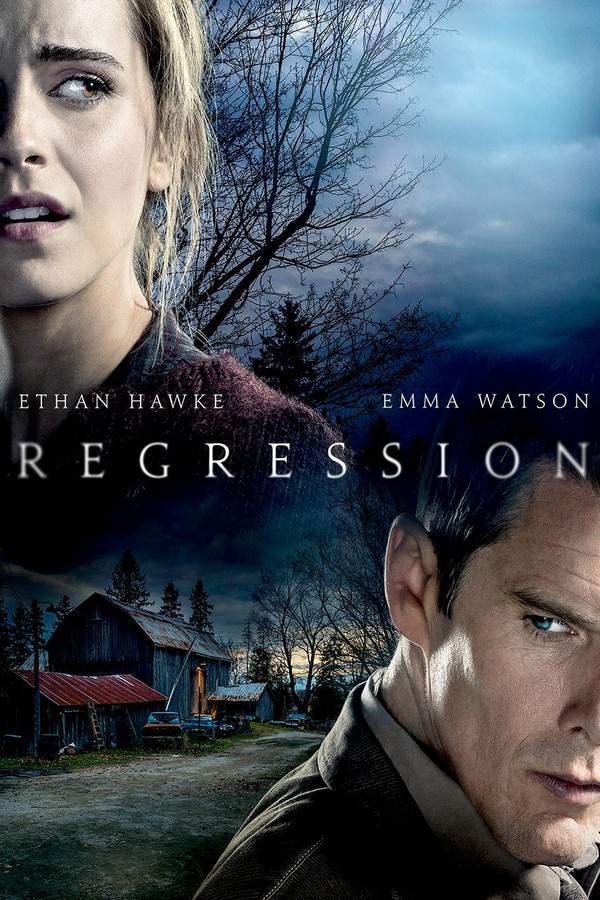
Regression 2016


Directed by
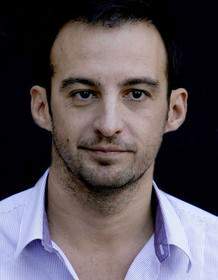
Alejandro Amenábar
Made by

Weinstein Company, The
Where to Watch Regression
See current US streaming, rental, and purchase options for Regression (2016) via JustWatch.

Lionsgate+ Amazon Channels
HD
Fawesome
HD
Hoopla
SD
Fandango at Home Free
HD
Plex
HD
Plex Channel
HD
The Roku Channel
HD
Tubi TV
SD
VIX
HD
Apple TV Store
HD Fandango At Home
HD
Google Play Movies
SD
YouTube
SD Streaming availability powered by 
Regression Plot Summary
Read the complete plot summary and ending explained for Regression (2016). From turning points to emotional moments, uncover what really happened and why it matters.
In Hoyer, Minnesota, in 1990, Detective Bruce Kenner investigates the case of John Gray, who admits to sexually abusing his 17-year-old daughter Angela Gray Emma Watson but has no recollection of the abuse. They seek the help of Professor Kenneth Raines David Thewlis to use recovered-memory therapy on John Gray to retrieve his memories, and come to suspect that their colleague Detective George Nesbitt is involved. They detain him but fail to find evidence against him. Detectives suspect a satanic cult is involved because of Angela’s testimony, in which Angela says that she was abused by people in masks and someone took pictures of it.
Bruce and Kenneth meet Angela’s estranged brother Roy Gray in Pittsburgh, Pennsylvania to inquire about why he left the house. Using the regression technique on him, he recalls hooded figures entering his room while he was young. Bruce and Kenneth suspect Roy’s grandmother, Rose Gray Dale Dickey has some involvement but find nothing after a search of her house.
Meanwhile, Bruce begins having nightmares involving satanic rituals. Angela tells him that the cult is out to kill her as she has shown her demonic mark to him and that he is in danger as well. She tells him that her mother received miscellaneous calls and saw strange figures staring at her in the street before she herself had an accident. Bruce starts to experience the same things and his nightmares increase in intensity.
Rose jumps from the window of her house after seeing ghostly figures, injuring herself. Bruce meets Angela in the church’s cemetery to reassure her and after an emotional outburst, she kisses him. Shocked, Bruce leaves her there and returns to his home. He sees a soup advertisement on the street and recognizes the woman in it as the one he sees in his nightmares. He concludes that his imagination has run away with him. He tells Kenneth that all these past memories are induced by therapy and the whole situation is just the result of mass hysteria. Though the professor is initially resistant to the idea, he too comes to suspect that these memories were not real.
Bruce is attacked by two hooded figures who finally reveal themselves as George and their colleague, Farrell. George was seeking revenge after Bruce detained him as a child molester and ruined his career. Bruce offers to forget the whole situation if George tells him everything he knows. After George reveals things, Bruce confronts Angela about her abuse and she insists she told the truth. Finally Bruce concludes that she was fabricating everything from the beginning as she wanted to escape from her family, whom she believes to be responsible for her mother’s death. She wanted to elope with George, as they had a sexual relationship for some time, but he refused to elope with a minor. Angela accused her father in order to escape the house. When Bruce confronts her, she tells him that no one is going to believe him, especially if she tells them that they kissed in the cemetery. Bruce tells John everything but John decides to take the blame and pleads guilty in order to rescue Angela and hopes that she will forgive him one day for being a bad father.
Many cases like this were reported before the satanic abuse hysteria faded, and that there was never any proof that such ritualistic abuse by organized Satanic cults existed (presumably referring to assertions made during the Satanic panic in the U.S. and other countries in the 1980s and early 1990s).
Regression Timeline
Follow the complete movie timeline of Regression (2016) with every major event in chronological order. Great for understanding complex plots and story progression.
John Gray confesses; Kenner begins investigation
John Gray admits to sexually abusing his 17-year-old daughter Angela but cannot recall the details. Detective Bruce Kenner launches a formal investigation and enlists Professor Kenneth Raines to attempt memory recovery through therapy. As the sessions unfold, the team begins to suspect their colleague Detective George Nesbitt may be involved.
Recovered-memory therapy begins; cult suspicion grows
Raines uses recovered-memory therapy on John Gray to retrieve buried memories. Angela's testimony and the pattern of abuse lead the investigators to entertain the possibility of a satanic cult behind the crimes. The prospect of a wider conspiracy deepens the tension as they press for leads and evidence.
Detention of Nesbitt; no evidence found
The detectives detain their colleague George Nesbitt on suspicion of involvement in the abuse, but their search yields no solid evidence. The lack of proof leaves the case in a fragile limbo, even as memories returned in therapy raise questions about reliability.
Trip to Pittsburgh to question Roy Gray
Bruce and Kenneth travel to Pittsburgh, Pennsylvania to question Roy Gray, Angela's estranged brother, about the family history. Roy, under regression, recalls hooded figures entering his room as a child. The investigators begin to suspect Roy's grandmother, Rose Gray, though their search earns little evidence.
Search of Rose Gray's house yields nothing
Roy's memories hint at a broader family connection, so Bruce and Kenneth search Rose Gray's house for clues. They find nothing conclusive and no proof of Rose's involvement emerges. The case remains unsettled as memories clash with the lack of physical evidence.
Nightmares begin; Angela warns of cult danger
Bruce begins having nightmares involving satanic rituals, while Angela tells him the cult is out to kill her and that he is in danger. She also notes that her mother received strange calls and saw figures in the street before an accident. Bruce starts to experience the same phenomena, and the nightmares grow more intense.
Rose Gray's jump underscores danger
Rose Gray jumps from the window of her house after seeing ghostly figures, heightening the sense of danger surrounding the family. The event marks a turning point as fear permeates their lives and the investigation intensifies.
Cemetery meeting; Angela kisses Bruce
Bruce meets Angela in the church's cemetery to reassure her, and after an emotional outburst, she kisses him. He is unsettled by the moment, leaves in shock, and begins to question the reliability of the memories surfacing through therapy.
Soup ad reveals nightmare figure; memories questioned
While wandering the street, Bruce sees a soup advertisement and recognizes the woman pictured as the figure from his nightmares. This realization deepens his doubt about the reality of these memories and fuels concerns that therapy may have induced the visions. Kenneth's confidence in recovered memories also begins to waver.
Kenneth questions recovered memories
The professor who was initially supportive of recovered-memory therapy starts to doubt its validity. He begins to suspect that the memories retrieved through therapy may not be real, casting doubt on the entire case. This shift foreshadows a broader skepticism about the satanic-abuse narrative.
Hooded figures attack Bruce; reveal themselves
Bruce is attacked by two hooded figures who turn out to be George Nesbitt and Farrell, seeking revenge for the past actions that derailed their lives. The confrontation exposes personal vendettas linked to the investigation and confirms that not all revelations are genuine.
Bruce confronts Angela; she reveals motive
Bruce confronts Angela about the abuse and she insists she spoke truthfully. She reveals a motive to escape her family and previously had a relationship with George, but he refused to elope with a minor. The confrontation shatters Bruce's certainty about the case and exposes complex personal dynamics.
John Gray takes the blame; pleads guilty
John Gray decides to take the blame to protect Angela and pleads guilty, hoping for mercy and a chance at reunion with his daughter. His sacrifice is framed as an act of bad faith to salvage Angela's future and perhaps soothe her guilt.
Epilogue: hysteria fades; no proof of cults
The film closes with a somber note that many similar cases appeared before the Satanic panic faded, and there was never any proof that ritualistic abuse by organized Satanic cults existed. The societal memory lingers in skepticism, illustrating how mass hysteria can shape perceptions of truth.
Regression Characters
Explore all characters from Regression (2016). Get detailed profiles with their roles, arcs, and key relationships explained.
Professor Kenneth Raines (David Thewlis)
A university professor who oversees recovered-memory therapy. He grows skeptical of the retrieved memories as Bruce questions their authenticity, revealing ethical tensions in the therapeutic process. His evolving doubt mirrors the film's broader critique of memory under pressure and mass hysteria.
Rose Gray (Dale Dickey)
Roy Gray's grandmother, depicted as distressed by the alleged events and prone to fracture under the strain of fear. She experiences frightening visions and takes drastic actions, underscoring how the case unsettles even the older generations. Her behavior illustrates the reach of the investigation into family life.
Angela Gray (Emma Watson)
The 17-year-old at the center of the case, whose testimony triggers the hunt for a Satanic cult. She reveals a volatile mixture of fear and manipulation, and her later statements imply a desire to escape her home life. Her relationship with a colleague adds complexity to the narrative and its revelations.
Regression Settings
Learn where and when Regression (2016) takes place. Explore the film’s settings, era, and how they shape the narrative.
Time period
1990
The events unfold in 1990, amid debates over recovered-memory therapy and the era's Satanic Panic. The atmosphere reflects a time of uneasy public fear about ritual abuse and the reliability of memory. The narrative follows weeks of interviews, therapy sessions, and confrontations that shape the case.
Location
Hoyer, Minnesota, Pittsburgh, Pennsylvania
Hoyer, Minnesota serves as the quiet Midwestern backdrop where the initial allegations unfold. The close-knit town amplifies fear and rumor as investigators pursue a tangled web of memories and motives. The investigation then shifts to Pittsburgh, Pennsylvania, highlighting the contrast between a sleepy town and a larger urban setting as clues emerge.
Regression Themes
Discover the main themes in Regression (2016). Analyze the deeper meanings, emotional layers, and social commentary behind the film.
🧠
Memory vs Reality
Recovered-memory therapy is used to retrieve past abuse, but the film shows memories can be unreliable or planted by suggestion. As evidence is questioned, Bruce and Kenneth struggle to distinguish truth from fabrication. The tension reveals how memory can be shaped by therapy, fear, and social pressure.
🕯️
Satanic Panic
Angela's testimony ignites fears of a ritualistic cult, fueling a climate of suspicion. The story uses the era's panicked atmosphere to question whether such rituals actually existed or were a societal fever. The pursuit of the cult becomes a proxy for anxiety and scapegoating.
⚖️
Truth and Guilt
Characters wrestle with what they owe to others and to themselves as guilt shifts between victim, accuser, and family. John's willingness to bear the blame to protect Angela highlights the moral complexities of the case. The film ultimately interrogates who is responsible for the consequences of false memories and accusations.

Coming soon on iOS and Android
The Plot Explained Mobile App
From blockbusters to hidden gems — dive into movie stories anytime, anywhere. Save your favorites, discover plots faster, and never miss a twist again.
Sign up to be the first to know when we launch. Your email stays private — always.
Explore the mobile appRegression Ending Explained
Unravel the ending of Regression (2016) with our detailed explanation. Understand the final scenes, character fates, and unresolved questions.
The ending of Regression reveals a dark and complex web of manipulation and misdirection. Angela, who initially appears to be a victim, turns out to have orchestrated her own story of abuse to seek revenge against her father, John, who she resents for his alcoholism. Her motivations are rooted in her desire to escape her troubled teenage life, and she cleverly manipulates those around her—planting false memories and influencing the investigation. This manipulation even extends to Detective Kenner, who becomes entangled in her web of lies, partly through her kiss, which was actually a ploy to blackmail him and ensure his silence. Meanwhile, Angela’s father, John, despite being accused and tortured by the allegations, chooses to plead guilty and take responsibility for crimes he did not commit. His decision reflects his growth and willingness to atone, even through wrongful imprisonment. The film also explores the fragility of perception and the power of hysteria, exemplified by Kenner’s nightmares that reveal how easily ideas can be implanted through suggestion. The overall message critiques the hysteria of Satanic panic and regression therapy, illustrating how easily people can be led astray by disturbing stories and collective fear. The film ultimately leaves viewers questioning what is real and emphasizes that stories, especially the gruesome and salacious ones, are often accepted more readily than the truth. The ending underscores the idea that manipulation, falsehoods, and hysteria can cause even the most tragic and disturbing situations to be accepted as fact, revealing a disturbing truth about human psychology and societal hysteria.
Regression Spoiler-Free Summary
Discover the spoiler-free summary of Regression (2016). Get a concise overview without any spoilers.
In the quiet suburbs of 1990s Minnesota, a community is shaken when a young woman’s accusations set off an unsettling investigation. The case draws Bruce Kenner, a seasoned detective whose methodical instincts clash with the murky undercurrents of memory and doubt. As he delves deeper, the atmosphere thickens with a blend of small‑town familiarity and an almost palpable sense of something hidden just out of sight, hinting at secrets that might stretch far beyond the immediate neighborhood.
To navigate the tangled testimonies, the authorities enlist Kenneth Raines, a respected psychologist known for his work with recovered memories. His clinical precision offers a stark contrast to Kenner’s gritty streetwise approach, creating a dynamic partnership where each must question the reliability of what they think they know. Together they confront a landscape where personal histories intertwine with broader cultural anxieties, evoking the lingering echoes of a nationwide panic that once gripped the nation’s collective imagination.
The film balances a brooding, introspective tone with moments of unsettling tension, inviting the audience to ponder how trauma, belief, and the power of suggestion can reshape reality. Shadows linger in familiar places—churches, cemeteries, even everyday advertisements—suggesting that the true horror may lie not in overt acts but in the fragile boundaries of perception itself. As the investigation unfolds, both Kenner and Raines are forced to confront the possibility that the truth they seek is more elusive than any single confession, setting the stage for a psychological journey that questions how we remember, how we trust, and what lies concealed beneath the surface of ordinary life.
Featured on this page

What's After the Movie?
Not sure whether to stay after the credits? Find out!
Check out our other apps:

SAT Sphere
Build confidence for the Digital SAT.

Mori Atlas
Discover wild places worth protecting.

Luntero
Search smarter for a home in Amsterdam.

Plot Explained
Unravel movie endings and hidden clues.

Pokechamp
Dive into Pokémon data and battle logic.

Driving Theory
Get ready for your European theory test.

Movie Dust
Plan your next cinema trip with ease.

Musemap
Find art and culture as you travel.

Selkobase
Compare credentials before committing.

Local Manual
Turn an unfamiliar country into practical next steps.

Lernavi
Compare school systems before your next move.

GymRoam
Find a workout stop wherever your plans take you.
Explore Our Movie Platform
New Movie Releases (2026)
Famous Movie Actors
Top Film Production Studios
Movie Plot Summaries & Endings
Major Movie Awards & Winners
Best Concert Films & Music Documentaries
Movie Collections and Curated Lists
© 2026 What's After the Movie. All rights reserved.
Privacy Policy