What Is Ratcatcher About?
The premise of Ratcatcher in 279 words, with nothing given away. The full story follows below.
In the early 1970s, Glasgow is a city caught between its industrial past and a restless push toward change. The streets are lined with housing estates that are still under construction, while the slow‑moving canals wind through neighborhoods like quiet arteries, offering both a reminder of decay and a hidden place of escape. The atmosphere is heavy with grime and the promise of new beginnings, yet it retains an intimacy that lets the smallest moments feel monumental.
James, a twelve‑year‑old navigating the turbulence of a shifting home life, feels a persistent disconnection from his family and the world around him. Burdened by an unnamed secret, he spends much of his time by the water, where the canal becomes a liminal space—part refuge, part mirror for his inner turmoil. The city’s muted colors and the ever‑present sound of water create a backdrop for his quiet search for meaning and belonging.
In this environment, he forms tentative ties with two peers who share his yearning for connection. Margaret Anne is a thoughtful girl whose presence offers a gentle counterpoint to the harshness of their surroundings, while Kenny brings a restless energy that pushes the trio toward small acts of imagination. Their friendship blooms beside the canal, turning ordinary encounters into fleeting chances for solidarity and the brief illusion of freedom.
The film’s tone balances stark realism with dream‑like interludes, letting the viewer feel the weight of everyday hardships while hinting at moments of airy possibility. Through muted cinematography and a patient, observational style, the story invites curiosity about how these young lives might navigate the lingering shadows of their community and the quiet hopes that linger just beyond the water’s edge.
What Happens in Ratcatcher?
The complete story of Ratcatcher, from the first scene to the last, in 801 words (about 3 minutes). Spoilers throughout.
Spoilers ahead
Glasgow, 1973 forms the backdrop for a quiet, aching coming-of-age story centered on James, a boy who carries the weight of a friend’s death and the feeling that he’s failed to protect him. When Ryan Quinn is dragged into rough horseplay by the canal and drowns, James finds himself blamed by association, even as he believes his inaction went unnoticed. Ryan’s family is rehoused, and on leaving day his mother gives James a pair of brown sandals she had bought for Ryan the day he died—a small, stubborn reminder of loss that he carries with him.
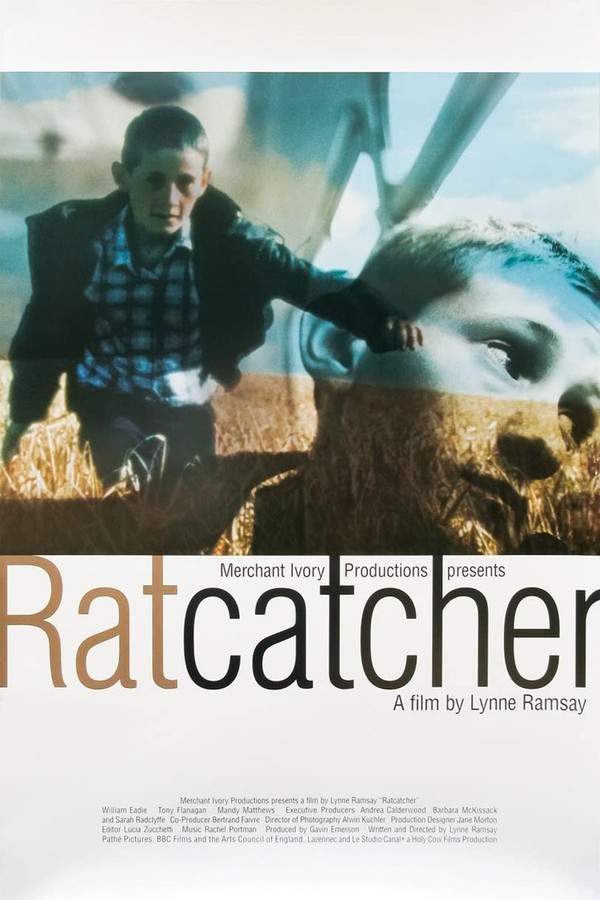
The film follows James as he navigates a landscape of broken promises and fragile hopes. He escapes the constraints of his home by stepping onto a bus that stops at the edge of the city, where a new housing estate is under construction. There, in front of a half-built kitchen window, he beholds a wheat field stretching to the horizon—an expansive, wind-swept vision of freedom that feels almost otherworldly. He climbs through the window and allows himself a moment of blissful escape, a breath of possibility that clashes with the grit of his daily life.
A crucial part of James’s journey is his friendship with Margaret Anne, a girl who stands beside him as they both seek shelter from the harshness around them. When her glasses are thrown into the canal by the local gang, James steps in to help, and from that act of solidarity grows a tender companionship. They become a refuge for one another: James finds solace away from his home’s tensions, and Margaret Anne gains a friend who won’t turn away. Their bond becomes a quiet beacon amid the noise of a neighborhood that often feels indifferent or even hostile.
The story also follows Kenny, a friend of James, who receives a pet mouse for his birthday. The gang’s cruelty is vivid as they fling the mouse around to make it “fly,” and then Kenny’s impulse to set the mouse free in a fantastical way—tying its tail to a balloon so it seems to float toward the moon. The surreal image of the mouse joining a colony of others on the moon serves as a poignant, almost magical counterpoint to the real world’s brutality. Later, tragedy intrudes again when Kenny falls into the canal, and James’s father rescues him, earning a brief moment of local heroism and a medal, even as his own drinking problem continues to shadow the family.
The film does not shy away from the darker edges of life. One night, James’s father returns home drunk and strikes James’s mother, a scene that unsettles the family but is followed by a fragile reconciliation and a dance that hints at the complexity of love and pain coexisting within a single household. James’s connection to Margaret Anne deepens when he visits her home, and the two share a moment that feels intimate and rare in a setting where danger and contempt lurk just beyond the door.
Even as an Army presence arrives to clean up the neighborhood’s litter, James gains a clear sense that the cycle of deprivation and danger may never truly end. A failed attempt to recover Margaret Anne’s glasses from the canal underscores the persistence of risk, and when he witnesses her being abused again by the local gang, it deepens his sense of helplessness and guilt. Kenny’s taunting—reminding him of Ryan’s death—pushes James to a breaking point, and he throws himself into the canal, a response that underscores the film’s haunting meditation on blame, despair, and the lure of watery forgetfulness.
The narrative then moves toward a quiet, almost pastoral turn as James’s family moves to a new neighborhood. They carry their furniture across the earlier wheat field, a symbolic passage from confinement to possibility, and James walks behind the group with a subtle, almost hopeful smile that hints at a new, uncertain future.
In the final, haunting image, the closing credits pair with a slow-motion moment of James drowning in the murky canal water. It’s a stark reminder of the innocence that can be lost, the line between escape and danger, and the enduring ache of a child growing up amid neglect and momentary glimpses of beauty.
This tale blends stark realism with fleeting, dreamlike visions—the wheat field as a beacon of freedom, the moonlit mouse as a fable of escape, and the canal as a recurring thread tying together guilt, memory, and the fragile hope that a child clings to in the face of a world that often feels worlds away from safety and fairness. The result is a somber, empathetic portrait of adolescence under siege, told with restraint, tenderness, and a careful eye for the small details that reveal the larger truth about life in a community where change comes slowly—and sometimes never.
Ratcatcher Timeline: Every Key Event in Order
13 key events in the order they happen, from “Ryan Quinn's death and its aftermath” to “Closing credits and James' fate”. 13 events name a place, across 11 locations.
- 1
Ryan Quinn's death and its aftermath
On a Glasgow day in 1973, Ryan Quinn is forced to go to visit his imprisoned father but runs off to play with James. The two boys meet at the canal, where rough horseplay ends in Ryan's drowning. James carries guilt for not raising the alarm, and Ryan's family is re-housed after the tragedy; on leaving day, Ryan's mother gives James the brown sandals she had bought for her son.
When:1973 Where:Canal, Glasgow
- 2
James confronts guilt and the hostile environment
James grapples with his guilt and the sense that his inaction left his friend at risk. He confronts the bleak, unchanging environment of his neighbourhood and wonders whether anything will ever shift. The event lingers with him as he tries to find a way forward.
When:1973 Where:Glasgow inner-city
- 3
Escape to the edge of town and the field
Seeking escape, James rides a bus to the end of its route on the Glaswegian outskirts. He explores a half-built housing estate and stands before a kitchen window, marveling at a wheat field that seems to reach the horizon. He climbs through the window and steps into the freedom of that imagined world.
When:1973 Where:Outskirts of Glasgow
- 4
New friendship with Margaret Anne
James befriends Margaret Anne and helps her after her glasses are thrown into the canal by the local gang. They find comfort in each other's company, sharing a sense of relief from the abuse surrounding them. Their growing friendship becomes a small refuge amid the harsh surroundings.
When:1973 Where:Margaret Anne's neighbourhood
- 5
Kenny's mouse and the moon
Kenny receives a pet mouse, which the gang torment by tossing it in the air. When Kenny ties the mouse's tail to a balloon, the animal rises and eventually joins a moon-bound colony of mice. The scene blends dark mischief with a surreal flight of imagination.
When:1973 Where:Neighborhood
- 6
Kenny rescued by James' father
Kenny later falls into the canal and is rescued by James' father, who briefly becomes a local hero and is awarded a medal for bravery. The triumph is tinged by the father's ongoing heavy drinking and the fragile stability of the family.
When:1973 Where:Canal, Glasgow
- 7
Family violence and reconciliation
One night the father comes home drunk and strikes James' mother, witnessed by the family. The incident strains the household, but the parents eventually reconcile and share a quiet moment of dance together.
When:1973 Where:James' home
- 8
James visits Margaret Anne's home
James visits her home and the two lie in bed, seeking comfort and closeness in a bleak world. Their bond shows a tender counterpoint to the street violence and neglect surrounding them.
When:1973 Where:Margaret Anne's home
- 9
Army cleans the neighbourhood
An army arrives to clear the rubbish from the neighbourhood, a symbolic but incomplete attempt to tidy the area. James realises that such changes won't alter the fundamental conditions of his life. He remains haunted by the underlying sense of stagnation.
When:1973 Where:Gritty Glasgow neighbourhood
- 10
Margaret Anne's glasses and ongoing abuse
After failing to recover Margaret Anne's glasses from the canal, James witnesses the gang's abuse of her again. He feels guilty and powerless as he watches the violence return. The cycle of intimidation continues to shape his choices.
When:1973 Where:Canal area
Show the other 3 events of Ratcatcher Hide the last 3 events
- 11
James confronts the pressure and dives in
Kenny taunts James about causing Ryan's death, pushing him to a breaking point. Overwhelmed, James dives into the canal, seeking escape or oblivion. The act marks a grim turning point in his outlook.
When:1973 Where:Glasgow canal
- 12
Moving to a new neighbourhood
A brief scene shows the family moving to a new neighbourhood, carrying furniture across the wheat field James had discovered earlier. James walks behind the movers and stops, then smiles at the camera as the field frames their new start.
When:1973 Where:Across the wheat field
- 13
Closing credits and James' fate
The closing credits show James drowning in slow motion in the murky canal water, underscoring the permanence of his escalation. The final image leaves his fate ambiguous, reflecting the film's unresolved cycle of trauma.
When:End credits Where:Canal, Glasgow
Who Are the Main Characters in Ratcatcher?
6 characters, among them James, Ryan Quinn and Margaret Anne: who each one is and the part they play in the story.
- J
James
A sensitive boy grappling with guilt over his friend Ryan's death. He seeks solace by exploring new places and forming a fragile friendship with Margaret Anne, revealing a compassionate yet troubled nature. His inaction and contemplation mirror the harsh, indifferent world around him.
- 🧭 Reflective
- 💔 Guilty
- 🌾 Yearning for escape
- RQ
Ryan Quinn
James's friend whose impulsive decision to play near the canal leads to a tragic drowning. The event haunts James and underscores the fragile line between play and danger in their environment. His family's upheaval after the tragedy adds to the sense of a community under strain.
- 💔 Tragic loss
- 👪 Family-oriented
- 🕊️ Innocence
- MA
Margaret Anne
A girl who becomes James's confidante and ally as they navigate abuse and loneliness. She offers warmth and vulnerability, helping James momentarily escape his surroundings. Her resilience and trust in James highlight a fragile bond formed in hardship.
- 💗 Compassionate
- ⚠️ Vulnerable
- 🪞 Empathetic
- K
Kenny
James's friend who holds a vivid but troubling presence in the gang’s world. He can be teasing and cruel, yet the episode with the mouse reveals a capacity for mischief and a longing for belonging. He becomes a foil to James’s gentler nature.
- 🤹♂️ Mischievous
- 🐭 Animal-loving
- 🎈 Playful
- JF
James's Father
A heavy-drinking man who briefly becomes a local hero after rescuing Kenny, illustrating a mix of courage and volatility. His alcoholism and moments of tenderness complicate the family dynamics, showing both flaws and care.
- 🥇 Bravery
- 🍺 Alcoholic
- 🧔 Protective
- JM
James's Mother
A resilient presence who endures domestic volatility and supports her son through guilt and confusion. She shares moments of reconciliation with James's father and provides emotional grounding amid chaos.
- 💞 Resilient
- 🧍♀️ Strong-willed
- 🫶 Caring
Where and When Is Ratcatcher Set?
Ratcatcher is set in Glasgow and Scotland (1973). Here is why the time and place matter to the story.
When
1973
The early 1970s Glasgow setting reflects urban redevelopment and social strain. Wealth disparity and rough living conditions frame James's fragile sense of safety and belonging. The year anchors moments of bureaucratic indifference that shape the children's experience.
Where
Glasgow, Scotland
Set in Glasgow in 1973, the film grounds its story in a rough, working-class urban landscape. The action moves through crowded streets, a canal, and a half-built housing estate that symbolize neglect and uncertainty. A distant field of wheat becomes a rare, almost magical escape from the claustrophobic environment.
- 🏙️ Industrial city
- 👥 Working-class neighborhoods
- 🗺️ Canal-side areas
What Are the Themes of Ratcatcher?
3 ideas the story keeps returning to, among them Guilt, Escape and Abuse & Neglect.
-
01
Guilt
James carries a heavy burden of guilt after Ryan's death and his inaction to raise the alarm. The trauma threads through his interactions with family and friends, coloring his view of the world. The film traces how guilt informs his attempts to find meaning amid a harsh environment.
-
02
Escape
The field of wheat becomes a symbol of freedom beyond the concrete blocks and canals. James discovers a momentary refuge by venturing into the open space, a stark contrast to his restricted life. The escape is fragile and tinged with the memory of the tragedy that surrounds him.
-
03
Abuse & Neglect
The story exposes a community where violence and neglect ripple through families and neighborhoods. James witnesses direct abuse and the gang's intimidation, highlighting the precariousness of his world. These conditions shape behavior and leave lasting emotional scars.
What Kind of Film Is Ratcatcher?
Melancholic in tone, with slow pacing and a moderate story, going by the plot summary.
- Tone
- Melancholic
- Pacing
- Slow
- Story
- Moderate
- Intensity
- Medium
- Ending
- Bittersweet
A quietly aching, slow-paced portrait of childhood set against urban decay, blending stark realism with fleeting moments of dreamlike escape to create a deeply melancholic and tender viewing experience.
- melancholic
- somber
- dreamlike
- lonely
- gritty
- tender
- coming of age
- poverty and neglect
- grief and guilt
- childhood friendship
Content notes: accidental death of a child, domestic violence, child endangerment, grief and loss, bullying.
Quiz
How well do you remember Ratcatcher? Test yourself on the story.