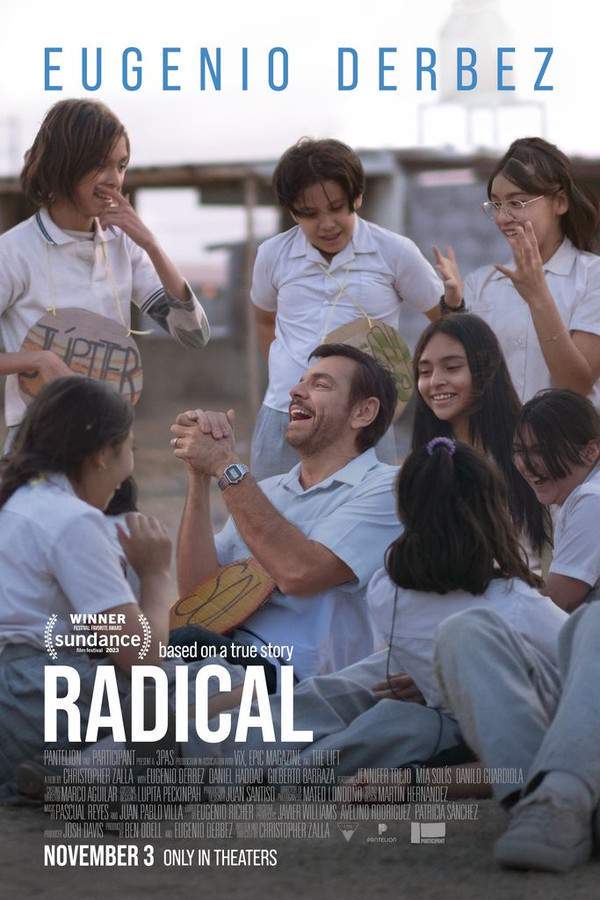
What Is Radical About?
The premise of Radical in 308 words, with nothing given away. The full story and the ending follow below.
In the dusty streets of a Mexican border town, a weary elementary school stands as a quiet witness to daily hardship. When Sergio Juarèz Correa steps into the worn‑down halls of José Urbina López Elementary, he carries more than lesson plans; he arrives with a conviction that learning can be a doorway out of survival. The school’s cracked walls and thin supply cabinets hint at a system strained by scarcity, yet the classroom’s emptiness brims with the untapped curiosity of children who have learned to navigate uncertainty.
Sergio’s methods quickly set him apart. Eschewing rote drills, he introduces hands‑on experiments that turn ordinary objects into springboards for imagination, inviting his sixth‑graders to explore concepts through play, discussion, and visual storytelling. The atmosphere shifts from quiet compliance to tentative excitement, as students begin to see knowledge as something they can shape rather than something that is simply handed to them. This unorthodox style creates a space where questions are valued as much as answers, and where the act of learning feels alive.
The school’s principal, Chucho, watches the experiment with a mix of caution and intrigue. Their dynamic becomes a quiet negotiation between tradition and innovation, each respecting the other’s dedication to the children’s future. Among the pupils, a bright mind named Paloma shines as a subtle emblem of the promise that blossoms when encouragement meets ambition. Together, the teacher, the principal, and the students navigate a fragile but hopeful landscape, where the rhythm of daily life is punctuated by moments of shared discovery.
Through its sun‑baked classrooms and the resonant hum of a community on the edge, the film paints a portrait of resilience, curiosity, and the quiet power of mentorship. It invites viewers to wonder how far a single teacher’s belief can travel when it meets the yearning of young minds eager to rewrite their own stories.
What Happens in Radical?
The complete story of Radical, from the first scene to the last, in 976 words (about 4 minutes). Spoilers throughout. Names in the text link to 4 cast member pages.
Spoilers ahead
Sergio Juarèz Correa arrives in 2011 at the Jose Urbina López Elementary in Matamoros, stepping into a school that is badly run and caught in the crossfire of cartel violence. The building is worn, resources are scarce, and many students face an uphill battle to even stay engaged as they contend with the daily reality of crime surrounding them. The atmosphere is tense, and the pulse of hope is faint, but the new teacher carries a conviction that there can be more to education than survival.
The classrooms are a snapshot of broader neglect: limited materials, scarce computers, and facilities that crumble under the weight of years without adequate investment. Students struggle with some of the worst academic scores in Mexico, and a system that seems to prize rote testing over real understanding only deepens that struggle. Teachers, under pressure to hit standardized benchmarks, often lose sight of curiosity and wonder, leaving many kids feeling that learning is something done to them rather than something they can own. In the middle of this, the school’s principal, Chucho, keeps a wary eye on the progress—or the lack of it—while trying to keep the door open for anything that might spark growth.
Against this backdrop, the arrival of Sergio brings a wave of unexpected energy. He surprises his sixth graders with an unorthodox approach to learning that places discovery at the center of the classroom. To foster creative thinking and problem solving, he reshapes the physical space and the way problems are framed—turning desks upside down to imagine lifeboats in an ocean, each boat holding a specific number of people. This tactile, visual exercise becomes a bridge to deeper mathematical reasoning, pushing students to articulate their reasoning and defend their conclusions. The change isn’t instant, but the mood shifts as students become more engaged, more willing to experiment, and more capable of thinking through complex ideas together. The principal’s initial bafflement gives way to curiosity as he watches these sixth graders reach answers they hadn’t thought possible.
As the weeks unfold, the impact becomes harder to ignore. Independent thinking takes root, and the class begins to demonstrate gains in core subjects that had previously seemed out of reach. The energy in the room shifts from compliance to collaboration, and the students start to believe that their circumstances don’t have to define their future. Even those who were most skeptical begin to recognize the value of a learning process that invites questions, rather than simply delivering solutions. The positive momentum grows, and for a time, what seemed like a fragile experiment starts to feel like a viable new way of teaching. The school community begins to see possibility where there was once only struggle, and the shift is clear to those who observe daily life in the classroom.
But innovation attracts scrutiny. A visiting administrator arrives to evaluate the program, and the conversations in the room turn to the boundaries of accepted pedagogy. The discussion touches on morality and difficult topics that the students raise—most notably abortion—sparking a clash between progressive, student-led inquiry and traditional expectations. The administration’s concerns threaten to derail Sergio’s approach, and the tension exposes the fault lines between reform and caution in a system under pressure. In this moment, the role of the Administrador becomes pivotal, as the clash tests whether bold educational experiments can survive the glare of official oversight.
The strain reaches a breaking point when tragedy strikes: the death of Nico, a member of Sergio’s class. The loss hits the teacher hard, and he withdraws from his responsibilities, his confidence shaken by the trauma and the sense of responsibility for a student who did not survive. The classroom, once a place of forward motion, slides back toward the old routines that had once been their only anchor, underscoring how delicate progress can be in the face of such heartbreak.
Concern for him grows, and [Chucho] watches as the educator grapples with grief and doubt. He visits Sergio at home, urging him not to give up on the sixth graders who still need him, reminding him of the work ahead and the potential that remains within the students. The conversation marks a turning point, a reminder that support from within the school community can rekindle a teacher’s resolve even after a devastating loss.
The story pivots toward Paloma, a gifted student who embodies the promise of what could be achieved with the right encouragement. Sergio reconnects with her and pushes for Papa Paloma to support Paloma’s dreams of becoming an astronaut. With the father’s backing—and the student’s own drive—the narrative blazes toward a hopeful horizon. Paloma’s determination becomes a beacon in the room, illustrating how ambition, when nurtured, can open doors that poverty and violence would prefer to close. The bond between teacher, student, and family highlights the transformative power of belief in a young mind.
As the academic year moves toward its climax, Sergio returns to the classroom with renewed purpose, urging his students to remain steadfast in their belief in themselves despite the pressures of standardized testing. The class channels the lessons they have learned—creative problem solving, collaboration, and the courage to voice their ideas—and they respond with a performance that reflects more than just grades. The end of the year showcases a future-oriented arc: some students go on to build paths in private enterprise and find opportunities in Big Tech companies across the United States, a testament to what can be achieved when education embraces creativity, independence, and resilience.
In the end, the film offers a measured, hopeful portrait of education’s potential to transcend poverty and violence when guided by a teacher willing to challenge the status quo and a class willing to dream bigger than their circumstances. It is a story about resilience, mentorship, and the quiet power of learning to change lives—even in the most difficult of environments.
Radical Timeline: Every Key Event in Order
12 key events in the order they happen, from “Sergio arrives at Jose Urbina Lopez Elementary” to “Long-term outcomes”. 11 events name a place, across 6 locations.
- 1
Sergio arrives at Jose Urbina Lopez Elementary
A new teacher, Sergio Juarèz Correa, joins the poorly-run Jose Urbina Lopez Elementary in Matamoros in 2011. The school sits amid cartel violence and deteriorating facilities, with students suffering from an environment that stifles learning. Sergio faces the challenge of engaging students in a system that lacks resources.
When:2011 Where:Jose Urbina Lopez Elementary, Matamoros
- 2
Harsh environment and lack of resources
The school is plagued by drug cartel violence and severe underfunding. Classrooms lack computers, up-to-date materials, and motivation to improve beyond mandated tests. Sergio begins to see that traditional teaching is failing his students.
When:2011 Where:Jose Urbina Lopez Elementary, Matamoros
- 3
Unorthodox teaching begins
Sergio surprises his sixth graders with a creative approach that turns the classroom upside down to visualize problem solving, such as imagining lifeboats with limited capacity. The method aims to foster independent thinking and collaborative reasoning. The students respond with curiosity and engagement, unlike their prior classes.
When:2011 Where:Classroom, Jose Urbina Lopez Elementary
- 4
Principal Chucho's initial bafflement
When the principal Chucho checks on the class, he is as baffled as the students by the new method. He struggles to grasp how this approach leads to learning outcomes. The scene highlights the mismatch between policy and classroom reality.
When:2011 Where:Classroom, Jose Urbina Lopez Elementary
- 5
Positive impact grows
Continued effort yields measurable gains as students demonstrate improved understanding and confidence. The class becomes more engaged through student-led activities and independent thinking. Chucho starts to see the potential of this approach, shifting from skepticism to cautious support.
When:2011-2012 Where:Classroom, Jose Urbina Lopez Elementary
- 6
Clash with a visiting administrator
A visiting administrator challenges the class because of their discussions on morality, notably abortion. Sergio defends the new learning method and the students’ right to engage with complex issues. The tension culminates in him being sidelined by the school administration.
When:Late 2011 Where:School administration offices / classroom
- 7
Sergio withdraws after Nico's death
Sergio withdraws from his teaching duties following the death of Nico, a student in his class. The loss deeply affects the remaining students and marks a turning point in the classroom's trajectory. With the teacher sidelined, the class begins to regress academically.
When:2012 Where:Home/School, Matamoros
- 8
Chucho offers encouragement
Concerned about his former students, Principal Chucho visits Sergio at his home to urge him not to give up on the sixth graders. The visit marks a moment of personal renewal for Sergio. It rekindles a sense of responsibility toward the class.
When:2012 Where:Sergio's home, Matamoros
- 9
Reconnection with Paloma
Sergio reconnects with Paloma, a gifted student, and helps convince her father to let her pursue her dream of becoming an astronaut. The moment re-energizes Sergio’s belief in his students’ potential. Paloma’s ambition becomes a personal beacon for him.
When:2012 Where:Paloma's home / family home
- 10
End-of-year return and motivation
With the academic year nearing its end, Sergio rushes back to the school during standardized testing to encourage his class to keep believing. The students respond to his renewed encouragement with a determined focus on the exams. The scene caps his journey of rediscovering his mission as a teacher.
When:End of academic year Where:Jose Urbina Lopez Elementary, Matamoros
- 11
Students excel on tests
The class channels their renewed confidence and performs well on the standardized tests. Their success demonstrates that independent thought and engagement can translate into academic achievement. Some students begin to find new opportunities after school.
When:End of academic year Where:Classroom, Jose Urbina Lopez Elementary
- 12
Long-term outcomes
Several students go on to succeed in private business or work for major technology companies in the United States, illustrating the lasting impact of Sergio’s teaching approach. The film suggests that empowering students to think for themselves can open doors beyond the immediate environment. The story closes on a note of potential and complexity.
When:Post-school
Who Are the Main Characters in Radical?
4 characters, among them Sergio Juarèz Correa, Paloma and Nico: who each one is and the part they play in the story. 3 of them link to the actor’s page.
- SJ
Sergio Juarèz Correa
A new, unorthodox teacher who arrives at Jose Urbina Lopez Elementary. He champions independent thinking and uses creative methods to engage sixth graders, transforming the classroom with unconventional activities. His optimism fuels student confidence, but he withdraws after a traumatic event, re-emerging to urge his class to persevere.
- 👨🏫 Education
- 💡 Innovation
- 🧭 Creative thinking
- P
Paloma
Played by Jennifer Trejo
A bright sixth-grade student who becomes a focal point for Sergio’s renewed teaching energy. She embodies curiosity and a dream of space exploration, serving as a catalyst for the class to believe in themselves and reach beyond their circumstances.
- 🧑🚀 Student
- 🧠 Ambition
- 💫 Inspiration
- N
Nico
Played by Danilo Guardiola
One of Sergio’s students whose death marks a turning point in the story. Nico’s loss triggers Sergio’s doubt and eventual withdrawal, illustrating how grief can derail progress in a fragile classroom.
- 🧒 Student
- 💔 Loss
- 🕊️ Memory
-
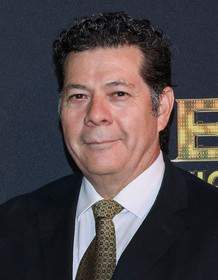
Chucho
Played by Enoc Leaño
The school administrator and principal who checks on Sergio’s class. Initially baffled by the new method, he grows supportive as the positive results become evident, reflecting a possible shift in institutional attitude toward innovative teaching.
- 🏢 Administrator
- 🗣️ Authority
- 🧭 Change
Where and When Is Radical Set?
Radical is set in Jose Urbina Lopez Elementary and Matamoros (2011). Here is why the time and place matter to the story.
When
2011
The story unfolds in 2011, a year when cartel-related violence and social upheaval affected daily life in parts of Mexico. Schools faced pressure to lift test scores under government mandates, often at the expense of meaningful learning. The period frames a clash between traditional schooling and innovative approaches.
Where
Jose Urbina Lopez Elementary, Matamoros
Jose Urbina Lopez Elementary sits in a densely populated, under-resourced neighborhood of Matamoros. The building reflects the challenges in a region marred by poverty and cartel violence, with limited facilities and few computers to aid learning. The setting highlights the contrast between the students' potential and the constraints of their environment.
- 🏫 School
- 🇲🇽 Mexico
- 🧭 Urban environment
What Are the Themes of Radical?
4 ideas the story keeps returning to, among them Innovation, Violence & Safety and Education & Aspiration.
-
01
Innovation
Sergio rejects rote teaching and embraces independent thinking, encouraging students to solve problems creatively. He uses unconventional visuals and activities to make math meaningful even with scarce resources. The approach aims to unlock potential beyond test scores and inspires active engagement in class.
-
02
Violence & Safety
The school operates in a context of cartel violence that threatens students and disrupts learning. This external danger tests teachers' resolve and students' sense of security, shaping daily life and decisions. Traumatic events, including the death of a student, destabilize progress and deepen the stakes of education.
-
03
Education & Aspiration
Learning is portrayed as a vehicle for social ascent, with teachers and classmates pushing beyond the barrio’s limits. Sergio’s methods aim to prepare students for futures beyond poverty, including opportunities in tech and business. Paloma’s dream of becoming an astronaut embodies the transformative power of education.
-
04
Morality & Debate
The open discussion of ethical issues, such as abortion, becomes a catalyst for resistance from administrators and a test of students’ voices. Sergio defends student-led inquiry, challenging constraints while navigating institutional boundaries. The moral conversations catalyze character development and highlight the tension between authority and conscience.
How Does Radical End?
The last act of Radical and what it means, in 241 words. The ending lands as happy. Big spoilers: read the plot summary first if you have not seen it.
The final act, in full
The film “Radical” concludes on a powerful note that underscores the transformative impact of genuine education and hope. After a challenging journey through the impoverished town of Matamoros, where violence, poverty, and limited resources prevail, we see the extraordinary change brought about by teacher Sergio Juarez. Despite the bleak environment, Juarez’s unconventional and passionate teaching methods ignite curiosity and belief in his students, especially Paloma, a girl whose dreams of becoming an astronaut are initially dismissed by her father. When Paloma’s world seems to be collapsing after Nico’s tragic death in a gang war, Juarez’s unwavering faith in her sparks renewed hope. Together, they visit Paloma’s home, where her mother’s hard work and her father’s regret come into focus. Juarez recognizes Paloma’s innate intelligence and creativity, seen in the books and the handmade telescope she crafted. This moment signifies not only her potential to transcend her difficult circumstances but also the importance of nurturing dreams amid hardship. In the end, Paloma’s remarkable success—scoring the highest in national exams and receiving a scholarship—serves as a testament to the power of education that believes in potential rather than limitations. The closing scenes celebrate the profound idea that hope, perseverance, and a dedicated teacher can inspire a future where even the most disadvantaged children can soar beyond their circumstances. The film leaves viewers with a heartfelt reminder that education is a tool for change, capable of transforming lives and fostering dreams against all odds.
What Kind of Film Is Radical?
Hopeful in tone, with steady pacing and a straightforward story, going by the plot summary.
- Tone
- Hopeful
- Pacing
- Steady
- Story
- Straightforward
- Intensity
- Medium
- Ending
- Happy
An inspiring and hopeful drama that balances the tense reality of poverty and cartel violence with the uplifting journey of a teacher transforming his students' lives through unconventional methods, marked by both tragedy and triumph.
- hopeful
- inspiring
- uplifting
- contemplative
- tense
- tragic
- education
- mentorship
- poverty
- social inequality
Content notes: gun violence, murder, child endangerment, tragic death of a child.
Quiz
How well do you remember Radical? Test yourself on the story.
Where to Watch Radical
Stream it on Amazon Prime Video and VIX, or rent or buy it from Amazon Video. US availability and prices from JustWatch.
 Amazon Prime Video
  Amazon Prime Video with Ads
  VIX
VIX Rent or buy 1

Streaming availability in the US, powered by