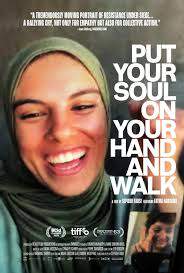
What Is Put Your Soul on Your Hand and Walk About?
The premise of Put Your Soul on Your Hand and Walk in 311 words, with nothing given away. The full story follows below.
Sepideh Farsi, an Iranian filmmaker living in exile in Paris, sets out to make a film about life in Gaza during an ongoing war. Her attempt to travel there through Cairo cannot proceed, so the project takes an unexpected form: a series of intimate video calls with Fatma Hassona, a 25-year-old Palestinian photojournalist and poet who remains in the territory. Their conversations become a fragile link across distance, allowing Farsi to encounter the people and places shaping life under siege without the polished remove of conventional war reporting.
Hassona shares everyday reality from a small family apartment in northern Gaza, where ordinary routines unfold against harsh living conditions, widespread devastation, and the ever-present threat of violence. Her perspective is both personal and deeply rooted in her community: she describes the strain on civilians, the resilience around her, and the experiences of young people affected by conflict. Her own photography, particularly focused on children, adds another visual language to the story, while news reports situate their exchanges within the international response to the wider humanitarian crisis.
Visually, the film has a raw immediacy, weaving unsteady digital connections with Hassona’s images and broadcast footage. The technical fragility of the calls becomes part of the texture, emphasizing how far apart the two women are while also underscoring the closeness their conversation creates. Farsi listens and questions; Hassona moves between reporter, witness, and poet, making each exchange feel candid, tender, and reflective.
Throughout, the documentary keeps its attention on mood, memory, and human connection rather than spectacle. Their dialogue reveals the weight of daily life under siege, the emotional burden of bearing witness, and the determination to preserve ordinary moments of warmth and creativity. At its heart, the exchange offers an intimate portrait of a community holding onto life and one another with remarkable resilience, presenting Gaza through one young woman’s compassionate and perceptive voice.
What Happens in Put Your Soul on Your Hand and Walk?
The complete story of Put Your Soul on Your Hand and Walk, from the first scene to the last, in 241 words (about 1 minute). Spoilers throughout. Names in the text link to 2 cast member pages.
Spoilers ahead
In early 2024, Iranian filmmaker Sepideh Farsi, living in exile in Paris, travels to Cairo with the intention of crossing into Gaza to document the ongoing war. However, due to the Israeli blockade of the Gaza Strip, she is unable to enter Rafah.
Unable to enter the territory, Farsi instead documents the conflict through a series of video call interviews with Fatima Hassouna, a photojournalist living with her family in a small apartment in devastated Northern Gaza. Despite frequent interruptions caused by poor internet connectivity, Hassouna describes the brutal living conditions and the heavy civilian casualties, including the loss of her own relatives. These conversations are woven together with news reports and Hassouna’s own photography, which focuses heavily on the suffering of children.
As the war intensifies toward the end of 2024, Hassouna continues to record the aerial bombings and military operations near her home in Gaza City, eventually leading to the death of friends and her displacement to a nearby shelter.
On April 15, 2025, Farsi shares the news that their film has been selected for the 2025 Cannes Film Festival. During the call, Hassouna expresses a deep desire to attend the world premiere, and Farsi asks for her passport. Tragically, the following morning, Fatima Hassouna and nine of her relatives are killed in their sleep by an Israeli airstrike. By May 2025, the OHCHR confirmed that 211 journalists in Gaza had been killed since October 7, including 28 women.
Put Your Soul on Your Hand and Walk Timeline: Every Key Event in Order
14 key events in the order they happen, from “Outbreak of the Gaza War” to “World Premiere at Cannes”. 11 events name a place, across 6 locations.
- 1
Outbreak of the Gaza War
The war in Gaza has been ongoing since 7 October 2023, devastating the Gaza Strip and its civilian population. The conflict forms the backdrop for all the events documented in the film and motivates the efforts to bear witness to its human toll.
When:7 October 2023 Where:Gaza Strip
- 2
Farsi Travels to Cairo
Sepideh Farsi, an Iranian filmmaker living in exile in Paris, travels to Cairo in early 2024. Her goal is to cross the Egyptian-Palestinian border and personally document the ongoing war in Gaza on the ground.
When:Early 2024 Where:Cairo, Egypt
- 3
Denied Entry at Rafah
Farsi is prevented from entering Rafah due to the blockade of the Gaza Strip imposed by Israel. Unable to physically enter Gaza, she is forced to find an alternative way to document the conflict.
When:Early 2024 Where:Rafah Border Crossing
- 4
Video Call Interviews Begin
Blocked from entering Gaza, Farsi instead documents the war remotely through video call interviews with photojournalist Fatima Hassouna. Hassouna lives alongside her family in a small apartment in the devastated Northern Gaza.
When:Early 2024 Where:Northern Gaza
- 5
Testimonies of Life Under War
During the calls, Hassouna describes the harsh living conditions imposed on Gaza's population and the mounting civilian casualties. She shares that her own relatives have been killed in the conflict, with conversations constantly interrupted by poor internet connection.
When:2024 Where:Gaza City
- 6
Hassouna's Photojournalism
Alongside the interviews, the film shows Hassouna's photojournalism work documenting the war from the ground. Her photography focuses mainly on the suffering of children, offering an intimate view of the war's toll on Gaza's youngest.
When:2024 Where:Northern Gaza
- 7
International Response Contextualized
The video calls are intertwined with news reports that provide context on the international response to the ongoing genocide. These reports frame Hassouna's personal testimony against the wider political landscape of the war.
When:2024
- 8
Bombings Near Hassouna's Home
As the war intensifies in late 2024, Hassouna continues to document successive aerial bombings and military activity near her home in Gaza City. Despite the escalating danger, she keeps recording the events unfolding around her.
When:Late 2024 Where:Gaza City
- 9
Loss and Displacement
The intensifying assaults result in the deaths of Hassouna's friends, adding to her growing personal losses. She is eventually displaced from her apartment and forced to take refuge in a nearby shelter.
When:Late 2024 Where:Gaza City
- 10
Cannes Selection Announced
Farsi shares the news that the film has been selected for the 2025 Cannes Film Festival. Hassouna expresses her desire to attend the world premiere of the documentary in person.
When:15 April 2025
Show the other 4 events of Put Your Soul on Your Hand and Walk Hide the last 4 events
- 11
Request for the Passport
The call ends with Farsi asking Hassouna to send her passport, a hopeful step toward enabling her travel to the festival in France. The request becomes a poignant symbol of a future that Hassouna will never get to see.
When:15 April 2025
- 12
Israeli Airstrike Kills Hassouna
On the morning of 16 April 2025, Fatima Hassouna and nine of her relatives are killed in their sleep by an Israeli airstrike on their home. Her death comes just one day after she learned of the film's selection to Cannes.
When:16 April 2025 Where:Gaza City
- 13
Confirmed Death Toll of Journalists
By May 2025, the OHCHR confirms that 211 journalists have been killed in Gaza since 7 October, including 28 women. Hassouna stands among the many journalists who lost their lives while documenting the war.
When:May 2025 Where:Gaza Strip
- 14
World Premiere at Cannes
The documentary reaches its world premiere at the 2025 Cannes Film Festival. The film stands as a lasting testament to Hassouna's life, her work as a photojournalist, and the story she fought to tell from Gaza.
When:May 2025 Where:Cannes, France
Who Are the Main Characters in Put Your Soul on Your Hand and Walk?
2 characters, among them Sepideh Farsi and Fatima Hassouna: who each one is and the part they play in the story. Every profile links to the actor’s page.
- SF
Sepideh Farsi
Played by Sepideh Farsi
Sepideh Farsi is an Iranian filmmaker who becomes a voice for those affected by war while living in exile in Paris. Driven by a passion for documenting the truth, she faces obstacles such as the Israeli blockade that prevent her from entering Gaza. Her determination to share the stories of those suffering reflects her commitment to the craft of filmmaking and social justice.
- 🎬 Filmmaker
- 🌍 Exile
- FH
Fatima Hassouna
Played by Fatima Hassouna
Fatima Hassouna is a courageous photojournalist residing in Northern Gaza, capturing the brutal realities of life amid war. Through her interviews with Farsi, she shares the harrowing experiences of her community and the profound impact of violence on families. Her artistry is balanced by the raw pain of loss, making her a poignant figure in the narrative of conflict.
- 📸 Photojournalist
- 🙏 Resilience
Where and When Is Put Your Soul on Your Hand and Walk Set?
Put Your Soul on Your Hand and Walk is set in Cairo, Gaza Strip and Gaza City (2024-2025). Here is why the time and place matter to the story.
When
2024-2025
Set in the early to mid-2020s, the film captures a period marked by heightened conflict in the Middle East, particularly focusing on the Gaza Strip amidst the Israeli blockade. This time frame reflects the struggles of civilians during the war, the impacts of military actions, and the devastating loss of lives, specifically among journalists. The narrative culminates in significant events of April 2025, including the selection for the Cannes Film Festival, underscoring a moment of hope amidst despair.
Where
Cairo, Gaza Strip, Gaza City
The film takes place primarily in Cairo, where filmmaker Sepideh Farsi is based, and Gaza, which is portrayed through the lens of her interactions with photojournalist Fatima Hassouna. Gaza City is depicted as a war-torn area, suffering devastating consequences from ongoing military operations and bombings. The contrasting scenes of Cairo's relative safety and the chaos of Gaza highlight the harsh realities of the conflict.
- 📍 Locations
- 🏙️ Cities
What Are the Themes of Put Your Soul on Your Hand and Walk?
2 ideas the story keeps returning to, among them War and Documentation and Loss and Grief.
-
01
War and Documentation
The film deeply explores the theme of war, focusing on the documentation of conflict through various media. It shines a light on the role of journalists and their challenges in reporting from dangerous locations. By illustrating the personal stories of those affected by war, it emphasizes the importance of bearing witness to suffering and the human experience.
-
02
Loss and Grief
Central to the narrative is the theme of loss and grief, particularly as characters like Fatima Hassouna endure the tragic deaths of loved ones due to the conflict. This emotional weight highlights the toll that warfare takes on families and communities. The heart-wrenching circumstances depict how grief permeates daily life and shapes resilience in the face of overwhelming pain.
What Kind of Film Is Put Your Soul on Your Hand and Walk?
Dark in tone, with variable pacing and a moderate story, going by the plot summary.
- Tone
- Dark
- Pacing
- Variable
- Story
- Moderate
- Intensity
- High
- Ending
- Bleak
An intimate, raw documentary pairs fragile video calls with escalating images of war, conveying Gaza’s human cost through sorrow, urgency, and the stubborn resilience of ordinary life.
- intimate
- somber
- urgent
- oppressive
- raw
- harrowing
- gaza conflict
- war photography
- journalism
- civilian suffering
Content notes: war violence, airstrikes, civilian deaths, child suffering, death of loved ones, grief and loss.
Quiz
How well do you remember Put Your Soul on Your Hand and Walk? Test yourself on the story.