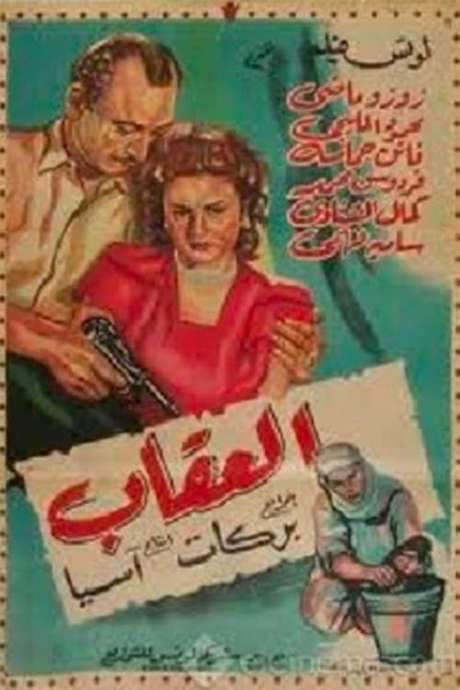
Punishment 1948

Directed by

Henry Barakat
Made by

السبكي فيلم للإنتاج والتوزيع
Punishment Plot Summary
Read the complete plot summary and ending explained for Punishment (1948). From turning points to emotional moments, uncover what really happened and why it matters.
In 1970, amidst the turbulence of the Vietnam War, President Richard Nixon makes the controversial decision to launch a secret bombing campaign in Cambodia, intensifying the ongoing conflict. At the same time, a rising wave of opposition from various social movements, including the anti-war, Civil Rights, and feminist movements, prompts the government to take drastic measures. Under the authority of the McCarran Internal Security Act of 1950, Nixon declares a state of emergency, granting federal authorities sweeping powers to detain anyone deemed potentially threatening to internal security.
This crackdown primarily targets university students, who are protesting the war or are members of the Communist Party, along with conscientious objectors and activists. These individuals are abruptly arrested and subjected to emergency tribunals composed of community members, fueling a climate of fear and repression. With state and federal detention centers overwhelmed, those convicted are faced with a stark choice: serve their full sentence in federal prison or participate in a brutal and controversial program called Punishment Park.
Punishment Park is a harsh, open-air punishment site set in the scorching California desert, spanning 53 miles. The convicted prisoners, mostly young activists, are given a cruel choice: embark on a three-day trek across the blistering desert, with no water or food, while being relentlessly chased by National Guardsmen and law enforcement officers. The goal is to reach a symbolic American flag at the end of the course—success means freedom, while failure results in returning to full incarceration. If they are “arrested” during the run, they will serve their sentences in federal prison.
European filmmakers document this intense and controversial experiment from two perspectives. One group, Group 637, begins their ordeal, learning the rules of the game, while the film crew captures their experiences and interactions with their pursuers. As the documentary unfolds, it becomes clear that tensions escalate; some detainees refuse to accept the rules, resorting to violence and resistance, leading to tragic consequences, including the death of the violent group. Meanwhile, a separate civilian tribunal conducts hearings on Group 638, who attempt to justify their resistance against the Vietnam War. Their arguments fall on deaf ears, and the atmosphere grows increasingly hostile.
Within Punishment Park, divisions among the detainees emerge. One faction, a pacifist group, perseveres in the face of brutality. They push toward the flag in hopes of victory and liberation. However, as they near their goal, they are ambushed by police, waiting in a calculated trap. The pacifists are beaten mercilessly, illustrating the grim reality that victory in this cruel game seems impossible. The film poignantly reveals that there is no way to truly win in Punishment Park—a symbol of the oppressive climate of the era and the suppression of dissent.
This intense documentary offers a stark look at a turbulent period in American history—highlighting the tension between government authority, social activism, and individual resistance amid war and unrest. It underscores the harsh realities faced by those daring to oppose the status quo, portraying both the brutality of the system and the resilience of those who stand against it.
Punishment Timeline
Follow the complete movie timeline of Punishment (1948) with every major event in chronological order. Great for understanding complex plots and story progression.
Vietnam War Escalation and Presidential Decision
In 1970, the Vietnam War continues to escalate, prompting President Richard Nixon to announce a secret bombing campaign in Cambodia. This decision intensifies unrest and opposition within the United States, especially among anti-war activists. The government responds with measures to control dissent through emergency powers, including detention policies.
Declaration of State of Emergency
President Nixon decrees a state of emergency based on the McCarran Internal Security Act of 1950. This law grants federal authorities the power to detain individuals deemed a threat to internal security. It marks a significant escalation in government actions against dissenters amid growing protests.
Arrests of Dissidents
Members of various social movements, including anti-war activists, civil rights advocates, feminists, conscientious objectors, and Communist Party members, are arrested. They face detention hearings and are classified as risks to national security by community tribunals. The arrests symbolize the government’s crackdown on opposition.
Punishment Park Setup
Due to overcrowded jails, some detainees are offered an alternative: serve their full sentences in federal prison or participate in the Punishment Park challenge. This 53-mile desert trek in California is designed as a brutal form of field training, with the promise of freedom for those who complete it successfully.
Beginning of the Punishment Park Trial
Group 637 begins their three-day ordeal in Punishment Park, learning the rules of the game. Simultaneously, the civilian tribunal starts hearings on Group 638, representing different perspectives on resistance and dissent. Both sides prepare for their respective battles, amidst mounting tensions.
Documenting the Events
European filmmakers follow the two groups and document their experiences. They interview participants, capture the hostility between detainees and chasers, and record the tribunal proceedings. The footage emphasizes the escalating conflict and polarization surrounding the trial.
Splintering of Group 637
As the challenge continues, Group 637 splits into two factions: one refuses to accept the rules and resorts to violence, while the other maintains pacifist resistance. The violent faction is eventually killed, illustrating the lethal consequences of defiance and chaos within the game.
Pacifist Group Nears the Flag
The pacifist members of Group 637 progress towards the American flag at the end of the desert course, symbolizing their resistance's hope for eventual freedom. However, they encounter an ambush by police, revealing the dangerous and unpredictable nature of the trial.
Violence and Suppression
Upon reaching the flag, pacifists are mercilessly beaten by law enforcement, demonstrating that resistance within Punishment Park is futile. The authorities have effectively rendered the challenge unwinnable, serving as a metaphor for the broader suppression of dissent.
Themes of Futility and Control
The film reveals that there is no true way to win the Punishment Park challenge, symbolizing the oppressive nature of the government and the impossibility of resistance within such a system. Both the violence and pacifist resistance end in defeat, underscoring the film's critique of authority.
Punishment Characters
Explore all characters from Punishment (1948). Get detailed profiles with their roles, arcs, and key relationships explained.
Kamal Al-Shenawy as أمير محرم
A character representing resilience and authority within the context of societal enforcement. His role, while not detailed in the summary, might embody the oppressive system or its enforcer, highlighting the moral ambiguity of justice during political crises.
Faten Hamama as ابتسام بنت محسن
A significant female character likely symbolizing empathy, resistance, or moral conscience amidst chaos. Her presence underscores the involvement of women in social and political struggles depicted in the film.
Punishment Settings
Learn where and when Punishment (1948) takes place. Explore the film’s settings, era, and how they shape the narrative.
Time period
1970
The film takes place during 1970, a period marked by intense social upheaval and political unrest in the United States. This era saw widespread protests against the Vietnam War, civil rights activism, and feminist movements. The political climate was characterized by government crackdowns and the use of emergency laws to suppress dissent.
Location
California Desert
The movie is set in the hot and arid California desert, a harsh environment used as a testing ground for the detainees' endurance. This remote wilderness symbolizes both physical and ideological confrontation, with the desert accentuating the severity of the punishment. It serves as a stark backdrop for the political and social struggles depicted in the film.
Punishment Themes
Discover the main themes in Punishment (1948). Analyze the deeper meanings, emotional layers, and social commentary behind the film.
⚖️
Justice and Repression
The movie explores themes of justice, law enforcement, and government repression during times of political turmoil. It highlights how state authorities use emergency powers to detain and punish dissenters, blurring the lines between justice and oppression. The contrasting fates of the detainees reflect the complexities of moral and legal authority.
✊
Civil Disobedience
Central to the film is the theme of civil disobedience and protest. The detainees' participation in Punishment Park is a symbol of resistance against unjust laws and war. The film questions the legitimacy of authority and advocates for active resistance as a form of political expression.

Coming soon on iOS and Android
The Plot Explained Mobile App
From blockbusters to hidden gems — dive into movie stories anytime, anywhere. Save your favorites, discover plots faster, and never miss a twist again.
Sign up to be the first to know when we launch. Your email stays private — always.
Explore the mobile appPunishment Spoiler-Free Summary
Discover the spoiler-free summary of Punishment (1948). Get a concise overview without any spoilers.
In a quiet neighborhood where appearances mask deeper currents, the wife feels the weight of a marriage that has grown stale. She shares an unspoken bond with her lover, a connection that threatens to upend the fragile equilibrium of her domestic life. Their mutual longing is set against the backdrop of a household that includes a dutiful husband and a loyal maid, each representing different facets of responsibility and trust within the home.
The story unfolds in a world where secrets linger behind closed doors, and the ordinary rhythm of daily routine hints at a looming unraveling. A young daughter watches the adults navigate their tangled loyalties, while a close friend silently shoulders the burden of raising her in the wake of tragedy. The atmosphere is suffused with a lingering tension, as whispered conspiracies and unvoiced guilt create a sense of inevitability that something will shift beneath the surface.
As the characters move through a series of quiet confrontations and hidden glances, the film explores how power, desire, and duty intertwine. The maid carries the weight of misplaced blame, and the son—though barely mentioned—adds another layer of familial complexity. A looming sense of justice hovers, hinting at consequences that will soon surface, while the lingering melancholy of past decisions colors every interaction. The tone remains introspective and brooding, inviting the audience to contemplate how seemingly ordinary lives can be altered by secrets that refuse to stay buried.
Featured on this page

What's After the Movie?
Not sure whether to stay after the credits? Find out!
Check out our other apps:

SAT Sphere
Build confidence for the Digital SAT.

Mori Atlas
Discover wild places worth protecting.

Luntero
Search smarter for a home in Amsterdam.

Plot Explained
Unravel movie endings and hidden clues.

Pokechamp
Dive into Pokémon data and battle logic.

Driving Theory
Get ready for your European theory test.

Movie Dust
Plan your next cinema trip with ease.

Musemap
Find art and culture as you travel.

Selkobase
Compare credentials before committing.

Local Manual
Turn an unfamiliar country into practical next steps.

Lernavi
Compare school systems before your next move.

GymRoam
Find a workout stop wherever your plans take you.
Explore Our Movie Platform
New Movie Releases (2026)
Famous Movie Actors
Top Film Production Studios
Movie Plot Summaries & Endings
Major Movie Awards & Winners
Best Concert Films & Music Documentaries
Movie Collections and Curated Lists
© 2026 What's After the Movie. All rights reserved.
Privacy Policy