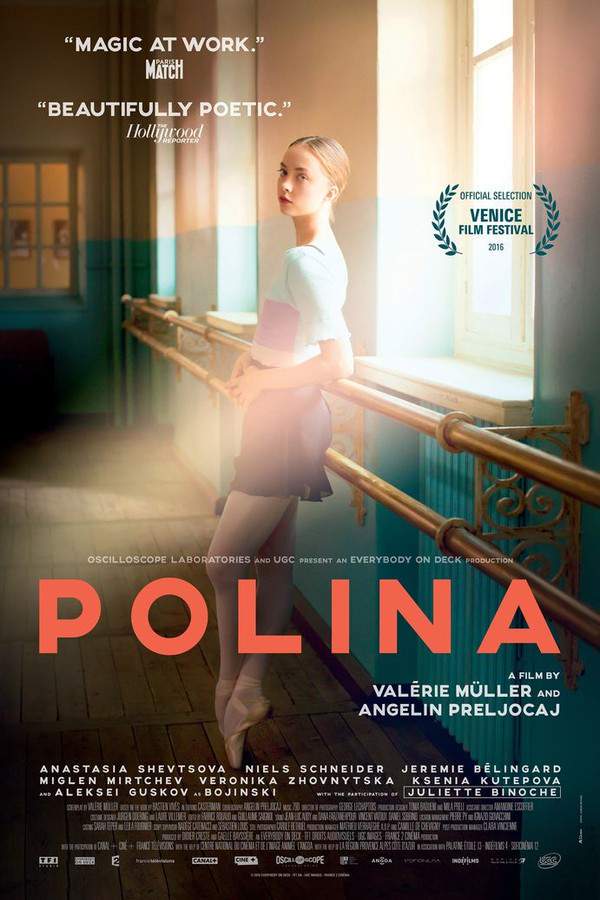
What Is Polina About?
The premise of Polina in 279 words, with nothing given away. The full story follows below.
In the disciplined realm of the Bolshoi Ballet, where precision is sacred and every gesture carries the weight of centuries, a young prodigy rises under the exacting gaze of her mentor, Bojinski. From childhood auditions to the hallowed studios of Moscow, Polina embodies the relentless pursuit of perfection, her body a finely tuned instrument honed for the purest form of classical ballet. The world around her is one of immaculate lines, strict hierarchies, and an unspoken expectation that greatness is achieved through sacrifice and unyielding focus.
Amidst this rigor, a fleeting glimpse of contemporary movement at a festival ignites a quiet rebellion within her. The fluid, unstructured language of modern dance offers a tantalizing contrast to the rigidity of her training, planting the seed of an artistic dilemma. The film’s tone balances the austere beauty of Russian ballet with the vibrant, unpredictable energy of contemporary studios, creating a palette that is both elegant and restless.
Compelled by this burgeoning curiosity, Polina steps beyond familiar borders, drawn to the sun‑lit streets of Aix‑en‑Provence where a modern dance program promises new horizons. Here, the expectations shift: freedom replaces formality, and personal expression becomes the currency of the art. The setting—a juxtaposition of historic French charm and avant‑garde rehearsal spaces—mirrors her inner conflict, as she navigates the tension between disciplined mastery and the desire to move with feeling.
Surrounded by fellow dancers, including a supportive partner, Adrien, and an inspiring choreographer, Liria, she begins to question what it truly means to belong to a craft. The narrative lingers on her internal journey, hinting at a transformative choice that will redefine her relationship to dance, identity, and the very notion of artistic fulfillment.
What Happens in Polina?
The complete story of Polina, from the first scene to the last, in 390 words (about 2 minutes). Spoilers throughout. Names in the text link to 1 cast member page.
Spoilers ahead
As a child Polina auditions for ballet school and is accepted. The head teacher and choreographer, Bojinski, notices her talent and pushes her hard, sensing the spark of something exceptional. Yet she continually wrestles with the rigidity of training for ballet and her own growing passion for dance, torn between precision and the urge to move with feeling.
Polina is accepted into the Bolshoi Ballet in Moscow, a dream long held by her teachers and family. But after catching a glimpse of a different kind of movement at a festival, she decides to seek out new horizons in Aix-en-Provence, auditioning for a modern dance program there alongside her boyfriend, Adrien. Both are accepted, though she’s warned that modern dance will demand a different mindset from the classical tradition she knows so well. She grapples with unfamiliar choreography and endures criticism for prioritizing her craft above almost everything else. A setback comes during a rehearsal when she injures her ankle, and her understudy, Sonia, steps in and begins an affair with Adrien. Once Polina heals, she asks for her role back, but the choreographer, Liria, tells her she’s not emotionally ready. Frustrated, she leaves the company.
Polina ends up in Antwerpen, where she calls the number of the first dance company she sees. She auditions for a strange man who tells her that since she is a dancer and they both know she can dance, he wants her to make him feel something. The audition is unsuccessful and she leaves, but not before she notices a man teaching dance to kids. Unable to find work elsewhere, she becomes hungry and homeless, eventually taking a waitressing job at a bar. She returns to the site of her failed audition and meets Karl, the dancer who teaches improv. She joins one of his classes and slowly rediscovers the joy of dancing, finding freedom and purpose again. Encouraged by Karl, Polina choreographs a duet for the two of them to perform together.
Polina’s father dies, and she travels back to Moscow where her mother reminds her that her father always wanted her to be a great dancer. She then returns to Antwerpen, where she and Karl perform their piece for a programmer who books them for the Montpellier Festival, a hopeful sign that her art might finally find its place on the stage again.
Polina Timeline: Every Key Event in Order
12 key events in the order they happen, from “Polina is accepted into a childhood ballet program” to “Return to Antwerp and Montpellier Festival”. 12 events name a place, across 11 locations.
- 1
Polina is accepted into a childhood ballet program
Polina auditions for a ballet school as a child and earns acceptance. The head teacher Bojinski notices her talent and becomes particularly hard on her, pushing her through strict training. This early praise and pressure shape her love for dance while exposing the demanding nature of classical training.
When:childhood Where:Childhood ballet school
- 2
Bojinski shapes Polina's technique with a rigorous hand
Bojinski's rigorous approach continues to shape Polina's technique and performance style. He singles her out for his harsh coaching, believing her talent must be disciplined. The intensity of the training foreshadows the tension between art and personal freedom in her career.
When:early training years Where:Ballet school
- 3
Polina earns a place at the Bolshoi Ballet
Polina is accepted into the Bolshoi Ballet in Moscow, fulfilling the long-held dream of her teachers and family. The new company offers her a prestigious platform but also intensifies the demands on her. She begins to navigate the pressures and expectations of a major Russian company.
When:early career Where:Moscow, Bolshoi Ballet
- 4
A festival reveals a different path: Aix-en-Provence
After attending a festival, Polina experiences a different style of dance that inspires her to explore modern movement. She decides to audition for a modern dance school in Aix-en-Provence with her boyfriend Adrien. The choice signals a potential shift away from strictly classical training.
When:soon after Bolshoi acceptance Where:Aix-en-Provence, France
- 5
Adrien joins a modern dance program
Adrien and Polina are accepted into the Aix-en-Provence program, but they are warned that modern dance is very different from classical training. Polina struggles with the new choreography, highlighting the clash between her background and the contemporary approach. The warning foreshadows the emotional and artistic challenges to come.
When:during the early modern dance period Where:Aix-en-Provence
- 6
Injury and upheaval in the modern company
During a rehearsal Polina injures her ankle, sidelining her from the project. Her understudy Sonia takes her place and begins an affair with Adrien, sowing personal turmoil within the company. The combination of physical setback and relationship drama compounds her sense of failure.
When:during the rehearsal Where:Rehearsal studio
- 7
Polina is told she's not emotionally ready; she leaves
After she heals, Polina asks for her role back, but choreographer Liria tells her she is not emotionally ready. Frustrated and disheartened, she leaves the modern company rather than fight for a place. This departure marks a turning point toward pursuing her own path.
When:post-injury Where:Modern dance company
- 8
Polina seeks work in Antwerp; auditions for a mysterious impresario
Polina travels to Antwerp and calls the number of the first dance company she sees. She auditions for a strange man who wants her to make him feel something through dance, but the audition is unsuccessful. Before leaving, she glimpses a man teaching dance to kids, hinting at other possible paths.
When:post-Antwerp audition Where:Antwerp, Belgium
- 9
Hardship and resilience: a waitressing job
Unable to find work, Polina becomes homeless and survives by taking a waitressing job in a bar. This period tests her resilience and keeps her connected to the dance world through memory and longing. The hardship strengthens her resolve to return to her art.
When:after Antwerp audition Where:Antwerp
- 10
Polina reconnects with Karl and rediscovers dance
She returns to the site of the failed audition and meets Karl, a dancer who teaches improv. He invites her to attend his class, and Polina experiences a renewed joy in dancing. Together they choreograph a duet for the two of them to dance.
When:following job Where:Antwerp
- 11
Polina's father dies; a homeward journey to Moscow
Polina's father dies, prompting a trip to Moscow. Her mother reminds her that her father always wanted her to be a great dancer. The loss deepens her sense of duty to fulfill that dream.
When:after the father's death Where:Moscow
- 12
Return to Antwerp and Montpellier Festival
Polina goes back to Antwerp and, with Karl, performs their duet for a programmer. The programmer books them into the Montpellier Festival, opening a new chapter in her artistic journey. The collaboration marks a hopeful direction in her career.
When:after Moscow Where:Antwerp and Montpellier Festival
Who Are the Main Characters in Polina?
9 characters, among them Polina (Anastasia Shevtsova), Bojinski and Adrien: who each one is and the part they play in the story. 6 of them link to the actor’s page.
- P(
Polina (Anastasia Shevtsova)
Played by Anastasia Shevtsova
A talented but conflicted dancer who wrestles with the rigidity of classical ballet and her own urge to express freely. Polina's journey is defined by resilience, impulsive decisions, and a longing for belonging through dance.
- 💃 Protagonist
- 🎯 Determined
- 🧠 Reflective
- B
Bojinski
Played by Aleksei Guskov
The head teacher and choreographer whose exacting standards push Polina to her limits. He embodies the pressure of elite training and the cost of artistic perfection.
- 🎭 Authority
- 🎯 Demanding
- 🧊 Stoic
-

Adrien
Played by Niels Schneider
Polina's boyfriend, a fellow dancer who shares her dream but is drawn into the complications of touring and romance. His choices impact Polina's confidence and path.
- 💑 Relationship
- 🌟 Ambition
- 🔄 Complication
-
Liria
Played by Juliette Binoche
The choreographer or figure who rejects Polina's emotional readiness, representing the gatekeeping in contemporary dance.
- 🎭 Gatekeeper
- 🧭 Artistic vision
- 👁️🗨️ Insight
- S
Sonia
Played by Kseniya Kutepova
Polina's understudy who seizes an opportunity, embodying jealousy and upheaval within a company setting.
- ⚡ Rivalry
- 🩰 Aspiration
- 🕰️ Change
- K
Karl
Played by Miglen Mirtchev
A dancer who teaches improv and helps Polina reconnect with joy in movement, representing second chances and collaboration.
- 🤝 Collaboration
- 🕺 Improvisation
- 🎨 Creative
- PF
Polina's father
Her father’s death marks a turning point, reminding Polina of her family’s dream and the price of pursuing art.
- 🕊️ Loss
- 👨👧 Family
- 💪 Resolve
- PM
Polina's mother
Her mother influences her sense of duty to live up to her father’s dream, underscoring themes of parental pressure.
- 👩👧 Family
- 🎭 Duty
- 💭 Reflection
- P
Programmer
A figure who books Polina and Karl into the Montpellier Festival, representing the gatekeepers who identify artistic potential.
- 🎟️ Gatekeeper
- 🎯 Opportunity
- 🌐 Festival
Where and When Is Polina Set?
Polina is set in Moscow, Aix-en-Provence, Antwerpen and Montpellier. Here is why the place matters to the story.
Where
Moscow, Aix-en-Provence, Antwerpen, Montpellier
Polina's story spans across Moscow, Aix-en-Provence, Antwerpen, and Montpellier, tracing her evolution from strict classical training to contemporary dance exploration. Moscow anchors the narrative in the Bolshoi's rigorous discipline and prestige. Aix-en-Provence introduces a freer, modern-dance sensibility encountered at a festival, challenging Polina's preconceptions. Antwerpen and Montpellier present the harsh realities of a dancer's life, including auditions, relationships, and a final festival moment that tests her resolve.
- 🎭 Ballet hubs
- 🗺️ City hopping
- 🏛️ Dance culture
- 🎬 Film setting
What Are the Themes of Polina?
4 ideas the story keeps returning to, among them Self-Discovery, Ambition and Pressure and Journey and Belonging.
-
01
Self-Discovery
Polina’s journey is as much about discovering who she is as a dancer as it is about mastering steps. The strict expectations of classical ballet collide with her instinct to express freely. The film follows her attempts to reconcile technique with personal expression, revealing how identity drives artistic choice.
-
02
Ambition and Pressure
Polina faces the demanding, sometimes punitive, environment of elite training. Injuries, replacements, and criticism test her resilience and threaten to derail her ambitions. The tension between dedication to craft and emotional well-being is a constant undercurrent.
-
03
Journey and Belonging
Her travels across Europe expose her to new forms of dance and new communities, yet leave her homeless at times. She searches for a place where art and life align, learning to reinvent herself after setbacks. The story frames dance as both a path to belonging and a solitary pursuit.
-
04
Artistic Expression
The narrative contrasts classical choreography with modern dance, pushing Polina to choreograph with a partner and to embrace collaboration. The final performance at the Montpellier Festival symbolizes a synthesis of training, experimentation, and personal growth. Dance is shown as a language through which Polina processes loss, love, and hope.
What Kind of Film Is Polina?
Hopeful in tone, with steady pacing and a straightforward story, going by the plot summary.
- Tone
- Hopeful
- Pacing
- Steady
- Story
- Straightforward
- Intensity
- Medium
- Ending
- Happy
A poignant and hopeful drama that follows the emotionally taxing but ultimately rewarding artistic journey of a ballerina as she sacrifices everything to find her authentic voice.
- introspective
- hopeful
- melancholic
- arduous
- inspiring
- solitary
- artistic journey
- ballet
- creative crisis
- self-discovery
Quiz
How well do you remember Polina? Test yourself on the story.