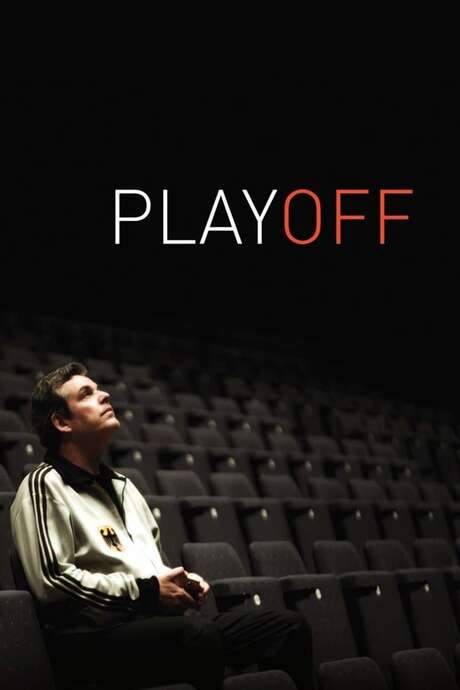
Playoff 2011

Directed by

Eran Riklis
Made by

Egoli Tossell Pictures
Playoff Plot Summary
Read the complete plot summary and ending explained for Playoff (2011). From turning points to emotional moments, uncover what really happened and why it matters.
The film traces Max Stoller, a legendary Israeli basketball coach who rises to national fame by turning Maccabi Tel Aviv into European champions in the late 1970s, one of Israel’s first major international sports triumphs.
After that peak, Max accepts a nearly impossible assignment: turning the seemingly hopeless West German national team into European winners. He insists that Germany, the country where he was born before the war, means little to him, and that coaching their squad is just another rung on his path toward NBA glory.
His blunt stance is tested as he refuses to speak German to his players, signaling emotional distance while he quietly yearns for connection. The only people he seems able to connect with are Deniz Deniz, a Turkish immigrant woman, and her lively teenage daughter Sema.
As his methods take hold, the German players begin to glimpse their own potential on the European stage, and Max—though it complicates his mission—also finds himself drawn toward Deniz, eventually falling in love as he guides the team to continental success.
But a deeper truth surfaces when he uncovers what happened to his own family in the 1940s. That revelation forces him to reassess notions of identity, loyalty, and memory, making it clear that you cannot run away forever from one’s past and the demons it carries.
In the end, the story weaves ambition, personal history, and the price of triumph into a portrait of a man navigating love, duty, and the inescapable shadows of history.
Playoff Timeline
Follow the complete movie timeline of Playoff (2011) with every major event in chronological order. Great for understanding complex plots and story progression.
Max Stoller guides Maccabi Tel Aviv to European Champions
In the late 1970s, Max Stoller coaches Maccabi Tel Aviv to the European Champions Cup, delivering one of Israel's first major international sporting triumphs. The victory dramatically raises his profile at home and turns him into a living symbol of national pride. His success marks a turning point for Israeli basketball on the world stage.
Becomes a national hero in Israel
Stoller's success makes him a household name across Israel, celebrated as a symbol of perseverance and leadership. He is hailed as a national hero in Tel Aviv and beyond, with his achievement elevating the status of Israeli sport. The win is framed as a historic milestone for the country on the international stage.
Accepts the challenge to coach West Germany
After his Israeli triumph, Stoller takes on the nearly hopeless West German national team, treating the assignment as another rung toward the NBA. His decision instantly sparks controversy, labeling him a traitor by some back home. The move places him squarely in the crosshairs of two national narratives.
Refuses to speak German to the players
In Germany, he withholds speaking German to the team, opting for distance and unconventional methods to control the squad. The refusal creates friction in practice and signals a deliberate break with local norms. His outsider status becomes a central part of his coaching persona.
Germany is a job, not a homeland
Stoller declares that Germany means little to him and frames the coaching job as simply another step toward NBA glory. He stresses that roots and loyalty lie elsewhere, even as the past continues to haunt him. This mindset underscores the emotional distance he maintains from his surroundings.
Meets Deniz and Sema
Among the turmoil, Deniz, a Turkish immigrant woman, and her cheeky daughter Sema become the few people Max can connect with. A wary romance blossoms as Max seeks human warmth amid professional chaos. Their bond introduces a personal dimension to his mission in Germany.
Begins turning the German players into European contenders
Using outsider insight and determined leadership, Max reshapes the German players and their system, pushing them to think and play differently. His methods gradually take root, turning a previously hopeless squad into a competitive unit. The team starts showing signs of genuine European potential.
Romance with Deniz deepens
Max's relationship with Deniz grows beyond a fling, providing emotional balance amid the pressure of rebuilding a national team. The romance humanizes him to some and sparks suspicion in others. Personal and professional lines blur as past wounds surface.
Germany rises to European champions under his guidance
Under Max's steady leadership, the German team ascends to European champions, validating his reformist approach. The victory cements his reputation as a capable catalyst who can transform underperforming talent into a winning unit. The triumph also amplifies scrutiny of his cross-border career move.
Discovers his family’s fate in the 1940s
During a quiet moment, Max learns what happened to his family in the 1940s, a revelation that reshapes his understanding of home and memory. The truth challenges the rosy narrative he has clung to and exposes the depth of personal tragedy behind his public persona. The past, once distant, now presses in with undeniable force.
Confronts past and demons
The discovery forces Max to confront the demons he hoped to outrun and to reconsider his loyalties and identity. He realizes that running away from memory only delays healing. The inner reckoning becomes as decisive as any on-court victory.
Resolution: facing history to move forward
In the film's closing arc, Max accepts that you cannot erase your history and that reconciliation requires facing it head-on. He chooses to integrate his past into his future, ending with a tempered sense of closure. The story leaves him pursuing future aims with wiser perspective on who he is.
Playoff Characters
Explore all characters from Playoff (2011). Get detailed profiles with their roles, arcs, and key relationships explained.
Max Stoller
Legendary Israeli basketball coach who rose to fame leading Maccabi Tel Aviv to European triumphs in the late 1970s, then takes on the challenge of rebuilding the West German national team. He is fiercely driven, idealistic, and reluctant to honor old national loyalties, preferring to win on his own terms. His personal history, especially the 1940s, haunts him and complicates his relationships, including with Deniz.
Deniz
A Turkish immigrant woman who forms a fragile bond with Max and becomes a confidant for him. She embodies resilience and warmth, and her relationship with Max provides emotional grounding amid the pressures of international competition. Her perspective highlights cultural blending and the human cost of national narratives.
Sema
Deniz's cheeky teenage daughter who represents the younger generation navigating memory, identity, and belonging in a divided Europe. Sema observes the adults' struggle with a mix of curiosity and streetwise humor, offering a grounded counterpoint to Max's grand schemes.
Playoff Settings
Learn where and when Playoff (2011) takes place. Explore the film’s settings, era, and how they shape the narrative.
Time period
Late 1970s
Set in the late 1970s, a period when European basketball was gaining prestige and national teams were testing new identities. The era is defined by postwar memory and Cold War politics affecting athletes, fans, and national narratives. The time frame underscores Max's struggle to reconcile his past with his drive for achievement.
Location
Tel Aviv, Israel, West Germany
The film unfolds across Tel Aviv in Israel, home to Maccabi Tel Aviv's European triumphs, and across West Germany as Max takes on the national team. The arenas, hotels, and media rooms become pressure-filled backdrops for a coach navigating fame, politics, and memory. The contrast between a coastal city setting and a post-war European backdrop enriches the story's tension between pride and guilt.
Playoff Themes
Discover the main themes in Playoff (2011). Analyze the deeper meanings, emotional layers, and social commentary behind the film.
🕯️
Memory
The narrative probes how the past haunts Max and his family, forcing him to confront the consequences of his history. Memories of the 1940s resurface as he pursues victory, complicating loyalty to country and sport. The film suggests that personal healing can only come by facing buried truths.
🏀
Sports redemption
Basketball becomes a bridge between cultures, as Max reshapes a struggling team into European champions. His coaching philosophy clashes with national expectations, exposing the politics of fame and betrayal. The victories on the court reveal as much about identity as about scorelines.
💘
Love & belonging
Max's connection with Deniz and her daughter Sema introduces a personal dimension to his quest. The relationship tests his detachment from Germany and his willingness to belong somewhere again. Love becomes a catalyst for confronting the past rather than a retreat from it.

Coming soon on iOS and Android
The Plot Explained Mobile App
From blockbusters to hidden gems — dive into movie stories anytime, anywhere. Save your favorites, discover plots faster, and never miss a twist again.
Sign up to be the first to know when we launch. Your email stays private — always.
Explore the mobile appPlayoff Spoiler-Free Summary
Discover the spoiler-free summary of Playoff (2011). Get a concise overview without any spoilers.
In the restless heartbeat of 1980s Europe, a world where sports can rewrite national pride, a once‑celebrated Israeli basketball coach steps onto an unlikely stage. Max Stoller—the mastermind who lifted Maccabi Tel Aviv to continental glory—finds himself branded a traitor by his homeland for accepting a job that most would deem impossible: rebuilding the hopeless West German national team. The film opens amidst the clatter of gymnasiums and the smoky atmosphere of downtown cafés, painting a landscape where old rivalries linger beneath the neon optimism of a new decade. The tone balances the grittiness of post‑war politics with the kinetic energy of a sport that demands both discipline and imagination.
Within this uneasy setting, Max’s stubborn refusal to speak German becomes both a personal barricade and a subtle commentary on identity. He navigates a roster of young players who speak a language he refuses to acknowledge, forcing communication to happen through gestures, sweat, and the universal rhythm of the game. The cultural clash fuels a tension that crackles like a basketball bouncing on hardwood, hinting at deeper scars without spelling them out. Amidst the pressures of expectation, a quieter, more intimate thread begins to weave itself through the story.
Enter a Turkish immigrant woman who offers Max an unexpected anchor in a foreign land. Deniz, with her resilient humor and nuanced outlook, becomes the one person who seems to understand the weight of his past. Her teenage daughter, Sema, adds a cheeky spark that both lightens and complicates the dynamic, hinting at generational perspectives on displacement and belonging. Their interactions suggest that the true contest may be as much about reconciling histories and personal demons as it is about winning games, setting the stage for a journey that blends sport, memory, and the fragile process of forging a new identity.
Featured on this page

What's After the Movie?
Not sure whether to stay after the credits? Find out!
Check out our other apps:

SAT Sphere
Build confidence for the Digital SAT.

Mori Atlas
Discover wild places worth protecting.

Luntero
Search smarter for a home in Amsterdam.

Plot Explained
Unravel movie endings and hidden clues.

Pokechamp
Dive into Pokémon data and battle logic.

Driving Theory
Get ready for your European theory test.

Movie Dust
Plan your next cinema trip with ease.

Musemap
Find art and culture as you travel.

Selkobase
Compare credentials before committing.

Local Manual
Turn an unfamiliar country into practical next steps.

Lernavi
Compare school systems before your next move.

GymRoam
Find a workout stop wherever your plans take you.
Explore Our Movie Platform
New Movie Releases (2026)
Famous Movie Actors
Top Film Production Studios
Movie Plot Summaries & Endings
Major Movie Awards & Winners
Best Concert Films & Music Documentaries
Movie Collections and Curated Lists
© 2026 What's After the Movie. All rights reserved.
Privacy Policy