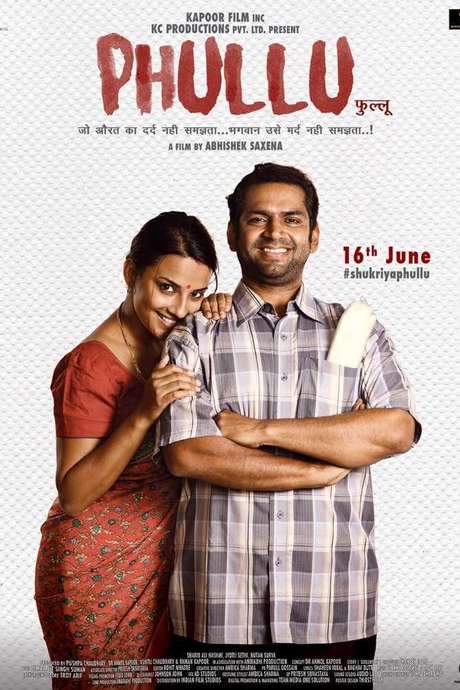
Phullu 2017

Directed by

Abhishek Saxena
Made by

Phullu Plot Summary
Read the complete plot summary and ending explained for Phullu (2017). From turning points to emotional moments, uncover what really happened and why it matters.
Phullu is an unemployed man living in a tiny village that lacks basic amenities and infrastructure. He shares a small home with his mother and sister, and their days revolve around salvaging pieces of waste cloth from nearby city tailors and turning them into refurbished quilts. The family grows a humble income by selling these quilts door-to-door, while Phullu’s mother also nudges him to seek a better life in a bigger city like Delhi. Despite the modest comforts, Phullu’s gentle nature keeps him helping the villagers—he brings back little things from the city for the women and families who need them, always trying to make life a touch easier for those around him.
When his mother arranges a marriage for him, hoping it would anchor him and coax him to move away, Phullu is quickly drawn to a woman named Bigni and the two marry. From that moment, Phullu’s priorities shift; his wife becomes his focal point, and he begins to place her needs above those of his mother and sister. In the quiet arc of daily life, he’s still the same kindhearted man, but the balance of responsibilities tilts toward his new family.
A pivotal moment arrives during a trip to the city to collect earrings for his sister. In the same visit, he steps into a chemist shop to buy sanitary napkins requested by his wife, though he has little idea what they are. A doctor explains that women should use sanitary pads rather than cloth to prevent infections. This revelation astonishes him, and instead of purchasing the earrings, he spends the money on pads for all the women in his family. This bold, compassionate act enrages his mother and sister, who feel the savings are squandered on a luxury they cannot afford.
Determined to understand the problem more deeply, Phullu seeks guidance from a local female schoolteacher and learns that menstrual pads are prohibitively expensive for poor households. Motivated to find a practical solution, he moves back to the city to explore possibilities. With the help of a local journalist, he lands a job at a sanitary napkin manufacturing company and begins studying the production process up close. The more he learns, the more he realizes that affordable options for women in his village are desperately needed. After gaining insight and inspiration, he quits the job and returns to his village, where his wife is now seven months pregnant.
Back home, Phullu begins experimenting with his own designs for low-cost pads, leveraging the knowledge he gained in the city. He envisions offering these pads at a nominal price to make a real difference in the lives of poor women. After countless trials and failures, he finally develops a workable prototype. Yet the village is wary; no woman is willing to trial his invention, and he faces sharp criticism for attempting something so unconventional. Undeterred, he conceives a bold approach: he builds a life-size mannequin to demonstrate the effectiveness of his design. He places his own blood in the mannequin’s pubic region and seals it with his sanitary napkin, hoping the demonstration will speak for itself.
The next morning brings a devastating turn. Phullu discovers that his wife has died from a vaginal infection, yet he also confirms that his mannequin-based demonstration has yielded the desired results. A journalist who had assisted him in the city helps publicize his work, and Phullu’s efforts are featured prominently in the day’s top stories. The film closes on a note of perseverance and social purpose, underscoring the importance of affordable menstrual products and the impact one determined individual can have on a community’s health and dignity.
Phullu Timeline
Follow the complete movie timeline of Phullu (2017) with every major event in chronological order. Great for understanding complex plots and story progression.
Village life and family recycling
Phullu lives with his mother and sister in a small, underserved village where he recycles waste cloth into quilts. The family earns a meager income from door-to-door quilt sales, and Phullu is known for his kind nature. He often helps bring items from the city that the village women need.
Marriage arranged; new priorities
Phullu's mother arranges his marriage to a woman named Bigni, hoping the union will push him to move to a bigger town. He marries quickly and starts prioritizing his wife over his mother and sister. The dynamic in the home shifts as he adapts to his new role.
Trip to the city; the napkin discovery
During a trip to the city to collect earrings for his sister, Phullu visits a chemist and learns that sanitary napkins can prevent infections. He spends the family savings to buy pads for all the women, instead of the earrings, much to his mother and sister's fury. This moment plants the seed for his later mission.
Seeking knowledge; value of pads
Back in the village, a local female school teacher explains more about menstrual hygiene and the cost of pads for poor women. Phullu realizes that affordable options do not exist for many families. He resolves to find a practical solution.
Move to the city for opportunity
Seeking opportunity, he moves to the city to observe pad production first-hand. A journalist helps him land a job at a sanitary napkin factory, where he learns how the product is made.
Industry exposure; return home
In the factory, he studies the production process in detail. After gaining experience, he quits the job and returns to his village to apply what he learned.
Wife's pregnancy
Back home, he visits his wife who is seven months pregnant. He vows to support his family with affordable hygiene products.
Homemade pads; prototype attempts
He begins experimenting with making sanitary pads at home using his newfound know-how. He intends to offer them at a nominal price, but villagers are skeptical and the process is slow.
Prototype fails; innovation through a mannequin
Frustrated by initial rejection, he creates a mannequin to test the pads, placing his own blood on the pubic region to simulate real use. He waits to see if the product works under practical conditions.
Tragic consequence; a breakthrough
The next morning, his wife dies due to a vaginal infection, while the mannequin experiment appears to succeed. The tragedy strengthens his resolve to bring affordable pads to the village.
Media attention and recognition
A journalist who aided him previously features his achievement in the top story of the newspaper. The story brings wider recognition to his sanitary pad project.
Turning point toward change
With the attention and his new knowledge, Phullu begins planning an affordable pad launch for his village. He envisions improved health and dignity for women, despite initial resistance.
Phullu Characters
Explore all characters from Phullu (2017). Get detailed profiles with their roles, arcs, and key relationships explained.
Phullu (Sharib Hashmi)
Phullu is an unemployed, kind-hearted man who lives with his mother and sister in a resource-poor village. He is practical, hardworking, and driven by a desire to help his family and other women, which leads him to explore affordable menstrual hygiene solutions. His curiosity pushes him to move to the city, learn from industry, and return to implement a low-cost pad.
Bigni (Jyotii Sethi)
Bigni is Phullu’s wife, whose presence highlights the complexity of family dynamics in rural India. Her relationship with Phullu evolves from default marriage to partnership, as she becomes part of his motivation to improve women's health. The tragedy of her seven-month pregnancy and death shapes the emotional core of the story.
Phullu's Mother (Nutan Surya)
Phullu's mother is a practical, supportive figure who keeps the household running and nudges her son toward better employment in the city. She initially pushes him to move away with his wife and fuels his sense of responsibility to the family. Her reaction to the pad invention—and the subsequent outcomes—reflects the pressures of poverty and tradition.
Journalist (Inaamulhaq)
The journalist helps Phullu connect with urban ideas and find a job in the city to observe pad manufacturing. He becomes an ally who legitimizes Phullu's pursuit by bringing public attention to the cause. He later features Phullu in a top newspaper story.
Phullu Settings
Learn where and when Phullu (2017) takes place. Explore the film’s settings, era, and how they shape the narrative.
Location
Rural Indian village, Delhi
A tiny rural Indian village forms the backbone of the story, where basic amenities and infrastructure are scarce. The family sustains itself by recycling waste cloth into quilts, a shared craft that supports daily life. The plot also shows the pull of the city, particularly Delhi, where better-paying jobs and urban products lie beyond the village’s gates. The setting highlights the economic and social gaps between rural life and urban opportunities.
Phullu Themes
Discover the main themes in Phullu (2017). Analyze the deeper meanings, emotional layers, and social commentary behind the film.
🚺
Menstrual Health
Menstrual health is presented as a costly and stigmatized issue for poor women in the village. Phullu learns from a doctor and a teacher about the need for affordable pads, sparking his experiment in making a low-cost alternative. The film shows resistance from family and peers when he introduces the idea, highlighting social stigma around menstruation and poverty. Ultimately, his efforts are recognized in the press, underscoring the potential for grassroots health innovation.
💡
Entrepreneurship
Phullu's journey traces a path from curiosity to social entrepreneurship. He studies the production process in a factory, returns to the village with a prototype, and experiments with cost-cutting methods. The narrative emphasizes innovation under scarcity, audience skepticism, and the persistence required to bring a cheap product to market. The journalist's support and eventual newspaper feature illustrate how new ideas can gain visibility.
👨👩👧
Family & Duty
Family duty shapes Phullu's choices from the start, balancing care for his mother and sister with his new wife's expectations. The marriage shifts his priorities, causing tension as he pursues work in the city and later focuses on family health initiatives. The emotional core is deepened by the tragedy of his wife's death, testing bonds within the family.

Coming soon on iOS and Android
The Plot Explained Mobile App
From blockbusters to hidden gems — dive into movie stories anytime, anywhere. Save your favorites, discover plots faster, and never miss a twist again.
Sign up to be the first to know when we launch. Your email stays private — always.
Explore the mobile appPhullu Spoiler-Free Summary
Discover the spoiler-free summary of Phullu (2017). Get a concise overview without any spoilers.
In a remote hamlet where the hum of electricity is rare and basic comforts are a luxury, daily life revolves around the slow rhythm of tradition. The village’s narrow lanes are lined with modest homes, and the community survives on small trades—recycling discarded cloth into quilts, selling modest wares door‑to‑door, and sharing the few resources they can muster. The atmosphere is one of quiet endurance, tinged with the hope that even the smallest improvement could shift the balance of hardship.
Phullu is an earnest, unemployed young man whose world is anchored by his devoted mother and supportive sister. Though his own prospects are limited, his generosity drives him to fetch necessities from the nearby town for the women of his village, earning silent gratitude in return. When his mother arranges his marriage to Bigni, their union quickly recasts his priorities, placing his new responsibilities alongside the lingering pull of his familial duties. A chance encounter with a doctor’s advice about sanitary napkins awakens in him a lingering curiosity about a problem that has long been overlooked in his community.
Compelled by this revelation, Phullu begins to seek guidance from a local schoolteacher, learning that affordable menstrual care remains out of reach for many women around him. This newfound awareness spurs him to venture into the city, where, with the help of a journalist, he secures a position at a sanitary‑product manufacturer. There, he watches the intricate process that turns raw material into protective pads, absorbing the knowledge that could one day be returned to his village.
Back home, armed with fresh insight and a determined spirit, Phullu resolves to apply what he has learned to create a solution that fits the modest means of his neighbors. The story balances the gentle humor of everyday village life with a deeper, earnest quest for dignity and empowerment, inviting viewers to wonder how far one person’s resolve can travel against the backdrop of entrenched scarcity.
Featured on this page

What's After the Movie?
Not sure whether to stay after the credits? Find out!
Check out our other apps:

SAT Sphere
Build confidence for the Digital SAT.

Mori Atlas
Discover wild places worth protecting.

Luntero
Search smarter for a home in Amsterdam.

Plot Explained
Unravel movie endings and hidden clues.

Pokechamp
Dive into Pokémon data and battle logic.

Driving Theory
Get ready for your European theory test.

Movie Dust
Plan your next cinema trip with ease.

Musemap
Find art and culture as you travel.

Selkobase
Compare credentials before committing.

Local Manual
Turn an unfamiliar country into practical next steps.

Lernavi
Compare school systems before your next move.

GymRoam
Find a workout stop wherever your plans take you.
Explore Our Movie Platform
New Movie Releases (2026)
Famous Movie Actors
Top Film Production Studios
Movie Plot Summaries & Endings
Major Movie Awards & Winners
Best Concert Films & Music Documentaries
Movie Collections and Curated Lists
© 2026 What's After the Movie. All rights reserved.
Privacy Policy