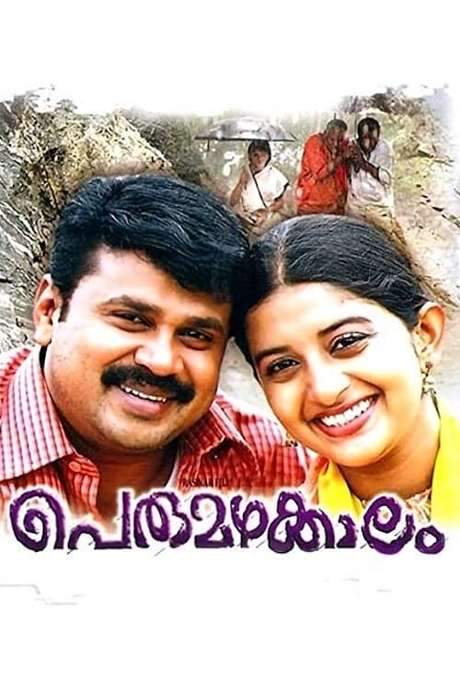
Perumazhakkalam 2004

Directed by

Kamal
Made by

Rasikar Films
Perumazhakkalam Plot Summary
Read the complete plot summary and ending explained for Perumazhakkalam (2004). From turning points to emotional moments, uncover what really happened and why it matters.
Akbar, [Dileep], is happily married to Raziya, [Meera Jasmine]. He travels to Saudi Arabia for work and forges a close friendship with Raghu Rama Iyer, [Vineeth Radhakrishnan], and John Kuruvilla, [Biju Menon]; the trio becomes a steady support system as they navigate life far from home. Akbar even lends some money to another Indian worker, Haneefa, hoping to help him out and keep their circle strong. When Haneefa vanishes with the loan, every attempt to recover the money fails, testing trust among friends. In the heat of a confrontation with Haneefa, Akbar lands a blow, but the situation spirals: the strike inadvertently claims Raghu’s life, and the consequences are swift and severe.
The Saudi court hands down a death penalty for Akbar, turning a personal misstep into an international crisis for a family left behind. The only possible path to escape this fate rests on a letter of pardon from Raghu’s wife, Ganga, [Kavya Madhavan]. To secure this mercy, Raziya and her father, Abdu, travel to Palakkad and set out to persuade Ganga, even as they must navigate its demanding social terrain. They lodge with Kunjikkannan, whose home becomes a temporary base for their mission. Ganga’s in-laws resist any contact with the women, and Raziya’s persistence creates tension, culminating in a tense encounter when Ganga is spotted at a temple; Ganga initially refuses to meet them and slips away, leaving Raziya to face rejection and the sting of communal disapproval from Raghu’s relatives.
Yet compassion and conscience pull at Ganga. She understands that her act of forgiveness could set off a broader ostracism, but the weight of mercy grows heavier than fear. In a decisive turn, she suspends her doubts, travels to Raziya’s hometown, and meets her, eventually signing the pardon letter. Upon returning home, Ganga endures the backlash of her community and in-laws, who cast her out for choosing mercy over conformity. The act of forgiveness thus becomes a quiet, costly act of courage, rippling through two families bound by one tragic accident.
After the three-year sentence is served, Akbar returns to a world that has moved in his absence, and the family grateful yet changed seeks out Ganga, who by then has taken up selling snacks to support herself. The reunions are tempered by memory and restraint, as the adults carry the knowledge of what happened between them, even as the children play together and form bonds that mirror the harmony they are unaware their parents once shared. In the end, the film sketches a portrait of how love, guilt, and forgiveness intersect within a close-knit community, illustrating that reconciliation can arrive not with grand statements but with quiet acts of mercy that rewire futures.
The narrative stays grounded in its human center: a couple’s attempt to repair what was fractured, a sisterhood forged in obligation and compassion, and a community learning to accept a choice that once threatened to tear them apart. The result is a measured tale about the persistence of family ties, the cost of forgiveness, and the way children grow up observing the imperfect way their parents navigate truth, love, and late-arriving grace, all while finding a path toward a fragile, hopeful equilibrium.
Perumazhakkalam Timeline
Follow the complete movie timeline of Perumazhakkalam (2004) with every major event in chronological order. Great for understanding complex plots and story progression.
Marriage of Akbar and Raziya
Akbar and Raziya are happily married, starting a life together back home. Shortly after, Akbar leaves for Saudi Arabia to seek employment. The couple begins a long-distance chapter that tests their bond but keeps them hopeful for the future.
Akbar's life in Saudi Arabia and friendships
Akbar builds a new life in Saudi Arabia and forms a close circle with Raghu Rama Iyer and John Kuruvilla. The trio become firm friends, sharing work and camaraderie. Their bonds provide Akbar with support while he adapts to a new country.
Loan to Haneefa and its consequences
Akbar lends money to Haneefa, hoping to help a fellow Indian. Haneefa borrows the money and later absconds with it. Efforts to recover the funds prove futile, straining Akbar's finances and reputation.
The fatal confrontation
During a confrontation with Haneefa, Akbar strikes but misses and accidentally kills Raghu Rama Iyer. The death shocks the community and triggers serious legal consequences. Akbar is left to bear the blame for Raghu's death as events spiral toward a trial.
Saudi court delivers the death penalty
A Saudi court sentences Akbar to death for the unintended killing. The sentence marks the turning point of his life and places his family in a desperate predicament. The only possible escape is a pardon letter from Raghu's wife, Ganga.
Mercy mission to Palakkad
Raziya and her father Abdu travel to Palakkad, India to plead for mercy and secure the pardon letter. They carry the hope of saving Akbar's life. Their journey marks a risky, emotionally charged appeal to Raghu's family.
Staying with a friend's family
They stay at Kunjikannan's house, an old friend of Abdu, as they navigate local customs and opposition. The hospitality provides some relief, but the social hurdles remain high. The visit intensifies the stakes of their plea.
Ganga's initial refusal and Raziya's persistence
Raziya makes multiple attempts to meet Ganga, but Raghu's relatives resist contact. She persists, seeking any opportunity to speak with Ganga about mercy. The tension reveals the community's rigid code and the personal cost of forgiveness.
Temple meeting and Ganga's initial stance
Raziya finally meets Ganga when the latter visits a temple, but Ganga refuses to forgive at that moment and leaves. The meeting underscores the emotional wall between the two families. The encounter deepens the emotional stakes of the pardon.
Ostracism of Raziya
Raziya is thrown out from the community compound by Raghu's relatives, severing her social ties. The incident starkly demonstrates the social ostracism attached to the case. Raziya endures humiliation as she fights for mercy.
Ganga decides to pardon
Realizing the weight of the decision, Ganga decides to pardon Akbar. However, Raziya has already returned home. Ganga travels to Raziya's hometown to sign the pardon letter herself, risking further social backlash.
Return and ostracism after the pardon
On returning home, Ganga is ostracised by her in-laws and the community for her act of mercy. The social costs mirror the personal toll endured by Akbar's family abroad. Yet the act of mercy leaves a fragile thread of reconciliation in place.
Akbar's return from imprisonment
Akbar completes a three-year sentence and returns home to be reunited with his family. They visit Ganga, whose pardon has altered their lives in subtle, complicated ways. The reunion hints at a fragile peace amid the lingering judgments of the community.
Ganga's new livelihood
Ganga begins selling snacks to support herself, adapting to a life shaped by the ordeal. She continues to live in Palakkad, quietly rebuilding a sense of normalcy. Her resilience marks a quiet, ordinary endurance after extraordinary events.
Children's bond and a hopeful ending
The children of the families bond with each other, unaware of the parents' complicated past. Their innocent friendship offers a note of reconciliation amid social tensions. The story closes on a small, hopeful moment of everyday life.
Perumazhakkalam Characters
Explore all characters from Perumazhakkalam (2004). Get detailed profiles with their roles, arcs, and key relationships explained.
Akbar (Dileep)
A migrant worker in Saudi Arabia who becomes entangled in debt and a fatal accident. His actions trigger a death sentence that tests his marriage and his family's resilience. He embodies vulnerability and responsibility as he navigates legal and moral peril.
Raziya (Meera Jasmine)
Akbar's wife who travels from home to plead for mercy. She endures social stigma and distance to protect her husband and maintain family ties. Her persistence underlines devotion and pragmatic sacrifice.
Raghu Rama Iyer (Vineeth Radhakrishnan)
A friend of Akbar in the Gulf who becomes a central victim in the incident. His death triggers the central conflict and the community’s response, shaping the story arc and the quest for mercy.
John Kuruvilla (Biju Menon)
Akbar's Gulf friend who shares the same social circle and supports his life in exile. His presence underscores the camaraderie and the consequences of money lending among expatriates.
Ganga (Kavya Madhavan)
Raghu's wife who must decide whether to forgive, balancing personal loss and communal expectations. Her eventual pardon becomes a turning point, illustrating the power and cost of mercy.
Abdu (Mamukkoya)
Raziya's father who travels with her to seek mercy. He represents the older generation's values and the familial obligation to protect kin, even as they confront external hostility.
Kunjikkannan (Mala Aravindan)
An old friend who hosts the family in Palakkad, becoming a harbor amid the social storm. His character anchors the domestic side of the story and introduces communal ties.
Perumazhakkalam Settings
Learn where and when Perumazhakkalam (2004) takes place. Explore the film’s settings, era, and how they shape the narrative.
Time period
Early 2000s
The events unfold during a period when many Malayali workers sought jobs in the Gulf. The narrative includes a multi-year imprisonment and the slow, personal process of obtaining mercy through a pardon letter. These elements frame the moral stakes and pace of the story.
Location
Saudi Arabia, Palakkad, Kerala, India
The film moves between migrant-worker communities in Saudi Arabia and the Kerala town of Palakkad. It highlights the gulf labor corridor that connects the Indian diaspora with home towns. The settings juxtapose the urban Gulf environment with the close-knit rural social world of Palakkad.
Perumazhakkalam Themes
Discover the main themes in Perumazhakkalam (2004). Analyze the deeper meanings, emotional layers, and social commentary behind the film.
🤝
Forgiveness
Forgiveness drives the central conflict and resolution. Ganga's act of pardoning Akbar is costly and deeply personal, testing loyalties within families and communities. The story shows that mercy can restore bonds, but it often carries social consequences. Mercy becomes a pivotal, costly choice.
🧱
Social Pressure
Social norms and communal scrutiny shape the characters' choices and consequences. Raziya endures discrimination, while Ganga's decision to pardon occurs under pressure to preserve family honor. The film portrays the heavy price of communal judgment. It reveals how gossip and ostracism can drive life choices as much as love or duty.
🌍
Migrant Bonds
The migrant-labor context anchors relationships across seas and cultures. Debt, support networks, and shared risk among expatriates set the stage for the moral decisions that follow. The story uses diaspora ties to show how actions abroad ripple back into home life. It presents cross-border relationships as both lifeline and liability.

Coming soon on iOS and Android
The Plot Explained Mobile App
From blockbusters to hidden gems — dive into movie stories anytime, anywhere. Save your favorites, discover plots faster, and never miss a twist again.
Sign up to be the first to know when we launch. Your email stays private — always.
Explore the mobile appPerumazhakkalam Spoiler-Free Summary
Discover the spoiler-free summary of Perumazhakkalam (2004). Get a concise overview without any spoilers.
In the monsoon‑laden backdrop of Kerala and the stark desert of Saudi Arabia, a tight‑knit expatriate community navigates a world where cultural traditions and foreign law intersect. The film immerses the viewer in humid streets and sun‑scorched offices, using the relentless rain as a quiet metaphor for the tension that seeps through the lives of those far from home. Its tone balances the intimacy of family drama with the weighty atmosphere of legal and moral uncertainty, inviting the audience to feel both the claustrophobia of distant courts and the familiar warmth of homely rituals.
Akbar is an industrious migrant worker whose optimism is rooted in his love for his family. His wife Razia exudes quiet strength, acting as his anchor while he toils abroad. Their lives intertwine with Reghu Rama Iyer, a fellow Indian whose friendship adds a layer of camaraderie and shared aspirations, and his devoted spouse Ganga, whose presence embodies the resilience of a woman bound by social expectations. Together they form a mosaic of hopes, responsibilities, and unspoken ties that reflect the broader diaspora experience.
When a sudden tragedy strikes, the legal framework of the host country imposes a verdict that can only be softened by an act of forgiveness from the bereaved’s partner. This premise places Razia on a delicate journey—physically, as she travels back to her native town, and emotionally, as she confronts a community whose customs clash with a foreign justice system. The narrative teeters between the stark finality of law and the nuanced, often painful, negotiations of mercy.
Through carefully composed scenes that blend rain‑kissed landscapes with bustling markets, the story explores how ordinary lives are reshaped by extraordinary circumstances. It lingers on the silent conversations between parents and children, the unspoken bonds that form across cultural lines, and the lingering question of whether compassion can bridge the gap between two worlds.
Featured on this page

What's After the Movie?
Not sure whether to stay after the credits? Find out!
Check out our other apps:

SAT Sphere
Build confidence for the Digital SAT.

Mori Atlas
Discover wild places worth protecting.

Luntero
Search smarter for a home in Amsterdam.

Plot Explained
Unravel movie endings and hidden clues.

Pokechamp
Dive into Pokémon data and battle logic.

Driving Theory
Get ready for your European theory test.

Movie Dust
Plan your next cinema trip with ease.

Musemap
Find art and culture as you travel.

Selkobase
Compare credentials before committing.

Local Manual
Turn an unfamiliar country into practical next steps.

Lernavi
Compare school systems before your next move.

GymRoam
Find a workout stop wherever your plans take you.
Explore Our Movie Platform
New Movie Releases (2026)
Famous Movie Actors
Top Film Production Studios
Movie Plot Summaries & Endings
Major Movie Awards & Winners
Best Concert Films & Music Documentaries
Movie Collections and Curated Lists
© 2026 What's After the Movie. All rights reserved.
Privacy Policy