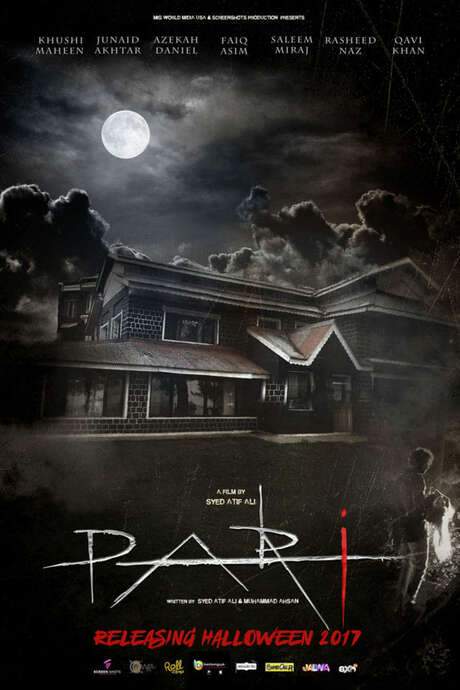
What Is Pari About?
The premise of Pari in 270 words, with nothing given away. The full story follows below.
In the quiet, rain‑soaked outskirts of Bangladesh, a modest home becomes the centre of an unsettling quiet. Arnab, a gentle printer, and Piyali, a caring nurse, have just settled into this new space, hoping to build a future together. Their daughter, Rukhsana, begins to show behaviour that feels both foreign and unnerving, prompting the couple to question what lies beneath the surface of her everyday life.
The film weaves a slow‑burning atmosphere that blends the everyday with the mythic. Whispers of an ancient demon, known locally as Ifrit, linger in the shadows of the village, hinting at a lineage that blurs the line between human and something older. The rural landscape, dense with mist‑clad fields and creaking houses, feels both intimate and expansive, inviting viewers to feel the weight of tradition and superstition that presses against modern hopes.
Arnab and Piyali are drawn into a delicate dance of love, doubt, and protectiveness as they grapple with the changes they observe in their child. Their relationship, grounded in quiet devotion, is tested by forces they can barely name, and the film’s tone shifts between tender domestic moments and an undercurrent of dread that never fully fades. The characters move through a world where science and folklore intersect, leaving room for wonder and fear to coexist.
Through careful pacing and a muted colour palette, the story sets up a compelling mystery: what is truly hidden within Rukhsana’s strange behaviour, and how will the couple’s resolve shape the outcome? The mood remains hauntingly lyrical, promising a journey that explores the boundaries of love, identity, and the shadows that linger just beyond ordinary sight.
What Happens in Pari?
The complete story of Pari, from the first scene to the last, in 698 words (about 3 minutes). Spoilers throughout. Names in the text link to 1 cast member page.
Spoilers ahead
In a rural corner of Bangladesh, a dark myth comes alive through the figure of Ifrit, a demon whose bloodline is supposedly preserved by a secretive cult named Auladhchakra. This group pursues a chilling plan: kidnap women and summon a male demon to sire offspring, hoping to continue the demonic line. A brutal vigilante faction, led by Qavi Khan as Professor Qasim Ali, once hunted these women, keeping them captive until they give birth, only to end the lives of the newborns by decapitating them and sealing the heads in glass jars. Their method inspires fear and opposition among villagers, and while some sympathize with their cause, the drastic violence of their actions ultimately shuts them down.
Rukhsana, the daughter of one woman who survived such a ritual, grows up haunted by the past and slips away from the clutches of that brutal world. The story widens its lens to follow Arnab, a young man who runs a printing press, and Piyali, a nurse who is about to enter an arranged marriage with him. In a heavy rain, their journey home takes a fatal turn when they strike an old woman; the woman dies, and the discovery of a hidden hut in the forest reveals Rukhsana chained and hiding from a past she barely understands. Arnab, moved by compassion and a sense of responsibility, takes her in. Rukhsana, unfamiliar with the modern world, is troubled by unsettling demonic visions, yet she appears to be drawn to Arnab, and a fragile bond forms between them as she begins to trust and love him.
The calm is disrupted when a mortuary assistant uncovers the cult’s mark on Rukhsana’s mother and alerts Professor Ali, who has been pursuing clues about her whereabouts for years. As Rukhsana’s health falters, she experiences a violent awakening—she bites a dog and releases a venom that she cannot control. She opens up about her love for Arnab, and the two share an intimate moment that becomes a turning point in the story. The professor confronts Arnab with the truth, but Arnab’s initial disbelief gives way to a desperate search for answers about Ifrit. A fight with a morgue assistant intensifies the tension, and Rukhsana retaliates by killing the assistant in a display of fierce protectiveness, stepping between Arnab and Piyali.
What follows is a careful unravelling of legend and science. Arnab learns that Ifrit’s offspring are born far earlier than human pregnancies would allow—about one month into life—an idea that shakes him to his core. He reaches back to Professor Ali for help, and the professor arrives with his men. In a dramatic and devastating revelation, Rukhsana admits she is pregnant with Arnab’s child. The professor’s group binds and tortures her in a bid to extract the truth, a cruel act that ultimately leads to her death from the poison she carries. She calls out to Arnab, but he leaves, broken and unsure of what to do next.
Weeks pass, and Piyali visits Arnab at his family home. Through their conversation, he confronts the consequences of his choices, recognizing that he should not have abandoned Rukhsana, and that the child she carries is his. Rukhsana, after enduring further violence, breaks free and makes a final, terrible bid for life—she kills the professor and wounds Piyali before going into labor. Piyali, drawing on her nurse’s training and her difficult history with abortion, helps deliver the baby, a moment that carries a fragile hope. Rukhsana hands the newborn to Piyali and disappears, leaving Arnab to chase the truth to the old hut.
There, he finds the broken, dying figure of Rukhsana. He cradles her as she succumbs, and she makes a final choice to spare him from her poison, letting the venom stay inside her. Before she dies, she insists that their baby is human, a testament to the power of love over hate. In the end, Arnab confronts the magnitude of what has happened and resolves to raise their child, believing that Rukhsana’s love gave the child a future that the demon’s lineage never could. The film closes on a note of cautious, human hope, tempered by the memory of the costs paid in love and sacrifice.
Pari Timeline: Every Key Event in Order
12 key events in the order they happen, from “Rise of Ifrit-driven vigilante crusade” to “A human child and a vow to raise it”. 12 events name a place, across 11 locations.
- 1
Rise of Ifrit-driven vigilante crusade
The legend of Ifrit and a Bangladeshi cult led by Professor Qasim Ali is introduced, revealing their plan to perpetuate Ifrit's bloodline by kidnapping women and summoning a male demon for impregnation. The group tortures and kills the resulting demonic babies, sealing their heads in glass jars. Villagers initially support but opposition grows, and the vigilante operation is eventually shut down due to its violent methods.
Where:Bangladesh (village areas)
- 2
Mother's mark and Ali's search
A mortuary assistant reveals that Rukhsana's mother bears the cult's mark, connecting her to the long pursuit of Ali. Professor Ali, who has hunted Rukhsana for years, tightens the net as he continues to search for her. The revelation escalates the danger surrounding Rukhsana.
When:years of pursuit Where:mortuary
- 3
Arnab rescues Rukhsana after the accident
On a rain-soaked route home, Arnab and his parents strike an old woman who dies. Police investigations lead to a forest hut where Rukhsana is chained and kept by the cult; Arnab, feeling responsible, brings her into his home. He shelters her and begins to learn about her strange world.
When:on the way home in heavy rain Where:Forest hut (where she is kept) and Arnab's home
- 4
Rukhsana adapts, visions and growing bond
Rukhsana struggles to adjust to the modern world and is haunted by demonic visions she cannot control. Arnab finds her strange yet endearing, and their bond deepens as they spend time together. Her presence unsettles some, but it draws Arnab closer.
When:shortly after adoption Where:Arnab's home
- 5
Cult ties reassert with Ali
A mortuary assistant informs Ali that the cult's mark appeared on Rukhsana's mother, confirming Ali's long pursuit of Rukhsana. Ali escalates his campaign to capture her and eliminate the threat he believes she represents. The pursuit intensifies as the danger to Rukhsana grows.
When:soon after Where:morgue / Ali's base
- 6
Illness, love, and a secret kiss
One night, Rukhsana grows sick as her body fights the demon poison dwelling in her blood. She secretly bites a dog, killing it, as a stark sign of the poison's power. She then admits that she loves Arnab, and the two share an intimate moment.
When:one night Where:Arnab's home
- 7
Ali confronts Arnab; the morgue fight
The next morning, Ali confronts Arnab with the truth about Rukhsana, but Arnab refuses to believe him. The morgue assistant attacks Arnab, but Rukhsana intervenes by killing the assistant and stepping between Arnab and Piyali.
When:the night after illness Where:Arnab's home / morgue vicinity
- 8
Arnab learns about Ifrit and calls for guidance
Disturbed, Arnab researches Ifrit and learns that Ifrit babies are born in one month, not nine. He contacts Professor Ali, seeking guidance and help to protect Rukhsana and their unborn child.
When:shortly after the confrontation Where:Arnab's home / library
- 9
Ali's men capture and torture Rukhsana
Ali's men capture Rukhsana after she reveals she is pregnant. They tie her up and torture her to death by forcing the poison to kill her, while she cries for Arnab. The torture ends with her death, underscoring the danger surrounding them.
When:soon after Where:secluded site / Ali's base
- 10
Three weeks later: truth about the baby
Three weeks later, Piyali visits Arnab and reveals that Rukhsana's pregnancy makes him the father, a truth he discovers and laments for not having saved her. He realizes he should not have left her to die and that the baby is his.
When:three weeks later Where:Arnab's family home
- 11
Rukhsana's final rampage and birth
Rukhsana, having endured torture, breaks free and kills Professor Ali before heading to Piyali's. She injures Piyali and goes into labor, with Piyali assisting the birth despite her own fears. The baby is born with an umbilical cord, raising questions about humanity as Rukhsana disappears.
When:immediately after the attack Where:Ali's hideout / Piyali's home
- 12
A human child and a vow to raise it
Arnab rushes to the old hut and finds Rukhsana near death. He cries and hugs her, and she resists biting him to release her poison, choosing to keep it inside. Before dying, she tells Arnab that their baby is human, not Ifrit's offspring, thanks to their love, and Arnab vows to raise the child.
When:end of story Where:old hut
Who Are the Main Characters in Pari?
4 characters, among them Professor Ali, Arnab and Rukhsana: who each one is and the part they play in the story. 1 of them link to the actor’s page.
- PA
Professor Ali
Played by Qavi Khan
Professor Qasim Ali heads a radical vigilante group that hunted women impregnated by Ifrit and killed the demonic offspring. His methods are brutal and controversial, drawing opposition from villagers and ultimately leading to the group's shutdown. He relentlessly pursues Rukhsana for years, believing he is eradicating evil, though his ruthlessness sparks moral questions about justice.
- ⚖️ Moral ambiguity
- 🗡️ Radical vigilantism
- A
Arnab
Arnab is a young man who runs a printing press and becomes the caretaker of Rukhsana after she escapes captivity. He grapples with responsibility, empathy, and love as the two form a fragile bond. His discovery of the truth about Rukhsana forces him to confront the consequences of his actions and choices.
- 💖 Love
- 🧭 Moral conflict
- R
Rukhsana
Rukhsana is a woman subjected to a satanic ritual and demon blood, who gradually falls in love with Arnab. She struggles with violent impulses and the fear of harming those she cares about, ultimately fighting for her baby's humanity even as she faces death. Her journey blends vulnerability with dangerous power.
- 👹 Demon heritage
- 💞 Love
- 🎗️ Sacrifice
- P
Piyali
Piyali is a nurse who becomes entwined in the drama surrounding Rukhsana and Arnab. Set for an arranged marriage, she ultimately assists in the delivery of the baby, confronting her past and showing compassion in a moment of crisis. Her role underscores themes of care, choice, and resilience.
- 🧑⚕️ Care
- 💬 Compassion
Where and When Is Pari Set?
Pari is set in Bangladesh. Here is why the place matters to the story.
Where
Bangladesh
Set in rural Bangladesh, the story centers on a village landscape with a forest and an old hut used by a demon cult. The community atmosphere is claustrophobic, balancing traditional values with fear of a lurking demonic influence. Weather and isolation heighten tension as vigilante actions unfold against a backdrop of superstition and danger.
- 🎭 Horror
- 🌧️ Supernatural
- 🏚️ Rural backdrop
What Are the Themes of Pari?
3 ideas the story keeps returning to, among them Love vs Blood, Moral Dilemma and Humanity vs Monstrosity.
-
01
Love vs Blood
Love defies the demonic lineage at the heart of the story. Rukhsana's affection for Arnab challenges the violent fate imposed by Ifrit and the cult. The bond between them drives the emotional core, culminating in the belief that love can humanize their unborn child.
-
02
Moral Dilemma
The vigilante professor's radical methods spark a debate on ends versus means. Arnab confronts the ethics of saving one person versus the cost of vigilantism. Loyalty, guilt, and responsibility clash as characters decide who deserves protection.
-
03
Humanity vs Monstrosity
The film blurs the line between demon and human through Rukhsana's demon blood and her humanity as a mother. The baby, born of conflicting forces, becomes a symbol of humanity overcoming hatred. The narrative asks what makes a person truly human.
What Kind of Film Is Pari?
Dark in tone, with steady pacing and a moderate story, going by the plot summary.
- Tone
- Dark
- Pacing
- Steady
- Story
- Moderate
- Intensity
- High
- Ending
- Bittersweet
A dark and emotionally heavy horror film that builds a tense, tragic atmosphere around a cursed love story, culminating in a devastating yet cautiously hopeful sacrifice.
- disturbing
- tragic
- gothic horror
- fatalistic
- melancholic
- tense
- demon child
- forbidden love
- supernatural inheritance
- cult persecution
Content notes: torture, child death, decapitation, forced pregnancy, animal violence.
Quiz
How well do you remember Pari? Test yourself on the story.