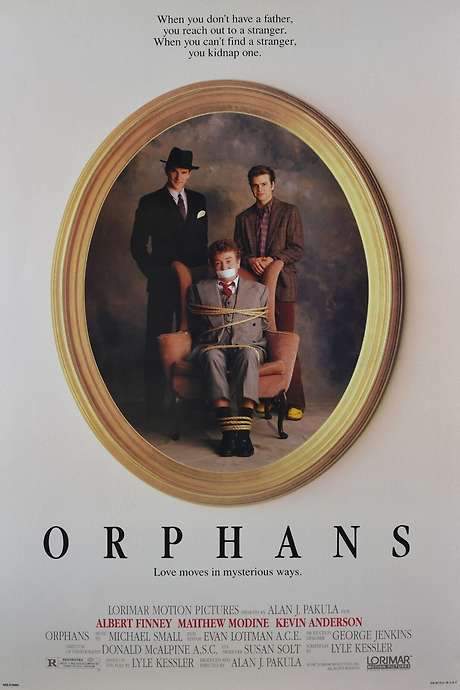
Orphans 1987

Directed by
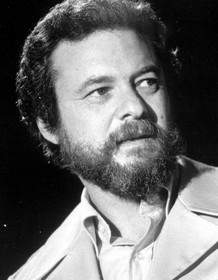
Alan J. Pakula
Made by

Lorimar Motion Pictures
Where to Watch Orphans
See current US streaming, rental, and purchase options for Orphans (1987) via JustWatch.






Orphans Plot Summary
Read the complete plot summary and ending explained for Orphans (1987). From turning points to emotional moments, uncover what really happened and why it matters.
In a rundown row house in Newark, New Jersey, two brothers struggle to survive: Treat, the elder, who sustains the family by petty theft, and Phillip, who clings to learning through magazines and television as the world outside remains largely off-limits.
One night, Treat ambushes a mysterious man from a bar, the briefcase full of stocks and bonds in hand. The man, known as Harold, turns the tables and quietly insinuates himself into the brothers’ lives, reshaping their routine and the dynamics of their small world. He begins to transform Treat into a more refined and courteous figure, while offering Phillip the encouragement he needs to reach beyond their dilapidated walls.
But Harold’s presence unsettles the fragile balance inside the household. As he helps Phillip confront his agoraphobia—the fear of leaving the house that Treat has long warned might be deadly—the tension rises. The brothers face questions about trust, control, and what stability might look like when a stranger’s influence is in the mix.
After a late-night argument between the brothers, Harold returns badly wounded. He dies on the couch, with Phillip by his side. Treat breaks down in tears, and Phillip offers him quiet comfort, marking a stark, emotional shift in their uneasy relationship.
Orphans Timeline
Follow the complete movie timeline of Orphans (1987) with every major event in chronological order. Great for understanding complex plots and story progression.
Two brothers in a rundown Newark row house
Treat and Phillip live in a dilapidated row house in Newark, eking out a precarious existence. Treat, the elder, is a violent pickpocket who drags himself and Phillip through daily danger. Phillip mostly watches from the sidelines, educating himself with magazines and television while the outside world looms.
Treat's daily theft for survival
Treat robs people in the city to feed himself and Phillip, maintaining a brutal rhythm of survival. His violence masks a fragile, strained household and foreshadows the upheaval Harold will bring. The routine is a fragile shield over deeper tensions in their lives.
Phillip seeks knowledge at home
Phillip educates himself using magazines and television, trying to understand the world beyond their door. His quiet curiosity contrasts with Treat's volatile tendencies and hints at a new dynamic that might emerge. The home becomes a small classroom where ideas threaten their routine.
Treat abducts a mysterious man from a bar
Treat abducts a mysterious man from a bar, Harold, clutching a briefcase full of stocks and bonds. Harold immediately asserts himself, turning the tables on his kidnapper. The encounter marks the start of a dangerous shift in the brothers' lives.
Harold infiltrates the household
Harold begins to assimilate into the brothers' lives, quietly guiding their routine and manners. He subtly shapes Treat into a refined, genteel partner and exposes Phillip to new expectations. The household's power balance tilts as civility replaces raw survival.
Treat becomes a gentleman under Harold's influence
Under Harold's influence, Treat adopts a more polished demeanor and a restrained approach to life. The transformation alarms Phillip, who fears losing the world he understands. The once-chaotic home grows quiet, an uneasy veneer of civility masking deeper tensions.
Harold helps Phillip confront agoraphobia
Harold pushes Phillip toward the outside world, encouraging him to step beyond the door. Phillip makes tentative progress, spurred by Harold's faith in him. The brothers' relationship reshapes as Phillip gains a fragile sense of agency.
Tensions rise as Harold's disappearance is suspected
People begin to notice Harold's absence and wonder what happened to the mysterious broker. The home becomes a site of rumor, and the brothers' reliance on Harold's moneymaking cover grows more obvious. External pressure amplifies the fragility of their fragile arrangement.
A late-night argument erupts between the brothers
One night, a heated argument erupts between Treat and Phillip, built on fear, dependence, and a longing for the world beyond the door. The conflict exposes the rift between the brothers and the cost of Harold's presence. The tension leaves the home taut and unstable.
Harold returns, revealed to be fatally wounded
That same night, Harold returns, found mortally wounded. He reveals that his stay has limited time and that danger followed him. The shocking moment confirms that the arrangement cannot last and raises the stakes for all of them.
Harold dies on the couch; Phillip by his side
Harold collapses onto the living room couch and dies, with Phillip kneeling beside him. The death marks the collapse of his influence and the end of the brothers' uneasy plan. Treat breaks down emotionally, while Phillip's steadfast presence offers a last glimmer of support.
Treat breaks down; Phillip offers comfort
Treat finally breaks down in tears, the years of violence catching up with him. Phillip consoles his brother, offering quiet, compassionate support amid the tragedy. With Harold gone, the brothers must face an uncertain future alone.
Orphans Characters
Explore all characters from Orphans (1987). Get detailed profiles with their roles, arcs, and key relationships explained.
Harold (Albert Finney)
A mysterious bar patron who kidnaps Treat's brother and quickly ingrains himself into the brothers' daily life. Harold exudes calm charm and worldly knowledge, using newfound influence to sway Treat and Phillip. He becomes a catalyst for both protection and manipulation, blurring the line between benefactor and threat.
Treat (Matthew Modine)
The elder brother, a volatile pickpocket who relies on quick violence to survive. His bond with Phillip is tested as Harold reshapes their household and expectations. His emotional arc confronts affection, fear, and the fragility of family loyalty.
Phillip (Kevin Anderson)
The younger brother who seeks education and solace in magazines and television. He is initially unstable due to agoraphobia and Harold’s influence offers him a new sense of possibility. His relationship with Treat and Harold drives the emotional core of the story.
Orphans Settings
Learn where and when Orphans (1987) takes place. Explore the film’s settings, era, and how they shape the narrative.
Location
Newark, New Jersey
The film is set in a gritty Newark urban landscape, centering on a dilapidated row house where Treat and Phillip struggle to survive. The city’s bars, streets, and public spaces frame the tension between vulnerability and manipulation. The backdrop of an aging urban environment underscores the sense of decay and urgent peril within the brothers' lives.
Orphans Themes
Discover the main themes in Orphans (1987). Analyze the deeper meanings, emotional layers, and social commentary behind the film.
🗝️
Power & Control
Harold's arrival shifts the balance of power in the house as he uses charm to redefine Treat as a gentleman and push Phillip toward dependence. The film explores how control can masquerade as mentorship and care, blurring lines between protection and coercion. Treat's violent instincts clash with Harold's calculated manipulation, highlighting the fragility of family bonds under pressure.
🧠
Psychological Manipulation
Harold enters as an enigmatic outsider whose knowledge and calm demeanor mask ulterior motives. Phillip's widening education and agoraphobia reveal how mental states are shaped by what we are allowed to know and fear. The narrative probes how suggestion and conformity can alter identity within a small domestic sphere.
🎭
Transformation & Deception
Harold's presence turns Treat from a violent thief into a polished, courteous persona. The film examines the performative nature of identity, as appearances cover coercive dynamics. The tension comes from who gets to wear the mask of civility and who remains bound by rough behavior.
💔
Tragedy & Loss
Moments build toward an inevitable tragedy as Harold sustains his parasitic influence until the fatal wound reveals the consequences of manipulation. The death scene on the couch crystallizes the fragility of family, trust, and the illusion of control. Phillip's and Treat's reactions underscore the film's meditation on grief and the normalization of violence.

Coming soon on iOS and Android
The Plot Explained Mobile App
From blockbusters to hidden gems — dive into movie stories anytime, anywhere. Save your favorites, discover plots faster, and never miss a twist again.
Sign up to be the first to know when we launch. Your email stays private — always.
Explore the mobile appOrphans Spoiler-Free Summary
Discover the spoiler-free summary of Orphans (1987). Get a concise overview without any spoilers.
In the gritty backdrop of Newark’s aging row houses, a quiet desperation lingers in every cracked window and faded hallway. The city’s relentless hum presses against a modest, weather‑worn home where two brothers have built a fragile world of routine and survival. The atmosphere feels both intimate and oppressive, a place where the line between protection and confinement blurs with each passing day.
The elder brother, Treat, moves through the streets with a hardened edge, his demeanor shaped by years of taking what he needs to keep the household afloat. He is a figure of silent authority, his actions driven by an instinct to provide, even if it means walking a precarious line. Across from him, Phillip dwells in a quieter realm, seeking refuge in the pages of magazines and the glow of a television set, trying to piece together a sense of self amid the stale air of their shared confinement.
Their isolated rhythm is disturbed when a stranger named Harold steps into their lives. He arrives with an air of quiet confidence that seems at odds with the brothers’ hardened existence, offering a subtle invitation to see beyond the walls that have defined them. His presence begins to stir dormant hopes and unspoken fears, prompting Treat to reconsider his hard‑won habits and encouraging Phillip to confront the invisible barriers that have kept him from the world outside.
The film hovers between melancholy and the faint promise of change, painting a portrait of brotherly love that is both protective and suffocating. As the characters navigate the uneasy balance between dependence and independence, the story leaves the audience questioning how far love can move when the only certainty is the unknown that now lingers in the doorway.
Movies with Similar Twists and Themes
Uncover films that echo the narrative beats, emotional arcs, or dramatic twists of the one you're exploring. These recommendations are handpicked based on story depth, thematic resonance, and spoiler-worthy moments — perfect for fans who crave more of the same intrigue.


Featured on this page

What's After the Movie?
Not sure whether to stay after the credits? Find out!
Check out our other apps:

SAT Sphere
Build confidence for the Digital SAT.

Mori Atlas
Discover wild places worth protecting.

Luntero
Search smarter for a home in Amsterdam.

Plot Explained
Unravel movie endings and hidden clues.

Pokechamp
Dive into Pokémon data and battle logic.

Driving Theory
Get ready for your European theory test.

Movie Dust
Plan your next cinema trip with ease.

Musemap
Find art and culture as you travel.

Selkobase
Compare credentials before committing.

Local Manual
Turn an unfamiliar country into practical next steps.

Lernavi
Compare school systems before your next move.

GymRoam
Find a workout stop wherever your plans take you.
Explore Our Movie Platform
New Movie Releases (2026)
Famous Movie Actors
Top Film Production Studios
Movie Plot Summaries & Endings
Major Movie Awards & Winners
Best Concert Films & Music Documentaries
Movie Collections and Curated Lists
© 2026 What's After the Movie. All rights reserved.
Privacy Policy