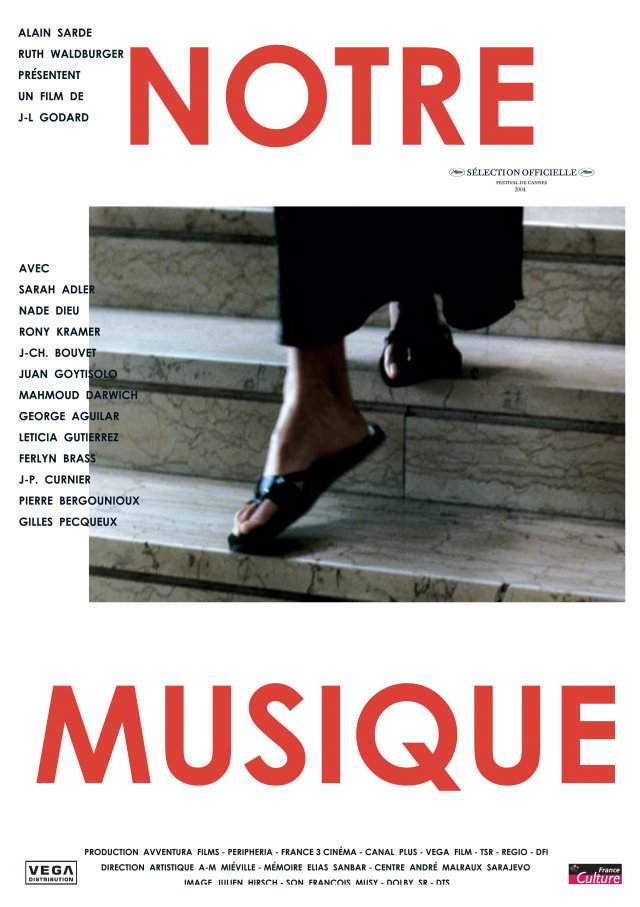
Notre musique 2004

Directed by
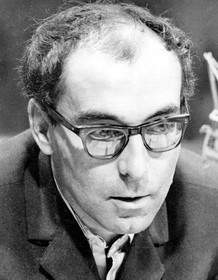
Jean-Luc Godard
Made by

Wellspring Media
Notre musique Plot Summary
Read the complete plot summary and ending explained for Notre musique (2004). From turning points to emotional moments, uncover what really happened and why it matters.
The film is structured into three distinct segments, drawing inspiration from Dante’s Divine Comedy.
Realm 1: Hell features a concise, non-narrative montage that utilizes both documentary and fictional footage, showcasing grim depictions of war, destruction, and violence.
Moving into Realm 2: Purgatory, the main portion of the film unfolds as Jean-Luc Godard portrays himself, lingering at an airport while anticipating his flight to a European arts conference in Sarajevo. During this wait, he encounters Ramos Garcia, a French Israeli who is headed to the conference as an interpreter. Excited about reuniting with his niece, Olga Brodsky, a French-speaking Jew with Russian ancestry, Ramos shares his eagerness. At the same conference, Judith Lerner, a journalist from Tel Aviv, approaches the French ambassador, urging him for a discussion on Jewish-Palestinian relations stating she seeks “not a just conversation; just a conversation.” Judith also engages with poet Mahmoud Darwish, who argues that Israel’s identity shapes the Palestinian struggle. As she explores the city, she visits the symbolic Mostar bridge, where she reflects on Emmanuel Levinas’s works (Entre Nous).
Meanwhile, Olga participates in Godard’s lecture, which ostensibly discusses the interplay of image and text. Godard critiques the traditional “shot/reverse shot” technique prevalent in cinema, arguing it diminishes the uniqueness of characters and can serve as a propaganda tool. Later, Olga and her uncle Ramos delve into the profound philosophical implications of suicide.
After the conference’s conclusion, Godard returns home to tend to his garden. He receives a call from Ramos, who recounts a chilling incident involving a young woman who stormed a theater claiming she had a bomb, demanding someone to die alongside her for the sake of Israeli-Palestinian peace. In a frightening turn, the audience fled and the police intervened and shot her; her bag revealed only books. Ramos suspects that the woman might have been Olga.
Realm 3: Heaven serves as a brief epilogue, where Olga meanders through a serene lakeside environment, seemingly overseen by American marines.
Notably, the film’s soundtrack features contributions from Meredith Monk, an American composer, enhancing the film’s emotional and thematic depth.
Notre musique Timeline
Follow the complete movie timeline of Notre musique (2004) with every major event in chronological order. Great for understanding complex plots and story progression.
Introduction to Hell
The film opens with a montage that vividly depicts the horrors of war and violence. This segment, known as 'Hell', combines both documentary and fictional footage to immerse the viewer in the grim realities of human conflict.
Anticipation at the Airport
The narrative transitions to 'Purgatory', primarily set in an airport where Jean-Luc Godard portrays himself. He finds himself waiting for a flight to a European arts conference in Sarajevo, setting the tone for the unfolding interactions.
Meeting Ramos Garcia
While at the airport, Godard encounters Ramos Garcia, a French Israeli interpreter on his way to the same conference. Ramos is filled with excitement over reuniting with his niece, Olga Brodsky, providing insights into their family dynamics.
Judith Lerner's Advocacy
Judith Lerner, a journalist from Tel Aviv, meets with the French ambassador at the conference. She expresses her desire for open dialogue regarding Jewish-Palestinian relations, emphasizing the need for meaningful conversations in a tense political climate.
Dialogue with Mahmoud Darwish
During her exploration of the city, Judith Lerner engages in a conversation with poet Mahmoud Darwish. He shares insights on how Israel's identity profoundly influences the Palestinian struggle, adding depth to the ongoing discourse.
Reflection at Mostar Bridge
Judith visits the historic Mostar bridge, where she reflects on the philosophical works of Emmanuel Levinas, particularly his book *Entre Nous*. This moment captures her deep contemplation on ethics, identity, and the shared history of conflict.
Godard's Lecture
At the conference, Olga attends a lecture presented by Godard focused on the connections between image and text in cinema. Godard critiques conventional filmmaking techniques, shedding light on how they can stifle character uniqueness and serve propagandistic purposes.
Philosophical Chats
Following the lecture, Olga and Ramos delve into the heavy topic of suicide, exploring its philosophical implications. Their discussion exemplifies the film's overarching themes of despair and identity in the face of societal pressures.
The Chilling Incident
After the conference, Godard returns to his home to care for his garden. He receives a shocking phone call from Ramos, detailing a harrowing event in which a young woman disrupted a theater, claiming to have a bomb and demanding a partner in her sacrifice for peace.
Tragic Outcome
As the audience panicked and fled, the police intervened, tragically shooting the woman who only had books in her bag. This incident leaves Ramos suspecting that the woman might have been his niece, Olga, casting a shadow over the narrative.
Epilogue in Heaven
The final segment, labeled 'Heaven', presents Olga wandering through a peaceful lakeside setting. Here, she is depicted as being watched over by American marines, contrasting sharply with the preceding turmoil.
Musical Contributions
Throughout the film, the emotional and thematic layers are enhanced by the soundtrack, which features contributions from American composer Meredith Monk. This music adds depth and resonance to the complex narrative.
Notre musique Characters
Explore all characters from Notre musique (2004). Get detailed profiles with their roles, arcs, and key relationships explained.
Jean-Luc Godard
Portrayed by Nade Dieu, Godard is a filmmaker who embodies intellectual critique and philosophical inquiry. His character navigates themes of war and identity while challenging conventional cinematic narratives.
Ramos Garcia
Played by Rony Kramer, Ramos is a French Israeli interpreter who balances his personal joy and the weight of his cultural identity. His interactions reflect both hope and despair in the context of the conference.
Olga Brodsky
Sarah Adler's portrayal of Olga highlights a young woman caught between cultures and the heavy legacy of history. Her character engages deeply with philosophical questions about existence and the consequences of human action.
Notre musique Settings
Learn where and when Notre musique (2004) takes place. Explore the film’s settings, era, and how they shape the narrative.
Time period
Contemporary era
The film takes place in a contemporary setting, a time marked by geopolitical tensions, especially regarding the Israeli-Palestinian conflict. This period witnessed efforts towards dialogue and understanding amidst ongoing violence, reflecting the challenges of achieving peace.
Location
Sarajevo, Mostar
Sarajevo, known for its complex history and cultural diversity, serves as a backdrop for discussions about Jewish-Palestinian relations and reflects on the impacts of war. Mostar, with its iconic bridge, symbolizes the intersection of cultures and histories, becoming a poignant site for reflection on identity and conflict.
Notre musique Themes
Discover the main themes in Notre musique (2004). Analyze the deeper meanings, emotional layers, and social commentary behind the film.
🕊️
Peace
The theme of peace permeates the narrative, especially through the interactions between characters discussing Jewish-Palestinian relations. The film critiques the barriers to genuine dialogue and understanding, highlighting personal and cultural struggles in the quest for harmony.
🖼️
Art and Identity
Art as a means of exploring identity is central to the film. Through Godard's critique of cinematic techniques and Olga's participation in his lecture, the film underscores how art reflects complex human experiences and the shared narratives that shape cultures.
💭
Existentialism
Existential themes are explored, particularly through the philosophical discussions on life and death between Ramos and Olga. The film delves into the meaning of existence in the face of violence and chaos, prompting reflections on personal choice and societal conditions.

Coming soon on iOS and Android
The Plot Explained Mobile App
From blockbusters to hidden gems — dive into movie stories anytime, anywhere. Save your favorites, discover plots faster, and never miss a twist again.
Sign up to be the first to know when we launch. Your email stays private — always.
Explore the mobile appNotre musique Spoiler-Free Summary
Discover the spoiler-free summary of Notre musique (2004). Get a concise overview without any spoilers.
In a daring meditation on conflict and representation, the film unfolds in three distinct realms that echo Dante’s Divine Comedy. The opening segment plunges viewers into a stark collage of war imagery, juxtaposing real‑world devastation with the polished violence of cinema. This visual counterpoint sets a contemplative tone, inviting the audience to question how media shapes our perception of suffering. The mood is austere yet oddly lyrical, underscored by Meredith Monk’s haunting score, which weaves an atmospheric thread through the montage.
The narrative heart emerges in the middle realm, where a chance encounter at an airport launches a reflective journey to Sarajevo. Here, Jean‑Luc Godard appears as himself, a seasoned filmmaker poised between lecture and introspection. He meets Ramos Garcia, a French‑Israeli interpreter whose personal ties to the city add a layer of intimate urgency. Accompanying them is Olga Brodsky, a French‑speaking Jew of Russian descent, whose presence at a European arts conference hints at the collision of heritage, art, and political reality. The gathering also draws in Judith Lerner, a journalist seeking conversation about the Israeli‑Palestinian dialogue, and poet Mahmoud Darwish, whose words blur the line between cultural identity and conflict. Their interactions swirl around ideas of image, text, and the ethics of storytelling, suggesting that the real drama lies in the dialogue between creators, interpreters, and observers.
As the film moves toward its concluding realm, the atmosphere shifts toward a quiet, almost surreal serenity, offering a brief respite that feels both contemplative and unresolved. The final images linger over a tranquil lakeside watched over by distant military presences, reinforcing the persistent tension between peace and surveillance. Throughout, the work balances documentary gravitas with self‑reflexive artifice, cultivating a tone that is simultaneously probing and poetic, urging viewers to linger on the uneasy spaces where history, media, and personal narrative intersect.
Movies with Similar Twists and Themes
Uncover films that echo the narrative beats, emotional arcs, or dramatic twists of the one you're exploring. These recommendations are handpicked based on story depth, thematic resonance, and spoiler-worthy moments — perfect for fans who crave more of the same intrigue.

Featured on this page

What's After the Movie?
Not sure whether to stay after the credits? Find out!
Check out our other apps:

SAT Sphere
Build confidence for the Digital SAT.

Mori Atlas
Discover wild places worth protecting.

Luntero
Search smarter for a home in Amsterdam.

Plot Explained
Unravel movie endings and hidden clues.

Pokechamp
Dive into Pokémon data and battle logic.

Driving Theory
Get ready for your European theory test.

Movie Dust
Plan your next cinema trip with ease.

Musemap
Find art and culture as you travel.

Selkobase
Compare credentials before committing.

Local Manual
Turn an unfamiliar country into practical next steps.

Lernavi
Compare school systems before your next move.

GymRoam
Find a workout stop wherever your plans take you.
Explore Our Movie Platform
New Movie Releases (2026)
Famous Movie Actors
Top Film Production Studios
Movie Plot Summaries & Endings
Major Movie Awards & Winners
Best Concert Films & Music Documentaries
Movie Collections and Curated Lists
© 2026 What's After the Movie. All rights reserved.
Privacy Policy