
Night Visions 1990

Directed by
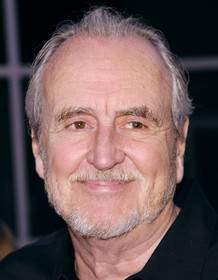
Wes Craven
Made by

MGM Telecommunications
Night Visions Plot Summary
Read the complete plot summary and ending explained for Night Visions (1990). From turning points to emotional moments, uncover what really happened and why it matters.
Ray sits in a dim club, watching Aura Angela Alvarado dance provocatively with other men, and his irritation boils over as he forcibly removes her from the floor. After a brief struggle, Aura storms out and drives away in her car. In the parking lot, Aura is killed—strangled with a hose—left on the ground with her legs spread, a stark and unsettling tableau that sets a brutal tone for what follows.
The newspapers buzz with the city’s latest headline: the Spread-Eagle Killer has struck a fourth time. Ray is pulled in for questioning, and he is treated with suspicion and roughness by the precinct’s own, particularly by Sergeant Thomas Mackey [James Remar]. The case gains a new voice in Dr. Sally Powers [Loryn Locklin], a renowned expert in criminal psychopathology who is brought in to read the killer’s mind. Her presence comes with a sanction: Mackey can skip a ten‑day suspension if he agrees to supervise Powers, a condition that immediately puts pressure on their uneasy partnership.
At the next crime scene, Powers makes a chilling observation herself: the victim has been raped, and she convulses to the floor in the tape outline that matches the killer’s ritual. That night, Powers faces a painful memory as she relives a murder from her own childhood—a memory that hints at the trauma underpinning her unique abilities to inhabit others’ psyches.
The following day, Powers’s instincts tug at the precinct’s hierarchy. Instead of waiting for a formal briefing, she follows a hunch to a health club, where she mimics the behavior of the instructors to infiltrate a class when the next body is discovered in a separate room. After a tense clash with Mackey, she accurately predicts the next crime’s setting: a biker bar. Mackey trails her into questionable territory, finding Powers in a back room with a knife in hand beside a recently murdered woman. The victim, though, has not been stabbed; instead, she’s been beaten with a blunt object. A diner scene later softens the tension, as Powers subtly imitates the restaurant’s waitress, a moment that makes Mackey question how far Powers is willing to push her own boundaries in order to anticipate the killer’s next move.
The precinct’s Commissioner Nathan Dowd [Francis X. McCarthy] offers context to Mackey: Powers is the survivor of an attack that claimed her family, and her coping mechanism is to slip into the minds and bodies of others to escape her own shattered memories. She has built a mental map of the killer’s acts and motives, even drawing a landmark in the shape of Da Vinci’s Vitruvian Man as she traces how the murderer pieces together a “perfect woman.” Her method is a chilling blend of empathy and adaptation, a professional shield that also exposes her deepest vulnerabilities.
As Powers tracks the murderer, the tension escalates toward a final confrontation that pushes everyone to their limits. The pursuit culminates on a rooftop, where Powers, Mackey, and the killer converge for a deadly showdown. The killer turns violent in the last moment, attempting to murder both of them, but fate intervenes as he slips from the edge and plummets to his death, leaving the investigation resolved but the emotional costs lingering.
Along the way, a broader portrait emerges of the interplay between law enforcement and a mind that can inhabit darkness to illuminate it. Powers’s fragile brilliance is tempered by the weight of her past, while Mackey’s skepticism gradually yields to a cautious respect for the unconventional methods that keep the case moving forward. The city’s fear of a calculating killer meets a blend of clinical insight and street‑level persistence, underscored by a cast that brings each figure into sharp, human relief.
- Palm Reader briefly appears in the tapestry of the investigation, a small world within a larger hunt, adding a layer of mystique to a case defined by logic and deduction.
- The New Age Minister makes a fleeting but symbolic appearance, underscoring the era’s cultural milieu in which the city’s anxieties are channeled through varied belief systems.
Ultimately, the narrative threads converge on a climactic rooftop confrontation that tests trust, nerve, and the ethics of pursuing truth at any cost. The Spread-Eagle Killer’s legacy is not simply the deaths he leaves behind but the way it binds together a detective’s stubborn resolve with a psychologist’s fragile humanity.
Night Visions Timeline
Follow the complete movie timeline of Night Visions (1990) with every major event in chronological order. Great for understanding complex plots and story progression.
Ray confronts Aura in the club
Ray sits in a club, his jealousy boiling as Aura dances with other men. He angrily pulls her off the floor, sparking a brief fight. Aura storms out and takes the car home, leaving Ray fuming.
Aura is murdered in the parking lot
Later, in the parking lot, Aura is choked to death with a hose. The killer leaves her body on the ground with her legs spread apart.
Ray questioned as 'Spread-Eagle Killer' emerges
The papers report that the 'Spread-Eagle Killer' has struck a fourth time and Ray is brought in for questioning. Sergeant Thomas Mackey conducts the interrogation roughly, testing his nerves and instincts.
Dr. Sally Powers joins the case
The extremely intuitive Dr. Sally Powers, a specialist in criminal psychopathology, is brought in to help understand the killer's mind. Mackey is allowed to forego a ten-day suspension and to continue to work on the case if he agrees to supervise Powers.
Next murder scene reveals rape motive
At the scene of the next murder, Powers writhes on the floor inside the tape outline of the victim and declares that the victim was raped. Her claim reinforces the killer's predatory profile and foreshadows deeper trauma.
Powers relives a childhood murder
That night in bed, Powers relives a murder she survived as a child. The experience underscores how her mind fragments into other personalities as a defense.
Hunch leads to the health club
The next morning, Powers is called to the station to meet with the captain, but a stronger instinct drives her to a health club. Her hunch sets in motion her hands-on involvement in the investigation.
Powers demonstrates imitation to unlock the case
Inside the health club, she emulates the instructors' behavior to take over a class when the next body is found in another room. The display of imitation convinces Mackey of Powers's talent for reading killers' minds.
Next location predicted: the biker bar
After an argument with Mackey, Powers predicts the next location will be a biker bar. Her insight showcases her evolving psychological approach to the case.
Mackey catches Powers with a knife at the biker bar
Mackey follows her to a back room in the biker bar and finds her with a knife in her hand beside a freshly murdered woman. The victim was not stabbed; instead, the blows from a blunt object left the body damaged.
Diner confrontation and waitress mimicry
Mackey apologizes to Powers at a diner, and he witnesses her imitate the waitress's mannerisms. The moment highlights her uncanny ability to adopt other personas.
Powers embraces the killer's mindset, fears it
Powers begins to think like the killer, encouraged by Mackey, but the realization frightens her and she runs away. The line between observer and participant grows dangerously thin.
Commissioner explains Powers's trauma-fueled dissociation
The commissioner explains to Mackey that Powers is the survivor of an attack on her family, which forced her to retreat into other personalities. This history explains her dissociative tendencies and the danger of powerful empathy with the killer.
Vitruvian Man map reveals killer's plan
Powers maps the murders on a diagram inspired by Da Vinci's Vitruvian Man and concludes that the killer is assembling a 'perfect' woman. Her analysis crystallizes the pattern and motive driving the crimes.
Final rooftop showdown and death
Powers corners the killer at the rooftop for a final confrontation with Mackey. The killer tries to murder them but ends up falling to his death, bringing the case to a dramatic close.
Night Visions Characters
Explore all characters from Night Visions (1990). Get detailed profiles with their roles, arcs, and key relationships explained.
Ray
A volatile, jealous man whose temper fuels the early confrontation with Aura and sets off the chain of murders. His controlling behavior makes him a prime suspect and a constant source of tension for Mackey.
Aura
Aura is a provocative nightclub dancer whose murder triggers the investigation. Her fate reveals the volatile undercurrents of desire and control in the lives around her.
Dr. Sally Powers
A brilliant criminal psychologist who survived a traumatic attack. She uses others’ behaviors to predict the killer’s moves and struggles with personal fears as the case unfolds.
Sergeant Thomas Mackey
A seasoned detective whose suspicion is tempered by professional duty. He challenges Powers at times but ultimately respects her insights as the investigation deepens.
Commissioner Nathan Dowd
The high-ranking official overseeing the case. He provides context about Powers’ background and the limits of the investigation.
Palm Reader
A mystic figure whose insights guide the investigation, interpreting patterns and clues beyond traditional evidence.
Captain Keller
A commanding police captain who coordinates the team’s efforts and pushes for results.
Martin
An ally within the department who assists in the investigation and helps push the case forward.
Luanne
A supportive figure in the investigation environment; her interactions reveal the personal stakes of those affected by the case.
Starks
A pragmatic colleague in law enforcement who contributes to the investigation’s momentum.
New Age Minister
A minor figure offering a spiritual counterpoint within the community, reflecting the era’s eclectic beliefs.
Rocker
A club patron who underscores the nightlife environment surrounding Aura’s murder; not central to the investigation but present in the setting.
Young Sally
A younger version of Dr. Sally Powers seen in flashbacks, highlighting the trauma shaping her later identity.
Night Visions Settings
Learn where and when Night Visions (1990) takes place. Explore the film’s settings, era, and how they shape the narrative.
Location
Club, Parking Lot, Health Club, Biker Bar, Rooftop, Police Station, Diner
Set in a contemporary urban environment, the story unfolds across nightlife venues and police precincts. The action moves from a dim nightclub where Aura is killed to a health club, a biker bar, a rooftop confrontation, and finally a busy police station and diner. The locations establish a gritty, nocturnal mood that drives the suspense and investigation.
Night Visions Themes
Discover the main themes in Night Visions (1990). Analyze the deeper meanings, emotional layers, and social commentary behind the film.
🧠
Psychology
The film centers on the psychology of crime, exploring how trauma, guilt, and desire shape a killer’s mind and how a survivor therapist navigates her own fears. Dr. Powers embodies the tension between clinical objectivity and personal vulnerability as she inhabits others’ personas to anticipate the killer’s moves. The investigation becomes as much about understanding human psyche as finding physical evidence.
🎭
Dual Identity
The narrative plays with shifting identities, as the survivor Dr. Powers adopts multiple personas to predict the killer’s plan. Aura’s public persona as a nightclub dancer contrasts with her fate, underscoring the fragility of appearances. The killer’s pursuit to assemble a ‘perfect woman’ highlights the dangers of obsession distorting reality.
🩸
Violence & Consequence
Murder scenes are central to the plot, depicting brutal acts and how violence leaves psychological traces on those who study it. The story ties physical harm to deeper consequences— trauma, guilt, and the erosion of trust between investigators. The rooftop finale frames violence as a fatal culmination of a chilling, methodical pursuit.

Coming soon on iOS and Android
The Plot Explained Mobile App
From blockbusters to hidden gems — dive into movie stories anytime, anywhere. Save your favorites, discover plots faster, and never miss a twist again.
Sign up to be the first to know when we launch. Your email stays private — always.
Explore the mobile appNight Visions Spoiler-Free Summary
Discover the spoiler-free summary of Night Visions (1990). Get a concise overview without any spoilers.
In the neon‑lit sprawl of Los Angeles, a series of crimes feels almost untouchable—an unseen predator stalks the city’s shadows, leaving only a lingering sense of dread behind each mystery. The atmosphere is a blend of gritty police procedural and unsettling psychological thriller, where the ordinary bustle of the streets contrasts sharply with an invisible menace that seems to move through thoughts as easily as through alleys. The film leans heavily into a moody, late‑night palette, using rain‑slicked avenues and dimly lit clubs to amplify the feeling that something is always just out of sight.
Detective Ray is the hard‑nosed, street‑wise officer tasked with making sense of the incomprehensible. He is accustomed to conventional clues, but the case forces him to confront a reality that defies the usual playbook. Enter Dr. Sally Powers, a renowned criminal psychologist whose unique talent is to inhabit the minds of others, slipping into the mental patterns of the killer in order to anticipate the next move. Her method is part empathy, part survival mechanism, forged from personal trauma that grants her a fragile yet powerful window into the darkness the city fears.
The partnership that forms between Ray and Dr. Powers is as volatile as it is necessary. Their collaboration pits raw police intuition against an unconventional, almost supernatural investigative style, creating a constant tension between skepticism and belief. As they navigate bureaucratic pressure, personal demons, and the ever‑present threat of the unseen assailant, the film sustains a suspenseful rhythm that keeps the audience hovering between dread and intrigue. The world they inhabit is one where logic and the uncanny intersect, promising a relentless hunt that tests the limits of both law enforcement and the human mind.
Movies with Similar Twists and Themes
Uncover films that echo the narrative beats, emotional arcs, or dramatic twists of the one you're exploring. These recommendations are handpicked based on story depth, thematic resonance, and spoiler-worthy moments — perfect for fans who crave more of the same intrigue.

Featured on this page

What's After the Movie?
Not sure whether to stay after the credits? Find out!
Check out our other apps:

SAT Sphere
Build confidence for the Digital SAT.

Mori Atlas
Discover wild places worth protecting.

Luntero
Search smarter for a home in Amsterdam.

Plot Explained
Unravel movie endings and hidden clues.

Pokechamp
Dive into Pokémon data and battle logic.

Driving Theory
Get ready for your European theory test.

Movie Dust
Plan your next cinema trip with ease.

Musemap
Find art and culture as you travel.

Selkobase
Compare credentials before committing.

Local Manual
Turn an unfamiliar country into practical next steps.

Lernavi
Compare school systems before your next move.

GymRoam
Find a workout stop wherever your plans take you.
Explore Our Movie Platform
New Movie Releases (2026)
Famous Movie Actors
Top Film Production Studios
Movie Plot Summaries & Endings
Major Movie Awards & Winners
Best Concert Films & Music Documentaries
Movie Collections and Curated Lists
© 2026 What's After the Movie. All rights reserved.
Privacy Policy