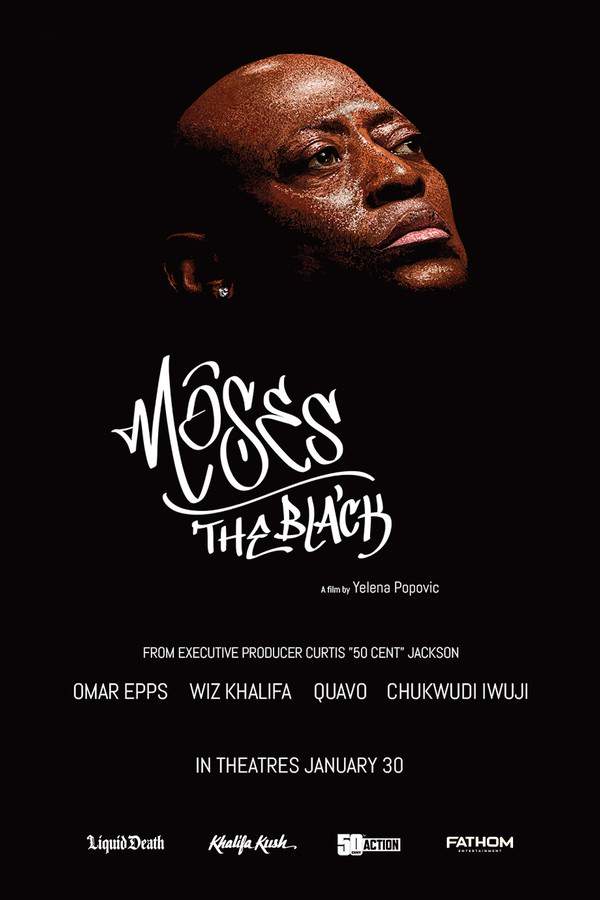
Moses the Black 2026

Directed by

Yelena Popovic
Made by

G-Unit Film & Television
Where to Watch Moses the Black
See current US streaming, rental, and purchase options for Moses the Black (2026) via JustWatch.






Moses the Black Plot Summary
Read the complete plot summary and ending explained for Moses the Black (2026). From turning points to emotional moments, uncover what really happened and why it matters.
Malik returns to West Side Chicago after his prison term, stepping back into a life of leadership as he tries to steer his crew through a landscape that has grown more dangerous in his absence. He soon learns that his closest friend, Sayeed, was murdered by a rival gang, and the weight of vengeance presses on him as he orders his gang to retaliate against the attackers. His aging grandmother—an unwavering Christian who prays for him daily—gives Malik a small icon of St. Moses the Black, describing the saint not only as a former gang leader who found sainthood but as a symbol of mercy in the face of violence. The ceremony of her funeral becomes a chilling turning point when a rival gang launches a drive-by aimed at Malik, yet hits one of his own men instead. The moment unsettles Malik deeply, and a sudden panic attack forces him to cling to the Moses icon, triggering a dream where the saint speaks a stark warning: > He who lives by the sword shall die by the sword.
This vision sparks a clash inside Malik between old loyalties and a rising sense of duty to something higher. He shares the message with his close ally Mike, a gang member who simultaneously embodies devout faith and immersion in street life. Mike recognizes the line as Jesus’s teaching and urges Malik to actually read the Bible himself, hinting at a path that could pull him away from the cycle of violence. Malik’s internal struggle deepens as he questions whether leadership requires blood for blood, and whether a life of crime can coexist with the quiet dignity his grandmother admired.
Seeking guidance, Malik visits his grandmother’s church and confesses that his dreams revolve around [St. Moses the Black]. The priest responds with calm certainty: God may be calling Malik to change his life before it’s too late. The tension within the gang escalates when Lil B, a member who has endured humiliation in a viral video made by the rival gang, decides to take matters into his own hands and kills a rival fighter. The resulting shootout intensifies the feud and forces Malik to confront a grim realization: > the thief went to heaven first. The moment comes when [Straw] joins the chaos in a brutal exchange, and [2wo-3ree] is struck down, his dying words asking Malik whether he’ll find a place in heaven.
In the aftermath, Malik places a photograph of Sayeed beside the church’s Moses the Black icon and makes a bold, if dangerous, deal with the rival gang: he will surrender to the police, confess his crimes alone, and refuse to snitch on others. He returns to prison and experiences a vision of Moses the Black foretelling martyrdom at the hands of bandits, repeating, > Lord, have mercy. Malik pleads for mercy not only for himself but for everyone in his gang as two inmates close in. The struggle ends with Malik’s murder inside the prison, his final utterance a quiet plea: > Remember us in your kingdom. The film closes on a stark biblical echo, with a final title card quoting Matthew 21:31: > Verily I say unto you, that the publicans and the harlots go into the kingdom of God before you.
Through its charged arc of duty, faith, and redemption, the story follows a man who tries to trade a life of crime for a chance at mercy, only to find that mercy—and even salvation—comes at a steep, personal cost.
Moses the Black Timeline
Follow the complete movie timeline of Moses the Black (2026) with every major event in chronological order. Great for understanding complex plots and story progression.
Malik returns to gang leadership
Released from prison, Malik returns to West Side Chicago and resumes control of his gang. He learns that his closest ally Sayeed was murdered by a rival gang and orders retaliation by their members. The reentry reinforces his authority but pulls him back into the cycle of violence.
Grandmother gives Moses the Black icon; she dies
Malik's devout Christian grandmother gives him a small icon of Moses the Black, framing him as a former gang leader who became a saint. He carries the symbol as a sign of guidance. Soon after, she dies, leaving Malik with a heavier spiritual burden.
Funeral drive-by; rival attack
At the grandmother's funeral, the rival gang conducts a drive-by shooting intending to hit Malik. One of Malik's own gang members is struck instead, deepening fear and guilt. The incident underscores the peril of Malik's violent world and his fragile leadership.
Panic, dream, and prophecy
Malik experiences a panic attack and clamps onto the Moses the Black icon. He dreams of the saint who warns, 'He who lives by the sword shall die by the sword.' The vision unsettles him and plants doubt about returning to violence.
Malik shares dream with Mike; Bible insight
Malik relays the dream to Mike, who sees no conflict between gangster life and faith. Mike recognizes the quote as Jesus’s words and urges Malik to read the Bible himself. The exchange deepens Malik's spiritual conflict within the gang's world.
Restraint and doubt
Troubled by visions, Malik chooses not to authorize further retaliation against the rival gang. Some, including 2wo-3ree, question his fitness to lead. Even Mike grows uneasy when Malik quotes Scripture to justify restraint.
Church visit; calling
Malik visits his grandmother's church and tells the priest about the dreams of Saint Moses the Black. The priest interprets the visions as a sign from God calling him to change before it's too late. The church encounter heightens the moral stakes of his choices.
Lil B's viral humiliation sparks a deadly shootout
Lil B, humiliated by a viral video, acts on his own and kills a rival gang member. The feud erupts into a full shootout between the gangs. Malik confronts the violence and acknowledges the grim toll, noting that the thief goes to heaven first.
2wo-3ree is shot; dying words
During the shootout, 2wo-3ree is shot and dies. His final words ask Malik whether he will enter heaven. The death intensifies Malik's spiritual reckoning and sense of consequence.
Deal with rival gang; return to prison
Malik places a photo of Sayeed and himself beside the church icon and makes a deal with the rival gang to end the fighting. He agrees to surrender to the police and confess his crimes alone, refusing to be a rat. He returns to prison, where a vision of Moses the Black anticipates martyrdom.
Assault and Malik's death
Two inmates sneak up and stab Malik in prison as he expresses mercy for his gang. He dies, repeating a plea for mercy and asking to be remembered by those he loved. The end marks his sacrificial arc from gang leader to martyr-like figure.
Final card with scripture
The film closes with a title card quoting Matthew 21:31 about the publicans and harlots entering the kingdom of God before the religious leaders. The closing note reinforces Malik's journey as a moral reckoning and mercy-seeking finale.
Moses the Black Characters
Explore all characters from Moses the Black (2026). Get detailed profiles with their roles, arcs, and key relationships explained.
Malik (Omar Epps)
A former gang leader who returns from prison and tries to steer his crew toward reform. He experiences Moses the Black-inspired visions, questions the cycle of retaliation, and seeks mercy over revenge. His journey highlights the burden of leadership when faced with personal risk and community blame.
Mike (Corey Hendrix)
A devoted gang member who blends street loyalty with a stubborn belief that crime is compatible with faith. He challenges Malik’s changing stance and pushes back against the idea of abandoning violence. Mike embodies the tension between spiritual aspiration and gang allegiance.
2wo-3ree (Wiz Khalifa)
A pragmatic gang member who fears Malik’s silence on retaliation signals weakness. He embodies the faction that resists Malik’s reform and pushes for continuing violence. His stance reflects the pressure to maintain order through force.
Lil B (Ahmad Nicholas Ferguson)
A younger gang member whose embarrassing viral moment and impulsive actions accelerate the conflict. His decision to kill a rival after humiliation triggers a deadly escalation. Lil B’s impulsivity underscores how recklessness can ignite broader violence.
Straw (Quavo)
A gang member who operates within the street hierarchy and participates in the violence. He serves as a foil to Malik’s evolving stance, showing the pressure of staying under gang rules. Straw represents the loud, action-first wing of the crew.
Meechie (Skilla Baby)
Another gang member who helps carry out the gang’s operations and contributes to the atmosphere of danger. Meechie’s presence emphasizes the ripple effects of loyalty and aggression within the group.
Polo (Maurice Cobige)
A member of the gang whose actions reflect the drive for territorial control. Polo’s role adds to the tense network of rivalries that push Malik toward the edge of change.
Detective (David Krostal)
Law enforcement figure investigating the gang violence and Malik’s crimes. The detective represents the external pressure of the justice system that ultimately intersects with Malik’s inner transformation.
Jerry (Cliff Chamberlain)
A member of the older generation within the neighborhood who witnesses the violence and the shifting dynamics of Malik’s leadership. Jerry’s perspective helps contextualize the stakes for the West Side community.
Sayeed
Malik’s closest friend whose murder sparks the quest for revenge and propels the plot toward a reckoning with violence and mercy. Sayeed’s memory haunts Malik and influences his decisions.
Moses the Black Settings
Learn where and when Moses the Black (2026) takes place. Explore the film’s settings, era, and how they shape the narrative.
Location
West Side, Chicago
The story unfolds on the gritty blocks of Chicago's West Side, where torn street corners and dense housing create a maze of territory. The neighborhood is marked by rival gangs, makeshift meeting points, and a local church that stands as a fragile beacon of hope. This setting amplifies the tension between a life of crime and the possibility of redemption through faith and community.
Moses the Black Themes
Discover the main themes in Moses the Black (2026). Analyze the deeper meanings, emotional layers, and social commentary behind the film.
🕊️
Redemption
Malik's arc centers on choosing mercy over revenge, attempting to lay down a life of crime. His visions of Moses the Black push him toward a new path, even as his crew doubts his change. The narrative culminates in a personal reckoning where forgiveness is possible, but not without sacrifice. Redemption here is hard-won and costly.
🙏
Faith vs Violence
Religious imagery and Christian zeal collide with gangster pragmatism. Malik searches for guidance in the church and scripture, while his friend Mike struggles to reconcile faith with the street code. The icon of Moses the Black becomes a test of whether faith can curb bloodshed. The tension drives the plot toward choosing a different future or repeating the past.
🧭
Leadership
Malik's authority is challenged as the gang questions his willingness to end their criminal life. Other members resist his softened stance, pushing back with violence and pressure. His internal conflict and eventual decision to confess reflect how true leadership weighs loyalty against moral responsibility. The story examines what it takes to steer a group toward change.

Coming soon on iOS and Android
The Plot Explained Mobile App
From blockbusters to hidden gems — dive into movie stories anytime, anywhere. Save your favorites, discover plots faster, and never miss a twist again.
Sign up to be the first to know when we launch. Your email stays private — always.
Explore the mobile appMoses the Black Spoiler-Free Summary
Discover the spoiler-free summary of Moses the Black (2026). Get a concise overview without any spoilers.
The streets of Chicago’s West Side pulse with a raw, unforgiving rhythm, a place where loyalty is measured in fists and silence. Malik steps out of a prison cell and back onto the same cracked sidewalks that once rang with his name, instantly reclaiming a role he left behind. His release is not a quiet homecoming; it thrusts him into a world that has hardened in his absence, a neighborhood where every corner whispers of unfinished business and unspoken debts.
Beside him stands his longtime confidant Mike, a figure who balances street savvy with a surprisingly steady faith, and together they try to keep the crew from splintering. The gang itself is a collage of personalities: the impetuous 2wo 3ree, whose swagger threatens to ignite the fragile peace; Meechie, whose loyalty is as fierce as his temper; and other members who hover between the pull of retaliation and the yearning for stability. Their interactions create a volatile chemistry that keeps the tension high, hinting at choices that could reshape their collective future.
Underlying the grind of survival is a quieter, more contemplative current. Malik’s aging grandmother, a devout Christian, hands him a modest icon of St. Moses the Black, a saint who once walked a similar line between violence and sanctity. The symbol becomes a silent interlocutor, urging him to weigh the weight of vengeance against the possibility of mercy. Conversations in dimly lit churches and whispered prayers begin to infiltrate the gang’s usual code, suggesting that redemption might be an option even for those entrenched in the streets.
The film moves in a gritty yet lyrical tone, blending the harsh realism of urban gang life with an almost reverent exploration of faith and conscience. It invites viewers to watch a man torn between the familiar call of the street and a faint, hopeful echo of something greater, leaving the outcome of his inner battle intriguingly open.
Featured on this page

What's After the Movie?
Not sure whether to stay after the credits? Find out!
Check out our other apps:

SAT Sphere
Build confidence for the Digital SAT.

Mori Atlas
Discover wild places worth protecting.

Luntero
Search smarter for a home in Amsterdam.

Plot Explained
Unravel movie endings and hidden clues.

Pokechamp
Dive into Pokémon data and battle logic.

Driving Theory
Get ready for your European theory test.

Movie Dust
Plan your next cinema trip with ease.

Musemap
Find art and culture as you travel.

Selkobase
Compare credentials before committing.

Local Manual
Turn an unfamiliar country into practical next steps.

Lernavi
Compare school systems before your next move.

GymRoam
Find a workout stop wherever your plans take you.
Explore Our Movie Platform
New Movie Releases (2026)
Famous Movie Actors
Top Film Production Studios
Movie Plot Summaries & Endings
Major Movie Awards & Winners
Best Concert Films & Music Documentaries
Movie Collections and Curated Lists
© 2026 What's After the Movie. All rights reserved.
Privacy Policy